

Need wedding prep that’s as precise as your morning routine? The 6-month timeline cranks up the pace, prioritizing speed and efficiency for no-nonsense, decisive folks. You book vendors fast and set tight deadlines. In contrast, the 12-month plan allows you to pace decisions, negotiate deals, and customize details like a savvy project manager. It’s not about romance; it’s about execution. Nail the plan, and you’ll be ahead of the game. Want the roadmap? Let’s tackle this together.
Quick verdict: 6-Month Wedding Timeline vs. 12-Month Wedding Timeline (who each is best for)
When it comes to planning your wedding, the decision between a 6-month or 12-month timeline is like choosing between a high-speed sprint and a strategic marathon. You’re either racing to the finish line or pacing yourself for a grand journey. So, who’s it for?
- 6-month wedding plan: Perfect for decisive go-getters who thrive under pressure and prefer a lean guest list. You’ll dodge inflation’s creeping costs, focusing on essentials without second-guessing. This approach is also fitting for those who are part of the 33% of couples who say they wouldn’t change a single thing about their wedding day, as it allows for focused decision-making. Even on a shorter timeline, you can successfully tackle wedding catering and food planning by prioritizing practical solutions and streamlined menus.
- 12-month wedding plan: Ideal for traditionalists craving customization. This approach gives you time to savor every detail, from mood boards to registries.
- Short vs long engagement planning requires evaluating your priorities: speed or detail?
- Our wedding timeline comparison shows both timelines get the job done, but your choice depends on your hustle style.
Choose your path wisely!
At-a-glance comparison: 6-Month Wedding Timeline vs. 12-Month Wedding Timeline
Dive headfirst into the whirlwind of wedding planning with our no-nonsense, at-a-glance comparison of the 6-month vs. 12-month timelines. Deciding how long to plan your wedding can make or break your sanity and budget. Here’s a quick breakdown:
| Aspect | 6-Month Timeline | 12-Month Timeline |
|---|---|---|
| Vendor Booking | Pressure; limited choices, premium | Flexibility; better negotiation |
| Budget Dynamics | Expedite fees, bundle reliance | Early-bird discounts, phased payments |
| Decision Pacing | Compressed, intense workload | Staggered, strategic planning |
| Guest List | Smaller, local focus | Larger, coordinated flexibility |
| Invitations | Rapid send-out, quick RSVPs | Early save-the-dates, better response |
Strategically execute your timeline, whether you embrace the kinetic chaos of six months or savor the extended precision of a year. Using a wedding website can streamline communication and updates, helping both the 6-month and 12-month timelines manage guest information and invitations effectively. Next, define your options wisely.
Define the options (so you’re comparing the right things)
Let’s cut through the wedding clutter and define your timeline options. The 6-month plan is all about high-speed execution—booking critical vendors immediately and embracing all-inclusive options to get the job done without sacrificing your weekend. Meanwhile, the 12-month timeline gives you breathing room to strategically secure top-choice vendors and navigate custom details, but don’t buy into the myth it’s all smooth sailing—both paths require hustle and smart decisions. Creating a wedding planning checklist is essential to staying organized, whether you choose a 6-month or 12-month plan.
6-Month Wedding Timeline: what it is, what it includes, and the common misconceptions
Opting for either a 6-month or a 12-month wedding timeline is like choosing between sprinting through a marathon or pacing yourself with precision. The 6-month sprint means executing tasks like vendor bookings and attire decisions at lightning speed, leaving no room for hesitation. Think of it as a high-stakes chess game where each move counts. You’ll prioritize essentials—venues, photography, catering—and juggle multiple tasks simultaneously, like decor planning and vow writing. It’s a streamlined approach for those who thrive on momentum and efficiency. Couples can simplify their planning by exploring a wedding service professional marketplace directory, which connects them quickly to vetted vendors.
A key consideration in this process is the budget allocation, where a significant portion must be dedicated to catering and beverages, followed by other critical elements like venues and photography.
Misconceptions? People think a 6-month timeline means settling for less. Wrong. It’s all about strategic prioritization and knowing when to pivot. The key is decisiveness—your hustle will secure what’s non-negotiable. Ready to move? Start with a checklist.
12-Month Wedding Timeline: what it is, what it includes, and the common misconceptions
When it comes to wedding timelines, the choice between a 6-month and a 12-month plan isn’t about “which is better,” but rather “which gets the job done for you.” You’ve got a life, a career, maybe even a side hustle, so efficiency is non-negotiable. The 6-month timeline is a sprint—strategically executed for high-energy couples. It includes essentials like sending save-the-dates, booking venues, and ordering cakes. You’ll need a game plan to juggle priority bookings and vendor coordination. In contrast, the 12-month timeline is a marathon, pacing through vision setting, budget mapping, and dress shopping. According to Columbia University research on wedding spending, the amount of time spent planning can significantly influence both your budget decisions and the types of vendors you’re able to secure. It allows more breathing room but requires steady momentum. Common misconception? It’s not just about booking; it’s about mastering logistics. Start with a checklist, then pivot as needed.
Cost breakdown (upfront vs hidden costs)
When breaking down wedding costs, you need to separate the upfront fees from those sneaky hidden charges that can catch you off-guard. Understanding what really drives cost changes—like peak season venue hikes or those must-have alterations—is non-negotiable for a streamlined budget. For instance, wedding planner fees often account for about 8% of the total wedding budget, making it essential to consider these costs early in your planning. Interestingly, studies suggest that wedding spending and marriage duration may be linked, meaning your budget decisions could impact more than just the big day. Get your cost checklist ready, because it’s time to strategically allocate funds and avoid those “bless and stressed” moments.
Line-item cost comparison by tier/budget
Steering wedding costs is like mastering the ultimate project management challenge—knowing what you’re up against is half the battle. Here’s a breakdown of upfront versus hidden costs depending on your budget tier. Use this table to strategically navigate budgeting like a pro:
| Cost Category | Budget Tier | Hidden Costs Examples |
|---|---|---|
| Venue | Budget | Overtime fees, security, missing rentals |
| Venue | Midrange | Per-head charges, weather contingency |
| Venue | Luxury | Extended hours, service charges |
| Catering & Beverage | Budget | Staffing fees, cake-cutting |
| Catering & Beverage | Midrange | Gratuity, premium liquor upgrades |
Research from Purdue University Cooperative Extension shows that early awareness of hidden wedding costs is a proven factor in helping couples stick to their budgets. Strategically plan for these hidden costs early on. Before you sign anything, get a clear line-item breakdown. Ready to gain momentum? Tighten those budget lines, and let’s execute. Printable wedding planning checklists are available to help ensure all potential wedding expenses are accounted for, making it easier to strategically plan for these costs.
What actually drives cost changes
Maneuvering the labyrinth of wedding costs—both upfront and hidden—is like the ultimate stress test for even the most seasoned project manager. Let’s cut to the chase: it’s a minefield of add-ons and fees. You’ve got:
- Service Charges: These range from 18–25% on top of your food and drink bill, and they’re not tips. Venues may add a service fee of 18–25% to the final bill, which can significantly increase the total cost unexpectedly.
- Bartending and Alcohol Fees: Venues markup alcohol, and there’s corkage for bringing your own.
- Setup, Breakdown, and Rentals: Extra charges for labor, tables, and even the dance floor. If you’re planning a destination event, don’t forget about travel health preparation costs, which may include vaccines or medical kits recommended by the CDC.
- Taxes, Gratuities, and Deposits: These can eat up an extra third of your budget.
Reality Check: Hidden costs can throw your budget off. Strategically allocate a contingency fund, and always read contracts thoroughly.
Planning workload & logistics impact
When you’re orchestrating a wedding, time and coordination are non-negotiable power players. With a 6-month timeline, expect a whirlwind of rapid decisions and vendor juggling, while a 12-month plan lets you strategically pace choices without the stress-induced caffeine overload. Be ready to pivot based on vendor availability—early birds get more worms, but last-minute pros can still get the job done if you’re willing to hustle hard.
Time, complexity, and coordination differences
Let’s be real: planning a wedding on a 6-month timeline is like juggling chainsaws while riding a unicycle. It demands precision, speed, and a touch of audacity. You’ve got to execute parallel tasks that would otherwise be leisurely spread over a year. Here’s what you’re dealing with:
- Decision Compression: Vendor choices need locking down immediately, or you’ll be chasing your tail.
- Task Congestion: DIY elements? Either scale back or outsource; time’s not a luxury here.
- Synchronization Stress: Coordinating fittings, trials, and rehearsals tightens, risking domino delays.
- Guest Management: Rapid RSVPs and digital tools become your best friends.
According to family dynamics in wedding planning, navigating relationships and expectations becomes even more complex when the planning window is short, as there is less time to manage input from parents and relatives. Strategically streamline your approach. Prioritize with military precision. Use digital tools to stay on track. You’re not just planning a wedding; you’re managing a mission.
Vendor availability + flexibility considerations
Booking vendors for your wedding is a tactical operation—one that demands foresight and a dash of audacity. You’re a pro at managing projects, so treat this like any other high-stakes task. Vendor availability isn’t a guessing game; it’s a strategic puzzle:
- Peak-season venues need 12–18 months’ notice. Act fast or pivot to off-season.
- Photographers? They’re one-wedding-a-day experts. Book 10–15 months out.
- Florists and caterers thrive on 9–12 months’ prep. Compress that, and you’ll pay rush rates.
- Entertainment? Bands need 9–12 months; DJs, a savvy 3–6 months.
Align your timeline with vendor realities. Short timelines mean fewer options. Be nimble, use a planner’s clout, and remember—weekday weddings are your ace. Adjust accordingly. For a streamlined way to compare and book wedding venues and vendors, consider using a trusted marketplace and directory to maximize your options and simplify logistics.
Guest experience impact
When you’re juggling a tight timeline, guest perception is all about how smoothly the event moves. Short timelines often mean quick pivots and reduced customization, which can lead to friction points like last-minute vendor changes or compressed RSVP windows. To keep your guests comfortable and engaged, strategically plan communications and prioritize seamless flow—because nobody wants to be “bless and stressed” at your wedding.
How guests perceive it + where friction shows up
Although you’re planning the most epic wedding bash, remember that your guests’ experience can make or break the day. A 12-month timeline offers a de-stressed journey, giving guests ample prep time and reducing travel conflicts. It’s all about precision—guests see:
- Strategically sent invitations: 8-12 weeks out, not a rushed afterthought.
- Thoughtful accommodation blocks: Secured early, avoiding peak-season chaos.
- Timely RSVP follow-ups: Non-negotiable for clear expectations.
- Personalized menus: Locked in months ahead, not last-minute surprises.
Conversely, a 6-month smash might feel like a whirlwind—intimate but logistically tight. Friction shows up in late RSVPs, compressed response times, and fewer lodging options. Whichever you choose, execute with precision and your guests will notice the hustle. If you need help narrowing down your venue, an Eventective wedding venue search can make it easy to compare locations and streamline your planning. Next up? Streamline those decisions.
Best-fit scenarios (choose based on constraints)
You’re balancing careers and wedding planning, so let’s cut to the chase: a 6-month timeline is your go-to if you’re a decision-making whiz who thrives under pressure and can pivot quickly when options are limited. On the flip side, a 12-month timeline is ideal if you want to maximize negotiation power, customization, and spread out the chaos like a well-executed project plan. Either way, your wedding needs to fit your lifestyle, not the other way around—so grab those timelines and start strategizing. Couples can benefit from understanding marriage psychology to help strengthen their partnership throughout the wedding planning process.
Choose 6-Month Wedding Timeline if…
If you’re ready to get married faster than you can say “Pinterest board,” a 6-month wedding timeline might be your jam. You’re all about getting things done with kinetic precision, not dragging your feet. Consider this timeline if you:
- Embrace Flexibility: You’re willing to pivot on dates and venues for the sake of expediency.
- Keep It Intimate: A smaller guest list means streamlined logistics and more meaningful interactions.
- Stay Budget Conscious: Off-peak seasons and in-season choices are your secret weapons for savings.
- Decide and Conquer: You thrive on swift, decisive actions without the luxury of second-guessing.
Reality Check: Accelerating your timeline means fewer opportunities for perfection, but it also squashes stress before it starts. Ready to move? Grab your checklist and let’s execute.
Choose 12-Month Wedding Timeline if…
While a 6-month wedding timeline moves at lightning speed, a 12-month timeline lets you strategically play the long game. Choose a 12-month timeline if:
- Large Guest Lists: You need to secure a venue for a crowd, giving yourself ample time for save-the-dates and caterer tastings.
- Peak Season Dates: You’re targeting those high-demand slots, where booking over a year in advance isn’t just smart—it’s non-negotiable.
- Multiple Vendors: You’re hiring an all-star team of vendors and want everything executed smoothly, from photographers to florists.
- Custom Details: You crave personalized touches, like unique décor or custom attire, and want the luxury of time to make those happen.
Reality Check: If you’re daunted by the timeline, delegate tasks or hire a planner early. Avoid burnout by pacing yourself.
Real-world scenarios (examples with numbers)
Let’s cut through the noise and get strategic about your wedding planning. Imagine you’re managing a budget of $35,000 with a guest list of 120, prioritizing a killer venue and top-tier photographer. Now, how do you pull this off without losing your mind?
3 sample scenarios: guest count + budget + priorities
When you’re juggling a high-energy career and planning a wedding, you need a strategy that gets the job done without derailing your life. Let’s break it down: guest count, budget, priorities. Planning a 6-month wedding? Think small, nimble, and laser-focused on essentials. A 12-month run-up? Room to breathe and negotiate.
| Guest Count | Budget Impact |
|---|---|
| 50 guests | Manageable |
| 150 guests | Negotiation key |
| 200+ guests | High stakes |
Prioritize venue, catering, and photographer as your non-negotiables. Short on time? Flexibility is your friend; weekday weddings can save big. Watch out for the DIY trap—rush fees can skyrocket.
Reality Check: 6-month plans demand precision, but with hustle, you can execute a streamlined event. Ready to accelerate your planning? Start with a checklist.
Common mistakes (and how to avoid them)
Nailing your wedding planning like a pro means steering clear of common pitfalls that could derail your big day. Let’s cut through the fluff and get straight to what you need to know:
- Budget Blunders: Set a realistic budget early. Don’t let those sneaky small expenses pile up. Talk money honestly with family to avoid financial drama.
- Venue Visit: Secure a venue with a planner to sidestep logistical nightmares. Always negotiate prices and scrutinize contracts to dodge surprise fees.
- Time Tangles: Expect delays. Build buffer times into your schedule to keep the momentum moving.
- Vendor Versatility: Don’t get attached to specific flowers. Weather or unavailability could rain on your parade.
Keep these strategic moves in mind, and your wedding timeline will be executed with precision.
Copy/paste decision matrix template
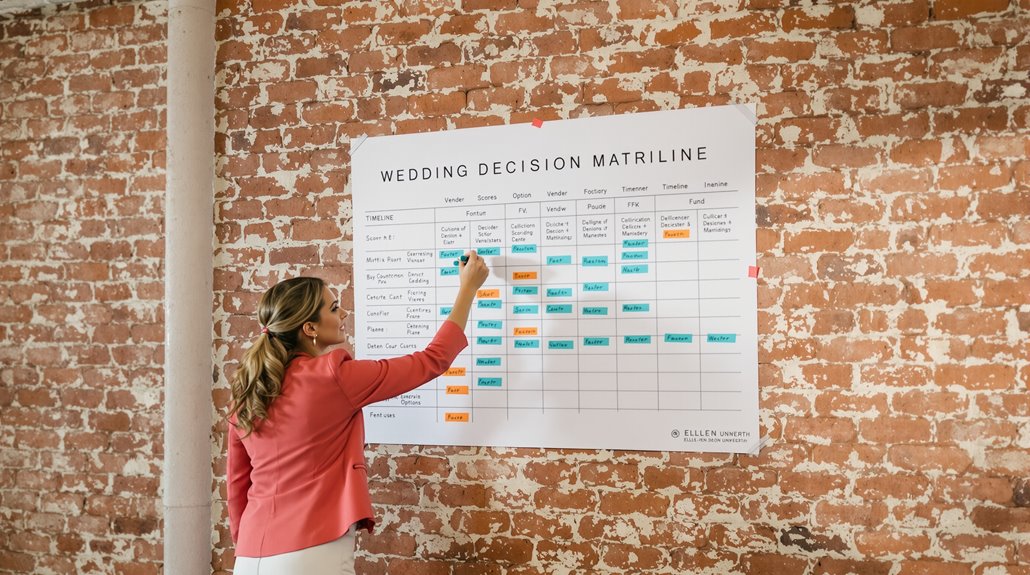
Crafting your wedding timeline can feel like juggling flaming swords, but a decision matrix is your non-negotiable secret weapon. It’s time to move from chaos to clarity. A decision matrix helps you compare options by scoring them against criteria like vendor availability, budget impact, and planning complexity. You’re strategically evaluating which timeline—6-month or 12-month—suits your high-energy lifestyle by using a spreadsheet.
Here’s the game plan: List your options and criteria, assign weights based on priorities, and score each option. We’re talking kinetic precision—think vendor quality at 30 points, budget at 25. Use Excel or Google Sheets for automation; this isn’t just busywork, it’s streamlined execution. Don’t just plan—pivot with purpose. Now, go execute with confidence.
FAQ (quick answers to common edge cases)
Stuck between two options? Strategically weigh the pros and cons with a quick checklist to pinpoint non-negotiables; it’s all about execution, not endless pondering. Always confirm vendor assumptions by asking direct questions about availability, pricing, and flexibility—because who has time for surprises? If your guest count swings by 20%, pivot quickly by adjusting your seating and catering plans, and always have a streamlined fallback strategy ready in case something goes sideways.
What if I’m stuck between two options?
When you’re juggling between two wedding planning options, it’s crucial to pivot with precision. First, break down each choice by key metrics: availability, budget, and guest logistics. Ask yourself: Which option aligns with your non-negotiables? With a 6-month timeline, you might lose top vendors but gain flexibility on off-peak dates. A 12-month plan offers breathing room for vendor selection and cost management but requires patience and long-term focus.
Strategically assess your priorities. If vendor variety and competitive pricing are top of your list, lean towards 12 months. Need speed? Embrace the controlled chaos and potential cost of a 6-month sprint. Decide, execute, and keep momentum high. Next, create a detailed checklist to streamline your chosen path and hustle smartly forward.
What’s the easiest way to reduce risk with either option?
While the wedding industry’s complexity might seem intimidating, reducing risk in your planning timeline is all about strategic execution. Whether you’re on a 6-month sprint or a 12-month marathon, hiring a seasoned planner is your ace card. They streamline decisions and guarantee you stay ahead of the curve. Prioritize booking your venue early—think 10 months out for 12-month plans and have backup dates ready for 6-month setups. Efficiently lock in key vendors like photographers and caterers. Use spreadsheets to track progress and pivot quickly when needed. Flexibility is non-negotiable; embrace it by preparing for guest conflicts and skipping save-the-dates. Delegate tasks like honeymoon arrangements to avoid overwhelm. Remember, the hustle is real, but so is your success.
What should I ask vendors to confirm assumptions?
How do you guarantee nothing falls through the cracks with your wedding vendors? Start by confirming their availability on your big day; that’s non-negotiable. Drill down into their prior experience at your venue—proof trumps promises. Ask about travel capabilities and related fees. Don’t get blindsided by their weekend booking frenzy. Know their arrival time and place, especially if you’ve got a tight timeline. Packages and pricing? Dissect them like a surgeon: deposits, payment plans, and any sneaky fees. Contracts are your Bible—read them thoroughly. Verify insurance, cancellation policies, and setup logistics. Logistics matter—equipment needs, headcount, and weather plans. Communication is king; set your cadence, demand references, and ascertain emergency contacts are locked in. Nail these down and execute like a pro.
What changes if my guest count swings by 20%?
You’ve nailed down your vendors and now it’s time to tackle the wild card: guest count. A 20% swing in attendance can pivot your entire strategy. Expect your budget to jump or shrink by the same percentage—catering, rentals, and staffing costs will accelerate or decelerate accordingly. For smaller weddings, this change hits harder, proportionally impacting your budget. Venue capacity? Watch those limits. A 20% increase might mean crammed spaces or pricy add-ons, while a decrease could leave you paying for empty chairs. Contracts often have thresholds that trigger extra costs—stay sharp on those details. Ready for the hustle? Lock in flexible contracts and reserve 10-15% of your budget for unexpected shifts. Execute with precision and gain control over chaos.
What’s the best fallback plan if something goes wrong?
When chaos hits, how prepared are you to pivot and execute a flawless Plan B? First, maintain a “hot list” of backup vendors—think photographers, caterers, DJs—complete with rates and availability. This isn’t optional; it’s your lifeline. Assign a day-of coordinator to handle vendor hiccups with military precision, avoiding fragmented decisions. Budget a 5-10% contingency fund for emergencies; that’s your safety net. For weather woes, have a tented plan B prepped and ready. Pre-book essentials like generators and heaters. Technical failures? Insist vendors bring backup gear and preload a “fallback” playlist on multiple devices. Health emergencies? Have an emergency contact sheet and first-aid kit ready. Remember, streamlined execution isn’t just a goal—it’s your wedding’s backbone. Ready to hustle?
Next steps: make the decision + execute the plan
Once you’ve got the wedding vision clear in your mind, it’s time to hit the ground running and make decisive moves. Start by picking your timeline—are you a 6-month sprint or a 12-month marathon? Your decision impacts every other step, so choose wisely. Here’s your no-nonsense action plan:
Choose your wedding timeline—6-month sprint or 12-month marathon—for a strategic start.
- Set non-negotiables: Lock down your must-have venue, vendors, and dates.
- Reserve essentials first: Book venue, planner, and top three vendors ASAP to avoid availability chaos.
- Create a shared project plan: Map deadlines, assign tasks, and track progress to keep execution laser-focused.
- Define scale and contingency plans: Decide on event size and prepare backup options to pivot quickly.
Now, execute like the Type-A pro you are!