

In the battle of the budgets, a 6-month wedding hits hard with $42K, while an 18-month game plan strategically shaves it to $35,450. Sprinting in six months means fewer vendor choices but slashes indecision and potential spend sprees. An 18-month timeline allows for deal hunting and can ease payment pace. Both demand you prioritize essentials, manage logistics like a boss, and avoid the “Pinterest trap.” Curious to see how timelines alter the game?
Quick verdict: 6-Month Wedding vs. 18-Month Wedding (who each is best for)
So, you’re staring down the barrel of wedding planning and wondering—6 months or 18? With a short vs long engagement cost in mind, your choice impacts the budget. Here’s the quick scoop:
- 6-Month Sprint: Perfect for decisive duos who thrive under pressure. You gain savings from restricted timelines, avoiding vendor premiums. Your stress-resistance turns chaos into streamlined simplicity. According to Columbia University research, shorter planning windows help couples avoid price inflation from extended vendor negotiations.
- 18-Month Marathon: Suits those who prefer to methodically spread costs. It allows strategic vendor negotiations and aligns payments with income cycles—ideal for financial savers. The National Average engagement length in the U.S. is about 13 to 18 months, providing a benchmark for planning timelines.
- Budget Impact: Short engagements reduce costs by limiting options and decisions, while longer ones offer payment flexibility but might tempt overspending.
Reality Check: Choose based on your hustle tolerance. Can you pivot quickly or prefer a slow march to the altar?
At-a-glance comparison: 6-Month Wedding vs. 18-Month Wedding
When it comes to planning your wedding, you’ve got two main timelines to choose from: the 6-month sprint or the 18-month marathon. Does longer planning cost more? Let’s break it down. In project management terms, a longer timeline can mean strategic savings, but also higher venue and catering costs if not managed well. The average venue costs in the U.S. range from $5,500 to $18,000, with significant regional variations. If you’re considering a name change after marriage, it’s important to understand the official guide for updating your Social Security information and accessing benefits. Here’s a quick glance:
| 6-Month Wedding | 18-Month Wedding |
|---|---|
| Higher deposit needs | More time for savings |
| Fewer vendor choices | Better vendor deals |
| Fast-paced execution | Room for adjustments |
| $33,000 average | Potential $5,400 savings |
The 18-month timeline allows for more installment plans, potentially saving $5,400. Still, focus on streamlined decisions and hustle-smart shortcuts to guarantee your wedding gets the job done efficiently. Ready to pivot? Start listing your non-negotiables now.
Define the options (so you’re comparing the right things)
Before you jump into wedding planning, it’s essential to understand your timeline options: the 6-month sprint or the 18-month marathon. The 6-month plan is all about speed and efficiency, using streamlined vendors and quick decisions, but beware of misconceptions like thinking you’ll always snag premium dates or avoid rush fees. On the flip side, the 18-month plan offers breathing room for peak bookings and bespoke touches, but don’t assume it’s the only way to get what you want—both have their strategic merits. Understanding how family dynamics in wedding planning can influence decisions is also crucial, as they often impact both timelines and budgeting approaches. Proper organization and dedication are essential for successfully planning a wedding in 6 months, as this timeline requires prioritizing major decisions early and maintaining clear communication with vendors.
6-Month Wedding: what it is, what it includes, and the common misconceptions
Planning a wedding can feel like steering a high-stakes project, and when your timeline is tight, every decision counts. A 6-month wedding is a sprint, not a marathon. You’re executing rapid-fire bookings for essentials—venue, caterer, photographer—while strategically budgeting and drafting your guest list in the first month. The hustle includes accelerated dress alterations (3-4 months needed) and crafting a detailed day-of timeline. Common misconceptions? Thinking all vendors are magically available or assuming peak season venues can be secured last minute. Full customization of wedding attire might be challenging due to the time constraints. Full customization? Not in this window. Stress without a month-of coordinator? Almost a guarantee. Pivot with intention: assemble an emergency kit and delegate day-of tasks. Reality Check: A tight timeline limits luxury; prioritize essentials and execute with precision. Couples under a time crunch may benefit from understanding the psychology of marriage planning, which can help manage expectations and strengthen communication during the whirlwind process.
18-Month Wedding: what it is, what it includes, and the common misconceptions
A wedding timeline is like a choose-your-own-adventure book, and the “Month Wedding” options are your main characters. With a 6-month wedding, you’re in hustle mode, strategically booking vendors and finalizing essentials like guest lists and budgets. It’s a fast-paced, no-nonsense sprint where you focus on executing core elements: venue, attire, and key vendors. Misconceptions? That you can nab any vendor without a fight or that a custom dress fits like a glove in weeks—spoiler, it doesn’t.
In contrast, the 18-month wedding is your marathon. You’ve got time to secure high-demand venues, send save-the-dates, and develop a detailed vision. It’s all about building in buffers for vendor selection and custom elements. Reality Check: Both timelines require laser-focused planning. In either case, wedding coordinators can serve as liaisons with vendors and provide coordination services to help keep everything on track.
Cost breakdown (upfront vs hidden costs)
Knowing the difference between upfront and hidden costs in your wedding budget is essential for keeping your planning on track. Upfront costs, like venue rentals and vendor deposits, are what you’ll see first on your checklist, but don’t let those hidden fees—like overtime charges and gratuities—catch you off guard. In California, for instance, wedding venue costs can range significantly based on the time of year, with peak season months like April, May, September, and October being more expensive. If you’re considering a destination or themed celebration, you might find inspiration by exploring Virginia’s charming historic venues, which often come with their own set of unique pricing structures and potential hidden fees. By strategically comparing line-item costs and understanding what really drives changes, you can keep your budget as controlled as your wedding day chaos.
Line-item cost comparison by tier/budget
You’re about to begin the wedding planning equivalent of a full-throttle project sprint, and we’re here to help you navigate the cost maze like a pro. Strategic budgeting is non-negotiable, especially when comparing a 6-month versus an 18-month wedding timeline. Here’s a streamlined breakdown to help you pivot smartly:
| Item | 6-Month Wedding | 18-Month Wedding |
|---|---|---|
| Venue | $8,000 | $6,000 |
| Catering | $12,000 | $10,250 |
| Photography | $4,500 | $3,200 |
| Lodging | $5,000 | $4,000 |
| Hidden Costs | $2,500 | $2,000 |
Identify upfront and hidden costs early. Use spreadsheets to keep your numbers precise and actionable. For the most reliable results, remember that practical wedding catering tips can help you stay organized and avoid unexpected food and service expenses. Hustle smartly to save thousands—because every dollar saved accelerates your big-picture goals. Ready to execute? Let’s go. Considering that the average American wedding cost in 2024 is $33,000, it’s crucial to manage your budget effectively to avoid exceeding this amount.
What actually drives cost changes
While wedding planning might seem like orchestrating a symphony of chaos, knowing the real drivers behind cost changes can turn you into the maestro of your budget. Strategically, it’s critical to understand the upfront versus hidden costs that can sneak up on you. Here’s the breakdown:
- Vendor Pricing: Long lead times secure lower rates, but short timelines invite rush fees. Those can balloon your budget faster than you can say “I do.” Booking entertainment through a wedding vendor marketplace can also help you compare prices and find deals tailored to your timeline.
- Contractual Add-ons: Venue service charges and sneaky gratuities can add 15-25% to costs. Don’t let these hidden fees catch you off guard.
- Logistics: Rentals, delivery, and emergency orders stack up. Streamline your logistics plan to avoid last-minute chaos.
Keep in mind that sales tax applies to wedding expenses, so it’s prudent to budget an additional 5%–8% of each line item for taxes. Reality Check: Short timelines mean higher costs. Plan early, execute flawlessly.
Planning workload & logistics impact
You’re juggling time, complexity, and coordination in wedding planning like it’s your side hustle, so let’s break it down. Short timelines mean vendor availability is a non-negotiable stressor, demanding quick decisions and ready-to-go options. On the flip side, longer schedules give you the luxury of strategically piecing together bespoke elements while reducing the chance of logistical chaos. Applying project management principles from MIT OpenCourseWare can help you prioritize tasks, manage deadlines, and streamline communication no matter your timeline.
Time, complexity, and coordination differences
Planning your wedding timeline is like playing a high-stakes game of Jenga. You’re balancing complexity, coordination, and time, each decision impacting the next. Here’s what you need to know:
- Short Timelines: In 6 months, you’re in rapid-fire mode. Decisions are quick and often reactive. You’ll streamline by sticking to ready-to-order solutions and prioritize the non-negotiables like venue and catering.
- Longer Timelines: An 18-month plan lets you execute decisions strategically with more stakeholder input. You can take your time, compare vendors, and avoid bottlenecks by sequencing tasks intentionally.
- Coordination Load: Six-month weddings demand relentless vendor communication—think of it as your second job. With 18 months, you stagger vendor meetings, easing the weekly hustle.
Reality Check: Faster isn’t always better—sometimes it’s just faster.
As you plan, remember that nutrition and wellness for wedding preparation can make a significant impact on how you feel throughout the process and on your big day.
Vendor availability + flexibility considerations
Securing vendors is like orchestrating a symphony; you’ve got to align the right players at the right time to create a masterpiece. With a 6-month wedding timeline, flexibility isn’t just a nice-to-have—it’s non-negotiable. You’re maneuvering a complex matrix of availability, especially for high-demand vendors. Here’s how it breaks down:
- Venues: Book venues 12-18 months in advance; 6-month plans mean fewer choices. Be ready to pivot to off-season or weekday options.
- Planners: Lock in planners 9-12 months out to steer the ship. Early engagement guarantees precision and streamlines vendor selection.
- Photographers: High-demand photographers fill fast. Securing them 12-15 months ahead captures your day with style.
Interestingly, research from Cornell University found that the amount spent on weddings can influence marriage duration, adding another layer to consider as you weigh vendor choices and planning timelines.
Reality Check: In short timelines, compromise is your secret weapon. Prioritize and execute.
Guest experience impact
You know your guests will notice every detail, so let’s talk real talk about how timing affects their experience. Longer planning periods mean you can strategically execute those extra touches—think personalized welcome bags and bespoke entertainment—that make guests feel special. On the flip side, shorter timelines might mean trimming the extras, but don’t stress; focus on nailing the essentials like food and flow to guarantee everyone leaves happy.
How guests perceive it + where friction shows up
When it comes to guest experience, execution is everything. Your wedding’s perceived value hinges on strategic planning and thoughtful execution. Here’s where friction often shows up:
- RSVP Management: Streamlined tech tools, like online RSVPs, are non-negotiable. They reduce friction and enhance guest satisfaction.
- Travel Coordination: For out-of-town guests, timely communication about travel deals and accommodations is essential. It gains trust and makes attendance more attractive.
- Expectations vs. Reality: Guests equate high-quality food and seamless logistics with a top-tier experience. A six-month timeline can strain these expectations if not executed with precision.
Best-fit scenarios (choose based on constraints)
If you’re looking to execute a wedding in six months, focus on off-season venue availability and smaller guest lists to streamline logistics and keep costs in check. Meanwhile, planning over 18 months allows for installment plans on luxury locations and strategic savings, giving you the flexibility to book premium vendors without stress. Whether you’re ready to hustle or prefer a methodical approach, prioritize your non-negotiables to make the smartest choice for your timeline.
Choose 6-Month Wedding if…
Executing a seamless wedding within six months is not just possible—it’s a strategic move for those who thrive on precision and momentum. If you’re ready to ditch the “bless and stressed” for a streamlined approach, consider these scenarios:
- Budget Constraints: Venues and suppliers offer last-minute deals, letting you focus spending on your top three priorities without expense snowballing.
- Tight Timeline Preference: Embrace frequent deadlines to maintain engagement excitement and make swift, decisive choices.
- Stress Reduction: Shorter timelines minimize overthinking and external opinions, keeping your original vision intact and fostering a relaxed atmosphere.
Choose a six-month plan if you crave efficiency over tradition and are ready to pivot and accelerate towards a memorable, non-negotiable celebration. Get your timeline rolling now!
Choose 18-Month Wedding if…
Choosing an 18-month wedding timeline is a strategic move for those who refuse to rush into chaos and prefer a well-orchestrated plan. If you’re driven by deadlines and demand efficiency, this timeline delivers:
- Financial Savings: Spread vendor payments to reduce strain and tap into off-season discounts. You’ve got time to budget and save effectively—hello, tax savings and lower insurance rates.
- Vendor Availability: Lock in top-tier talent without fighting for dates. Early bookings mean snagging that high-demand photographer or dream venue.
- Detailed Planning: Craft a bespoke event with time for DIY projects and trend exploration. Plan meticulously without the frantic scramble.
Reality Check: 18-months isn’t a license to procrastinate. Stay disciplined, use checklists, and tackle tasks systematically.
Real-world scenarios (examples with numbers)
Let’s cut to the chase with three real-world scenarios that break down guest count, budget, and priorities. Imagine a 100-guest wedding in Texas, where you strategically allocate $30,000, emphasizing venue and catering without skimping on quality. Or consider a Florida bash for the same crowd, with a $35,000 budget prioritizing a killer beachfront venue and exceptional photography.
3 sample scenarios: guest count + budget + priorities
Ever wonder how strategic planning transforms wedding chaos into controlled magic? Let’s break it down. Imagine this: a 6-month wedding for 60 guests versus an 18-month affair with 150 guests. In six months, you’re prioritizing venue and catering with a budget of $19,500–$22,500. Fast decisions and a reduced guest list streamline the process, but expect rush fees. Now, for the 18-month marathon, you’ve got 150 attendees and an average budget of $33,000–$36,000. Here, you’ve got time to snag discounts and spread costs.
| Scenario | Guest Count | Budget Range |
|---|---|---|
| 6-Month Wedding | 60 | $19,500–$22,500 |
| 18-Month Wedding | 150 | $33,000–$36,000 |
Reality Check: Guest count pivots are your budget’s secret weapon.
Common mistakes (and how to avoid them)
When you’re juggling a wedding with a packed schedule, the last thing you need is a budget that spirals out of control. Avoid chaos by strategically planning each step. Here’s how:
- Budget Realistically: Initial budgets are just estimates. Track every vendor quote and allocate a contingency fund for those sneaky hidden fees.
- Manage Your Timeline: Average delays can hit 37 minutes. Hair and makeup alone take 15-20% longer than planned. Build buffer time to keep things moving smoothly.
- Guest List Control: It’s tempting to invite everyone, but exceeding venue capacity is a fire hazard. Match your list to the reception site’s max to avoid turning guests away.
Reality check: Controlled chaos is your friend—plan, execute, pivot. You’ve got this.
Copy/paste decision matrix template
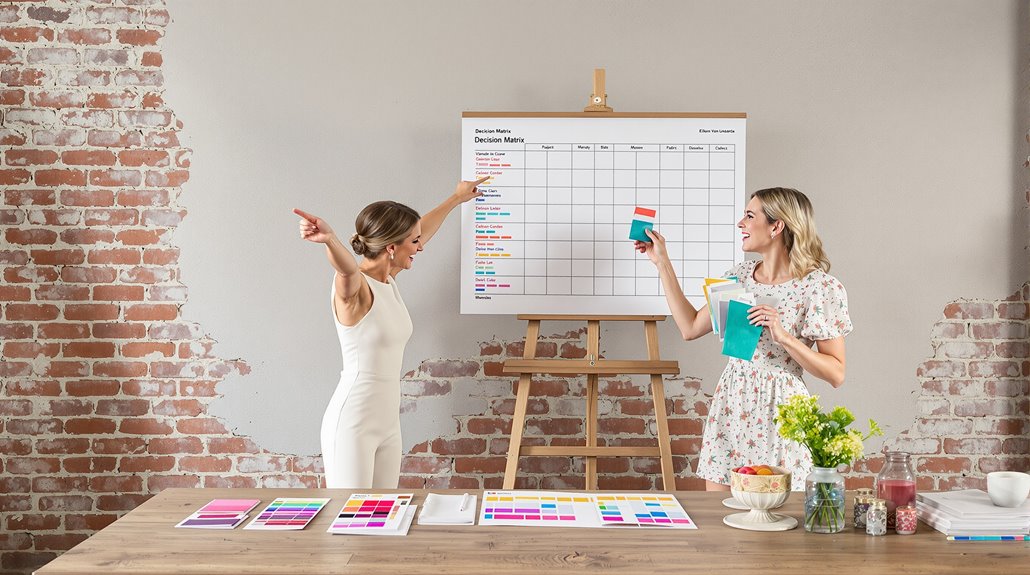
Ditch the guesswork and streamline your wedding planning with a decision matrix that acts like your personal project manager. This template transforms wedding chaos into a controlled, strategic operation. Start by listing your options: venues, vendors, timelines—whatever you’re juggling. Then, define criteria: cost, availability, capacity, quality, and flexibility. Assign weights to each—what’s non-negotiable? Score each option, tally the totals, and let numbers guide your choices. Use a scoring scale (1-10) and don’t forget the must-have filter to eliminate the impossible. Lock those weights; you don’t want anyone accidentally messing with your well-oiled system. Conditional formatting? Yes, please. Highlight top contenders and watch decision-making accelerate. Snapshot versions before changes; your audit trail is gold. Now, execute.
FAQ (quick answers to common edge cases)
Stuck between two options? We’ve all been there—just pivot and ask vendors the hard questions to confirm your assumptions. If your guest list swings by 20%, prepare to streamline the logistics and have a solid fallback plan ready to execute when things go sideways.
What if I’m stuck between two options?
How do you strategically choose between two wedding options without losing your mind? Think of it as launching a startup. First, clarify what’s non-negotiable—guest count or dream venue? Next, use a timeline to map out vendor bookings. If you’re eyeing a 6-month timeline, prioritize essentials like venue and photographer, knowing some high-lead-time vendors might be out. Consider the 18-month plan if you want peak dates and better rates. Compare location costs—Texas vs. New York—to understand budget impact. Remember, a hybrid approach—booking essentials early, filling gaps later—offers flexibility. Checklists are your best friend here. Finally, execute your choice with confidence and move on. Reality Check: The perfect plan doesn’t exist. Embrace the hustle, not the stress.
What’s the easiest way to reduce risk with either option?
Why take unnecessary risks when you can pivot strategically to minimize them? Executing a wedding in 6 or 18 months requires smart moves. First, nail vendor reliability with detailed contracts and a hot list of backups. No one wants a no-show DJ—prevention is key. Financial protection isn’t an option; it’s non-negotiable. Set up a 10-15% contingency fund and purchase wedding insurance. Track every penny like it’s an Olympic event. Weather? It’s unpredictable, but your response doesn’t have to be. Have tents ready and indoor spaces booked as a safety net. Finally, operational continuity means building in buffers and assigning clear roles. People mess up; systems don’t. Next step? Review your checklist and tighten any loose bolts.
What should I ask vendors to confirm assumptions?
Ever wonder what you should really be asking your vendors to keep assumptions airtight? Let’s get strategic. First, confirm their availability on your wedding date—non-negotiable. Verify their experience at your chosen venue; familiarity accelerates execution. Pin down their maximum weddings per weekend to avoid stretched resources. Travel? Check willingness, fees, and backup plans. Explore packages and pricing: understand what each includes and any hidden costs. Don’t skip the contract; review cancellation policies and insurance coverage. Lock in logistics—arrival times, equipment needs, and any meal requirements. Demand crystal-clear communication: how often, who’s your point of contact, and how they handle last-minute pivots. Finally, request recent references to guarantee they get the job done. Next step? Create a vendor comparison checklist.
What changes if my guest count swings by 20%?
Envision this: your guest list swings by 20%, and suddenly, your wedding budget‘s doing the cha-cha. A 20% increase means you’re adding $256-$375 per guest. That’s thousands more on catering, bar, and decor—no small change. Pivot strategically: evaluate what’s non-negotiable and where you can streamline. Conversely, a 20% decrease frees up $1,000-$3,750, letting you upgrade to luxe elements like premium blooms or designer attire. Remember, fewer guests mean fixed costs like venue and photographer spread thinner per head. It’s project management 101—reallocate those savings smartly. Don’t just chase the numbers; make intentional choices that reflect your curated cool. Next step? Immerse yourself in timelines and metrics to see how these swings impact your big day agenda.
What’s the best fallback plan if something goes wrong?
When chaos knocks, are you ready to pivot? Smart wedding planning means having a rock-solid fallback strategy. First, keep a prioritized list of vetted backup vendors. Check availability 2–4 weeks in advance. Contracts should include cancellation clauses and liability insurance. Secure a standby vendor for day-of emergencies—someone prepped to swoop in if chaos strikes. For outdoor weddings, an indoor backup is non-negotiable. Prebook tents and weather gear. Stash emergency kits with essentials like sewing supplies and over-the-counter meds. Redundancy is key: spare AV gear, backup media capture, and extra wardrobe items. Assign a decisive emergency coordinator. They’ll be your chaos commander, ensuring every pivot is seamless. Ready to hustle? Execute, adapt, and keep the momentum going!
Next steps: make the decision + execute the plan
Once you’ve decided on the wedding timeline that fits your life—whether you’re taking the scenic 18-month route or sprinting the 6-month dash—it’s go time. Now, let’s get strategic:
Choose your ideal wedding timeline—scenic 18-month journey or the 6-month sprint—and get ready to strategize.
- Book your venue and caterer ASAP. These are non-negotiable, high-impact decisions that set the stage for everything else. With longer timelines, you’ve got leverage—use it.
- Map out a cash-flow plan. Calculate monthly savings targets; remember the 18-month plan means less monthly stress—about 33% of the 6-month savings.
- Lock in key vendors early. Photography? Entertainment? These demand deposits months ahead. Get them signed before they’re snagged by someone else.
Ready to execute? Streamline your approach and leverage early wins. Remember, this isn’t a fairy tale, it’s a project—and it’s your job to keep it on track.