

Got a boardroom to conquer and a wedding to plan? Crush your 6-month wedding plan with precision and flair. Lock down your venue and priority vendors ASAP—it dictates everything. Run your RSVPs like a project manager, and keep contracts tighter than your schedule. Focus on execution over perfection. Set goals, crank out deliverables; remember, chaos is just controlled potential. Want to skip the “bless and stressed” routine? Tune in, because we’ve got this streamlined down to an art.
Timeline overview: 6-Month at a glance
You’ve got six months—let’s make every second count. Welcome to 6 month wedding planning, where hustle meets precision. This quick wedding planning journey requires a 6 month timeline that moves at warp speed. Here’s your strategic game plan:
- Venue & Date: Secure your venue and lock down the date. Prioritize all-inclusive options to streamline vendor chaos. Hyatt offers official wedding venues and celebration packages designed to simplify your selection and planning. Flexibility with choices may be necessary to ensure all arrangements are made smoothly.
- Key Vendors & Contracts: Book your must-have pros—photographer, caterer, entertainment—pronto. Review contracts; non-negotiable, folks.
- Guest Communication & Logistics: Launch your wedding website, send those save-the-dates, and open RSVP tracking. You’re pivoting here, not pivot tables.
- Attire, Beauty & Rings: Order attire and schedule beauty trials. It’s all about timing and execution, not hoping and waiting.
Execute this timeline with precision, and you’ll transform controlled chaos into curated cool.
Milestones that make or break this timeline
Let’s kick this planning into high gear with the milestones that can either turbocharge your timeline or send it skidding off the rails. Short engagement planning demands precision and hustle. Here are the non-negotiable milestones:
Rev up your wedding planning with these critical milestones to keep everything on track!
- Venue Booking: Execute immediately. Think off-peak dates for more options and savings. Secure separate spots for ceremony and reception without a hitch. If you’re looking for unique locations, the Texas wedding venues directory offers a wide range of options across the state.
- Vendor Securing: Prioritize essentials like your photographer and caterer. Bundle services for a streamlined approach and monthly check-ins.
- Guest List Finalization: Get it locked in pronto. Use a tracker for addresses and keep RSVPs on a tight leash. Flexibility is essential due to potential vendor and venue unavailability, making it crucial to have backup options in place.
- Attire Acquisition: Start shopping now. Schedule fittings and plan for alterations early.
Reality check: Miss these milestones, and you’ll face chaos. Stay sharp and proactive!
Phase breakdown (what to do when)
Let’s break this wedding planning marathon into four high-octane phases that keep you on track and in control. Phase 1 is all about setting your non-negotiables and decision order, so you know exactly where you’re headed. Purdue University Cooperative Extension research recommends establishing your wedding budget priorities early to avoid overspending and unnecessary stress. Then, shift into Phase 2’s booking sprint, securing your venue and priority vendors with contract hygiene that would make a lawyer proud. Make sure to create a wedding planning checklist to stay organized and track essential information throughout the planning process.
Phase 1: Foundation (set constraints + lock the decision order)
When kicking off your wedding planning journey, establishing a solid foundation is key—think of it as the blueprint for a well-executed project. Begin by setting non-negotiables: define your total budget, fix your guest count, and pick your preferred month or season. Research from Columbia University consumer economics studies highlights that the most effective wedding budgets start with clear cost ceilings and a prioritized guest list. Decide on the ceremony style and level of professional support to streamline decisions. Lock your decision order to reduce rework: budget first, then guest list, followed by date and venue. This strategic sequence guarantees everything aligns with your capacity and cost constraints. Create a master checklist and shared calendar to keep momentum. Adopt a centralized planning platform for efficiency. Remember, this phase is about intentional decisions that get the job done. Make sure to align values with expectations for wedding planning, as it sets the tone for every decision made from this point forward. Ready to pivot to booking? Let’s move!
Phase 2: Booking sprint (venue + priority vendors + contract hygiene)
Now that you’ve laid the groundwork, it’s time to sprint into action with the booking phase. First, prioritize locking in your venue by considering non-negotiables like capacity, date, and ceremony type. Peak venues book up fast, so act swiftly. For an elevated experience, consider exploring official wedding venues offered by Marriott International, which often provide tailored packages and professional event support. Next, strategically book priority vendors—photographer, videographer, planner—because they’re in high demand. Create a shortlist, verify references, and secure provisional bookings to keep momentum. Immerse yourself in contract hygiene, confirming key elements: service specifics, payment terms, and insurance requirements. It’s important to consider purchasing event insurance for cancellation or rescheduling to protect your investment. Negotiate smartly by bundling services or opting for off-peak dates. Move fast, but don’t sacrifice clarity—review cancellation policies and dispute resolutions. Stay sharp and execute with kinetic precision. Up next: design and logistics—don’t worry, we’ve got that covered.
Phase 3: Design + logistics (build the plan without overbuilding)
As you immerse yourself in Phase 3, know that your mantra is “build the plan without overbuilding.” Start by locking in your core design decisions—these are your wedding’s backbone. Nail down your primary style and priority list to streamline decisions and avoid the dreaded decision fatigue. Keep your color and material palette tight and cohesive. When it comes to food, consider early wedding catering choices that fit your overall vibe and guest needs. Strategically choose your guest-flow model and formality level to keep logistics sane.
Next, collaborate with vendors efficiently: get clear scopes, limit design revisions, and align on a unified floorplan. Produce a master event timeline highlighting major milestones—not every single second. Embed strategic buffers and assign a timeline owner to pivot when needed. Create a detailed site map for seamless setup. Remember, wedding day logistics matter because they reduce stress and ensure everyone knows where to be and when. Now, go execute with confidence!
Phase 4: Final 30 days (confirmations + buffers + day-of execution)
It’s time to put your wedding plan into motion by accelerating into the final 30 days. Confirm every vital detail—vendors, guest counts, venues, and honeymoons. Get that marriage license locked down. Don’t forget to review the San Bernardino County marriage license requirements to ensure you bring the right identification and complete the process smoothly. With RSVPs wrangled, firm up your seating chart using a trusty spreadsheet. Schedule a final planner meeting to nail down the timeline—precision is key. Embrace the hustle as you break in shoes, steam the veil, and finalize those shot-lists. Buffers are your best friend; send RSVP reminders, and make sure hotel bookings are set. Delegate day-of tasks; your wedding party’s your team. The day of execution demands a venue walk-through and a plan B for weather. Stay sharp, stay strategic, and execute flawlessly. Remember, prioritizing essential tasks is critical to managing your time effectively and ensuring a successful wedding day. Reality check: Overlooked details can derail timelines.
Weekly rhythm (how to stay on track without burning out)
When you’re knee-deep in wedding planning while juggling a high-octane career, your weekly rhythm needs to be a finely-tuned machine. Here’s how to execute without burning out:
- Time-Box Your Meetings: Schedule a weekly planning meeting with a set agenda and a visible timer. Treat this as non-negotiable to keep the momentum. Scheduling regular planning meetings can reduce stress and improve relationship dynamics, leading to a more enjoyable planning experience.
- Batch Tasks Strategically: Group similar tasks to minimize context-switching. Break them into micro-tasks—perfect for lunch breaks or commutes. According to marriage psychology research, effective task management can help reduce conflict and foster teamwork during wedding planning.
- Leverage Downtime: Use lunch breaks and commutes for vendor calls or checklist updates. Block off lighter workdays for focused planning time.
- Delegate Smartly: Assign planning areas to trusted partners or hire pros for high-cost tasks. Use vendor templates to streamline decisions.
Reality check: Overcommitting? Time-box realistically to avoid burnout.
Printable timeline + tracker
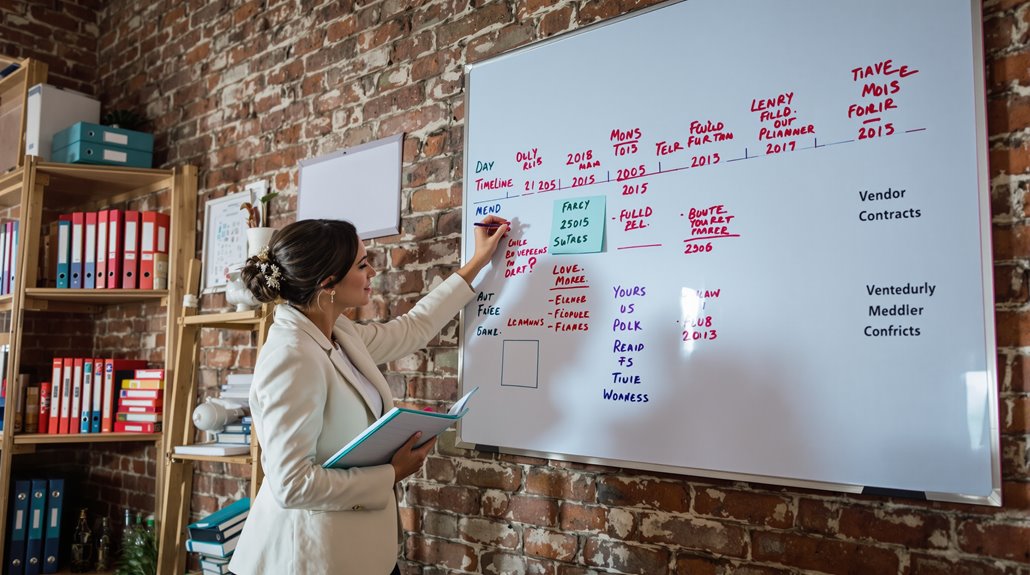
Streamline your wedding planning chaos with our no-nonsense printable timeline and tracker—your ultimate project management tool for the big day. This isn’t about dreamy pastels; it’s strategic execution. You’ll find a one-page chronological timeline and multi-sheet binder-style trackers that dissect your wedding logistics into manageable chunks. Think high-contrast typography and printer-friendly designs that respect your ink budget while keeping everything legible. Excel your way through cash flow with calculated fields for deposits and due dates. Delegate with power using task names, priority levels, and status fields. Export mobile-friendly PDFs for on-the-go access, and bless your sanity with automated reminders. Gain control over controlled chaos. Your next move? Print, pivot, and execute like the pro you are. For even more efficiency, you can browse Thumbtack wedding service professional marketplace directory to quickly find and hire trusted wedding vendors.
Common timeline failure points (and fixes)
While many dive headfirst into wedding planning with Pinterest dreams, savvy professionals know that execution demands precision and foresight. Common timeline failure points can derail even the most meticulously crafted plans. Here’s how to avoid them:
- Time Management: Underestimate tasks and you’ll face delays. Create a realistic timeline with built-in buffer time—non-negotiable for handling unexpected chaos.
- Communication: Don’t leave anyone in the dark. Share the detailed timeline with all vendors. Strategic check-ins are your secret weapon.
- Budget Oversight: Track every expense. Failing to do so leads to financial bottlenecks and compromises quality.
- Detail Neglect: Skip walkthroughs and rehearsals at your own risk. Execute a streamlined checklist to avoid logistical nightmares.
When working with vendors, it’s also essential to review FTC consumer protection guidance to ensure your wedding contracts are clear, fair, and legally sound.
Next steps? Implement these fixes and watch your wedding plan gain unstoppable momentum.
FAQ
Got questions about steering your wedding planning like a pro? Let’s tackle those head-on: when availability forces tradeoffs, remember that prioritizing your non-negotiables keeps things on track. Start by booking your venue, skip the unnecessary fluff, and streamline decisions with shared checklists to handle last-minute changes like a seasoned project manager.
What if availability forces tradeoffs?
When availability forces tradeoffs, you’ve got to pivot strategically and embrace flexibility as your secret weapon. Prime Saturdays might be booked, so consider a weekday or Sunday. It’s cost-effective and opens up more venues. Short timelines? Opt for less-central venues or off-peak seasons. Flex your ceremony time—late afternoon offers more options. Backup-date planning? Non-negotiable. Reserve alternates or have an on-call coordinator ready. Vendor availability tight? Hire mid-tier pros or bundle services like venue plus catering. Short notice means smaller guest lists—focus on VIPs first, then expand invites. Virtual attendance is a smart move for inclusivity. The reality check: planning a wedding in six months demands agility and smart choices. Ready to hustle? Streamline it like a pro.
What’s the first vendor to book?
You’re in the thick of it—juggling timelines, budgets, and vendor calls like a boss. First up, lock down your wedding venue. It’s non-negotiable. Your venue dictates your date, budget, and even which vendors you can choose—think caterers and rentals. Plus, venues in high-demand areas book up 12–24 months out. Time isn’t on your side? Skip the stress and secure that space.
Consider a planner first if you’re diving deeper than day-of coordination. They’ll streamline budget strategy and vendor negotiations, minimizing legal risks. Got a specific priority—like a must-have photographer? Pivot! Secure them first. Stay flexible with your date and venue, and you’ll gain significant momentum. Next steps? Nail down your top vendors, pronto.
What can be safely skipped or simplified?
Even the savviest wedding planner knows the art of strategic trimming. Let’s streamline to accelerate your six-month wedding game plan. Cut ceremony fluff by nixing unity rituals and elaborate processionals—less rehearsal, more impact. Swap custom vows for concise traditional ones and skip the receiving line; mingle at cocktail hour instead.
Paper goods? Ditch printed programs and save-the-dates. Use digital invites and a single-card suite to smash through decision blocks. Open seating or a seating chart kills the place card hassle.
Decor? Forget complex florals and custom signage. Opt for simple centerpieces and templated signs. Prioritize one lighting effect—more focus, less chaos.
Trim guest extras like welcome bags and multiple activities; one or two high-value options? Done. Keep it smart, keep it moving.
How do I keep decisions from dragging?
Decisions dragging? Let’s pivot to streamlined execution. First, establish a detailed timeline—non-negotiable deadlines keep momentum going. Short engagements mean less second-guessing, so commit early. Identify your top priorities: budget, convenience, aesthetic. Categorize everything—must-haves, nice-to-haves, not-important. A budget-first approach means prioritizing impactful choices like statement florals over fillers. Limit advice to your future spouse and one or two others—more opinions equal more headaches. Pinterest boards? Once you commit, stop scrolling. Collaborate with your partner on major decisions—venue, theme, guest list. Shared responsibility accelerates the process. Leverage your planner like a project manager—they’ll keep you on track while aligning with your vision. Remember, execution over perfection is key. Ready to move? Stay focused and hustle hard.
How do I handle last-minute changes?
Why does it feel like wedding plans love a good curveball? Because they do—so be ready to pivot. Strategically review vendor contracts for amendment clauses. This helps you know the non-negotiables: notice periods, fees, flexibility. Keep digital copies and a one-page summary handy. For guest-count chaos, use modular seating and a real-time RSVP tracker. Having reserve tables and a catering buffer (3–7%) means you’re not scrambling last-minute.
Create a master timeline with float blocks. This absorbs delays without derailing the day. Pre-assign a savvy on-site liaison to make real-time decisions. Draft emergency scripts for common hiccups—think guest flakes or vendor delays. Your next move? Set up a killer contact list. Gets the job done.
Key takeaways
In the whirlwind of wedding planning, three key takeaways keep you on track: prioritize, budget smartly, and execute like a pro. Your wedding isn’t just a day; it’s a project demanding precision. Here’s your no-nonsense guide:
- Prioritize Ruthlessly: Identify your top three non-negotiables. Let these pillars guide decisions when the clock’s ticking.
- Budget Strategically: Allocate funds wisely, with a buffer for surprises. Use an online tool to track every cent—it’s your financial lifeline.
- Execute with Confidence: Lock in your venue and key vendors first; they set the stage for everything else.
- Streamline Logistics: Send invites early, lock down accommodations, and create a seamless guest experience.