

To self-coordinate your wedding day, think CEO-level execution: it’s a freaking project, not a fairyland ride. Create a streamlined timeline where every moment’s accounted for—from the grand vows to the epic last dance. Address vendor logistics with military precision. Weekly meetings keep you sane; non-negotiable. Use Google Sheets like a boss to track those RSVPs. Want to dance without disaster? Make decisions, solve problems, and crush those timelines. Stick around and you’ll gain invaluable insights.
What you’ll accomplish (and what ‘done’ looks like)
When you’re managing your own wedding day like the boss you are, you’ve got to know what ‘done’ looks like, and it starts with strategic pre-wedding planning. Think of diy wedding coordination as your personal project management masterpiece. First, nail that initial consultation, review and sign your contracts like a pro, and gather those wedding details with precision. It’s about creating a bulletproof timeline and initiating vendor communications. Your self coordination guide needs all vendor details locked down, timelines shared, and venue logistics reviewed a month out. Fast forward to the final week, and you’re conducting vendor check-ins, preparing your emergency kit, and double-checking timelines. On the day, stay sharp, enforce timelines, and guarantee every move is executed flawlessly. Remember to engage with vendors and the wedding party to ensure clear and effective communication throughout the event. Before the big day, make sure you have backup plans in place for any potential issues that may arise.
Quick start (the short version)
Nailing your wedding day is like landing a plane: precision is non-negotiable, and there’s no room for guesswork. In a no coordinator wedding, you’re the pilot making sure everything executes seamlessly. Here’s your quick start:
- Strategize Timeline: Confirm vendor timings a month out, then craft a minute-by-minute schedule. Share it with all involved.
- Prepare Organizer: Assemble a three-ring binder with essential contacts, agreements, and timelines. Include ceremony and reception details to pivot effortlessly. Managing vendor relationships effectively can help you avoid common issues on your wedding day.
- Morning Essentials: Prioritize sleep, nutrition, and hydration. Allocate time for glam, pack an emergency kit, and double-check rings and licenses. Staying hydrated supports mental clarity and focus, ensuring you’re at your best throughout the day.
Execute these steps like a boss. Bless and stressed? No thanks. You’ve got this. With sharp planning and hustle, your day gets the job done.
Before you start: inputs you need
Before you plunge into the chaos of wedding planning, you need to arm yourself with the right intel. First up, establish a realistic budget. You’ve got to know where every dollar’s going, and what family contributions are on deck. A spreadsheet will be your best friend here. Don’t forget wedding insurance—because life happens. It’s also crucial to select wedding party members early on, as they will provide vital support during your ceremony and planning process. Be mindful of potential hidden fees that can inflate your overall budget, such as corkage and cake-cutting charges.
Next, nail down your guest list with military precision. Draft an initial list with both families and categorize by priority. Be ready to pivot as needed.
Finally, define your wedding style. Think beyond Pinterest to pinpoint your top three must-haves and non-negotiables. Here’s a quick breakdown:
- Budget: Spreadsheet, insurance, and spending limits.
- Guest List: Prioritize, categorize, and finalize addresses.
- Priorities & Style: Season, location, and personal touches.
Step-by-step process
Let’s get real about your wedding day strategy—think of it as a project with a clear trajectory. First, pin down your constraints: lock in your date range, budget ceiling, and non-negotiables. From there, we’ll systematically move through decision-making, build a timeline, and nail down your vendor commitments—because no one has time for chaos when precision gets the job done. Consider the importance of hiring a wedding coordinator to reduce stress and enhance the overall experience of your big day. It’s crucial to finalize your guest list early in the planning process, as it directly impacts your budget and venue choices.
Step 1: Clarify constraints (date range, budget ceiling, non-negotiables)
Understanding your constraints is the linchpin of a well-executed wedding day plan. First, lock down your date range. Popular dates book fast, so consider Fridays or Sundays for more flexibility and savings. Aim for a guest count that aligns with venue capacity and budget. Speaking of budgets, set a ceiling early—$33,000 is the average, but customize based on your needs. Allocate funds smartly: 28-32% for the venue, 20-25% for dining, and leave room for surprises with a 10-15% contingency fund. Identify non-negotiables like season, location, and must-have vendors. Many couples underestimate the impact of consumer economics on wedding spending patterns, so it’s essential to factor in inflation and changing market trends. Keep a spreadsheet tracking savings, contributions, and quotes. Secure deposits only after verifying constraints. Researching and securing venues early is crucial, as popular venues can book 12-18 months in advance. Ready to pivot through planning chaos? With these steps, you’re well on your way.
Step 2: Build the decision order (what to decide first so everything else is easier)
You’ve nailed down your constraints, now it’s time to get strategic with your decision-making order. First, establish your top three priorities. List them individually, then compare to find common ground. This sets your budget direction—where to splurge and where to save.
Next, tackle venue selection. Research online, tour shortlisted spots, and book early. Remember, the dream venue might require date flexibility. It is advisable to choose a venue 12-14 months in advance to ensure availability and secure the desired setting for your special day. Then, lock in your wedding style and theme. Use blogs and Pinterest for inspiration, but don’t let them dictate; create a vision board that guides every choice.
Finally, draft your guest list and choose your wedding party. Prioritize must-invite guests and discuss with family. For efficiency, select your best man and maid of honor first. Confirming your guest list early allows for effective scaling of the venue and catering. Now, you’re ready to accelerate towards the big day!
Step 3: Create the timeline (milestones + deadlines)
When it comes to orchestrating your wedding day timeline, think of it as your ultimate project management challenge—one where precision and momentum are non-negotiable. Creating a wedding timeline is essential for organizing the wedding day and ensuring a smooth flow of events. Start with the ceremony as your anchor point. Map out every event from morning preparations to the final dance. Factor in essential milestones like waking up, vendor arrivals, and guest buffers for those inevitable distractions. Strategically allocate time for each segment: 90 minutes for photos, 30-60 minutes for the ceremony, and sequential slots for reception activities. Remember, timing shifts is vital, so build in those buffers. Finalize your draft four weeks out, then distribute a streamlined version to vendors and the wedding party one week before. To ensure effective wedding planning, establish measurable criteria for vendor comparisons based on prioritized values. Precision gets the job done. Now, go execute that timeline like a pro!
Step 4: Execute vendor outreach (scripts + tracking)
Executing vendor outreach is where your wedding day vision begins to gain real momentum. It’s time to strategically communicate with vendors and guarantee your plans are executed flawlessly. Start with initial outreach scripts: introduce yourself as the coordinator, share your couple’s vision and mood board, and inquire about services within budget. Immerse yourself in communication preferences—email, text, Zoom—and set non-negotiable protocols. Efficient communication is crucial for valuable planning time, so ensure vendors respond within a reasonable timeframe.
Use real tools like Google Sheets or Trello to track vendor responses, proposals, and scheduling. Prioritize high-demand services like venues and bands early, because delays are not an option. Schedule interviews to assess vendor compatibility with your vision. Remember, it’s about proof-over-promises, so ask for work samples. To ensure vendors align with your wedding vision, make sure they have experience in your preferred themes and styles. Keep momentum with consistent follow-ups and pivot when necessary. Next, lock it down with contracts and deposits.
Step 5: Lock the plan (contracts, deposits, and contingency buffers)
Locking down your wedding plan is where the action truly accelerates. You’ve executed the outreach, now it’s time to strategically secure those contracts. Draft clear, written agreements with every vendor—no exceptions. Triple-check details like dates, times, and scope. Deposits are non-negotiable; they’re your commitment currency. A 50% standard deposit locks your date, and a missing deposit is a red flag. Keep an eye on payment schedules and cancellation policies—understand what’s refundable and what’s not. Contingency buffers? They’re your safety net for hidden fees and last-minute pivots. Verify insurance and flexibility clauses are outlined. Get granular with itemized lists, covering everything from rentals to responsibilities. Now, streamline your payment process and prepare labeled envelopes for final dues. To ensure clarity, specify explicit hours and overtime rates to avoid misunderstandings about time coverage.
Step 6: Run weekly check-ins (how to stay on track without spiraling)
Every successful project thrives on regular check-ins, and your wedding is no different. Set up weekly or bi-weekly mini-meetings with your partner to align on budget, guest list, and decor. Use these sessions to tackle concerns, celebrate wins, and divvy up tasks. Review major elements like the itinerary to keep everything running smoothly. It’s your strategic huddle to prevent details from slipping through the cracks. To ensure that all essential elements are covered, consider using a Decision-Priority Map to rank your wedding priorities effectively. Your secret weapon? A detailed timeline. Share it with vendors and the wedding party so everyone’s on the same page. Confirm vendor details one week out and adjust RSVPs two weeks prior. This isn’t fluff—it’s execution. Ready to pivot from chaos to control? Implement these check-ins and accelerate toward your big day with confidence.
Template you can copy/paste (checklist + tracker)
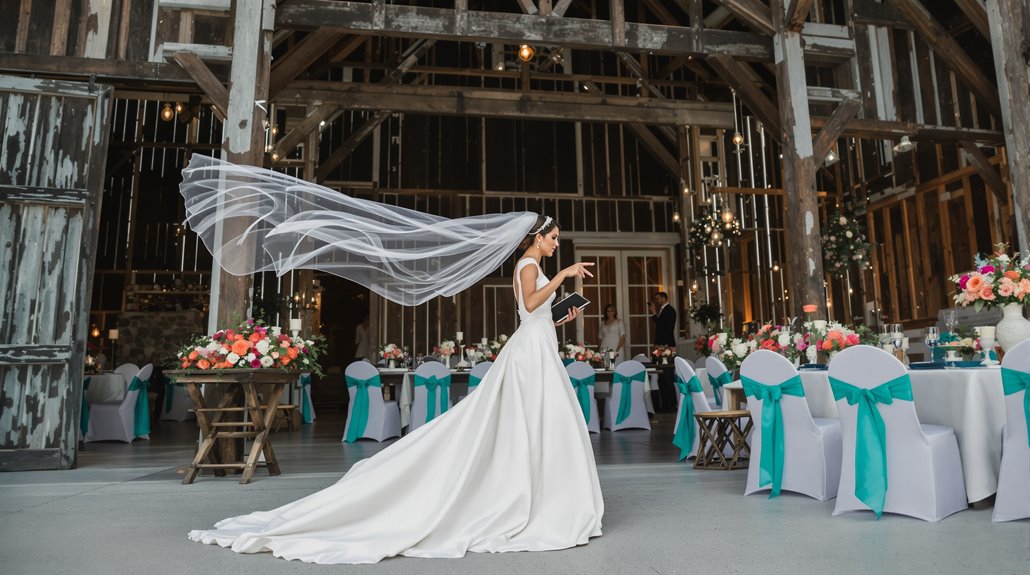
When the countdown to your wedding day feels like sprinting a marathon, having a killer template is non-negotiable. For the ambitious, time-strapped couple, you need a streamlined checklist and tracker that moves. Start by confirming every vendor’s arrival and responsibilities—don’t leave it to chance. Create a minute-by-minute schedule three weeks out and share it with everyone from your florist to your officiant. Pre-day, ascertain your wedding party knows their timings, and coordinate hair and makeup like a pro. Distribute digital checklists to vendors for clarity. On the day, execute with precision: from usher duties to meal timelines, everything needs your sharp eye. Keep a tracker handy to pivot in real-time. Act now; chaos is just controlled energy.
Common mistakes (and how to avoid them)
Even the most meticulously planned weddings can derail without careful attention to common pitfalls. Let’s keep you on track with precision and energy. Here are three major mistakes you can strategically avoid:
- Timeline Delays: Over 68% of weddings lag behind schedule. Hair and makeup take longer than you’d think—buffer time is non-negotiable. DIY morning tasks? Delegate or risk a domino effect.
- Lacking Vendor Contracts: Informal agreements are a minefield. Use detailed contracts for everything—date, time, costs, and cancellation terms. Protect yourself with legal agreements, not scraps of paper.
- Self-Coordination Exhaustion: Managing logistics single-handedly? Rookie move. Delegate like a pro to enjoy your day. Hire or assign a coordinator who gets the job done without missing moments.
Next step: reinforce your checklist with these insights.
FAQ
You’re juggling a million things, so let’s cut to the chase: how long should wedding planning take if you’re busy? The secret sauce is a streamlined timeline—think six months if you’re on top of it, or three with some hustle and smart delegation. Weekly, track your vendor responses, upcoming tasks, and any potential curveballs, because if a vendor’s ghosting you, that’s a non-negotiable red flag you can’t ignore.
How long should this take if we’re busy?
Let’s cut to the chase: you’ve got a bustling life, a packed calendar, and not a minute to waste on wedding fluff. For career-focused go-getters like you, a 9-month wedding timeline is your sweet spot, balancing efficiency with sanity. Start with a focused booking blitz—venue and major vendors should be locked in ASAP. This isn’t about dreamy visions; it’s about strategic execution. Invitations? Get those out 4 months before. Save-the-dates? 8 months prior. Crunch time hits 2-3 months out, shifting gears to execution mode. Confirm vendors, finalize seating charts, and hammer out the day-of schedule. Your aim? A streamlined, no-nonsense approach that gets the job done without sacrificing quality. Ready to pivot and accelerate? Let’s move.
What’s the minimum version that still works?
Efficiency is your mantra, and a 90-day wedding plan is your secret weapon. You’re not here for fluff; you’re here to execute. Streamline your focus on essentials that actually move the needle. Start by securing your venue date—reschedules are a real pain. Next, book high-priority vendors like your caterer and photographer. Create a basic timeline and blast it to your wedding party and vendors—clarity is king. Three weeks out, finalize vows, menus, and your shot list. One week out, pack essentials and rehearse that ceremony. On the day, track RSVPs, secure important documents, and have your emergency kit ready. Remember, the goal isn’t perfection; it’s getting the job done. Now, accelerate towards those next steps with confidence!
What can I safely delegate?
Why juggle everything on your wedding day when you can delegate like a pro? Streamline your to-dos by assigning repetitive tasks to others. Have a friend or gig worker handle invitation prep and mailing. Delegate guest list management and RSVP tracking to someone else—it’s a non-negotiable time-saver. Compile vendor contacts into one list for seamless handoffs. An assistant can be your vendor communication hub, ensuring every supplier knows their role. Avoid being the go-to for day-of questions by assigning an assertive timekeeper to manage the schedule and keep events moving. Trust decoration setup to a design-savvy mate, armed with visual guides for clarity. Ready to execute a killer wedding? Craft your delegation list and start checking off tasks like a boss.
What if a vendor isn’t responding?
Stuck in vendor radio silence? Let’s make some noise and get things moving. First, verify you’re using the vendor’s preferred communication channel—email’s usually a safe bet. Sometimes messages fall into spam or get lost in the shuffle. Send a polite follow-up after a few days. Still nothing? It’s time to pivot. High message volumes and inadequate staffing can slow responses, but you need a vendor who matches your momentum. If you’re ready to commit financially, responsiveness is non-negotiable. Aim for vendors who reply promptly; it’s a competitive edge. If unresponsiveness continues, consider moving on. Your wedding deserves swift action, not endless waiting. Remember, you’re managing a project, not chasing ghosts. Keep hustling forward.
What should I track weekly?
How do you keep the wedding train on track when life’s chaos tries to derail it? Nail down your weekly to-dos like a seasoned pro. First, chase those elusive RSVPs—your guest count can’t be a mystery novel. Pivot to vendor confirmations: lock down arrival times and finalize payments. Don’t let those details slip through the cracks. Strategically review ceremony and reception details; guarantee vows and menus are locked and loaded. Weekly attire check? Non-negotiable. Confirm beauty appointments and double-check your attire timeline. Speaking of logistics, keep tabs on your marriage license—it’s not just paper, it’s your wedding’s legal backbone. Reality Check: Don’t assume anything; assumptions are the enemy of precision. Execute with intention, and your wedding day will thank you.
Key takeaways
Let’s cut to the chase: executing a self-coordinated wedding demands strategic precision and a no-nonsense approach. You’re here to crush chaos with kinetic precision, not fluff around with tradition. Here are your non-negotiables:
Crush wedding chaos with precision—ditch tradition for strategic execution.
- Pre-Wedding Prep: Confirm every vendor arrangement three weeks prior. Develop a detailed event timeline, finalize your guest count, and don’t forget that marriage license.
- Week Before Tasks: Reconfirm vendor details, establish a solid communication plan, and verify all cultural or religious elements. Make sure eco-friendly practices are clear.
- Day Of Execution: Be the timekeeper, manage setups, and secure all wedding-day stationery. Oversee breakdown and pack-out like a pro.
This isn’t a Pinterest party—it’s a streamlined, executed event. Next steps? Engage with that checklist and make it happen.