
Wedding flower costs hit you with 14 line items? Here’s the playbook: From bridal bouquets (5-10% of budget) to those jaw-dropping chuppahs ($200-$5,000+), costs pivot on bloom choices, guest numbers, and local vs. exotic flowers. Don’t get blindsided by extras like cake table flowers or ceremony installations. Strategically manage your floral budget as if you’re herding cats and crunching numbers—precision’s your ally! Ready to dodge clichés and make your floral strategy unbreakable?
Cost snapshot
How much do wedding flowers really cost? Let’s break it down with precision. Wedding flowers cost can hit an average of $2,723, but don’t be surprised to see florist pricing vary wildly. Here’s what to expect:
- Range: Expect $700 to $2,500, with a comfortable mid-range around $1,500.
- Seasonal Pricing: First quarter peaks at $2,803, while summer dips to $2,698.
- Guest Impact: Small weddings average $1,343, but over 100 guests can spike costs to $3,282.
- Regional Differences: The Mid-Atlantic tops at $3,457, while the West offers a leaner $2,402.
- Budget Allocation: Allocate 8-10% of your total wedding budget to florals. Recent world events and supply chain issues have influenced flower prices, making strategic budget management even more essential. It’s crucial to prioritize tasks that enhance guest experience and satisfaction to ensure that your wedding planning remains on track.
Strategically managing your floral budget is non-negotiable. Pivot wisely to keep your wedding streamlined and executed with finesse.
What you’re actually paying for (cost structure)
Let’s dissect what you’re really shelling out for in your wedding flower bill—because clarity is power, and we’re all about power moves. Wedding flower costs aren’t just about the blooms; they’re a strategic compilation of artistry, logistics, and execution. Think of it as a high-stakes project. You’ve got the bridal party flowers—primary bouquets can hit $500 for premium peonies. Ceremony installations? Altar flowers range from $60 to $450, while chuppah setups could cost you up to $1,000. Reception centerpieces vary wildly, from $50 to $600 each, based on style and luxury. Every floral element, from the toss bouquet to reception greenery, is not just a detail; it’s a deliberate decision. Average spending ranges from $3,500 to $7,500 on wedding flowers, ensuring a beautiful ambiance for your big day. Ready to pivot? Start by mapping out your must-haves.
Cost drivers (what moves the quote the most)
When it comes to wedding flower costs, strategic decision-making is your best ally. Let’s cut the fluff and focus on what actually drives those quotes. Here’s what you need to know:
- Season: Opt for off-peak months or local in-season blooms to dodge inflated prices.
- Location: Consider nearby sources to reduce import and freight costs, especially in high-cost areas like the Mid-Atlantic.
- Guest Count: More guests mean more tables and flowers. Keep it tight to keep it light.
- Flower Type: Exotic blooms spike costs. Strategic choices matter—choose wisely.
- Design Scale: Elaborate designs add labor and setup fees. Streamline for impact without overkill.
Reality Check: Balancing ambition with budget means making savvy choices. Ready to execute a cost-effective floral plan? Let’s make it happen. In Alaska, geographic location greatly influences the cost of bridal bouquets, which can be the highest in the nation due to logistical challenges. Additionally, mandatory minimums for room rentals or food/drink options can unexpectedly inflate totals, affecting overall budget flexibility.
Example scenarios (3 budgets x 3 priorities)
Every wedding budget has its own personality, and it’s time to meet yours. Whether you’re all about the personal flowers, ceremony pizzazz, or reception wow-factor, there’s a strategy for you. Let’s get tactical: Modern budgeting, such as Zero-Based Budgeting, can be particularly effective for dynamically adjusting your floral expenses to maximize impact.
For abundant designs, it’s essential to allocate 20-25% of the total budget to flowers to ensure your vision comes to life.
| Budget Range | Priority 1: Personal Flowers | Priority 2: Ceremony Focus | Priority 3: Reception Focus |
|---|---|---|---|
| Low Budget | Bridal and bridesmaid bouquets, boutonnieres | Ceremony arch, aisle petals | Table arrangements, bud vases |
| Mid Budget | Balanced coverage: personal, tables | Ceremony arch, ground arrangements | Reception installs, table flowers |
| High Budget | Full service: all elements covered | Ceremony luxury: urns, archway | Reception statement pieces |
Your next move? Decide where your heart (and wallet) lies. Want precision execution? Prioritize and execute. Each decision accelerates your wedding game plan.
How to get accurate quotes fast
To swiftly nail down accurate quotes for your wedding flowers, preparation is your secret weapon. Start by strategically compiling all relevant details to streamline the process. Here’s how to accelerate getting those numbers:
Preparation is your secret weapon for swiftly securing accurate wedding flower quotes.
- Provide your wedding date: This checks availability and aligns pricing with seasonality.
- Share venue details: It informs logistics and floral needs.
- Gather inspiration images or a Pinterest board: This visual reference guides style discussions.
- Estimate floral counts: Include bridesmaid bouquets, boutonnieres, and centerpieces.
- Outline your color palette and vision: Align expectations before the consult.
Before meeting with the florist, create an inspiration board with images that represent your desired aesthetic, including non-floral details for a comprehensive vision. With these steps executed, you’ll move from inquiry to quote without missing a beat. Your next move? Schedule that complimentary consultation call and be ready to discuss your vision with confidence.
Mistakes to avoid
Mistakes? Let’s sidestep those pitfalls and keep your wedding flower hustle sharp as a tack. Consider these:
- Ignoring Seasonality: Out-of-season blooms aren’t just pricy—they’re diva-level demanding. Stick to in-season for cost and quality. Ignoring seasonality can limit flower choices and lead to disappointment, so research and consultation with a knowledgeable florist is essential.
- Overlooking Budget Constraints: Those hidden floral fees? They add up. Share your budget early and strategically to avoid last-minute panic.
- Neglecting Venue Considerations: Flowers should complement, not compete. Plan arrangements that fit the venue, not just the ‘gram.
- Opting for Trends Over Authenticity: Trends fade; your taste shouldn’t. Choose elements that scream “you,” not “meh.”
- Attempting DIY Without Expertise: You’re busy. Leave the floral finesse to the pros and focus on what you do best. Adding professional entertainment can enhance the wedding experience and reduce stress, ensuring that both your floral arrangements and the overall event atmosphere are unforgettable.
Reality Check: Prioritize smart decisions—your wallet and photos will thank you.
Quick cost checklist you can screenshot
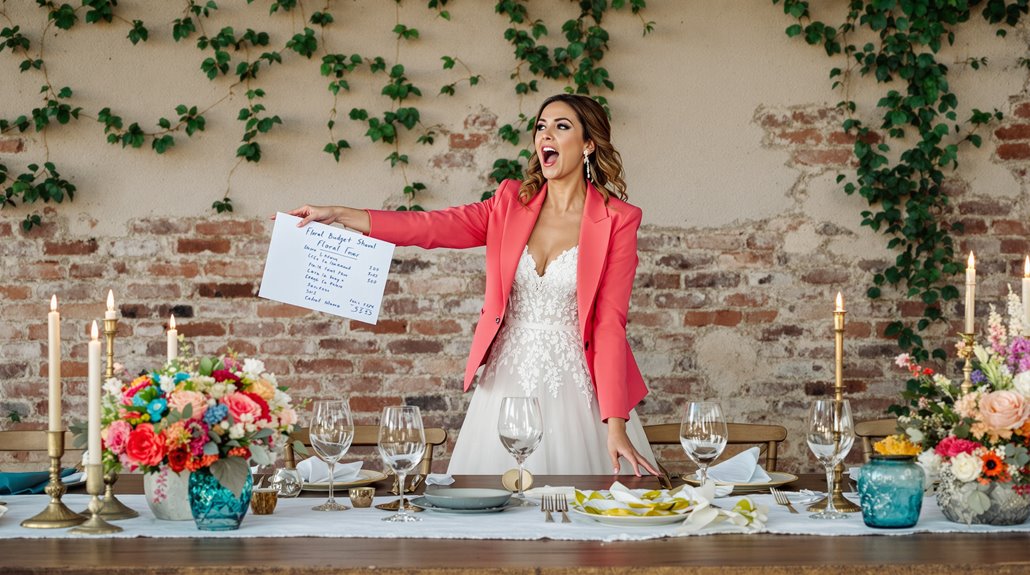
Need to nail down your wedding flower budget without the headache? Let’s cut to the chase with a streamlined cost checklist you can screenshot and execute.
- Bridal bouquet: $195–$350
- Bridesmaid bouquets: $50–$110 each
- Boutonnieres: $10–$40 each
- Corsages: $20–$40 each
- Floral arches/chuppahs: $200–$5,000+
- Reception centerpieces: $50–$600
- Sweetheart table centerpiece: $70–$500
- Cake table flowers: $30–$170
- Overall floral budget: $700–$4,000+
While planning your wedding flowers, keep in mind that seasonal blooms are typically more affordable, which can help you strategically allocate resources and avoid being “bless and stressed.” Screenshot, save, and keep momentum moving. Next step? Prioritize blooms and structures that align with your vision and budget. Your wedding, your rules—now go execute!
A strategic execution and design framework can help ensure your floral arrangements are aligned with your event’s overall style and budget, providing clarity and precision in your planning.
FAQ
Got your flower budget snapshot? Let’s explore the FAQs. First, “How can I reduce costs without sacrificing style?” Easy—opt for seasonal and local blooms that pack a punch without breaking the bank. Next, “Are silk flowers a good alternative?” Sure, if you’re cool with saving cash but want to keep that fresh vibe. “What’s the deal with florist markups?” Florists typically apply a 3-5x markup. They’re not scamming you—it covers labor, setup, and teardown. Finally, “How do I prioritize?” Focus on high-visibility areas like the ceremony arch and reception centerpieces. When considering your options, it’s important to calculate Cost of Goods Sold to understand the baseline pricing for your arrangements. To avoid financial surprises, make sure to regularly monitor fluctuating costs and adjust your budget accordingly. Ready to execute with flair and finesse? Create a checklist, embrace strategic choices, and make every dollar count. Maximize impact with minimal fuss—efficiency wins.
Key takeaways
When you’re steering through the whirlwind of wedding planning, knowing the key takeaways on flower costs can save you time and stress. Here’s what you need to accelerate through the floral frenzy:
- Understand the average spend: $1,500 to $2,803, but it’s non-negotiable to tailor this to your guest count and region.
- Prioritize spending: Bridal bouquets can claim 5-10% of your floral budget—strategically allocate and stick to what gets the job done.
- Navigate seasonal spikes: Peak season means peak prices—plan accordingly.
- Regional differences matter: Mid-Atlantic costs soar, so pivot your strategy if you’re there.
- Detail your specifics: From boutonnieres to archway garlands, every item has its price tag—don’t leave anything to chance.
- When planning your wedding, remember that food and beverages usually account for 20-30% of the overall wedding budget, so it’s crucial to balance these with floral expenses.
Now, streamline your budget for maximum impact!