
For wedding flowers, allocate a savvy 8-10% of your budget, which keeps you in the smart zone without drowning in petals. With a $75K wedding, you’re staring at a $6K floral tab. Want luxe intercontinental blooms? Pump that up to 15%. Remember, seasonal and local blossoms can curb the costs. Skip the floral drama and streamline with strategic choices—logistics are key. Curious about executing floral finesse with kinetic precision? There’s more where that came from.
The short answer (what most people should do)
When it comes to wedding flowers, most people want to know: what’s the bottom line? The short answer: strategically allocate 8% of your total budget to floral spending. For a $75,000 wedding, that means a florist budget of $6,000—non-negotiable if you’re serious about a streamlined, visually cohesive event. Your wedding flower budget isn’t just a number; it’s a tactical move that gets the job done without fluff. Primary bouquets run $100-$350, while bridesmaid bouquets average $75. Reception centerpieces range from $50-$600. Want to keep the chaos controlled? Focus on key elements that move the needle. Skip the excess, and pivot those dollars towards high-impact areas. Remember, it’s about strategic execution, not drowning in petals. Greenery-focused designs offer a cost-effective and modern aesthetic, allowing you to incorporate fresh-cut greens for texture and color without high costs. Consider the impact of location on your floral costs, as urban settings can elevate prices.
The real answer: what it depends on
Let’s cut to the chase—your floral budget isn’t just a number, it’s a dynamic equation influenced by four key factors: location, budget tier, percentage of your overall budget, and smart cost-reduction strategies. Here’s how to execute a streamlined approach:
- Location Matters: Prices fluctuate—$269.30 per arrangement in Alabama vs. $171.00 in California. Your flower budget percentage hinges on regional dynamics. Alaska’s average bouquet cost is notably higher due to logistical challenges, emphasizing the importance of location in your planning.
- Budget Tier: Choose your lane—are you going micro or aiming for a statement? Each tier dictates how much floral punch you can pack. It is crucial to prioritize essential wedding elements early in the planning process to ensure you stay within your budget.
- Flower Budget Percentage: Industry standard is 10-15% of your wedding budget, but immersive designs might push you to 20%.
- Cost-Reduction Strategies: Opt for in-season blooms and monofloral arrangements to pivot costs downward without losing impact.
Decision framework (choose the right move fast)
Deciding on your floral strategy shouldn’t feel like pulling teeth—it’s about smart, efficient moves that align with your wedding vision and budget. Here’s the deal: execute a plan that respects your financial limits without sacrificing impact. First, know your guest count—it dictates your centerpiece game. Fewer guests? Pivot funds to bold statement pieces. More guests? Reuse ceremony blooms at the reception—non-negotiable efficiency. Understanding floral design intricacies is essential, involving design planning, sourcing, and logistics, which can significantly influence your budgetary decisions. Consider timing of the event when choosing flowers, as off-peak dates might provide cost-saving opportunities.
| Budget Tier | Strategy | Guest Impact |
|---|---|---|
| Micro ($500–$1,500) | Silk alternatives, personal flowers focus | Intimate savings |
| Standard ($3,000–$5,000) | Strategic reuse, moderate installations | Balanced aesthetics |
| Statement ($7,000–$12,000+) | Immersive designs, logistic complexity | Wow factor execution |
Recommended timeline / checklist (so you don’t miss anything)
With your floral strategy locked and loaded, it’s time to execute a no-nonsense timeline that keeps your flower game on point—from first inspiration to final petal. Here’s your strategic rundown:
Execute your floral timeline flawlessly, from initial inspiration to the final, stunning petal.
- 12-9 Months Out: Set your overall budget. Allocate 10% for flowers, aiming for $3,000-$7,000. Immerse yourself in color palettes, and chat up venues about floral do’s and don’ts. Start gathering design inspiration using Pinterest and Instagram to visualize your dream arrangements. It’s crucial to establish a wedding budget early on to ensure your floral expenses align with your overall financial plan.
- 5-4 Months Ahead: Finalize flower choices and work with your florist on layouts. Strategically align designs with venue logistics.
- 3-2 Months To Go: Confirm orders and delivery details to avoid mix-ups. Get specs locked down tight.
- 1 Month Countdown: Verify florist orders blooms. Coordinate with the baker. Plan for a smooth delivery.
Reality Check: Repurposing blooms keeps both budget and sanity intact.
Examples (realistic scenarios)
Let’s tackle three scenarios you’ll likely face on this floral adventure. First, imagine executing a wedding on a tight timeline with limited availability—this requires strategic moves and quick decisions to secure what’s non-negotiable. Alternatively, if you’ve got the luxury of time and crave high customization, you can explore unique options that scream “you” without breaking the bank. Finally, when budget-first priorities steer your ship, focus on impactful choices that get the job done efficiently. In any case, it’s essential to recognize that the wedding flower budget typically accounts for 10% to 15% of the total wedding spend, which can guide your planning and allocation decisions. It’s also wise to establish a contingency buffer of 5-15% to manage unexpected costs, ensuring that your floral budget remains intact even if surprises arise.
Scenario 1: tight timeline + limited availability
When you’re up against a tight timeline with limited flower availability, it’s time to channel your inner project manager and execute with precision. Peak wedding seasons can hike flower costs by 40%, and if you’re scrambling, be ready to pivot. With flowers typically booked 5-6 months out, a rushed timeline means importing blooms—goodbye, local bargains. Strategically prioritize personal flowers like your bridal bouquet ($250-$300) and opt for impactful, large arrangements that can seamlessly shift from ceremony to reception. Tight budgets? Embrace greenery garlands at $15-$20/foot. Remember, urgency adds up: expect a 20% cost increase in rushed labor. The reality check? A $5K budget might stretch thin—plan deliberately and know where to spend. Considering the average wedding size of 150 guests with an average floral budget of $13K, it’s evident that managing expectations is crucial for effective planning. Wedding planning costs can inflate by up to 30% due to taxes and service fees, so keeping track of all expenses is essential to avoid surprises. Ready, set, execute!
Scenario 2: flexible timeline + high customization
Tackling a wedding with a flexible timeline and a penchant for high customization? You’re in the right lane. Booking 5-6 months ahead lets you access peak blooms and dodge import costs. Local flowers are your allies, especially in off-peak months like July-September when prices average $2,698. High customization, though, means budgeting $5,000-$8,000. Want that floral arch? Allocate $2,500+. A bridal bouquet? Set aside $250-$300. Embrace seasonal savings; a purely seasonal bouquet runs $95-$125. Repurpose ceremony flowers for the reception—budget magic! Reality Check: Customization’s not cheap or easy. It’s a hustle—strategically plan and adjust to what’s in bloom. Actionable step: Build a timeline. Then, talk to your florist about what’s realistically available. Get it done, no fluff. When considering your floral budget, it’s typical for reception centerpieces to represent 30-40% of the total allocation, ensuring a significant impact at the wedding. To ensure seamless execution, understand target audience preferences to align your floral choices with the overall wedding theme.
Scenario 3: budget-first priorities
Prioritizing budget in your wedding plans doesn’t mean sacrificing style; it’s about smart allocation and strategic choices. Start with a micro budget of $500–$1,500, focusing on personal flowers like the bride’s bouquet and attendants’ bouquets. Silk alternatives keep costs down and visuals up. Reuse ceremony flowers at the reception—dual-purpose, double impact. Opt for in-season, local blooms to save bucks and support local growers.
Minimal altar arrangements and smaller aisle flowers ($30–$60 per row) enhance charm without breaking the bank. For centerpieces, think modest and seasonal. A single flower type reduces costs while keeping it chic. Remember, strategic navigation is essential to manage expenses effectively, ensuring no unexpected costs derail your budget.
Reality Check: Skip elaborate installations; prioritize what truly matters. Checklists handy? Perfect. Move forward with confidence and control.
What to avoid (common traps)
Underestimating your wedding flower budget can derail your plans faster than you can say “I do,” so let’s cut through the chaos and get real. Avoid these common traps to keep your floral dreams on track:
Underestimating your wedding flower budget can quickly throw a wrench into your wedding plans.
- Luxury Bloom Miscalculation: Don’t get blindsided by the cost of high-end flowers. They look stunning but come with hefty price tags. Plan smart or face financial stress.
- Seasonal Missteps: Out-of-season flowers may seem tempting but can explode your budget. Choose blooms that align with your wedding date for a streamlined approach. Aesthetics are important, but remember that seasonal availability can dramatically impact flower choices.
- Venue Rules Ignorance: Venue restrictions can turn your floral fantasy into a compliance nightmare. Confirm policies early to avoid costly redesigns. It is also important to consider venue-related costs like kitchen rentals to avoid surprise expenses.
- Detail Neglect: Overlooked boutonnieres and corsages lead to incomplete aesthetics. Balance big and small for cohesive design execution.
Plan methodically, dodge surprises, and keep the focus on strategic execution.
1-page action plan you can screenshot
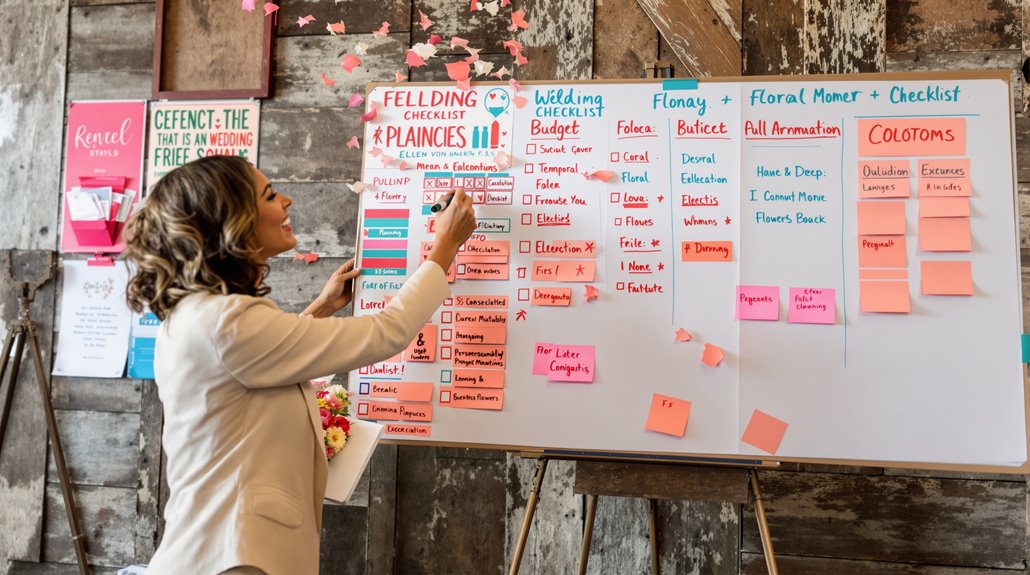
Even the most organized among us need a game plan, especially when wedding flowers can be a logistical minefield if not executed strategically. Here’s your streamlined action plan: First, determine your budget tier. Are you going micro, standard, or statement? Next, assess your guest count and regional costs. Mid-Atlantic weddings? Expect to shell out more. Now, allocate 10-15% of your total wedding budget for florals. Don’t forget labor and transport costs. Pivot to using in-season local flowers for cost efficiency—play with textures for impact. Finally, create a checklist: bouquet percentages, florist minimums, and venue logistics. Screenshot it. This isn’t just about pretty petals; it’s about making smart, intentional decisions that keep your day on track and your sanity intact. Consider the importance of vendor availability as it can significantly impact your planning timeline and flexibility.
FAQ
Got a unique situation that doesn’t fit our examples? No worries—start by listing your non-negotiables and strategize from there. Most folks wish they’d locked down their flower vendor earlier, so don’t drag your feet. Adding or removing vendors? That changes your budget dynamics, so pivot accordingly and keep your plan streamlined.
What if my situation doesn’t match the examples?
When your wedding plans don’t fit the cookie-cutter mold, it’s time to pivot strategically. Maybe you’re planning a blowout with 200 guests or an intimate elopement in your living room. Don’t sweat it. Start by recalibrating your floral budget. For a minimalist approach, aim for $1,000–$2,000. Going lavish? Consider $10,000 to transform your venue. Use local, seasonal flowers to keep costs down. DIY options can slash costs—think $45 for a DIY bouquet versus $120 professionally. Don’t get caught up in industry norms; aim for what gets the job done. Calculate 8–15% of your total budget for florals. Hustle smart: crunch numbers, make intentional choices, and adjust as needed. Next step? Action those plans with precision and confidence.
What’s the first thing I should do today?
Ready to kickstart your wedding planning with purpose? Start by setting a rock-solid budget. It’s your compass in this hustle. List all wedding components—venue, food, photos, dress, music, flowers, décor. Rank your priorities together, deciding what’s non-negotiable. Remember, it’s about strategy, not sentiment. Determine your comfortable spending limit before diving into vendor research. Allocate funds wisely—know how much goes to venue, catering, and attire. Family contributions? Factor them in. Align your budget with guest count and venue choice. This isn’t a soft pastel fantasy—it’s project management. Lock down the venue early; popular spots vanish fast. Ready to move? Create your guest list and start venue tours. This is your launchpad. Now, execute.
What’s the most common regret?
Regrets, anyone? In the wedding game, venue costs are the heavyweight champions of regret. A staggering 36% of couples wish they’d spent less on their venue. These expenses often balloon beyond your forecasted budget, making it the top regret in your wedding spending ledger. Here’s your hustle move: scrutinize venue pricing early. Get those numbers down on paper and strategize.
Close behind, 30% of you might feel a floral hangover. Flowers can wow, but they also chew through 8–10% of your budget. Before those petals derail your finances, execute a floral plan that aligns with your bottom line.
Reality Check: Over-enthusiasm can inflate costs. Avoid sticker shock by aligning expenses with your priorities. Next, streamline your budget to eliminate unnecessary splurging.
What’s a red flag that I’m moving too fast?
Floral hangovers aside, let’s get a pulse on another potential pitfall: accelerating your wedding timeline faster than a startup on caffeine. If you’re rushing key milestones like engagement talks within weeks or feeling isolated from your community, slow down. Ignoring red flags, like partner secrecy or dismissive behavior, is a road to regret. Are friends voicing concerns? Listen up—Proverbs 11:14 nails it: safety in numbers. Watch for partner resistance in planning; if every decision is a battle, rethink your pace. Anxiety over compatibility or future goals shouldn’t be brushed off. Reality Check: Unresolved issues in a whirlwind romance can lead to a crash landing. Action Step: Hit pause, consult trusted advisors, and guarantee your relationship foundation is rock solid.
What changes if I add/remove vendors?
When you’re orchestrating a wedding, vendor changes can drastically shift your strategy—and your budget. Adding a florist? Expect your costs to jump by 10-15% of the total wedding budget. Got over 100 guests? Your floral expenses can climb to $3,282. Thinking of the Mid-Atlantic? Brace for $3,457, while the West is a modest $2,402. But let’s pivot—removing a professional florist slashes costs to $500–$1,500 using silk flowers. DIY saves you $3,000–$8,000. Skipping installations? That’s $7,000–$12,000 back in your pocket.
Reality Check: Want those lush installations without the price tag? Opt for local, seasonal blooms. Your next step? Draft a streamlined vendor checklist. Keep it sharp; keep it strategic. Now, let’s get moving.
Key takeaways
You’re deep in the trenches of wedding planning and floral choices are no exception. Let’s streamline your floral budget strategy with these key takeaways:
- National Averages: Expect to allocate $2,698–$2,803 or 8-10% of your total wedding budget on flowers. Adjust based on guest count and region.
- Cost by Element: Bouquets range from $100 to $350, while centerpieces vary between $50 and $600. Prioritize what’s non-negotiable for you.
- Budget Tiers: From a micro budget of $500 to a statement budget of $12,000+, you’ve got options. Choose what’s strategically aligned with your vision.
- Seasonal Swings: First-quarter weddings? Brace for higher costs. Pivot to third-quarter dates for better deals.
Next step? Craft a floral checklist reflecting your priorities and non-negotiables. Execute it with precision.