
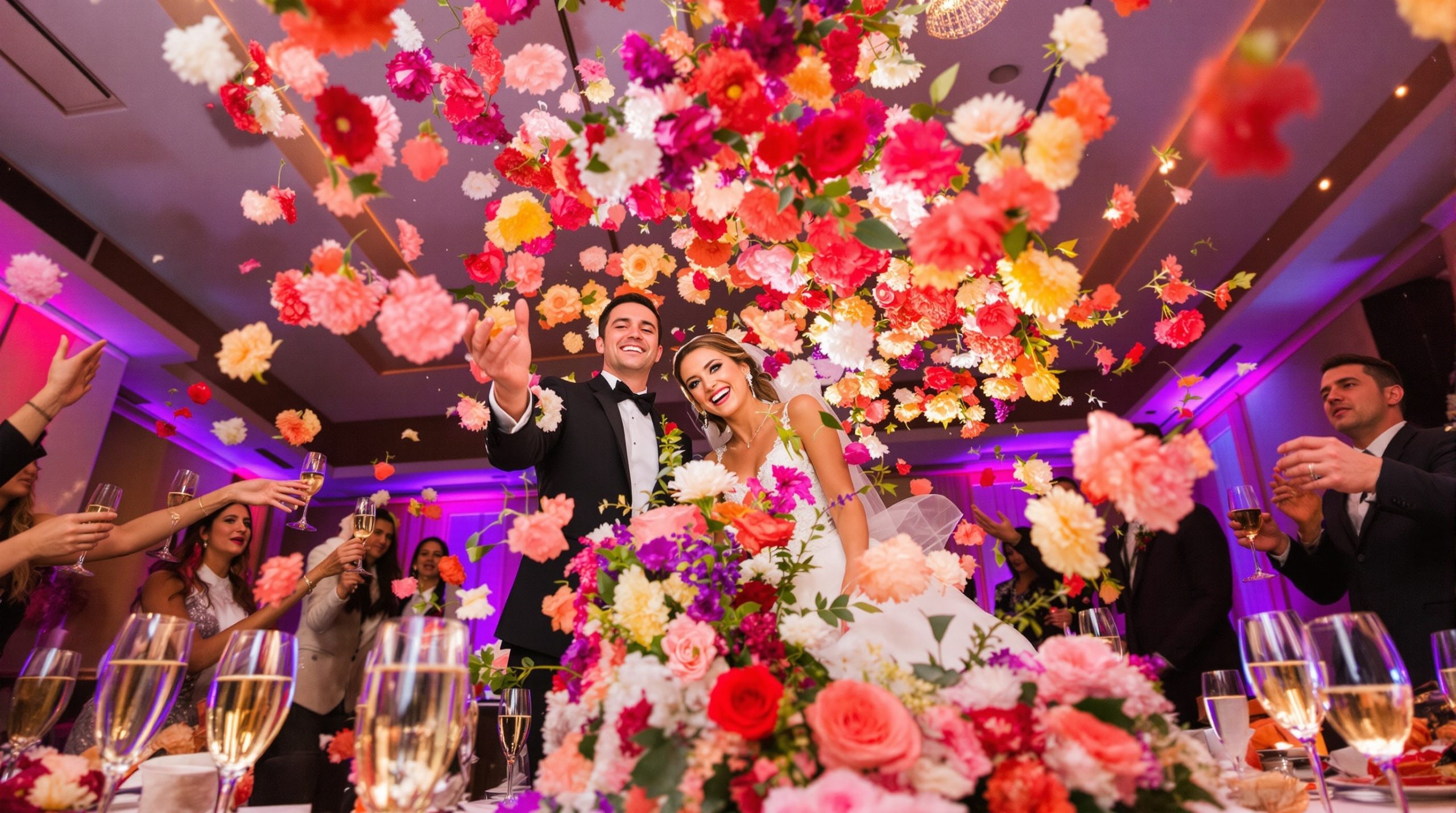
Centerpieces guzzle your floral budget faster than a bride downs prosecco. They get lost in the mix, fading into the background while giving your wallet a workout. High-impact? Hardly. Guests focus more on the food and music than your vase game. Strategically reallocate funds to interactive elements and high-impact placements that get noticed and start conversations. Keep it low-profile, pivot towards practical elegance. Want to maximize your ROI and maintain sanity? There’s more to explore.
The thesis (what people get wrong)
When it comes to wedding florals, many get it wrong by overvaluing centerpieces that guests barely notice. The centerpiece value often doesn’t justify its hefty price tag. You’re dropping $50 to $500 per table on something guests hardly remember. Here’s a floral spending strategy that makes sense: invest where it counts, like in elements that enhance the overall experience. Couples spend over half their budget on venues and have a high willingness to pay for dream wedding experiences, making it crucial to allocate funds wisely. Centerpieces, in their traditional form, aren’t worth it. They’re the decor equivalent of a treadmill collecting dust—looks good but doesn’t deliver. It’s important to consider hidden costs such as service charges and vendor overtime when planning your floral budget.
Instead, pivot your budget to interactive elements that engage and delight. Apply strategic thinking and streamline your decor choices. Focus on high-impact, visually striking options that get the job done efficiently. Next time, ask yourself: does this truly add value?
Why this happens (the real root causes)
Ever wondered why centerpieces keep chewing up your budget despite barely getting a nod from your guests? It’s all about flower priorities being misplaced. You see, centerpieces can cost up to $500 per table, eating into your decor budget without delivering the impact you’d expect. Here’s why:
- Material Costs: Custom arrangements are pricey but don’t translate into memorable guest experiences.
- Low Visibility: Guests rarely notice centerpieces, especially at round tables.
- Perceived Value: Couples often underestimate decor budgets, leading to overspend.
- Single Use: They’re designed for one day, with no reuse value. Event venues, on the other hand, focus on hosting multiple events to maximize their profitability.
- Inefficient Allocation: Budgeting favors high-impact elements, leaving florals lagging.
Understanding these root causes helps you pivot strategies and maximize your wedding’s impact. Allocate 17% of the total budget for venue costs to ensure you have enough left for other priorities.
What to do instead (the better framework)
Let’s flip the script on wedding centerpieces by thinking strategically about what truly delivers impact without denting your wallet. Centerpieces can be more than floral fluff—let’s streamline this part of planning. Consider alternatives that get the job done with flair and function. Opt for non-floral options that resonate with your “curated cool” vibe, ensuring your decor isn’t just decoration but a conversation starter.
- Greenery Gains: Eucalyptus and ferns cascade for a fraction of the cost.
- Functional Flair: Potted herbs double as decor and guest favors.
- Cheeky Choices: Gold-painted pineapples for a playful twist.
- Artful Edibles: Fruits and veggies make modern, bold statements.
- Clever Constraints: Small vases with single blooms cut extravagance.
Reality Check: Choosing wisely saves cash and stress—ditch what’s bless and stressed. Non-floral items can serve as long-term keepsakes, adding both sentimental value and sustainability to your wedding décor. Embracing flexible budgeting for wedding planning can help accommodate these creative choices while maintaining financial well-being.
How to apply it in real life
You’re juggling work deadlines and wedding planning, but here’s how you can execute centerpieces without losing your mind. Reception florals consume 40-50% of the total floral budget, so in a common scenario, skip the expensive tall arrangements, which obstruct views and cause logistical headaches, and opt for sleek, low-profile designs that keep the conversation flowing. When time is tight, repurpose ceremony florals for the reception and streamline your process with a checklist that guarantees no detail gets overlooked—because who has time for chaos when you’re crushing it at work? Consider off-peak options when planning your event to potentially save on venue costs, allowing more budget flexibility for other elements like florals.
Example 1: a common scenario + the better move
When it comes to wedding florals, the centerpiece conundrum is a classic budget sinkhole that ambitious couples often overlook. Imagine this: you’ve got 23 tables, each with a centerpiece costing between $50 and $500. That’s a whopping $1,150 to $11,500—money that could be better spent elsewhere. Guests rarely notice these table florals, so why not execute a smarter move? Pivot your investment to ceremony florals or non-floral centerpieces with higher ROI. Boost visibility with strategic placements like entryways. It’s about moving the needle, not just looking pretty. Audit guest feedback and calculate your spend using real metrics. Comparing the ROI of lead sources can help identify which channels are most effective for reaching couples. Service fees typically range from 15% to 25% of the total cost, and understanding their impact can help avoid budget surprises. Accelerate your wedding’s impact without the fluff. Your mission? Streamline decor, maximize bang for your buck, and keep things moving.
Example 2: a high-stakes scenario + the better move
In a high-stakes wedding scenario, where 300 guests gather amidst economic pressures, you can’t afford to squander your budget on low-impact details like floral centerpieces. Instead, strategically redirect funds to amplify your venue’s unique features—think stunning waterfront views or cutting-edge AV systems. Centerpieces are a low-ROI indulgence; they fade into the background while your venue’s standout elements captivate. With the rising demand for hyper-personalization in wedding services, couples are increasingly opting for unique and memorable experiences over traditional decor. Execute a budget pivot: cap floral expenses at $50 per table, reallocating $5,000+ to enhance venue highlights. Measure success with metrics like lead volume and revenue per source. The hidden trick? Use seasonal, local elements to boost guest retention by 15%. This move isn’t just smart; it’s non-negotiable for elevating your wedding game. Ready to accelerate your planning? Let’s hustle and align your design brief with these strategic insights.
Example 3: a ‘we’re busy’ scenario + the better move
Although juggling busy schedules and wedding planning can feel like wrangling a tornado in a teacup, there’s a smarter way to handle floral centerpieces without losing your sanity or your edge. Ditch the floral overkill. Instead, strategically reduce your arrangements to 14 and channel your energy into high-impact statement pieces. Non-floral centerpieces aren’t just trendy—they’re efficient and cost-effective. Think bold, sustainable designs that scream “curated cool” without breaking the bank. Use AI tools to optimize these alternatives and accelerate your planning process. Remember, ROI isn’t just a buzzword; it’s your secret weapon. Schedule a 30-minute travel block from getting-ready location to the venue, factoring in traffic to ensure a smooth timeline. Track your bookings and revenue per channel to see real gains. Ready to pivot? Focus on personal flowers like bouquets. Execute with precision, and let your wedding speak volumes.
Counterpoints (when the old way is actually fine)
Despite the allure of elaborate centerpieces, sometimes sticking with tried-and-true simplicity is the strategic choice that gets the job done. When you’re knee-deep in planning chaos, the old-school approach can save you time and cash. Centerpieces aren’t just about aesthetics; they’re about creating a vibe that aligns with your no-nonsense hustle.
- Strategically executed minimalism: Simple designs can highlight your venue’s natural beauty.
- Streamlined setup: Less complexity means faster execution and less room for error.
- Cost-effective elegance: Classic choices can look high-end without breaking the bank.
- Efficient guest engagement: Sleek styles still foster connections without overwhelming. A well-chosen centerpiece contributes to an overall sophisticated look, making it an integral part of the event’s decor.
- Reliable consistency: Tried-and-true setups guarantee smooth coordination. By focusing on high-impact areas and avoiding unnecessary complexity, you can ensure a seamless experience for all involved.
Action plan (do this next)
When your wedding planning is operating like a well-oiled machine, centerpieces shouldn’t throw a wrench into your momentum. Instead, strategically pivot to options that maximize your budget’s impact without sacrificing style. Here’s how to execute a streamlined floral plan:
- Opt for high-end silk florals: They deliver volume and drama minus the perishability.
- DIY floating centerpieces: Spend $50–$75 instead of $600. It’s efficient and chic.
- Repurpose aisle arrangements: Move them to the sweetheart table, doubling their value.
- Consider baby picture frames: Infuse personality for $20–$100 total, a genuine conversation starter.
- Seed sachet favors: At $0.62 each, they offer a sentimental touch without breaking the bank.
Choosing seasonal blooms for your wedding flowers can be a cost-effective strategy, as they tend to be fresher and more abundant. These moves guarantee your wedding florals are executed with precision and purpose. By adding/removing vendors, you can significantly impact your overall wedding budget, ensuring you allocate funds effectively.
Visual summary you can share
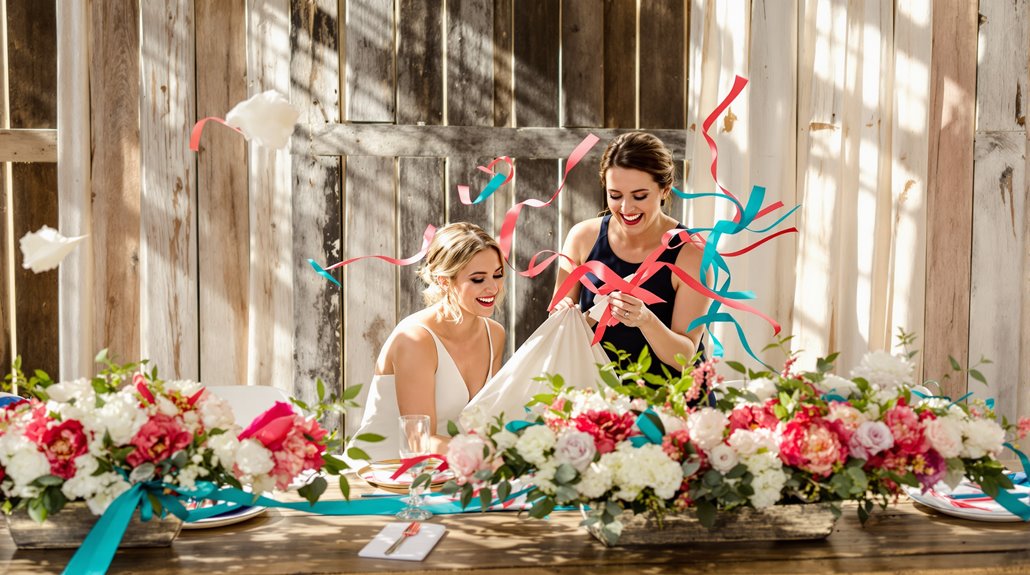
You’ve nailed the action plan, and now it’s time to roll up those sleeves and get visual. Centerpieces can drain your budget faster than a high-speed internet connection. With a $200 centerpiece for 20 tables, you’re staring at $4,000 gone—just like that. Let’s pivot to smarter choices. Opt for low centerpieces that let guests see each other without craning necks. Silk florals? They’re dramatic and durable. DIY floating florals or baby picture frames slash costs and add a personal touch. Repurpose aisle flowers for the sweetheart table to maximize use. Remember, delivery and setup fees lurk, ready to inflate costs. Keep it sharp, keep it strategic. Streamline the guest list to control costs, with each guest costing approximately $150-300. Next up? Evaluating logistics. Get ready to execute like a pro.
FAQ
Wedding planning’s not all fairy lights and champagne; sometimes, family or vendors push back on your choices. If you feel like you’ve made a misstep or need to align with your partner, take a breath—strategic pivots can be executed to get everyone on board. Start by addressing one quick win today: communicate your vision clearly and pull out that checklist to streamline the chaos.
What if my family/vendors push back?
Facing pushback from family or vendors on your wedding centerpiece decisions? Stand firm. Let’s talk numbers: those centerpieces aren’t just cute décor—they’re budget vampires. With costs skyrocketing to $4,000 for 20 tables, they’re a financial sinkhole. Vendors might push for tall pieces, but remember, they obstruct guest views—cue the awkward shuffling. Instead, pivot to a high-low mix for drama without the wallet blow. Propose silk or low-profile designs that deliver lush visuals for less. Repurpose ceremony arrangements to the sweetheart table—strategically efficient and cost-effective. When grandma insists on the floral overload, remind her: this is not 1982. Your wedding isn’t a floral jungle; it’s a streamlined celebration. Push back with metrics, not emotions. Execute smartly, save strategically.
What if I already made the ‘wrong’ decision?
Did you make a centerpiece decision that feels like a misstep? Let’s pivot smartly. First, don’t panic. Instead, consider how to maximize what you’ve got. High-end silk centerpieces? They offer lasting oomph—no wilting woes here. If your choice leans towards tall arrangements, brace for logistical gymnastics; they’re notorious for post-event headaches. Got “meadow” aisle florals? Repurpose them for the sweetheart table, saving dollars and doubling impact. Opt for “long and low” designs to salvage and reposition easily. Avoid the midnight trash trough—coordinate floral delivery just before your reception kicks off. Embrace strategic tweaks to steer your florals from “sunk cost” to savvy investment. Remember, it’s about execution, not ego trips. Ready to streamline? Let’s move with intention.
What’s the fastest way to course-correct?
When time’s tight and stress is high, executing a swift course-correction can feel like taming chaos. Don’t worry; we’ve got your back. Start by switching to low centerpieces. They’re cost-effective at $50–$600 per table and solve guest visibility issues while reducing logistical headaches. Upgrade to high-end silk alternatives for a lush look without the ongoing expense. Next, strategically repurpose florals—shift aisle arrangements to the sweetheart table and save big. Consider DIY non-florals like picture frames or seed sachets to cut costs further. Finally, reduce the table count. Focusing on key tables like the head table maximizes impact. Get it done fast with a checklist: evaluate, pivot, execute. Your wedding’s not about fluff; it’s about smart shortcuts.
How do I get my partner aligned?
How do you guarantee you and your partner are on the same page? Start with strategic discussions on ceremony type, venue vibes, and themes to align expectations. Focus on shared vision—find common ground for a wedding that reflects both your personalities. Prioritize essentials like budget, guest list, and traditions by defining top priorities. Keep communication crisp and open; weekly check-ins prevent frustration from creeping in. Delegate tasks based on strengths—let the spreadsheet lover handle budget tracking while the detail-oriented partner manages vendor contracts. Flexibility is your ally in conflicts; compromise turns obstacles into opportunities. Remember, this isn’t about Pinterest perfection—it’s about executing a celebration true to both of you. Next step? Schedule a budget meeting and make decisions stick.
What’s the easiest win I can do today?
Strategically tackling your wedding to-do list starts with a simple, high-impact move: rethink your centerpieces. Let’s cut the fluff—centerpieces can be a money pit. They range from $50 to $500 per table but often go unnoticed. So, pivot. Execute a powerful shift to unique, non-floral options that scream “modern chic” without breaking the bank. Consider sustainable or reusable materials that align with 2025’s trend of personalized, eco-friendly decor. Candles, interactive stations, or locally sourced elements won’t just save you cash; they’ll elevate guest experience.
Reality check: ditch the “Pinterest perfect” fluff. Streamline your approach with AI tools to design impactful tablescapes that maximize your budget. Today, make a list of centerpiece alternatives and start sourcing creatively. Bless and stressed? Not you.
Key takeaways
Let’s cut to the chase: centerpieces can make or break your wedding budget. They’re a high-cost multiplier, and with an average wedding flower budget of $2,800, centerpieces alone can eat up a major portion. Think strategically—focus on impact without bleeding your budget dry.
- Tall centerpieces: They multiply costs, block views, and require extra logistics.
- Budget dominance: Centerpieces, alongside bouquets, dominate floral expenses.
- Low-visual impact: They hinder guest interaction, reducing the social dynamic.
- Better alternatives: Opt for high-low designs or reusable decor to cut costs.
- Logistical nightmares: Complex setups mean more labor and fees.
Reality check: Don’t let ego-driven designs derail your budget. Execute smartly, pivot away from traditional fluff, and simplify your floral strategy.