

To create high-impact centerpieces on a $15-per-table budget, strategically hit up Dollar Tree for core items and invest in bulk flowers—because glamour shouldn’t break the bank. Nail the look by balancing vibrant blooms with timeless greenery; elegance doesn’t need diamonds, just smarts. Key is knowing the game: use timelines, checklists, and strict budgets. Oh, and never forget the power of candles for that mesmerizing glow. Curious? Stick around, there’s more to the hustle.
What you’ll accomplish (and what ‘done’ looks like)
When you’re juggling career deadlines and wedding planning, you need centerpieces that get the job done without blowing your budget. Enter budget centerpiece ideas that are more hustle than hassle. Imagine creating inexpensive centerpieces that ooze luxury but stay within $15 per table. You’ll strategically use Dollar Tree items and bulk flowers—talk about budget table decor that doesn’t scream ‘cheap’. Layer textures with greenery like eucalyptus, and add vibrant pops with yellow ranunculus or even lemons. Bulk flowers reduce per-stem costs, enabling lavish arrangements that look high-end. Delicious Wedding Catering Ideas can complement your elegant decor, making your reception both visually pleasing and satisfying to the palate. Candles in tealight holders add that elegant glow. Mix sizes for a dynamic look; it’s all about that high-impact visual appeal without the high cost. Your tables will look polished and chic, accelerating your wedding’s wow factor without stressing your wallet. Now, let’s execute!
Quick start (the short version)
Ready to plunge into centerpiece creation without the fuss? Let’s get those cheap centerpieces rolling with a streamlined strategy that doesn’t compromise on style. First, hit up Dollar Tree for essentials like gold metallic holly-berry stems and styrofoam discs. Then, execute a clean assembly:
Dive into centerpiece creation effortlessly with budget-friendly essentials that exude style and simplicity.
- Core Assembly: Secure a flameless candle with glue dots in a cylinder base; stack for volume.
- Add Greenery: Use preserved moss and succulent picks to pivot from basic to bold.
- Variations: Paint wood elements gold, stack cylinders, or center a glass holder.
This high-impact centerpiece moves from plan to table for just $15.00. Remember, it’s not about being “Pinterest perfect,” it’s about smart execution. Next, gather your tools and hustle on!
Before you start: inputs you need
Before you dive headfirst into centerpiece creation, let’s get a grip on the essentials so you can execute like a pro. First up, nail down your guest count; it’s essential for calculating how many tables you’ll need. Keep an eye on RSVPs and budget for a few surprise guests or no-shows. Next, verify your table specifics. Are they round or rectangular? Got a head table? Double-check the venue’s table inventory and sizes. Clear sightlines are important for all guests during vows, so ensure your seating arrangement doesn’t obstruct anyone’s view. Understanding per-person averages can aid in budget allocation and planning, ensuring your $15-per-table budget isn’t exceeded. Finally, let’s talk numbers. Your $15-per-table budget needs to stretch, so prioritize bulk buys and reusable items.
- Guest-Count Essentials: Determine total guest count; adjust for RSVPs.
- Table-Specifics: Confirm seating arrangements; check venue inventory.
- Budget-Constraints: Allocate $15 per table; track costs with a checklist.
Step-by-step process
Kick off your high-impact centerpiece project by strategically clarifying your constraints—think date, budget ceiling, and those non-negotiables you wouldn’t trade for the world. Next, build a decision order that makes everything else easier, effectively turning chaos into controlled efficiency. Create a timeline with milestones and deadlines that will keep the momentum going, ensuring each step gets executed with precision.
Step 1: Clarify constraints (date range, budget ceiling, non-negotiables)
When it comes to executing a high-impact wedding centerpiece strategy, let’s get straight to the point: clarifying your constraints is your first power move. Start by locking down your date range. Planning 6-12 months ahead gives you flexibility and keeps costs low by snagging in-season flowers. Next, establish your budget ceiling. With a $15-per-table cap, embrace thrift materials like faux flowers and bulk buys. Don’t let non-negotiables slip through the cracks—match your color palette and venue setup with your vision. Think strategically: repurpose ceremony items to save up to 50% on reception centerpieces. Consider risk management strategies to ensure your plans are resilient against unexpected challenges, enhancing the overall guest experience. Consider Facebook Marketplace for second-hand decorations to further stretch your budget. Immerse yourself in the details, cross-check with flower seasonality, and list your must-haves. Streamlined planning guarantees your centerpiece dreams are executed flawlessly. Ready to pivot? Let’s move forward!
Step 2: Build the decision order (what to decide first so everything else is easier)
Let’s cut through the noise and get straight to the heart of your centerpiece strategy: building a decision order to streamline your planning. First, nail down your event theme. This isn’t just window dressing; it’s your strategic north star. Choose something that aligns with your objectives and resonates with your audience—think seasonal motifs or minimalist vibes that won’t bust your $15 budget. Next, immerse yourself in audience analysis. Use surveys to gauge their décor preferences and adjust for practical needs like low-allergen flowers. Follow up by selecting your primary focal element—candles or florals work wonders. Lock in these components early to avoid chaos later. Consider using digital platforms for planning to maintain organization and manage your budget efficiently. Then, layer in supporting decor items for depth, ensuring everything harmonizes within your budget. Ready to execute? Let’s go. Remember, the audio experience is critical for setting the mood and energy at events, so ensure your centerpiece choices contribute positively to the overall atmosphere.
Step 3: Create the timeline (milestones + deadlines)
Creating a wedding timeline is where the real magic happens—minus the fairy dust. Start with the event date and work backward. This method guarantees you don’t miss a beat. Your end goal? A smooth, executed event. Strategically set milestones like venue booking and vendor selection. These are your non-negotiables, anchoring every task. For instance, order supplies six weeks out, kick off venue research four months prior. Assign deadlines with buffer time for delays—because life happens. Delegate tasks to your A-team or vendors, and track progress like a seasoned project manager. Plan for a wrap-up by 1:30 p.m. to ensure the ceremony transitions smoothly into post-ceremony photos and cocktail hour. Break it into phases: 12-16 weeks pre-event checklist, plunge into swimlanes, and keep those checkpoints tight. Downloadable templates? They’re your best friends. Incorporating risk management strategies early in the timeline ensures that potential challenges are mitigated and contingency plans are in place. Next step: Execute vendor outreach with precision.
Step 4: Execute vendor outreach (scripts + tracking)
Crafting a streamlined vendor outreach plan is your next big move in securing those budget-friendly, high-impact centerpieces. First, identify vendors who can deliver within your $15-per-table budget. Think local florists, craft suppliers, and discount wholesalers. Execute outreach with strategic precision—your email subject lines should pop, like “Budget Centerpiece Partnership for [Event Date].” Keep pitches concise, highlighting volume potential. On calls, ask, “Mind if I take 30 seconds to discuss low-cost centerpiece supply?” Track everything. Use email analytics to gauge interest and segment vendors by type for tailored messages. Monitor responses, quotes, and follow-up schedules in a CRM. Aligning values with expectations ensures that vendor partnerships are grounded in shared goals and budget considerations. Adjust tactics if response rates falter. This approach gets the job done—no fluff, just results. Now, pivot to action and start reaching out!
Step 5: Lock the plan (contracts, deposits, and contingency buffers)
Before any centerpiece ideas start gracing your tables, you need to pin down the plan with contracts, deposits, and contingency buffers—non-negotiables in your wedding planning arsenal. First, define your payment schedule to track deposits and milestones. Demand a line item breakdown to sidestep billing disputes. Secure a tiered deposit structure linked to deliverables, not arbitrary dates. Scour contract for attrition and refund clauses—knowing cancellation deadlines and force majeure protections is key. Include provisions that ensure venue quality and physical alterations are disclosed to maintain the event’s success. Investigate direct billing options to reduce upfront costs. Allocate a 10-15% contingency fund for curveballs, and negotiate flexible payment terms to maintain vendor relationships. Utilize off-peak dates to potentially lower costs and maximize savings. Remember, this isn’t just planning; it’s strategic execution. Locking down contracts means your centerpiece game is ready to roll. Next step? Keep everything on track without spiraling.
Step 6: Run weekly check-ins (how to stay on track without spiraling)
Contracts locked and deposits secured, it’s time to keep your wedding centerpiece plan on track without losing your mind. Weekly check-ins are your secret weapon. Start 8–12 weeks out with weekly updates, moving to twice-weekly as the date nears. Use bold status labels: Not Started, In Progress, Blocked, Complete. Blockers? Identify them early to sidestep chaos. Your agenda: announcements first, then review progress, challenges, and next steps. Recognize wins—small victories matter! Assign clear deadlines and ownership; this isn’t amateur hour. Confirm all vendor and headcount details 1–2 weeks out, and recheck everything 1–2 days prior. Set up pre-event communications and have a backup plan. Keep the hustle smart, not stressful. Execute, don’t just plan. Accountability in task management is crucial, as it assigns task owners and due dates for visible task management. Next step: accelerate coordination with your team. Wedding insurance is an important consideration during planning to ensure financial protection against unforeseen circumstances.
Template you can copy/paste (checklist + tracker)
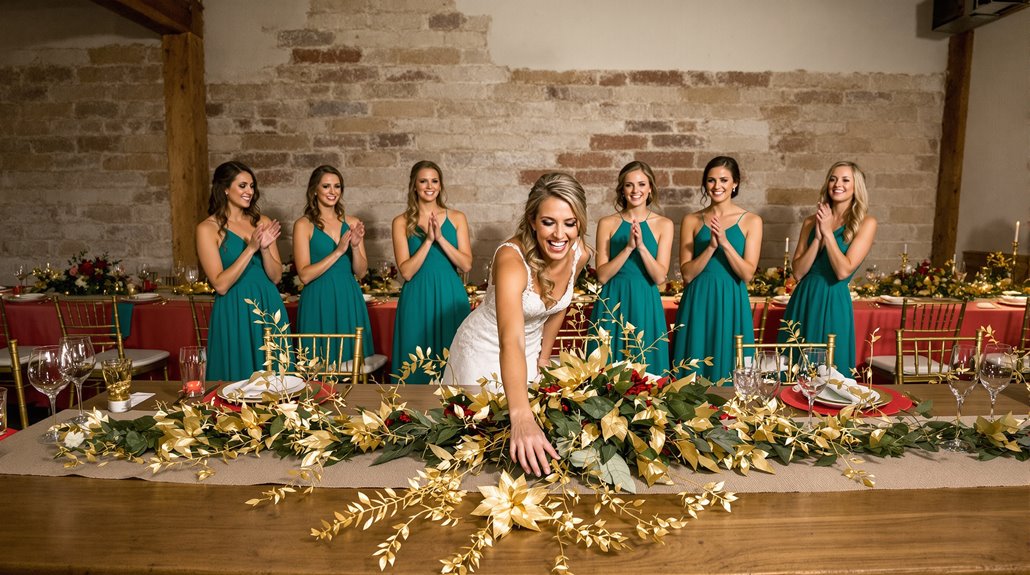
Let’s cut to the chase: You need a killer centerpiece without the hassle, and we’ve got the blueprint. Welcome to your streamlined template—a checklist and tracker that accelerates your centerpiece project with precision. Start by sourcing gold metallic holly-berry stems and gold poinsettias from Dollar Tree. Strategically combine glass vases with wooden trays as your primary vessels. Use glue dots to secure flameless candles, while styrofoam discs add height variation. For floral impact, grab natural baby’s breath from your local grocery store. Track your progress with a simple spreadsheet, noting costs per item and total expenditures. With everything mapped out, pivot confidently from planning to execution, ensuring each table gets the job done under $15. Next step? Gather your supplies and start assembling!
Common mistakes (and how to avoid them)
Even the savviest planners stumble into pitfalls when crafting high-impact centerpieces on a budget, but you don’t have to. First, avoid underestimating costs—hidden fees like setup and delivery can blow your budget. Keep a contingency fund, because ignoring this is like forgetting your umbrella during a downpour. Remember, negotiating isn’t just for boardrooms; it’s your secret weapon for slashing costs.
Avoid budget pitfalls: account for hidden fees, keep a contingency fund, and harness negotiation to save costs.
Adding a Day-Of Coordinator to your plan ensures smooth execution and allows you to focus on enjoying the event.
- Underestimating Costs: Delivery and breakdown charges can surprise you.
- No Contingency Fund: A 10-20% buffer shields you from financial stress.
- Neglecting Negotiation: Off-peak rates and reusable props are your friends.
Avoid these pitfalls, and you’ll execute your centerpiece plan with confidence. Want to crush it further? Create detailed expense lists and prioritize negotiation tactics. Your budget deserves it.
FAQ
Got a packed schedule but still want centerpieces that wow? You can whip up a stunning setup in under two hours if you streamline your tasks and strategically delegate parts like assembly or shopping. If a vendor’s ghosting you, pivot quickly and track weekly progress to guarantee nothing slips through the cracks—efficiency is non-negotiable here.
How long should this take if we’re busy?
How exactly do you manage wedding planning when you’re busier than a squirrel in Manhattan? Forget the fluff—strategically streamline your centerpiece creation. First, map out a realistic timeline. Use Gantt charts or color-coded calendars to track from pre-production to post-event wrap-up. Factor in multitasking distractions, which can sap 40% of your productivity. Time audits are non-negotiable; they reclaim precious minutes otherwise lost to reprioritization chaos.
Leverage project management tools like Asana or Trello to break down tasks and maintain momentum. Meetings can devour 40% of your workday—so schedule them wisely. Delegate roles based on expertise to avoid micromanagement and keep things moving. Next step? Assign a team timekeeper and sync up with centralized messaging tools to guarantee real-time coordination. Couples should also consider using a Decision-Priority Map to efficiently allocate their budget and manage priorities effectively.
What’s the minimum version that still works?
When you’re balancing a career and wedding planning, sometimes “less is more” doesn’t just apply to your free time—it applies to your centerpieces too. To nail a high-impact look on a $15-per-table budget, think strategically. Opt for bud vases; they’re cost-effective and deliver a stylish punch when grouped in clusters of 5-6 on round tables. Keep the color scheme tight—2 to 3 hues max—for a cohesive look. Go for low designs to maintain conversational flow and pivot between guests’ line of sight. Test your setups for stability and venue lighting. Symmetrical arrangements suit round tables, while long tables can benefit from varying heights. Execute your vision with quality materials—it’s a non-negotiable for a polished minimal aesthetic. Next step? Craft a mockup with your chosen elements.
What can I safely delegate?
Ever wondered how to streamline your wedding planning while juggling a career? Delegate efficiently—it’s a non-negotiable move. Empower a team member to handle vendor communication once you’ve chosen them. Let them manage back-and-forths with catering and security; just be sure they’re a communication whiz. For the event day, assign registration and check-in to reduce your workload. Equip them with clear instructions and tools—they’ll strategically accelerate the process. Need someone on the floor? Delegate to a competent team member who can spot issues and pivot quickly. Post-event, hand off tasks like cleanup and thank-you notes. Use checklists and deadlines to track progress. Remember, delegation isn’t about losing control; it’s about smartly gaining time. Now, go execute!
What if a vendor isn’t responding?
Is your vendor playing the elusive game of hide and seek? Time to strategically pivot. First, stay calm and give them 1-2 weeks to respond. If silence persists, follow up using the original method—then switch it up. Move from email to phone or social media. Be direct: state concerns and urgency clearly. Document every attempt—dates, times, and methods matter. If they still ghost you, escalate. Contact a supervisor and loop in your wedding planner. Clearly outline your previous steps. Still no luck? Begin researching backups, but don’t rush. Prioritize local vendors to guarantee timely execution. Don’t forget, patience is a hustle too. This isn’t about being blessed and stressed; it’s about getting the job done.
What should I track weekly?
Why is weekly tracking your secret weapon? Because it transforms chaos into clarity. For your $15-per-table centerpiece challenge, tracking actual spending against your budget is non-negotiable. Immerse yourself in costs for catering, decor, and vendors. Monitor RSVP responses and adjust your headcount; this isn’t just a party—it’s a precision operation. Confirm vendor contracts and timelines weekly. Payments? Check. Invoices? Check. Keep your timeline tight by hitting weekly milestones and updating the master plan. Got promotional campaigns? Measure them against your KPIs. Debrief your team on wins and hiccups. This isn’t about dreaming; it’s about executing with impact. Your actionable next step: Set up a tracking system that gets the job done and keeps you ten steps ahead.
Key takeaways
To nail those high-impact centerpieces without blowing your budget, you’ll need to strategically balance cost and creativity. Execute this by embracing smart sourcing and dynamic DIY approaches. Skip the fluff and hit the essentials as you:
- Vary centerpiece sizes: Divide tables into thirds—big, small, and candles. This not only saves cash but accelerates the visual impact.
- Source smartly: Amazon’s efficiency, Dollar Tree’s bargains, and your own backyard’s free elements become your non-negotiable allies.
- DIY with flair: Fish bowls, stemless wine glasses, and hollowed veggies—your toolkit for high-impact, low-cost setups.