

Planning a 200-guest wedding in 90 days? You’re plunging into a controlled whirlwind, and Hustle and Bustle Events has your back with zero-fluff precision. First up: nail your venue and caterer—non-negotiable. Craft a backward timeline and use tracking tools like Google Sheets or Trello. Prioritize vendor contracts and delegate tasks. Maintain your focus on guest experience over Pinterest-able fluff. Want to see how you can turn chaos into execution perfection? Immerse yourself in the nitty-gritty details next.
What you’ll accomplish (and what ‘done’ looks like)
You’re about to pull off the wedding planning equivalent of a high-stakes boardroom pitch, minus the PowerPoint but with way more cake. Imagine this: a quick large wedding with a 200-guest list, executed in just 90 days. You’re not just planning; you’re commanding a large short timeline wedding with the precision of a seasoned project manager. To achieve this, you’ll strategically align RSVPs, finalize seating, and confirm vendors, all in a timeline that would make a CEO envious. This is a short engagement large on efficiency. By two weeks out, your guest count is locked, payments organized, and the seating chart is strategically mapped. The hustle is real, but with intentional decisions, you’ll get the job done, proving that chaos can be controlled. In the early stages, it’s critical to book ceremony and reception venues as soon as possible to ensure availability and set the foundation for the rest of the planning process. Prioritizing essential elements early on, such as securing a venue and catering, will guide your budget allocation and decision-making effectively.
Quick start (the short version)
T-minus 90 days to go, so it’s time to kick this wedding planning into high gear. You’re not just planning a 90-day big wedding; you’re executing a high-stakes project. Here’s your swift start guide:
- Guest List & Budget: Estimate and align with budget. Flexibility is key—prepare for potential schedule conflicts.
- Wedding Style & Theme: Decide on a theme or color palette immediately to streamline vendor choices.
- Vendor Booking Basics: Secure your venue first, then swiftly book photographers and caterers. Read contracts like they’re business deals. Make sure to confirm all vendors and day-of helpers to ensure seamless coordination on the big day.
- Timeline Kickoff: Create a backward timeline from the ceremony. Map the day, noting vendor logistics. Master contract hygiene to avoid last-minute issues and ensure all agreements are clear and favorable.
- Immediate Must-Dos: Get your marriage license and start on invites. Delegate tasks to build momentum.
Reality Check: Strategic execution over whimsical dreaming—always.
Before you start: inputs you need
Before diving headfirst into planning, nail down your inputs with precision. Your wedding is a complex project, so start by aligning on the essentials. It’s about strategic moves, not stress. Here’s your no-nonsense checklist for getting it right:
- Budget: Establish a total budget, identify contributors, and allocate funds strategically.
- Guest List: Draft a preliminary list, estimate your target count, and gather mailing addresses.
- Venue: Research and tour options, book your venue, and confirm it accommodates 200 guests.
- Wedding Party: Compile selections, confirm attire readiness, and assign responsibilities.
- Vendors: Hire your photographer, caterer, and other key players in order and verify contracts.
Reality Check: Skip the fluff; it’s all about executing non-negotiables. Prioritize action over aesthetics.
It’s also crucial to set specific, measurable goals to ensure the planning process stays on track and to maintain momentum throughout the duration of the project.
Step-by-step process
Ready to plan a 200-guest wedding in just 90 days? First, nail down your non-negotiables like date range and budget—these are your project’s cornerstones. Then, strategically map out your decision order and timeline, making sure each step accelerates the next; it’s all about creating momentum, not stress. Focus on securing your essential vendors early, such as photographers and planners, to ensure availability and align with your vision. Confirming the venue first sets the tone for your event and helps in coordinating other details efficiently.
Step 1: Clarify constraints (date range, budget ceiling, non-negotiables)
Constraints. First, you need to nail down those date ranges. Flexibility is your friend—more options for venues if you’re not stuck on a single day. Sentimental dates? Sweet, but practical availability and rates take the cake. Lock in a venue early; demand’s a beast thanks to reschedules. Your budget? It’s the boss. Define it, count every cent, and prioritize high-end vendors if they’re your must-haves. Guest list? Dream big, then slice it down to fit your budget and venue capacity. Tally up dietary needs; no surprise expenses, please. Vendor availability? Top-tier talent’s often booked solid—pivot and leverage planner networks to snag alternatives. A clear budget should include savings, contributions, and goals to ensure financial stability and avoid overspending. Securing venue and critical vendors should be the first priority in your planning process. Secure your key non-negotiables upfront, then execute the rest. Next step? Decision order.
Step 2: Build the decision order (what to decide first so everything else is easier)
Executing a wedding in 90 days? Let’s streamline your chaos. Start with booking the venue—your wedding’s anchor. It dictates guest capacity, budget, and sets the tone for everything else. Venues can book up fast, so lock it down pronto. Next, tackle the guest list. Knowing who’s in helps you nail the venue size, catering scale, and keeps costs predictable. Once your venue and guest list are set, establish your budget ceiling. It’s your spending GPS; without it, you might splurge where you shouldn’t. Now, prioritize booking key vendors like planners, photographers, and caterers. They’re essential for your event’s success. Remember, realistic budgeting avoids last-minute compromises. Ready for action? Your next move: secure your venue and guest list. Choosing a seasonal theme like a spring wedding at Cranberry Creek Gardens can guide your decor and floral choices, enhancing the natural beauty of your event.
Step 3: Create the timeline (milestones + deadlines)
When you’re staring down a 90-day wedding timeline, every second counts, and guess what? You’ll need a razor-sharp timeline to pull it off. Start by identifying key milestones. Secure your date and venue ASAP—non-negotiable. Strategically plan your tastings and apply for your marriage license 3-4 months out. It’s crucial to define budget and priorities early on to guide your decisions effectively. Set your deadlines by phase: send save-the-dates and select wedding attire, all with clockwork precision. Ensure that out-of-town guests receive invitations 8 weeks before the RSVP deadline to accommodate travel plans.
Next, craft your day-of timeline. Schedule hair, makeup, and transportation one month prior. Add buffer times for delays; this isn’t amateur hour. Confirm every vendor detail—location and time. Track progress with checklist accuracy. Complete dress fittings and finalize seating charts two weeks out.
Now, what’s next? Execute vendor outreach and keep that momentum rolling.
Step 4: Execute vendor outreach (scripts + tracking)
Let’s dive right into vendor outreach because, frankly, there’s no time for the bless-and-stressed approach. First, strategically identify top vendors via online searches, directories, and planner referrals. Prioritize based on reviews, portfolios, and critical availability within your 90-day window. Compile a list of 3-5 options per category—photographers, florists, catering. Utilize email scripts: introduce date, venue, guest count, budget range, and attach your mood board. Confirm interest, lead times, and request pricing. Share the wedding timeline with key vendors to ensure they are informed and prepared for the day. Use a tracking tool like Google Sheets or Trello. Log details: contact info, response dates, quotes, and status updates. Follow up 3-5 days post-inquiry if no reply. Remember, in this accelerated timeline, every move counts. Next step: pivot to locking in plans and securing contracts.
Step 5: Lock the plan (contracts, deposits, and contingency buffers)
Securing contracts is your next critical move—a pivotal task that demands precision and speed. You need to lock down agreements with deposits, typically 20-50% of the total cost, to secure those must-have vendors. Each contract should outline payment schedules, milestone payments, and final balances. Don’t skip the fine print—know your cancellation clauses and nonrefundable deposits.
Deposits are non-negotiable. They hold your dates and protect against last-minute chaos. For your sanity, use vendor trackers to log due dates and prevent costly slip-ups. And remember, contingency buffers are your safety net for unexpected overages or last-minute changes.
Reality Check: Overlooked fees can derail your budget. Always account for service charges, setup overtimes, and damages. Stay sharp, stay strategic. Additionally, be mindful of catering costs which extend beyond just the food to include staffing and alcohol, potentially adding unexpected expenses to your budget.
Step 6: Run weekly check-ins (how to stay on track without spiraling)
The procurement’s done, contracts signed, and deposits locked—now it’s all about maintaining momentum without losing your mind. Set weekly check-ins with your partner to align on budget, guest list, and decor. These meetings aren’t optional; they’re your secret weapon. Celebrate wins, tackle concerns, and divide tasks like a power couple. Vendor confirmation calls? Non-negotiable. Confirm details, review timelines, and handle last-minute hiccups. RSVP tracking is your headcount’s GPS, so conduct final sweeps two weeks out. Share your wedding day timeline with everyone weekly and adjust as needed. Regular team audits prevent spiraling chaos—touch base on attire, day-of tasks, and overall progress. Execute these steps and watch your wedding move from planning chaos to orchestrated elegance. Remember to focus on the 20% of decisions that will impact 80% of the wedding experience for a streamlined process. Ready, set, streamline!
Template you can copy/paste (checklist + tracker)
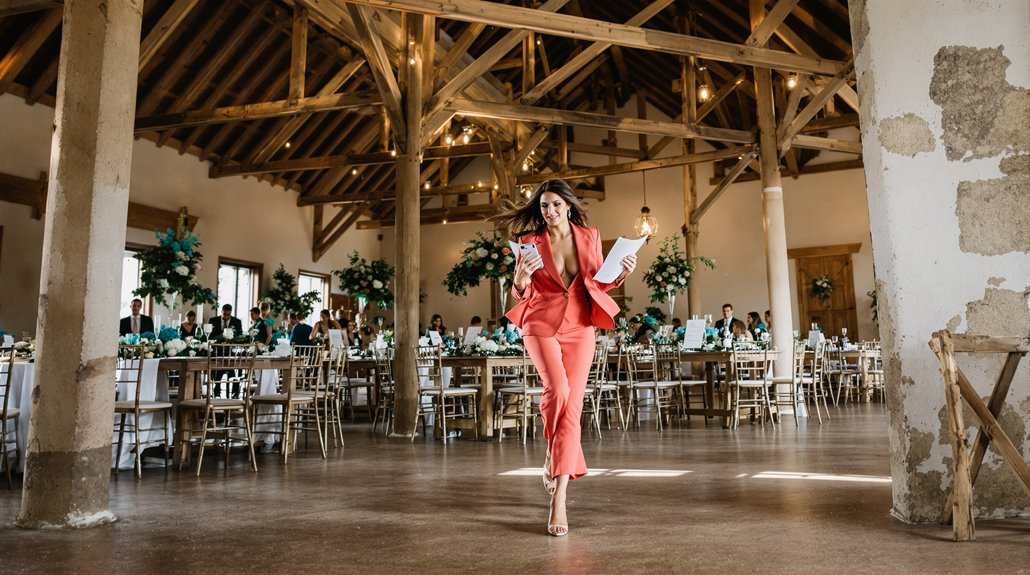
You’re juggling a 200-guest wedding with only 90 days on the clock? Time to pivot into action mode with your essential wedding planning template! This isn’t a fairy tale; it’s a project, and you’re the boss. Start with the Guest-List-Tracker to align RSVPs with your budget. Use the Vendor-Confirmation-Template to lock in rentals and verify everyone’s arrival. Your Timeline-Creation-Tool is your roadmap—plot every moment from “I do” to the final dance. The Personal-Prep-Checklist guarantees no detail’s overlooked, from fittings to packing essentials. Finally, use the Day-Of-Logistics-Tracker for seamless execution—assign roles, prep tips, and finalize transportation. A day-of coordinator is essential to manage timelines and act as a point of contact for vendors and guests, reducing stress for the couple. This is your strategic playbook. Execute with precision, and your wedding day will flow effortlessly. Ready, set, streamline!
Common mistakes (and how to avoid them)
Envision this: with a 90-day countdown to your wedding, every decision counts. Avoid common pitfalls by embracing planning precision. A few strategic pivots can keep your event on track.
- Set a realistic budget early: It’s non-negotiable. Overspending leads to compromises—use spreadsheets to track every penny.
- Guest list reality check: Avoid inviting more than your venue’s capacity. Fire laws aren’t flexible.
- Weather backup plans: Outdoor weddings need contingencies. Hurricanes don’t RSVP.
- Vendor reliability: Plan for no-shows to dodge last-minute chaos.
- Delegate tasks: You’re not a superhero. Streamlined execution requires help.
FAQ
Let’s cut to the chase—you’re busy, and planning a wedding in 90 days demands strategic moves. You’re wondering how to execute efficiently, what to delegate, and how to handle unresponsive vendors. Here’s the deal: track progress weekly, streamline tasks, and prioritize essentials, so you can pivot when needed and still get the job done.
How long should this take if we’re busy?
How fast can you plan a 200-guest wedding when life’s a whirlwind? With your packed schedule, you’re looking at an accelerated timeline. Most couples spend six hours weekly on planning. If you’re busy, you need strategic moves, not just more hours. Use digital platforms like The Knot and Pinterest to streamline vendor research and inspiration. Hiring a professional planner—whether full-service or day-of—can pivot your process by handling logistics. You’ll want to execute within 40 total hours, treating each step like a project milestone. Remember, the average couple hires 14 pros. Your mission: get the job done without sacrificing quality. Reality Check: Controlled chaos is your friend, but don’t skip on a clear timeline and budget. Start now, gain momentum.
What’s the minimum version that still works?
You’ve got 90 days to pull off a wedding with 200 guests, and it’s time to focus on the essentials. First, nail down your budget—this isn’t just a number, it’s your strategy. Next, secure that marriage license pronto; the clock’s ticking, and you’ll want to avoid any legal hiccups. Your guest list? Treat it like a non-negotiable asset. Match it to your venue’s capacity early to dodge venue drama. Save time by opting for simple DIY favors and streamlined menus. Prioritize top vendors and lock them in—they’re your A-team. Remember, it’s about what gets the job done, not perfection. Pivot wisely, and keep moving. Reality Check: Overcomplicating leads to chaos, so cut the fluff and focus on execution.
What can I safely delegate?
Why juggle every wedding task when you can strategically delegate and focus on what really matters? Streamline your 200-guest wedding plan by handing off tasks to trusted allies. Delegate venue and vendor research to family or friends who thrive on details. Create a packing checklist so others can organize venue essentials. Use a Google Sheet for vendor contacts—your go-to coordinator will thank you. Crowdsource your playlist from RSVPs, letting guests shape the dance floor vibe. Assign local-savvy folks to plan welcome events and bag prep. On the big day, appoint a liaison to handle vendor madness and shield you from chaos. Keep momentum by delegating timekeeping duties to prevent any “oops” moments. Ready to accelerate your planning? Start delegating now!
What if a vendor isn’t responding?
When a vendor isn’t responding, it’s time to pivot and take control of the situation—because who has time for ghosting when you’re on a 90-day clock? First, review your communication methods and make certain they’re crystal clear. Use automated CRM tools for follow-up emails or scheduler links to keep things moving. If they’re still MIA, it’s non-negotiable: consider other vendors. Pricing transparency is your ally; it accelerates decisions by cutting through the noise. Keep your checklist handy and track response times. If a vendor can’t meet the hustle, they’re not a fit for your project-managed wedding. Use your network—Google, Instagram, referrals—to find reliable backups. Remember, efficiency isn’t optional; it’s your superpower. Execute strategically, and keep momentum rolling.
What should I track weekly?
In the whirlwind of wedding prep, your secret weapon is a rigorously maintained weekly checklist. Think of it as your strategic playbook. First, confirm vendor details—arrival times, service expectations, and contact info. Don’t skip this; it’s non-negotiable. Next, lock in your final guest count and seating arrangements. This guarantees your caterer doesn’t panic. Verify ceremony and reception details are airtight—music, vows, and timelines all need your stamp of approval. Don’t forget attire and personal prep: schedule fittings, confirm hair and makeup, and pick up your wedding wear. Finally, handle payments and paperwork like a pro: tip envelopes, marriage license, and travel docs should be ready. Move with purpose; you’ve got this. Next step? Tick these off weekly.
Key takeaways
Executing a 200-guest wedding in just 90 days is nothing short of a strategic sprint. It demands precision, smart shortcuts, and relentless focus. Here are key takeaways to keep you on track:
- Guest List Management: Expect a 75% attendance rate. Invite strategically to fit venue capacity without overextending.
- Vendor Strategies: Hire about 14 vendors. Negotiation isn’t just for Wall Street—57% of high-rollers do it.
- Budget Allocation: Watch that budget balloon. Venue eats up 37%, and 76% overspend on food/drinks.
- Efficiency Tactics: Dedicate six hours weekly to planning. Streamline with tech and in-person meetings.
- Planning Timeline: Forget the 15-month norm. Use a 90-day checklist to accelerate every decision.
Reality Check: Cutting corners? Focus on what truly matters—guests and good vibes.