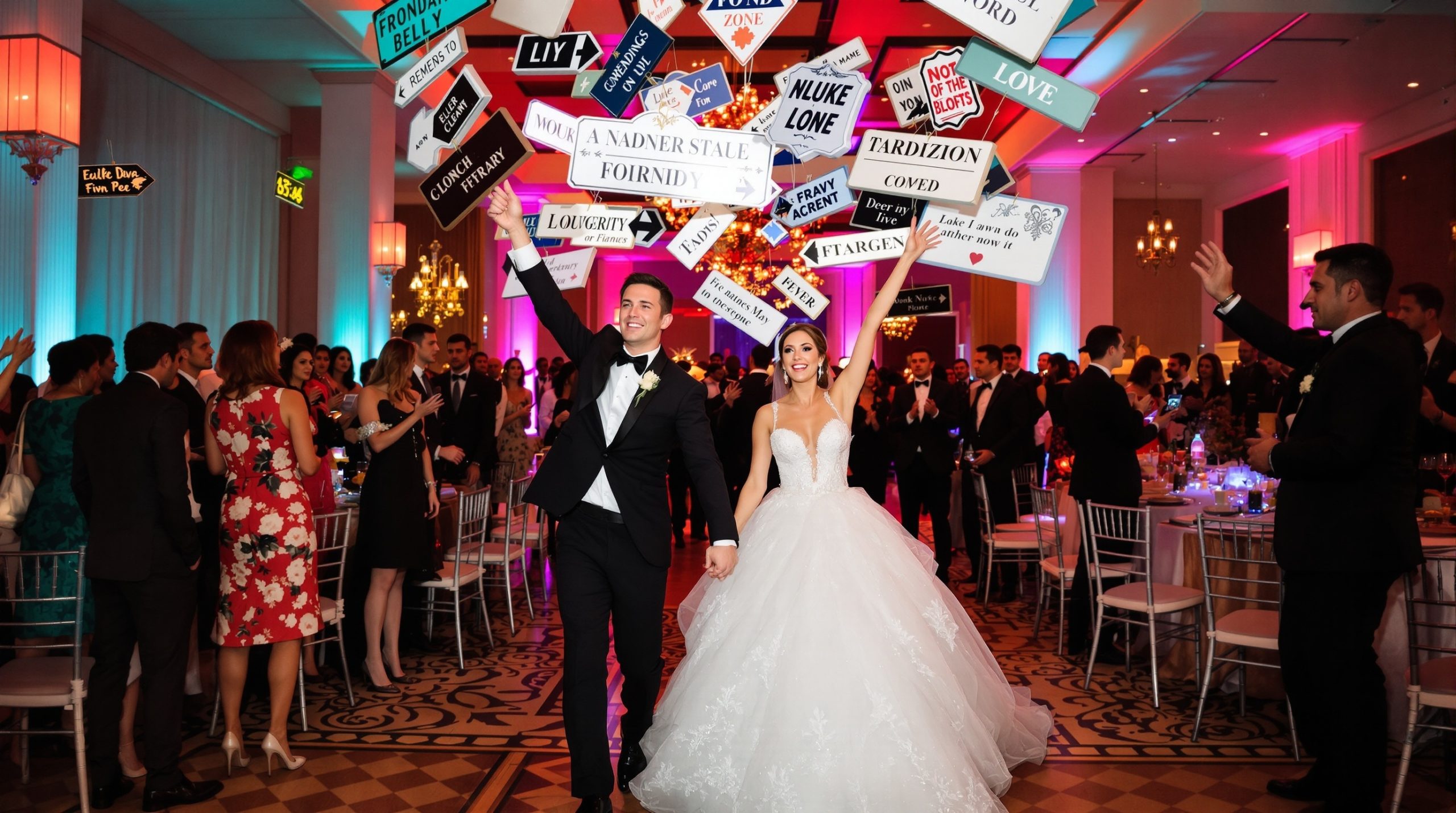
Most wedding signage is pure fluff that clutters your event, jacks up costs, and adds zero polish. Over-signing happens because many couples fear their guests will wander like lost sheep. Solution? You strategically prioritize essential signs—think welcome, directional, seating chart—and embrace live human guides who get the job done. Streamline from chaos to precision with smart planning and communication tools. Ready to pivot to a minimal, more efficient approach? Stick around—we’ve got more insights to share.
The thesis (what people get wrong)
Why do so many believe every wedding needs a forest of signs? Let’s break it down. Over-signed weddings often confuse priorities, piling on unnecessary expense and clutter. You might think more signs equal more polish, but it’s a misconception. Signage minimalism is your strategic friend. You only need 5-10 essential signs depending on your venue’s size and layout. Focus on what truly guides guests—like directional or table numbers—and skip the fluff that adds no real value. Smaller weddings typically require minimal signage, as personal guidance is easier with fewer guests. A streamlined approach guarantees your wedding isn’t drowning in signage chaos. Remember, less is more. Prioritize clarity and guest experience with intention. Engage in vendor outreach with scripts and tracking for smooth execution. Want a checklist? Make that your next step. Cut the clutter and execute with precision.
Why this happens (the real root causes)
When you feel buried under a mountain of wedding signs, it’s no accident—it’s a symptom of deeper issues. Often, the root cause is a blend of venue complexity, guest experience pressure, and aesthetic demands. Here’s how these factors lead to sign overload:
- Venue Complexity: Large or intricate spaces necessitate navigational aids, but many skip unnecessary signs by evaluating existing coverage. Popular materials for wedding signage, such as acrylic and wood, can be used sparingly to effectively guide guests without overwhelming them. Incorporating strategic alignment checkpoints can ensure that signage decisions are coherent and in line with the overall wedding plan.
- Guest Experience Pressure: Fear of guests feeling lost pushes couples to over-sign. Strategically placed signs can streamline this without overdoing it.
- Aesthetic Demands: Cohesive design should enhance, not overshadow. Signs can tie a theme together, yet too many clutter the look.
Recognize these factors, and you’ll pivot towards a more executed, streamlined event that gets the job done without sign chaos.
What to do instead (the better framework)
To tackle the sign chaos like the savvy pro you are, pivot your approach and embrace a framework that prioritizes essentials and cuts the fluff. Say goodbye to over-the-top displays and focus on what truly matters. Here’s how to execute it with precision:
Embrace essentialism in signage, focusing on necessity over excess to create impactful, clutter-free displays.
- Prioritize Essential Signs: Keep it simple with welcome, directional, and seating chart signs. They’re non-negotiable and get the job done efficiently. Welcome signs confirm guests have arrived at the correct venue, which is crucial for setting the tone of the event.
- Embrace Minimalist Design: Strategically choose legible fonts and neutral tones. Limit unnecessary decoration—your venue’s ambiance is enough. Consider using a customizable template for your wedding website to ensure that your signage design aligns with your overall wedding theme.
- Opt for Sustainable Materials: Use cardstock, wood, or glass. Think beyond the day—monogrammed signs double as home decor.
When executed with intention, your signage won’t just blend in; it’ll enhance the experience. Focus on these essentials, and you’ll cut through the clutter with ease.
How to apply it in real life
Envision this: you’ve got a bustling venue with guests pouring in, and the restrooms are a mystery—execute a quick pivot by strategically placing clear directional signs at key entry points to streamline flow and cut confusion. Now, imagine a high-stakes scenario with 200+ guests—your move is to upsize those signs for maximum visibility, ensuring everyone knows where to head without second-guessing. For those “we’re busy” days, streamline by pre-scouting the venue and preparing a checklist of essential signs, saving you time and keeping your budget in check. It’s important to remember that size affects visibility; small signs may be hard to read, while oversized signs can distract from wedding decor. Always vet vendors thoroughly to ensure smooth execution of your event, and avoid potential pitfalls that could arise from poor planning.
Example 1: a common scenario + the better move
Let’s talk tables—those unassuming fixtures that can either streamline your wedding or send guests into a tailspin of uncertainty. Imagine this: unlabeled tables for guestbooks, favors, gifts, and cards. Chaos, right? Instead of cluttering your venue with signs, pivot to a smarter approach. Use your event emcee or planner to verbally guide guests. Strategically place items like an open guestbook on a stand for intuitive discovery. Keep it simple—no need for a sign overload. For intimate gatherings under 50, personal greetings do wonders. Pre-wedding emails or programs can outline table purposes, ensuring clarity. In smaller venues, limit signs to essentials like a seating chart. Save time, money, and sanity while keeping your wedding streamlined and chic. It is important to set a budget early in the planning process to maintain financial clarity and prevent unnecessary spending on non-essential items like excess signage. Ready to execute? Start planning!
Example 2: a high-stakes scenario + the better move
When you’re tackling a sprawling venue with multiple buildings or outdoor spaces, every step counts. Without strategic signage, guests hesitate, disrupting the event flow—like sheep without a shepherd. Don’t let that happen. Scout your venue in advance. Identify high-traffic hesitation points. Instead of plastering signs everywhere, focus where it matters. Streamline to 5-10 essential signs: welcome, directional, seating, table IDs, and culinary. Reserved seating signs ensure VIP guests have the best view during the ceremony, enhancing their experience. Size matters—go big and readable. Reusable displays? A non-negotiable win. You’re not just decorating; you’re executing a precise mission. Want chaos? Skip this. Want efficiency? Stick to the plan. Accelerate your event’s success by prioritizing clarity over clutter. Printable Timeline + Tracker can help you organize this efficiently. Next steps: create a checklist, map out signage spots, and pivot to execution mode.
Example 3: a ‘we’re busy’ scenario + the better move
In the whirlwind of orchestrating a large wedding, it’s easy to think more signage equals more control—wrong! More signs often create clutter, not clarity. You’re not running a road rally; your wedding’s about experiences, not a signage safari. Instead, leverage people power. Strategic ushers and hosts can guide guests far better than placards ever could. Think of them as your event GPS—real-time, adaptable, and personable. Printed or neon signs can clutter the wedding atmosphere, which is why relying on human guidance enhances the experience. Deploy staff at key junction points like ceremony exits and dining areas. This move accelerates flow and cuts down on confusion. Plus, it’s eco-friendly—less paper waste, more personal touch. Ditch redundant signs and save your budget for what truly matters. You can explore marketplaces like GigSalad to find professional ushers and hosts who can enhance the overall guest experience. Next step: Strategize your staffing plan; it’s a non-negotiable efficiency gain.
Counterpoints (when the old way is actually fine)
While streamlined signage often accelerates a wedding’s flow, sometimes the old-school approach still gets the job done. Let’s face it, not every wedding needs a sign for every little detail. Sometimes, simplicity speaks volumes. Here’s where going old-school still works:
- Venue Layout: If your venue’s intuitive and compact, guests won’t need a roadmap. They’ll find the bathroom, trust me.
- Guest Engagement: Skip the sign; let guests ask questions. It’s human connection, not an info booth.
- Budget-Friendly Options: Don’t burn cash on unessential signs. Focus funds where they matter, like killer catering or a DJ that keeps people moving. Eco-friendly signage using plantable paper can be a unique touch, but sometimes an old-fashioned approach is more budget-friendly. It’s important to allocate 20-35% of your total wedding budget to venue costs to ensure it aligns with your overall spending plan.
Reality Check: Over-signage can clutter your venue and your budget. Sometimes less is more—strategically streamline for maximum impact.
Action plan (do this next)
You’ve grasped the beauty of simplicity in wedding signage, now let’s put that insight into action. Streamlining your wedding signage means maximizing efficiency without losing clarity. Here’s how to execute it:
- Prioritize Must-Haves: Focus on the non-negotiables like a welcome sign, directional markers for complex venues, and seating charts. These are your navigational lifelines. Remember that essential signs like directional signs and seating charts enhance guest experience by providing important information.
- Strategic Placement: Place signs where guests may hesitate—entrances, intersections, and decision points. This isn’t about overloading; it’s about targeted guidance that gets the job done.
- Integrate Design: Keep signs cohesive with your décor. Think of them as part of your aesthetic toolkit, not just functional items. Consider how venue expenses do not scale with guest count, and optimizing signage can help manage costs effectively.
Executing this plan respects your budget and guests’ time while maintaining that kinetic precision you crave.
Visual summary you can share
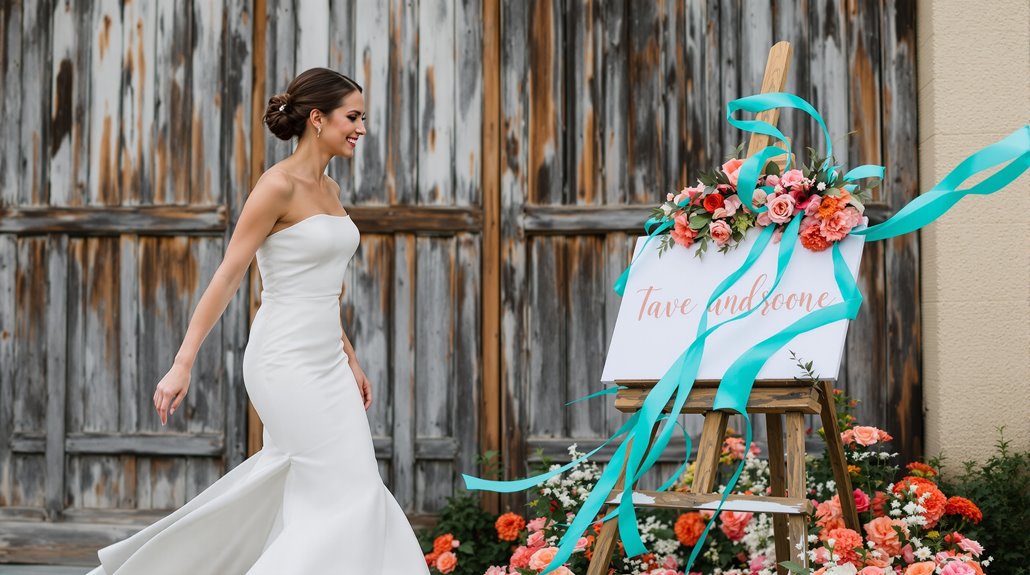
Let’s cut through the noise and get your wedding signage strategy on point. You only need 5-10 signs, tops. Focus on essentials like a welcome sign, directional signage, and seating chart. For big or labyrinthine venues, these signs are non-negotiable—they prevent your guests from wandering like lost sheep. Skip over-the-top signage for intimate or simple venues; your guests aren’t clueless. Excess signs? Total clutter. Stick with what gets the job done. Want to sprinkle in some personality? Consider personalized or fun signs as your “nice-to-have” extras. They’ll boost ambiance but don’t fool yourself—they’re not essentials. Keep your venue’s natural elegance intact with minimal, smartly placed signs. Now, pivot to execution mode. Create a checklist, set up timelines, and nail down your layout. Remember, careful planning is critical for success, especially if you’re on a tighter timeline, to ensure all elements of your wedding come together seamlessly.
FAQ
In the whirlwind of wedding planning, you’re bound to face pushback from family or vendors, but don’t sweat it—your vision is non-negotiable. If you’ve already taken a misstep, don’t panic—pivot quickly by aligning with your partner and executing a streamlined plan to course-correct. For an easy win today, prioritize a clear, strategic signage checklist that gets the job done without the fluff.
What if my family/vendors push back?
When it comes to wedding signage, pushback is almost guaranteed—whether from family fixated on tradition or vendors with a sales agenda. Families love to argue that without signs, guests will wander aimlessly like they’re in a romantic comedy (they won’t). Vendors, on the other hand, see signs as cash cows—adding 5-15% to your budget with claims of “necessary” polish. The truth? For smaller, intimate venues, signs are as useful as a chocolate teapot. Scout your venue first; it might already have all the signs you need. Don’t let pushy vendors or tradition-bound relatives derail your streamlined vision. Prioritize what actually enhances your day. Next step? Create a venue map and communicate it clearly—problem solved, efficiency gained.
What if I already made the ‘wrong’ decision?
Your family and vendors may have different opinions, but it’s your wedding, and it’s time to own your choices. You might feel you’ve already committed to too many signs, but no need to stress. Evaluate your venue layout post-purchase. A clear, simple space may need minimal signage—pivot by removing unnecessary ones. Streamline your approach by prioritizing only critical areas where guests might hesitate. If your wedding is intimate, personal guidance can replace signs. Repurpose or discard extras to declutter, focusing on what truly adds value. Remember, fewer signs mean saved dollars. You’ve got this—shift, adjust, and execute like the project management pro you are. The next step: evaluate what matters and strategically trim the excess.
What’s the fastest way to course-correct?
How do you pivot from a wedding disaster waiting to happen to a streamlined success story? Start by hiring a day-of coordinator. They’re your secret weapon, shifting you from chaos to enjoyment without a full replan. Next, tackle your budget head-on. Revise it immediately—nearly 45% of couples underestimate costs. Use transparent cost breakdowns and negotiate with vendors for rapid savings. Adjust your guest list to control costs; smaller counts are on trend and cut per-guest expenses. Finally, leverage planner expertise. They provide real-life budget examples and create detailed timelines for swift corrections. Build contingency plans—adaptable timelines and flexible contracts are non-negotiables. Now, execute with precision. Your wedding’s not a Pinterest board; it’s a well-oiled machine.
How do I get my partner aligned?
Pivoting from potential chaos to a streamlined wedding involves more than just budgets and coordinators; it requires getting your partner on the same page. Start with open communication: sit down and discuss priorities, preferences, and non-negotiables. Use “I” statements and active listening to bridge gaps. Define shared priorities by listing top three must-haves—like venue or food—and align on negotiables versus non-negotiables. Establish boundaries around budget and family input for a no-nonsense approach. Compromise strategically by trading preferences without sacrificing core values. Delegate tasks based on strengths, and keep momentum with regular check-ins. Schedule planning-free date nights to reconnect. Remember, a wedding isn’t a Pinterest board; it’s executed like a top-tier project. Next step? Make a checklist and get moving!
What’s the easiest win I can do today?
Ready to snag a quick win today? Slash unnecessary wedding signage. It’s a low-hanging fruit that’ll save you time and money. Focus on essential signs: welcome, directional wayfinding, seating charts, and table identifiers. Ditch the fluff—personalized signs like “Just Married” and name displays are nice-to-haves, not need-to-haves. Streamline your venue layout to naturally guide guests without clutter. Think of it as a tactical play, not a Pinterest parade. Use your venue’s existing flow to eliminate confusion. Smaller events? Skip signs altogether. Embrace strategic table placement for guest books and gifts. Your move: assess your venue’s natural flow and pinpoint where minimal signage maximizes impact. Execute this, and you’ll pivot from chaos to cool in no time.
Key takeaways
When it comes to wedding signage, less is often more—especially if you’re aiming for a streamlined, high-impact event. You don’t need to litter your venue with signs to execute a well-organized day. Here’s how to strategically tackle wedding signage:
- Minimal Essentials: Stick to a welcome sign, seating chart, and key directional guides. They get the job done without clutter.
- Venue Layout: For simple, indoor layouts, let the space speak for itself. Use existing venue markers to avoid unnecessary signage.
- Cost-Effective Choices: Skip the nonessential “extras.” No need to label every little thing—guests will figure it out.
Reality Check: Over-signage risks drowning the venue’s ambiance. Prioritize impactful signs that empower guests without overwhelming. Your wedding, your rules—execute with precision.