
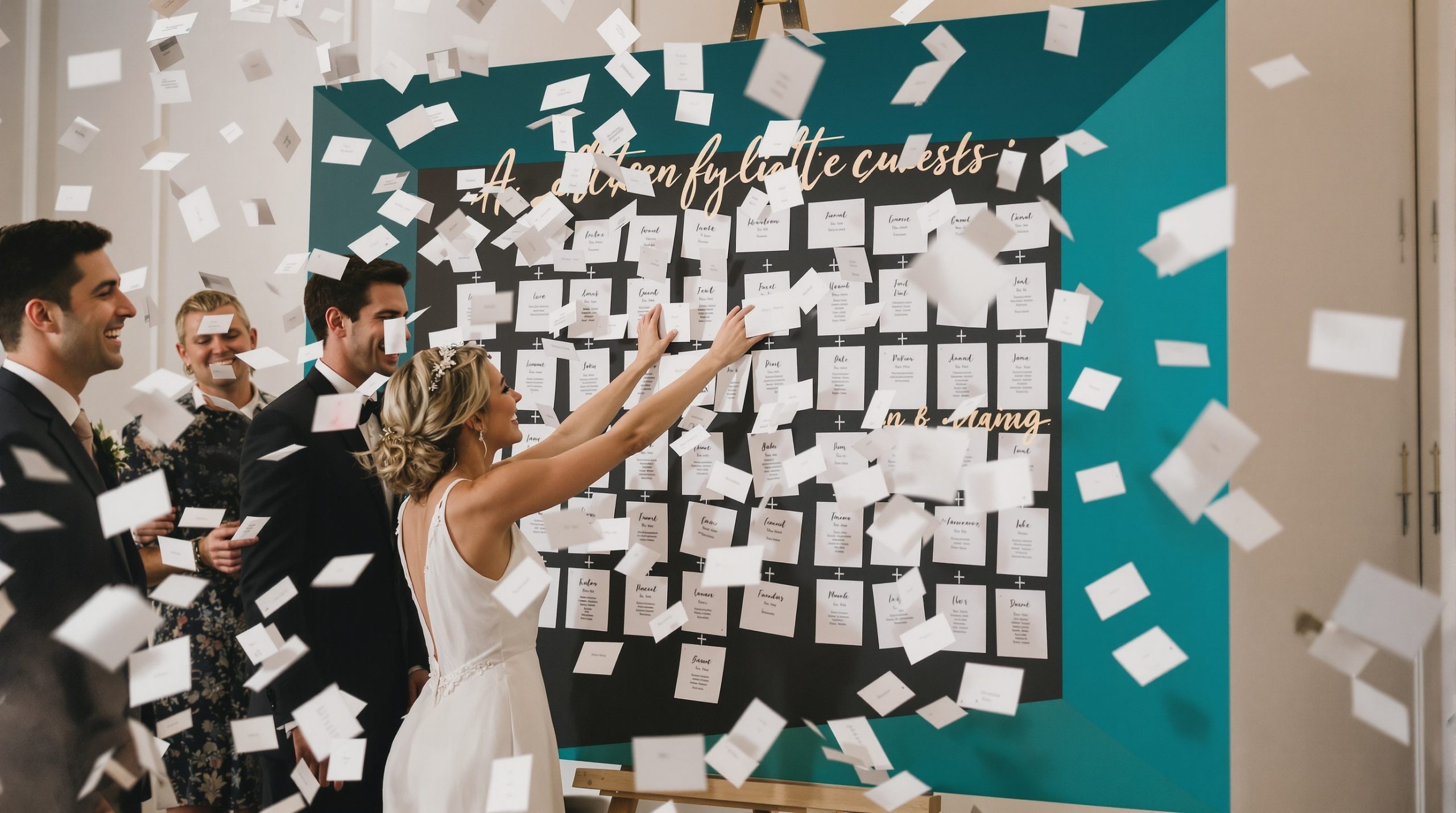
Balancing A-list and B-list guests at your wedding isn’t about playing favorites; it’s about strategic execution for maximum impact. It’s like choosing between champagne or prosecco: both elevate the celebration, but each fulfills different roles. A-listers boost prestige; B-listers maintain warmth and manage costs. Missteps? Forgetting the RSVP cutoff or letting slips turn strategic decisions into awkward conversations. Nail the lineup, streamline RSVPs, anticipate travel needs. Curious about refining that guest list even further?
Quick verdict: Ethical vs. Offensive? (who each is best for)
When it comes to guest lists, you might find yourself steering through the A-list vs. B-list waters with a sense of strategic precision. Understanding tiered guest invitations is a powerful tool in your wedding planning arsenal. Here’s why:
- Tiered Invitations: Streamlining your guest list is non-negotiable. Prioritize those guaranteed to elevate your event’s presence. Think A-list for the wow factor, naturally.
- Guest List Etiquette: Use secondary invitations for those still important but not critical to the event’s core success. This method maintains relationships while managing costs.
- Execution: Strategically executed invitations guarantee you gain maximum impact without unnecessary fluff. A-list actors are recognized globally and can open a movie based solely on their name, which is why their presence can significantly enhance the prestige of your event.
At-a-glance comparison: Ethical vs. Offensive?
How do you navigate the murky A-list vs. B-list invitations territory? It’s all about strategic execution. Let’s break it down:
| Ethical Aspects | Offensive Perceptions | Reality Check |
|---|---|---|
| Experts approve b-listing when handled properly. | Risks hurt feelings if guests discover tiered status. | Execute with precision, don’t half-ass. |
| Budget-friendly and practical. | Implies lesser importance. | Prioritize relationships, not just numbers. |
| Etiquette evolves; it’s not what it used to be. | Last-minute invites can offend. | Plan and pivot, don’t panic. |
Executing b-list invitations isn’t about playing favorites. It’s about managing your wedding like a project—being non-negotiable on your priorities while remaining respectful. Smart vendor management and execution ensures the guest list process runs smoothly and efficiently. Remember, the hustle is real, but your strategy must be airtight. Next step? Nail that guest list timeline and get this show on the road! Keep in mind the final guest count should always be under the venue’s comfortable capacity to ensure a stress-free celebration.
Define the options (so you’re comparing the right things)
When comparing A-list and B-list guests, you’ve got to define what ethical and offensive really mean in this situation, because clarity accelerates smart decision-making. Ethical involves understanding who aligns with your values and vision for the event, while offensive could mean guests who clash with your vibe or cause unnecessary drama. Misunderstandings arise when you confuse personal preferences with these definitions, so keep it streamlined: know the roles they play, and execute your list with precision. A-list actors, like Will Smith, are highly successful and guarantee box office hits, which may align with your event’s prestige and success goals.
Ethical: what it is, what it includes, and the common misconceptions
Crafting an ethical guest list isn’t just about checking boxes; it’s about strategically executing your vision for the big day while respecting everyone involved. You’ve got to navigate the wild world of wedding invites with precision. Start by prioritizing transparency—list every invited person to avoid misinterpretations. Proactively offer a set number of guests for stakeholders to invite, which can serve as an anchor for negotiations and discussions. Be upfront about adult-only restrictions and specific plus-one allowances. Online private lists sidestep awkward omissions. Remember, an ethical list aligns with your event goals, balancing legal minimums with superior respect standards. When planning, consider the cost per guest as a practical way to keep your event both ethical and financially responsible. Avoid the misconception that legal equals ethical; aim higher. No unlimited plus-ones—clarity is key. Missteps? Assuming solo invites offend, and private lists aren’t exclusionary—they prevent chaos. Next step: create a non-negotiable core list. Ready? Let’s hustle.
Offensive?: what it is, what it includes, and the common misconceptions
Offense isn’t just a buzzword—it’s a minefield you’ll need to navigate with precision if your wedding guest list is going to be a success. Understanding what constitutes offensive behavior is essential. Legally, it includes actions likely to wound, anger, or humiliate others. It’s not just about language; context and intent matter. Misconceptions abound: not every disagreement or bad joke is offensive. True offense targets dignity, often tied to protected characteristics like race or gender. Courts assess each case based on its specific circumstances, highlighting the importance of context. Your strategic advantage? Recognize serious, repeated behavior as potential red flags. Don’t confuse standard feedback with harassment. Community standards evolve, so keep your finger on the pulse. Actionable step: Use a checklist to evaluate guest list dynamics. Research shows that wedding planning often amplifies family dynamics in wedding planning, making it crucial to consider underlying relationships when making your decisions. Aim for a vibe that’s inclusive—without compromising your curated hustle.
Cost breakdown (upfront vs hidden costs)
Let’s talk numbers—A-list guests might wow your crowd, but they come with a hefty price tag, often exceeding $1 million upfront. B-list options are more budget-friendly, ranging from $50,000 to $150,000, but don’t forget the hidden costs like luxury travel, security, and those pesky rider demands. When planning your guest list, it’s crucial to account for hidden fees that can unexpectedly inflate your total expenses, similar to the way wedding costs can surprise couples in both major metros and secondary markets. Strategically managing these expenses guarantees your event isn’t just memorable, but also executed within a streamlined budget—because no one wants to be in a financial bind post-celebration. Recognize that celebrity fees vary based on status, availability, and media exposure, so it’s essential to factor in these elements when selecting the right guest for your event.
Line-item cost comparison by tier/budget
When it comes to booking celebrity talent for your wedding, understanding the line-item costs by tier is non-negotiable. You need strategic clarity to manage A-list and B-list budgets efficiently. Here’s a streamlined comparison:
| Expense | A-List | B-List |
|---|---|---|
| Base Appearance Fee | $100K – $1M+ | $50K – $150K |
| Travel Costs | Private jet, luxury | First-class, upscale |
| Accommodation | Luxury suites | Premium rooms |
| Security & Insurance | 1-3% talent fee | Basic coverage |
A-listers demand higher costs, from private jets to personal security. B-listers offer a more budget-friendly route without skimping on quality. Strategically choose based on your priorities. When working with reputable agencies, ensure all contracts are legitimate to avoid hidden costs. Remember, hustle beats fluff—plan with precision. Evaluate where your money moves and pivot accordingly. For a smooth planning process, consider how venue importance can affect your overall budget allocation and vendor choices.
What actually drives cost changes
Executing a wedding that’s the epitome of “curated cool” demands more than just a big budget. It requires understanding the cost dynamics that can pivot your plans from streamlined to stressful. Fixed costs like venue rentals and insurance are non-negotiable, but hidden costs lurk beneath the surface. Here’s what to watch:
- Variable Costs: These scale with your guest list. Catering and staff costs can inflate quickly, so monitor headcount.
- Upfront Costs: Commit to early decisions on venues and keynotes, locking in rates while avoiding last-minute chaos. Understanding event costs ensures profitability in ticket pricing, which is a crucial factor when making these early commitments.
- Hidden Costs: Operational surprises like extra cleaning and volunteer expenses can sneak up, impacting your bottom line.
Reality Check: Overlooking these can derail your budget faster than a runaway train. Stay sharp, stay savvy.
Planning workload & logistics impact
When orchestrating an event with A-list guests, you’re looking at a whole new level of time and complexity, making vendor flexibility non-negotiable. While B-list events can often rely on standard coordination, A-listers demand strategic execution with contingency plans for last-minute shifts. To guarantee you’re not caught flat-footed, align vendor schedules early and keep an eye on real-time updates for seamless pivoting. For these high-stakes gatherings, it’s crucial to monitor and manage hidden costs that can quickly escalate with increased guest expectations and specialized requirements.
Time, complexity, and coordination differences
Orchestrating a seamless guest list for your wedding is akin to running a tight ship—every detail needs to be flawlessly executed. Steering through the time, complexity, and coordination differences between A-list and B-list guests is a strategic endeavor. You’ll need to:
- Accelerate RSVP timelines: Send A-list invites 8-12 weeks before and B-list 4-6 weeks before to maintain a pulse on attendance.
- Strategically categorize: Prioritize A-list guests as close family and friends, then slot B-list as needed.
- Streamline coordination: Use digital RSVPs for rapid responses and staggered invites to keep the process moving.
It’s a dance of timing and precision. Remember, every decision impacts your planning workload—keep it tight, keep it moving. Ready for the hustle? Go execute like a pro. When handling guest lists, remember that even reducing the guest list can have a significant effect on your overall budget and planning complexity.
Vendor availability + flexibility considerations
While A-list guest lists might seem like a logistical nightmare, let’s break it down to a streamlined process that even your overbooked calendar can handle. Strategic vendor availability becomes non-negotiable when dealing with high-profile guests. Here’s how you execute with precision:
- Vendor Marketplaces: Use platforms like Cvent to tap into thousands of trusted vendors across 15 categories, accelerating your planning process.
- Service Flexibility: Choose vendors who adapt to any setup, ensuring smooth service no matter the guest count or kitchen constraints.
- Proactive Coordination: Engage entertainment and transportation vendors early to accommodate high-profile needs and avoid last-minute scrambles.
Reality Check: Balancing A-list demands with B-list simplicity requires hustle. Avoid overcommitting—prioritize what gets the job done efficiently. You can also explore wedding service professional marketplace options to further simplify vendor selection and streamline planning logistics.
Guest experience impact
When it comes to guest experience, the presence of A-list celebrities can turn a gathering into a high-octane spectacle, creating an electrifying atmosphere that B-list names just can’t match. However, the spotlight also brings friction—managing massive expectations and the inevitable fan frenzy demands strategic planning to maintain a seamless flow. Remember, it’s not just about the star power but how you execute the whole experience to keep your guests buzzing with excitement from start to finish.
How guests perceive it + where friction shows up
Let’s cut to the chase: guest perception of A-list versus B-list celebrities can make or break your event’s vibe. While A-listers generate buzz, they can also create friction. Here’s where the tension shows up:
- Access Issues: A-list celebrities need intense security, limiting guest interactions. Meanwhile, B-listers offer more personal time, upping guest inclusion and connection.
- Engagement Gaps: A-list appearances often mean quick walkthroughs. B-listers typically allow for richer engagements like Q&A sessions and signings, boosting guest satisfaction.
- Social Buzz: Sure, A-listers drive social media posts, but B-listers encourage guests to share their own experiences, enhancing organic reach.
Balancing between A-list and B-list guests is similar to optimizing guest count to create a more memorable and inclusive event experience.
Best-fit scenarios (choose based on constraints)
When you’re planning a high-energy event, strategically choosing between A-list and B-list guests can be a game-changer. Consider the ethical implications of your choices—select A-list when you need maximum impact and B-list for a more intimate vibe. Avoid being offensive by ensuring your guest list aligns with the event’s purpose and respects your audience’s values. When determining your guest tiers, remember that guest experience: food and drink often ranks among the top priorities for attendees, so plan your list with attention to both enjoyment and logistics.
Choose Ethical if…
Getting hitched in a way that reflects your values requires laser-focused decision-making, especially if you’re a couple who thrives on hustle and precision. Embrace ethical choices when:
- Transparency is non-negotiable: You’ll disclose all partnerships, keeping FTC guidelines in mind, guaranteeing genuine integrity.
- Authenticity is your mantra: Only endorse what you’ve personally vetted. Forget misleading claims—your guests deserve the truth.
- Positive impact is your legacy: Shape culture beneficially by promoting mental health and sustainable consumption.
Executing a wedding with these ethics at the core streamlines decision-making and accelerates trust. It’s not just about who’s on the list; it’s about aligning with your values. Next steps? Create a checklist to guarantee these principles guide your planning process—no fluff, just results.
Choose Offensive? if…
If you’re the type who thrives in the fast lane and won’t back down from a challenge, consider going a little rogue with your guest list by choosing offensive. Imagine this: your wedding as a high-stakes, drama-fueled blockbuster. Why not?
- Amplify the drama: Public feuds, like Lindsay Lohan’s on-air confrontation, add layers of intrigue.
- Strategic chaos: Calculated smear campaigns can be your secret weapon, as shown by Blake Lively’s legal drama with Baldoni.
- Eventful storytelling: On-set conflicts, such as Charlie Sheen’s run-in with Lohan, make for compelling stories.
Embrace the controlled chaos and execute an event that speaks volumes. Just remember, this path isn’t for the risk-averse. Ready to pivot? Start by crafting a guest list that guarantees your wedding becomes an unforgettable narrative.
Real-world scenarios (examples with numbers)
Envision this: you’ve got a guest list of 200, a budget of $150,000, and a priority for a memorable, high-impact experience. Hiring an A-list speaker like Simone Biles could eat up most of your budget, leaving little room for other event essentials. Alternatively, strategically booking a B-list celebrity such as Sarah Paulson for $75,000 gives you room to pivot and streamline other key aspects, ensuring the entire event gets executed with kinetic precision.
3 sample scenarios: guest count + budget + priorities
When you’re diving into wedding planning, guest lists can feel like a high-stakes game of musical chairs. Here’s how you can execute a streamlined approach without losing your sanity. Start with your non-negotiables: budget and guest count. Let’s say you’ve got a $50,000 budget and a 200-person guest list. Prioritize your must-haves.
| Priority | Execution Strategy |
|---|---|
| A-List Impact | Invite 2 A-listers to draw attention. Allocate $20,000 for them. |
| B-List Balance | Mix in 10 B-listers for versatile entertainment. Budget $15,000. |
| Guest Volume | Fill with C/D-listers to maintain energy. Spend $10,000. |
You’ve got $5,000 left for contingency because let’s face it, surprises happen. Prioritize like a pro, pivot when needed, and keep those wedding sneakers ready for action.
Common mistakes (and how to avoid them)
Maneuvering the A-list vs. B-list guest dilemma can feel like walking a tightrope. Mistakes happen, but let’s pivot to solutions. Here’s how to steer clear of common pitfalls:
- Timing Missteps: Send A-list invites 10-12 weeks out, and B-list invites as soon as declines roll in. Waiting signals guests they’re Plan B. Prioritize timing—strategic execution shows respect.
- Confidentiality Blunders: Avoid public guest list discussions. Keep things tight between you and your planner. When entire social circles receive invites together, everyone feels valued.
- Communication Gaffes: Skip text invites unless universal. Go for formal, written communication. If asked, be honest about venue constraints—not perceived guest worth.
Reality Check: Skipping these steps? Brace for drama. Your wedding’s a project—execute accordingly!
Copy/paste decision matrix template

Let’s cut to the chase: a decision matrix is your go-to tool for guiding the A-list vs. B-list guest decisions. You want efficiency? This matrix delivers. Start by defining your criteria: emotional closeness, potential drama, or obligatory invites. Assign weights to each—emotional closeness might be a 5, drama a 2. List your guests in rows, criteria in columns. Score each guest, multiply by their criterion weight, and sum it up. The highest score? That’s your A-list. This isn’t just a tool; it’s a strategic powerhouse that gets the job done. Forget the Pinterest-perfect guest list; this is about intentional execution. Ready to streamline your guest list? Copy/paste our template and make those decisions with kinetic precision. {save_text: decision_matrix_template}
FAQ (quick answers to common edge cases)
Feeling stuck between two options? Start by strategically listing pros and cons to gain clarity, then execute a risk-reduction strategy by confirming assumptions with vendors. If your guest count swings by 20%, pivot with a streamlined fallback plan—like adjustable seating charts or flexible catering options—to keep your event running smoothly.
What if I’m stuck between two options?
Stuck between two options for your wedding guest list? Let’s streamline this. First, rank your options based on the past year’s interactions—who’s been in your life lately? Prioritize those you engage with regularly. Next, consider social group dynamics. Don’t split friend clusters; it’s a non-negotiable move that keeps the peace. If all else fails, let practicality guide you: travel logistics, venue capacity, and your budget are real-world constraints. Use them strategically to make decisions that get the job done. Remember, honesty is your ally. If someone questions their invite status, a straightforward explanation about venue limits can diffuse tension. Pivot decisively and execute your plan with precision. Ready? Time to finalize those invites and move forward confidently.
What’s the easiest way to reduce risk with either option?
When it comes to reducing risk with A-List vs. B-List guests, prioritize clear communication and structured planning. Streamline your guest list by categorizing priorities—who absolutely needs to be there versus those nice-to-have attendees. This strategic division helps in managing expectations and planning logistics like seating and catering. Use a thorough checklist to guarantee every detail is executed flawlessly, from sending invites to confirming attendance. Secure venues with a capacity that accommodates everyone comfortably, minimizing crowding issues. Implement a strong RSVP process to track responses efficiently, reducing last-minute surprises. Coordinate with vendors to maintain a seamless flow of service—it’s about execution, not just dreaming. Reality check: Don’t get lost in the guest tiering; focus on what gets the job done effectively.
What should I ask vendors to confirm assumptions?
Streamlining your guest list is just one piece of the wedding planning puzzle; now, it’s time to get your vendors in line to confirm assumptions early. You don’t want surprises on your big day, so start with communication protocols. Designate a single point of contact per vendor and schedule regular check-ins. Share a detailed timeline—setup, breakdown, session times—via digital tools. Expectation setting is non-negotiable. Outline event goals and deliverables in contracts; include contingency plans for weather. Feedback mechanisms are your secret weapon. Implement surveys and performance reviews post-event to refine future collaborations. Remember, flexibility is key. Offer early setups and accommodate changes. Provide vendor kits with essential details upfront. Execute like a boss; your wedding day demands it.
What changes if my guest count swings by 20%?
A 20% swing in your guest count isn’t just a blip—it’s a seismic shift that demands your attention. It’s not about adding more chairs; it’s about recalibrating your entire event strategy. More guests mean you need to allocate more budget for food, venue, and staffing. Track real-time metrics like check-ins and app usage to pivot on-site strategies. A surge or drop in attendance can reveal changing priorities or communication gaps. Ascertain your registration channels—email and mobile—are optimized to capture these shifts. Don’t just react; strategically plan for these fluctuations with hybrid formats and enhanced tech for engagement. Gauge the impact on future events by analyzing post-event satisfaction and loyalty metrics. Stay nimble, stay smart—get it done.
What’s the best fallback plan if something goes wrong?
If things go south, you need a fallback plan that kicks into gear without hesitation. Start with a dedicated contingency team—roles over names for flexibility. Train them to handle surprises swiftly. Conduct scenario-thinking exercises; brainstorm 20 potential issues and prioritize by impact and likelihood. For high-risk areas like tech glitches or weather woes, have backup plans ready.
Stock up on alternative vendors and supplies—tested and ready to roll. Create detailed schedules with buffer periods; this isn’t a drill. Communicate proactively with draft messages and manage attendee expectations promptly. Over-communicate changes and keep VIPs in the loop. Leverage partners for rapid insights.
Reality Check: Don’t over-plan to paralysis. Be ready to pivot efficiently when the unexpected strikes.
Next steps: make the decision + execute the plan
When it’s time to decide between A-list and B-list guests for your wedding, align your choices with your event’s objectives and audience. Strategically execute your plan by prioritizing clarity and precision. First, use a weighted scoring system to evaluate celebrity fit: media reach, attendance potential, and brand alignment. Next, negotiate smartly with agents—outline roles, secure written agreements, and manage hospitality needs. Finally, streamline guest list management with centralized tools for RSVPs and seating.
Choose wisely between A-list and B-list guests; prioritize clarity, precision, and strategic planning for event success.
- Clarity Breeds Confidence: Define your goals, and the solution becomes obvious.
- Precision is Non-Negotiable: Secure airtight agreements to avoid last-minute chaos.
- Streamline Execution: Utilize tools that accelerate processes and minimize errors.
Reality Check: Don’t get bless-and-stressed; prioritize strategic decisions over perfection.