

Navigate wedding budgeting like a seasoned pro, tackling food and drink quantities with precision. Execute the One-Pound Rule: roughly 1 pound of food per guest. Strategically plan 1-2 drinks per person hourly, but don’t forget a 10% buffer for “just in case” moments. Leverage tools and metrics like checklists and inventory logs to seamlessly pivot from plan to execution. Embrace this tactical approach, and you’ll nail the next planning phase like a boss. Dive deeper to master the details.
What you’ll accomplish (and what ‘done’ looks like)
Let’s hit the ground running and talk about what you’ll accomplish when you streamline your wedding food and beverage planning like a boss. Using a wedding food quantity calculator, you’ll strategically determine how much food per guest is needed—ensuring no one leaves hungry. Cater to your ambitious standards by executing precise catering quantity planning. Think 4-6 ounces of protein per guest and a pound of food in total. Your beverage game? Non-negotiable. Calculate drinks per guest per hour, ensuring every glass is filled and every sip savored. This isn’t about dreaming; it’s about executing with precision. Leverage these metrics to pivot seamlessly from plan to action, proving that even in chaos, control is your secret weapon. A serving calculator can simplify portion calculations, taking into account the number of guests and the type of event. You can also find inspiration for wedding catering ideas and reception menu planning to ensure your event is both memorable and delicious. Now, go make it happen!
Quick start (the short version)
Ready to crush your wedding planning with precision and flair? Let’s streamline your approach to wedding portion sizes so you get it done without a hitch. Here’s your quick start guide:
- Drinks per person: Plan on 1–2 drinks per person per hour initially, then 1 drink per hour. For a dinner, think 5–6 drinks; for a full evening, expect 7–8.
- Food per person: Use the One-Pound Rule—about 1 lb of food per guest. Adjust for plated service by reducing portions 10–20%. Adults typically eat about one pound of food at parties.
- Hors d’oeuvres: Anticipate 6–10 bites per person for cocktail receptions.
- Buffer stock: Add a 5–10% buffer to your totals for unexpected guests and appetite surges.
Execute these tactics, and you’ll navigate with confidence.
Before you start: inputs you need
You need a strategic game plan before diving into food and beverage calculations. Think of it like executing a high-stakes project, not a fairy-tale meal plan. Start by gathering these non-negotiable inputs:
- Inventory Details: Record food categories (perishables, non-perishables, dry, frozen) and beverage types (non-alcoholic, beer, wine, liquor). Define units and prices per SKU.
- Inventory Values: Pin down beginning and ending inventory values, ensuring they’re time-stamped and using the right valuation method.
- Purchasing Info: Capture purchase values, item-level cost details, and traceability info like dates and lot numbers.
- Sales and Usage Metrics: Track total sales, production records, daily depletion rates, and portion/pour sizes. Technology is recommended for effective inventory management to ensure accuracy and efficiency in tracking these metrics.
Now, accelerate into the calculations with all your metrics aligned and ready.
Step-by-step process
Let’s get you moving with a streamlined, no-nonsense approach to planning your wedding feast. Start by nailing down your constraints—think date range, budget ceiling, and your non-negotiables—so you’re not caught off guard later. Then, map out the order of decisions that makes everything else a breeze, and create a timeline with clear milestones, because who doesn’t love crossing things off a list? By following practical wedding catering tips, you can ensure your menu and quantities are tailored to your unique celebration. Remember, beer accounts for 40% of total party drinks, so make sure to factor that into your beverage calculations.
Step 1: Clarify constraints (date range, budget ceiling, non-negotiables)
Before diving into the whirlwind of wedding planning, nail down your constraints—it’s your strategic launching pad. First, set your date range. Calculate event-specific consumption rates and inventory values over time frames like a 4-hour soirée. Next, define your budget ceiling. Use the actual food cost formula to keep spending in check, targeting a 28-32% industry benchmark. Finally, lock in your non-negotiables. An accurate guest count isn’t optional; it’s crucial. Inquire about dietary needs and plan protein and side dish quantities accordingly. Non-negotiables guarantee you’re not scrambling on event day. Remember, maintaining a clear food cost percentage is essential for ensuring profitability and financial organization. Once constraints are clear, you’re ready to move forward with precision and confidence. Time to pivot from planning to executing—efficiently and strategically.
Reality Check: Overlook constraints? Expect chaos.
Step 2: Build the decision order (what to decide first so everything else is easier)
Crack the code of decision-making with a laser-focused approach that propels you forward. Prioritize guest count and attendance certainty first. Confirm your guaranteed guest count to set purchasing and staffing levels. Classify attendees by probability and segment by type—adults, children, VIPs—to refine those estimates. Address dietary restrictions upfront to dodge menu missteps. With numbers locked, sequence your menu-level decisions. Start with fixed items like signature entrees that drive core orders, then pivot to flexible sides to balance inventory. Set protein selections early—they’re your costliest asset. Decide on portioning style to fine-tune quantity multipliers. Finally, lock in your beverage program. Want success? Sequence smartly, execute precisely. Next up: creating timelines. You’re not dreaming; you’re executing. Calculating food cost percentage helps in making effective business decisions regarding menu pricing.
Step 3: Create the timeline (milestones + deadlines)
When it comes to creating a rock-solid timeline for your wedding, think of it as your ultimate game plan—a strategic masterpiece that propels you from overwhelmed to overachieving. Start by working backward from your event date. Set it as your endpoint, then strategically place non-negotiable deadlines like venue walkthroughs a week prior. Identify key milestones—signing contracts, launching your website. Break tasks into manageable chunks with specific start/end dates. Categorize by timeframe: speakers/marketing nine months out, agenda/vendors six months out. Don’t forget buffer time for unexpected chaos. Schedule regular reviews, pivot if necessary, and keep communication crisp. Research from the University of Minnesota Extension highlights how understanding family dynamics can help smooth the planning process and minimize stress. This approach isn’t just about getting it done; it’s about executing with kinetic precision. When you incorporate technology, such as event management tools, you can streamline your processes and enhance planning effectiveness. Next? Execute vendor outreach efficiently.
Step 4: Execute vendor outreach (scripts + tracking)
You’ve got a wedding to plan and vendor outreach is your next big play. Start by researching vendors through platforms like ThomasNet, focusing on those who align with your farm-to-table or sustainable goals. Craft a killer Request for Proposal (RFP) that outlines your needs, quantities, and clear evaluation criteria. This attracts competitive bids and gets the job done. Use communication scripts to keep dialogues transparent and timelines tight—no surprises. Shift to digital platforms for real-time data sharing; emails are so last season. Track documentation meticulously—licenses, insurance, compliance checks—using ERP systems. Finally, monitor vendor performance through KPIs like delivery timelines and defect rates. Execute this step like a pro, and your food quantities will be spot-on. Vendor onboarding is crucial because it establishes a foundation for productive and compliant relationships, ensuring vendors meet regulatory and safety standards.
Step 5: Lock the plan (contracts, deposits, and contingency buffers)
Locking in your food and beverage plan is where your project management skills truly shine. Start by executing contracts with vendors—specifying quantities, delivery timelines, and quality standards. Include non-negotiables like penalties for non-delivery and require deposits of 30-50% to secure vendor commitments. These deposits aren’t just placeholders; they’re your ticket to priority access during peak seasons.
Next, strategically build time and budget buffers. Allocate 10-15% for prep and delivery delays, and another 10-15% of your budget for price fluctuations. This isn’t over-preparation; it’s smart planning. Set precise triggers for activating these buffers, like a 10% delivery shortfall, and document everything.
Reality Check: Don’t let buffer funds drift into other areas. Stay disciplined and guarantee every dollar accelerates your success.
Step 6: Run weekly check-ins (how to stay on track without spiraling)
To keep your wedding planning train on the tracks without derailing into chaos, immerse yourself in weekly check-ins like a pro. Execute a streamlined inventory count mid-week to catch every detail. Use the formula: Par level = (Weekly usage + Safety stock) / Number of deliveries, ensuring you’re always ahead of the game. Track starting, received, and ending inventory weekly. Strategically compare this data against sales to detect variances. Employ tech for real-time checks—automated systems and POS integration are non-negotiable allies. Spot discrepancies with barcode scanners and forecast with cloud-based tools. Prevent losses by analyzing trends and reordering smartly. The hustle is real, but with your system in place, you’re not just surviving—you’re thriving. Now, get those checklists ready!
Template you can copy/paste (checklist + tracker)
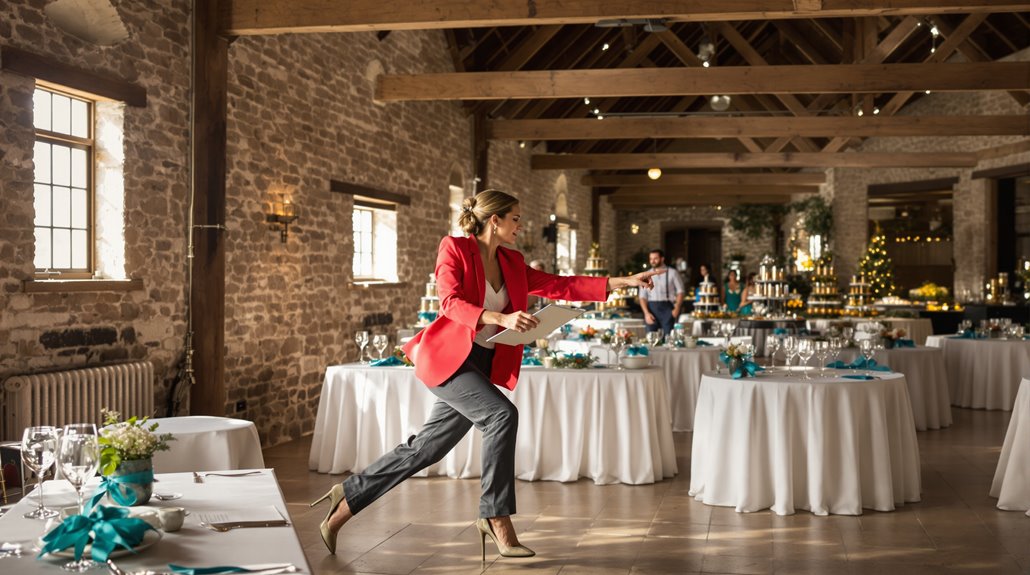
When it comes to executing a high-energy wedding with precision, a well-structured template for tracking food and beverage quantities is your non-negotiable ally. Think of it as your strategic command center. Start with essentials: item name, category, and quantity—each word counts like gold in your budget. Track unit prices and par levels to keep your stock from imploding. For beverages, plunge into brand details and unit sizes. Log stock movements with opening, purchased, and closing counts for airtight tracking. Categorize by food type and set expiration dates to cut waste. Use summary features to check your gross profit margin and total inventory value. Ready to streamline? Copy, paste, and pivot. Now, you’ve got the hustle to match your bustle.
Common mistakes (and how to avoid them)
Although wedding planning might seem like a beautiful chaos, it’s crucial to avoid common pitfalls that can derail your perfectly executed day. Let’s break down the usual suspects and how to dodge them:
- Incorrect Serving Size: Verify the latest FDA Reference Amounts Customarily Consumed (RACCs) to guarantee compliance. Incorrect sizes invite legal headaches.
- Portion Size Misestimation: Ditch eyeballing. Use scales or measuring cups. Remember, pint-sized ice cream holds four servings, not one.
- Omissions in Intake Reporting: Snacks and condiments often go unreported. Document every bite, sip, and dollop.
- Improper Rounding and Measurement: Follow FDA rounding rules. Calories under 50 round to five; over 50, round to ten.
Strategically streamline your planning with these tips, and watch your wedding day move like a well-oiled machine.
FAQ
Got too much on your plate? Let’s tackle these FAQs to streamline your wedding planning hustle. We’ll cover how to execute efficiently, what tasks you can strategically delegate, and what metrics are non-negotiable to track weekly. For the most accurate event calculations, always apply food science yield percentages to your ingredient estimates to ensure exceptional catering quality.
How long should this take if we’re busy?
Executing wedding planning with precision during your busiest times doesn’t have to be a logistical nightmare. You can streamline inventory checks with a few strategic moves. Implement daily spot-checks for high-cost items like steaks or avocados to nip discrepancies in the bud. Leverage POS-integrated software to cut inventory time from days to mere minutes—trust me, that’s a game-changer. Assign consistent staff for reliability, and train them in portion control to prevent time-sucking over-portioning. Keep your storage organized with labels and accessible spots for swift counts. Use FIFO methods to guarantee quick rotation checks, skipping full audits during peak times. Real-time tracking and digital tools? Non-negotiable. Now, go execute like a pro—pivot as needed, but never compromise.
What’s the minimum version that still works?
No need to stress over the nitty-gritty details of wedding planning when you’re already juggling a packed schedule. Let’s streamline: calculate essentials with laser focus. For drinks, one per guest per hour. Prioritize: 40% beer, 60% wine from remaining drinks. Spirits are optional—target two to three per person if you’re going full bar. For food, stick to the one-pound rule: one pound per adult guest, minus drinks and dessert. Divide plates smartly—protein, carbs, and double up on veggies. Use the plate method for balance and a well-rounded meal. Stick to industry benchmarks: food cost at 28-32% of sales. Reality Check: Underestimating portions? It could lead to shortages. Align your numbers strategically, and you’ll avoid chaos.
What can I safely delegate?
Ever wondered what wedding planning tasks you can delegate without losing control? You can safely hand off tasks like basic portion calculations and inventory counts. Calculating per-guest portion sizes and converting them into ingredient quantities? Delegate it. Inventory math and spreadsheet maintenance? Pass it on. These tasks are straightforward, non-negotiable, and can be executed with precision by someone else, freeing you to focus on strategic decisions.
Think of this as smart delegation—not dropping the ball. Use tools like portion-serving templates and beverage calculators to keep everything streamlined. Guarantee your team logs invoices and tracks inventory regularly. By delegating routine tasks, you gain time to pivot towards making high-impact choices. Ready for action? Start by assigning these tasks to trusted team members today.
What if a vendor isn’t responding?
Is your vendor ghosting you? Time to hustle. Start with a follow-up email—make the subject line pop with urgency. Mix it up: call, text, or hit them on a professional messaging app. Document every attempt with timestamps; you’re building your case. Reference any contracts to remind them of commitments, and schedule calls during their business hours for real-time responses.
Still no luck? It’s pivot time. Keep a list of pre-vetted backup suppliers for quick switches. Use online marketplaces for instant quotes and lean on your industry network for recommendations.
Reality Check: Not all vendors move at your speed. Strategically escalate by contacting higher-ups or even your legal team. Always have a cancellation clause ready. Now, execute with precision.
What should I track weekly?
How do you keep the wheels of your wedding planning machine turning smoothly? You track your food and beverage inventory with the precision of a Swiss watchmaker. Start with weekly checks on inventory levels—know your starting stock, log what’s received, and tally what’s left. Calculate usage to catch sneaky variances. Keep expiration dates in check with a FEFO approach, rotating perishables like a pro. Waste and variance tracking? Non-negotiable. Use spreadsheets to spot waste trends and prevent costly slip-ups. Sales and POS data guide your next moves—track sales, know your best-sellers, and forecast orders based on real numbers. Leverage tech tools: barcodes, RFID, AI—they’re your strategic allies. Get this rhythm right, and your event’s culinary chaos becomes a well-oiled machine.
Key takeaways
Efficiency is your wedding’s secret weapon, not a Pinterest board. Calculating actual food and beverage quantities is about precision and execution. Here’s your streamlined plan:
Efficiency in wedding planning lies in precision, not Pinterest dreams.
- Portion Control: Stick to standard serving sizes—6oz meat, 4oz pasta, and 4oz veggies per guest. Embrace the plate method for balance.
- Drink Strategy: Plan one drink per guest per hour. Prioritize wine (60%) and beer (40%) based on your crowd’s vibe.
- Cost Metrics: Use the formula: starting inventory + purchases – ending inventory = actual food cost. Keep food cost under 32%.
- Smart Stocking: A 750ml wine bottle serves 5, while a keg pours 165 beers. Calculate strategically to avoid waste.
Reality Check: Overestimating quantities can lead to unnecessary costs. Be precise, not extravagant.