
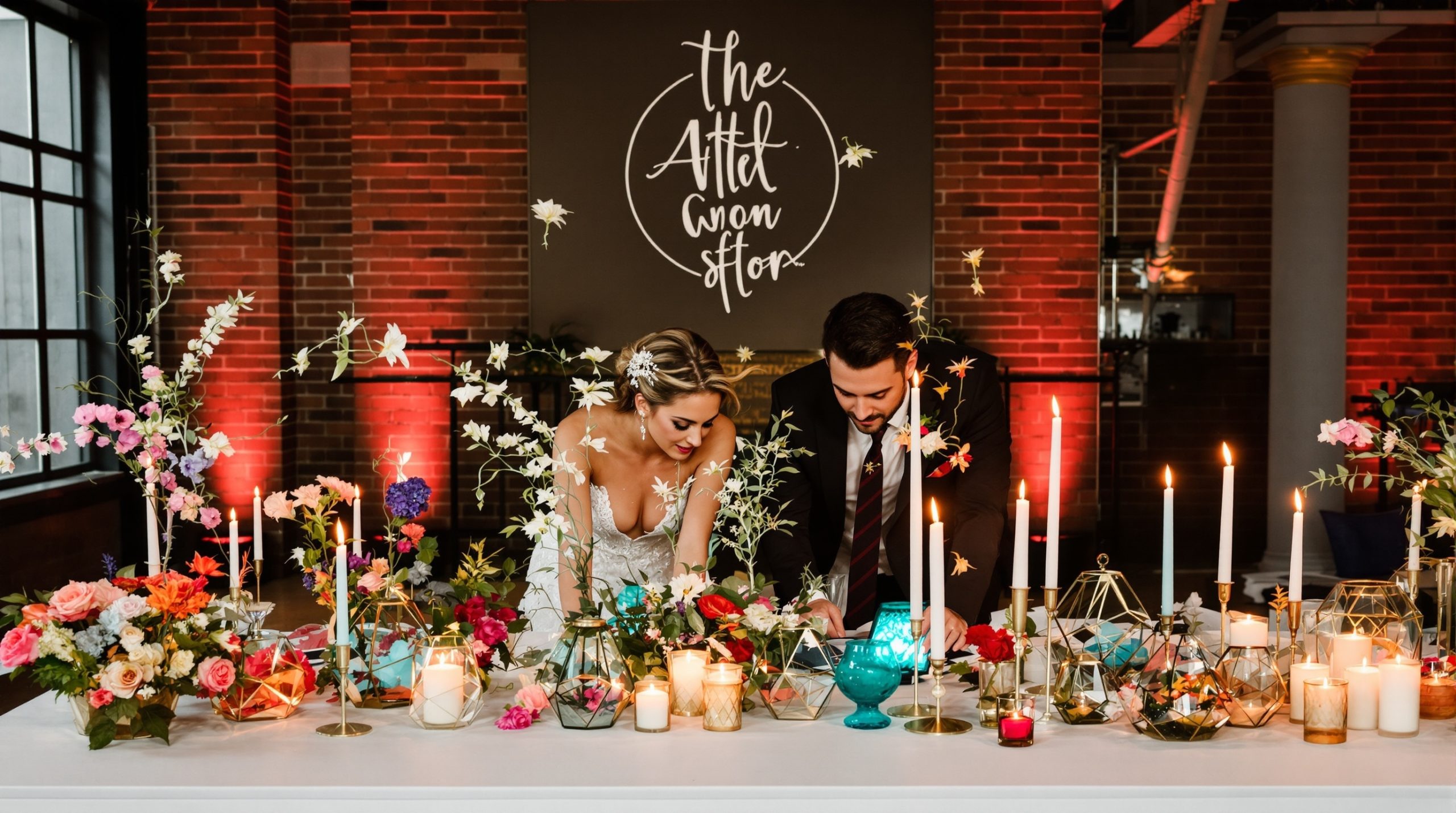
Avoid centerpiece chaos. Wedding table setups need to be strategic, not a floral free-for-all. Here’s the lowdown: small setups start around $20, while lavish designs can hit $600. Cut costs with rentals, seasonal blooms, or daring DIYs—just don’t let wilted tulips sabotage your big day. Different centerpieces create varying guest impacts, driving effortless chic or forgettable folly. Think of this as project management for style. Want the full playbook for centerpiece success? Dive deeper!
Cost snapshot
Centerpieces: the unsung heroes of your wedding tablescape. You’re exploring the world of centerpiece options, and it’s essential to know what you’re up against. Streamline your decisions with these practical table decor ideas:
Centerpieces: essential elements that bring your wedding tablescape to life with style and flair.
- Small Wonders: Opt for compact pieces like wreaths or glass bowls. They’re cost-effective at $60 each but pack a visual punch.
- Mid-Range Magic: Medium centerpieces, like wooden hexagons, offer a strategic balance at $85-$110. They’re versatile and stylish without breaking the bank.
- Elevated Elegance: Large centerpieces on acrylic stands are $110-$150, giving height and drama to your tablescape.
- Custom Creations: Unique wedding centerpiece ideas can be tailored to your vibe but expect costs to scale with ambition. Modern floral trends favor sculpture-like arrangements that allow blooms to breathe, enhancing visual impact without complexity. Keep in mind that budget allocation is essential when planning your wedding expenses, ensuring you maintain financial control while achieving the desired aesthetic.
Ready to execute? List your must-haves, set a budget, and delegate efficiently.
What you’re actually paying for (cost structure)
Before you pull out your checkbook for those jaw-dropping centerpieces, let’s dissect what you’re actually paying for. You’re not just buying flowers; you’re buying an executed vision. High-end blooms like peonies and roses scream luxury but also spike costs. Strategic use of greenery and cheaper accent flowers can be effective centerpiece alternatives without sacrificing style. Rental components like compote bowls or metal stands add layers to your tablescape, though they come with their own price tags. Labor charges—think design, logistics, and setup—are non-negotiable, often adding 20% to your bill. Delivery and service fees? They’re the hidden hustle behind seamless execution. Flowers are integral to various moments, from bouquets to ceremony decor, and their impact justifies the investment. So, pivot your planning—use our checklist to streamline choices and optimize both impact and budget. To ensure the strategic execution of your floral design, create a guide that includes details like event specifics, venue layout, and floral budget.
Cost drivers (what moves the quote the most)
When it comes to your wedding centerpieces, let’s cut to the chase: what truly moves the needle on your floral quote? It’s all about strategic decisions that drive costs with precision. Here’s what you need to know:
- Flower Types: Opt for in-season blooms. Luxury options like peonies can inflate your budget by 50%. Consider freesia or roses for smart savings. Seasonal blooms can help reduce overall floral expenses, allowing you to maintain quality without breaking the bank.
- Quantity Needed: More tables mean more centerpieces. For 100 guests, you might start at a $5,500 floral budget, skyrocketing with guest count. Negotiable elements in the wedding planning process can include adjusting the number of centerpieces to stay within budget.
- Design Complexity: Intricate designs mean expert labor, easily exceeding $600 per piece. Keep it simple for cost efficiency.
- Location Region: Venue choice matters. Urban spots like LA or DC can double or triple costs compared to rural venues.
Reality Check: Customize without compromise by balancing luxury and practicality.
Example scenarios (3 budgets x 3 priorities)
Let’s break down wedding floral budgets for those who prioritize strategy over fluff. Imagine this: you’re balancing cost and guest impact across three budget levels—low, medium, and high. Don’t stress; it’s about making smart choices, not Pinterest pinning.
| Budget Level | Cost Focus | Impact Focus |
|---|---|---|
| Low | Small centerpieces ($18-$25 each), DIY for $40 | Bud vases for visual appeal, $120 for 6 tables |
| Medium | Mixed centerpieces ($75-$250 per table) | Tall centerpieces, $7,500 total for drama |
| High | Luxury pieces ($600 each), full installs | Statement installs, immersive environments |
Now, pivot into action: evaluate priorities, set a budget, and execute with precision. Remember, “bless and stressed?”—never. Always hustle smart. Want clarity? Start a checklist; it’s non-negotiable. When planning your wedding flowers, consider that seasonal availability can make your budget stretch further by opting for in-season blooms that are more affordable. Utilizing a reverse wedding planning approach can also add flair and uniqueness to your event, ensuring that every detail aligns with your overall vision.
How to get accurate quotes fast
Need to snag accurate quotes fast? You’re in the right place. Let’s cut to the chase—efficient planning gets the job done. Here’s how you move:
- Contact Local Florists Directly: Skip the middlemen. Local florists give tailored quotes based on what’s in season and cut costs remarkably. Think $20-$40 boutonnieres instead of $50-$80.
- Prepare a Detailed Inquiry: Specify every detail—centerpiece type, size, flower preferences—so florists can quote accurately. Include event details like date and venue. Using technology to analyze past orders can provide insights into seasonal availability and pricing trends.
- Request Multiple Quotes: Prices vary. Compare several quotes to find the best fit. Consider extras like delivery fees. Prices for centerpieces can vary significantly depending on the region and the florist, so getting multiple quotes ensures you find the best value.
- Understand Pricing Formulas: Grasp the markup math. Know what you’re paying for and why.
Reality Check: Fast doesn’t mean rushed—precision matters.
Mistakes to avoid
While centerpieces can elevate your wedding atmosphere, avoid common pitfalls that can turn your dream day into a logistical nightmare. Here’s your no-nonsense checklist for strategic centerpiece planning:
- Theme Coordination: Execute a clear theme. Mixing rustic and modern without a guiding thread? That’s a visual mess. Stick to one vibe—boho chic, minimalist, whatever gets the job done.
- Proportion Precision: Don’t let centerpieces kill conversations. Ascertain they’re either on the table or above head height to maintain sightlines.
- Scent Strategy: Fragrance overload is a mood-killer. Coordinate scents with the food service to avoid sensory chaos. Combining multiple fragrances can overpower the overall wedding experience, so it is essential to consult with a local florist for harmonious scent combinations.
- Visual Clarity: Overdecorating creates clutter and costs. Strategically place statement pieces for maximum impact.
Quick cost checklist you can screenshot
Centerpieces can be the unsung heroes of wedding decor—if executed with precision. Here’s your quick cost checklist to streamline your planning and save time.
Budget-Friendly ($20–$120):
- Small centerpieces: $20 each
- Six tables: Approx. $120 total
- DIY with wholesale flowers: $40
Mid-Range ($145–$250):
- Low centerpieces: $145–$250 each
- Modest weddings (~50 guests): ~$1,200
- Wedding food costs often involve multiple components beyond the menu, so prioritize wisely.
Premium ($250–$550):
- Tall centerpieces: $250–$550 each
- Sweetheart table: $70–$500
Upscale ($500–$600):
- Statement pieces: $120–$600 each
- Head table runners: Over $500
Reality Check: Don’t get tangled in floral fantasies. Costs in Los Angeles can range from USD 12000.00 to USD 20000.00, so stick to your guest count and regional pricing to keep the budget in check. Pivot smartly, and let’s get this decor done!
FAQ
Ever find yourself lost in centerpiece chaos, wondering how to make those floral decisions fit the bigger picture? Let’s cut through the noise. Streamline your choices by matching table shapes to centerpiece styles: circular tables love low bowls; long tables excel with bud vase clusters. Height rules matter—under 12 inches keeps the chatter flowing across tables. Got a tall arrangement? Check those venue flame policies. Color balance isn’t just pretty—it’s strategic. Define primary hues, throw in complementary colors, and keep it cohesive. Want impact? Centerpieces with table numbers streamline guest navigation. Remember, personal elements like herb planters not only save cash but make statements. Ready to pivot from chaos to clarity? Start with a checklist and execute your centerpiece vision. Incorporating seasonal flowers ensures freshness and cost-effectiveness, as they are not only vibrant but also more affordable compared to out-of-season blooms. Planning wedding expenses based on personal values can help ensure a memorable experience for both you and your guests.
Key takeaways
Maneuvering the centerpiece cost maze? Let’s cut through the clutter. You want impact without the headache. Here’s what you need to know:
- Budget Basics: Centerpieces range from $18 to $600. For most, a sensible $700-$2,500 floral spend fits well, hitting that sweet spot of 8-10% of your total budget.
- DIY Dynamics: DIY options can slash costs—think $40 versus $120-$600. Wholesale roses and silk arrangements are smart shortcuts for Type-A personalities.
- Regional Realities: Costs fluctuate—Georgia’s bouquets peak at $249.40, while Illinois offers budget-friendly $163.90 options.
- Guest Impact: Centerpieces set the mood. Choose from budget bud vases or go big with elaborate designs. Your choice dictates the vibe.
Remember to include vendor meals and beverages in your wedding budget, as they are essential for event personnel and can add to your overall costs.
Reality Check: Don’t overspend—strategically allocate funds where they’re most impactful.