

Planning a standout wedding under $15K? You’re like a corporate ninja in the wedding world. Nail this by using efficiency tools – timelines, checklists, sharp contracts, and a magnum spreadsheet to track your budget like a hawk. Keep vendors in line with strategic follow-ups, and opt for unconventional venues for savings. Short-list non-negotiables, prioritize vendors, and leap on off-peak deals. Ditch romantic chaos for streamlined brilliance. Stay tuned—there’s more hustle magic coming your way!
What you’ll accomplish (and what ‘done’ looks like)
Imagine your wedding day as a finely-tuned project ready to execute—a day where every detail aligns like clockwork. You’re pulling off a budget wedding under 15k that’s a cheap wedding success story. How? By strategically assembling a core vendor team—caterer, photographer, officiant, florist—that gets the job done without breaking the bank. Written agreements guarantee everyone’s on the same page, minimizing stress. With a sharp interview and comparison process, you’ll secure the best deals, pivoting swiftly if needed. This affordable wedding example thrives on streamlined vendor confirmations and final payment coordination. Triple-check bookings, and have gratuity envelopes prepped and labeled. It’s about making intentional decisions, proving that smart planning beats fluffy perfection. Remember to prioritize essential wedding elements early in your planning to ensure that your day reflects your true vision. Ready to nail it? Immerse yourself in your checklist. Here Comes The Guide offers a comprehensive Wedding Checklist that includes 12 months of tasks for organized planning.
Quick start (the short version)
You’ve got the vision; now let’s kick your wedding planning into high gear with a straightforward, no-nonsense strategy. We’re talking a real budget wedding, executed with precision and intention. Here’s how to make it happen:
- Budget First: Set your budget early to pivot all major decisions. Knowing where you can splurge or save is non-negotiable. Allocate a contingency buffer of 10–15% to cover unexpected costs that may arise.
- Vendor Strategy: Secure your venue first, then strategically book other essential vendors like caterers and photographers—lock in those rates early.
- Guest List: Keep it tight. A smaller guest list means streamlined expenses and a more intimate celebration.
- Administrative Moves: Knock out legal requirements like the marriage license early, so you’re not scrambling last minute. Additionally, consider using platforms like Loverly to help organize and streamline your planning process.
Before you start: inputs you need
Before diving headfirst into wedding planning, you’ve got to arm yourself with the right intel. Think of it as gathering your strategic toolkit for a wedding that’s as ambitious as you are. Start with these non-negotiable data points:
Arm yourself with strategic intel for a wedding that’s as ambitious as you are.
- Budget Breakdown: Identify your total financial resources. Allocate specific amounts to categories like venue, food, and attire. Use free tools like Google Sheets to keep track—because an extra zero in the wrong place? No thanks. Keep in mind that hidden costs such as service charges and vendor overtime can inflate your budget by up to 30%.
- Guest List Parameters: Determine your maximum headcount. More people equals more money, so prioritize who truly makes the cut.
- Timeline Constraints: Know your deadlines. A tight timeline means accelerated decisions—more hustle, less hassle. Sending formal invitations at least 6-8 weeks in advance for local weddings ensures guests have ample time to RSVP.
- Priority Decisions: Choose what matters most. Invest wisely where it counts.
Reality Check: Your budget is a tool, not a constraint. Plan smart, pivot smartly.
Step-by-step process
Let’s get your wedding planning down to a science with a streamlined, step-by-step process that gets the job done without breaking the bank. Start by clarifying your constraints—know your budget ceiling, date range, and non-negotiables. Consider taking advantage of off-peak options to reduce costs and increase venue availability. Once that’s locked, strategically build your decision order, create a timeline with crystal-clear milestones, and execute vendor outreach like a pro; think scripts and tracking tools to keep everything on point. Consider using a printable wedding planning checklist to ensure all tasks are accounted for and organized efficiently.
Step 1: Clarify constraints (date range, budget ceiling, non-negotiables)
When planning a wedding, first nail down the constraints so you can move forward with clarity and purpose. Start by setting a hard budget ceiling. Explore combined savings, family contributions, and monthly income allocations. This isn’t about dreaming; it’s about executing a plan without financial chaos. Next, define your non-negotiables—those top three to five elements that get you excited. Prioritize them, because they’ll command your budget’s lion’s share. Then, set guest list parameters. The headcount dictates costs, so be strategic. Consider venue constraints and off-season timing to keep expenses trimmed. It’s crucial to choose a venue that comfortably accommodates your guest list and fits within your budget. Finally, create a budget accountability system—a detailed spreadsheet tracking every penny. Failing to set a realistic budget can lead to overspending, so ensure you have a clear plan in place. With these steps, you’ve strategically laid the groundwork. Now, you’re ready to move forward with confidence.
Step 2: Build the decision order (what to decide first so everything else is easier)
Locking down your constraints is like assembling the foundation of a skyscraper; now, it’s time to plan the sequence of your decisions to keep everything from toppling over. First, nail down your venue—it’s the budget behemoth, eating up 30-40% of your funds. Save cash by dodging Saturday bookings. Next, finalize your guest list since it dictates catering and invites costs. Get strategic with vendor priorities; book your photographer and entertainment early—they’re hot commodities. Don’t leave your officiant hanging; secure them to sort ceremony logistics. Finally, set your color palette to guide design choices. Maintaining open communication with your partner and family is crucial to managing expectations and avoiding common planning traps. Remember, wedding planning isn’t a Pinterest board; it’s a project. Move smart, decide fast, and keep momentum. Up next: timelines and deadlines. Couples can benefit from personalized planning checklists to prevent overlooking important details.
Step 3: Create the timeline (milestones + deadlines)
Even if you’re juggling a million things, creating a strategic wedding timeline is your non-negotiable power move. Start by breaking down your planning into key milestones: 12 months out, nail your budget and venue; 6-8 months out, send save-the-dates and finalize attire; 3-5 months out, lock in menus and photographers. This isn’t just a checklist—it’s your planning GPS, ensuring every decision pivots smoothly into the next. Focus on booking vendors early, especially if you’re eyeing a peak season wedding. Remember, 73% of weddings happen May through October. A critical component is to confirm details and contracts well in advance to avoid last-minute issues. Your timeline isn’t just about dates; it’s about gaining control. Stay ahead of stress by syncing deadlines with your busy life. Next up, let’s talk vendor outreach strategies.
Step 4: Execute vendor outreach (scripts + tracking)
For those who thrive on efficiency, follow up strategically: one day, one week, two weeks—each time nudging with timely offers. Your secret weapon? Trust-building content. Offer planning timelines or vendor checklists. Want to stand out? Introduce urgency with limited-time offers. Emails serve as crucial touchpoints after marketing efforts, ensuring that communication remains effective and relationships are nurtured. Execute this hustle, and watch your vendor responses accelerate. Now, go make things happen. Remember, investing in professional entertainment can create lasting memories and elevate the guest experience.
Step 5: Lock the plan (contracts, deposits, and contingency buffers)
Securing the plan is your power move. Execute those contracts like the boss you are—this guarantees you’re not left scrambling last minute. Immerse yourself in contracts with detailed payment schedules and clarity around non-refundable deposits. Lock in vendor dates with a strong retainer, signaling that you mean business. Want to avoid chaos? Structure your payment schedule smartly: initial deposit upon signing, and balance due 15-30 days before the big day. Oh, and don’t forget those contingency buffers. They’re the safety net for unexpected hiccups. Pay attention to vendor-specific timelines—these aren’t just suggestions. Secure all funds upfront if your timeline’s tight. Reality Check: Skipping these steps can cost you. Protect your plan, your budget, and your peace of mind. Consistently monitor the budget to ensure alignment with your financial reality and make adjustments as needed.
Step 6: Run weekly check-ins (how to stay on track without spiraling)
Your plan’s locked, but now it’s time to keep that train on the tracks with weekly check-ins. Execute these meetings with your partner as a non-negotiable strategy. Schedule weekly or bi-weekly meet-ups—calendars out, coffee on—to discuss budget, guest list, and decor. This keeps you aligned and prevents details from derailing. Strategically divide tasks to guarantee no one’s drowning in responsibility. Confirm vendor timelines and payments; a quick call prevents any “bless and stressed” scenarios. Tighten up your seating chart and guest count—don’t let RSVPs slip through the cracks. Refine the timeline; share it with your vendors and wedding party to pivot smoothly on the big day. Allocate 5-15% of the budget for unexpected expenses to ensure financial preparedness for any surprises. Your next step: lock those check-in times and watch your wedding plan gain unstoppable momentum.
Template you can copy/paste (checklist + tracker)
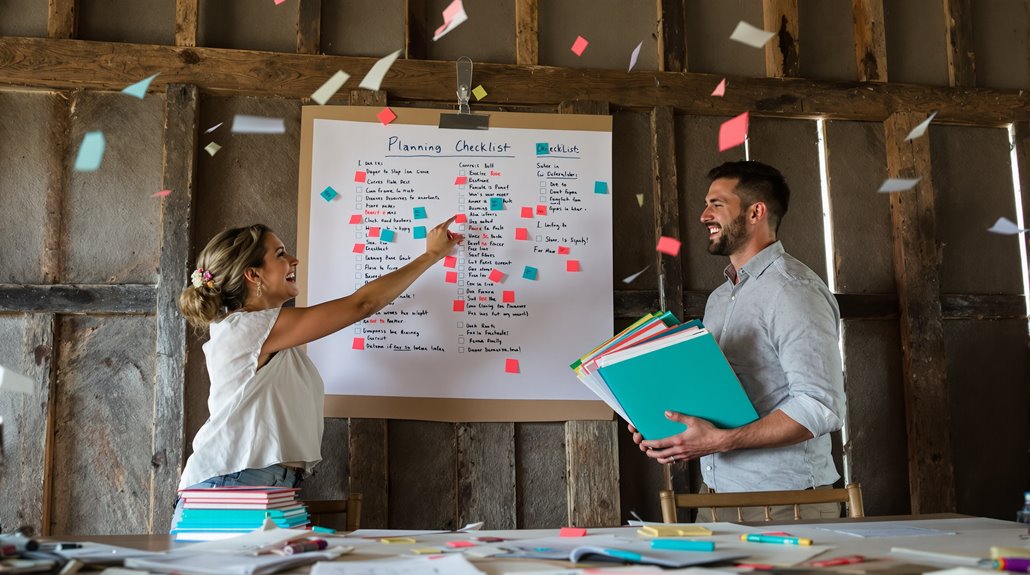
Let’s cut the fluff and get straight to the point: planning a wedding under $15K demands precision and hustle, so your best allies? Copy/paste templates that streamline chaos into clarity. You want digital or printable checklists from The Knot, Canva, and Zola—pick your poison. These templates are customizable, just plug in your wedding date and watch the magic unfold. Track vendors, guest lists, decor, attire, and day-of schedules in categorized sections—think logistics, not lace. Use budget tracking spreadsheets to compare costs and crunch numbers like a pro. Guest list management tools? Non-negotiable for final headcounts and RSVPs. Execute vendor coordination with centralized systems. Your strategy: download, customize, dominate. Next step: integrate these tools into your planning routine and gain momentum.
Common mistakes (and how to avoid them)
When it comes to wedding planning, even the most organized Type-A personalities can stumble into common pitfalls, but fear not—every misstep is just a lesson in disguise. Nail the planning game by dodging these frequent blunders:
- Timeline Turbulence: Hair and makeup always take longer than planned. Build buffer time to avoid cascading delays. A 15-minute delay can morph into a 30-minute ceremony setback.
- Budget Blowout: Set a budget early and stick to it. Use a spreadsheet to track every cent. Prioritize essentials like venue and catering to control costs.
- Vendor Vexations: Read contracts thoroughly. Overlooked terms lead to unexpected fees. Compare vendors for negotiation leverage.
- Guest List Gaffes: Don’t invite more than the venue can handle. Overcrowding isn’t just awkward—it’s against fire codes.
Pivot wisely and streamline your special day!
FAQ
You’re hustling hard, juggling careers, and now you’re adding wedding planning to the mix—it’s a lot, but let’s execute this efficiently. Think of your wedding as a project: streamline your timeline, focus on non-negotiables, and delegate tasks strategically to keep your sanity intact. If vendors are ghosting, pivot quickly and track key tasks weekly, like RSVPs and vendor confirmations, to keep everything moving smoothly.
How long should this take if we’re busy?
While juggling a high-powered career and planning a wedding might sound like a stress cocktail, it’s entirely doable with a strategic mindset. For you, the career-driven go-getter, a nine-month timeline is your sweet spot. This isn’t about fluff; it’s about getting things done efficiently. Start by securing a venue 12-14 months ahead because it’s non-negotiable. Pivot to vendor coordination, compressing tasks into a six-month blitz. Nail down your guest list four months prior to keep the momentum. Use a month-by-month structure to break down tasks. Forget the conventional; embrace a checklist to keep everything streamlined. Remember, your wedding is a project, not a Pinterest board. Execute it with precision and gain more time for what truly matters—your life.
What’s the minimum version that still works?
Let’s strip this down to brass tacks. The minimum version of a wedding that still works? It’s not about stripping it to bare bones but about strategic execution. Start with a non-negotiable list: vows exchanged, a celebrant, and a small venue that gets the job done. Keep the guest list lean—intimate means less stress and more meaningful connections. Opt for a digital invite to accelerate planning and save bucks. Skip elaborate floral arrangements; a few well-placed blooms can still create ambiance. Streamline the reception with a simple catered meal or a food truck—because who doesn’t love options on wheels? Reality Check: It’s not about reducing; it’s about redefining. Prioritize experiences over expectations, and you’ll pivot your way to wedding success.
What can I safely delegate?
Delegation isn’t just smart; it’s essential for executing a wedding that matches your ambitious lifestyle while keeping chaos controlled. Let’s get straight to it: offload last-minute errands like collecting attire or delivering goods. Delegate airport pickups and guest transport; that’s not where your energy should go. Have someone research venues and vendors early, ensuring you only deal with the best options. Assign a point person to manage day-of communication and handle guest queries. This isn’t about losing control; it’s about strategically streamlining your to-do list. Need a playlist? Let guests contribute song ideas via RSVPs. Checklists are your new best friend—use them for packing and preparations. Remember, delegating isn’t a luxury; it’s non-negotiable for seamless execution. Take action: assign these tasks today.
What if a vendor isn’t responding?
Ever wonder why your vendor isn’t calling back? It’s not just you—non-responsive vendors are a real buzzkill in wedding planning. Vendors are juggling high volumes, and sometimes, budget mismatches or lack of pricing transparency cause communications to fizzle. Let’s pivot and take control. First, double-check your inquiry aligns with their pricing and services. If silence persists, leverage multiple contact methods—email, phone, even social media. Streamline your approach with clear, concise messages. If a vendor’s still MIA, compare options; don’t get stuck. Remember, transparency accelerates decisions. Vendors with clear pricing get 40% more bookings. Your hustle requires precision, so escalate as needed. Keep moving, don’t wait—strategically execute to lock in your dream team. Time to hustle, not bustle.
What should I track weekly?
Weekly wedding tracking is your secret weapon to keep the chaos controlled and your sanity intact. Your game plan? Think like a boss. Execute budget tracking: monitor vendor invoices, compare actual versus projected spending, and document every extra penny. Strategically coordinate vendors: verify timelines, confirm guest counts, and check for any last-minute changes. Streamline guest list updates: chase RSVPs, refine seating arrangements, and communicate numbers to vendors. Personal preparation is non-negotiable: schedule dress fittings, confirm hair trials, and pack essentials. Finally, finalize ceremony details: confirm vows, review shot lists, and solidify music selections. This isn’t just about dreaming; it’s about doing. Each step gains momentum, ensuring your $15K wedding doesn’t just happen—it gets the job done. Now, pivot to your checklist!
Key takeaways
When you’re planning a wedding under $15K, think of it as a dynamic project that requires precision and smart strategies more than fairy-tale fluff. Here’s how you pivot from dreamer to doer:
- Venue Genius: Choose unconventional spots like parks or galleries; they’re budget-friendly and naturally beautiful. Book off-season or mid-week for killer discounts.
- Floral Savvy: Repurpose ceremony florals for receptions. Use greenery and bulk blooms like baby’s breath to add volume without adding dollars.
- Budget Mastery: Allocate realistically—$2,500 to $4,000 for venues, $2,000 for food, and $800+ for emerging photographers. DIY where you can.
- Cost-Saving Prowess: Cut the guest list, hire budding photographers, and lean on friends for music and desserts.
Ready to execute? Time to hustle and nail it!