

Your engagement announcement‘s all about strategy calls. First, tell parents, siblings, and inner circle—build intimacy, respect, and avoid family drama. Next, let close friends join the party within 48 hours. Keep acquaintances and distant relatives on hold until you’ve got a personal edge on it. Finish off with a curated social media reveal. Streamline and own your narrative, control the chaos, and make every step non-negotiable. Stick around for insights on executing like a boss.
Quick verdict: Who to Tell First vs. Who to Tell Last (who each is best for)
When it comes to announcing your engagement, timing and sequence are your secret weapons. Think of it as a project management task: executed efficiently and strategically. Here’s the streamlined plan:
- Immediate Family First: Skip the social media frenzy. Call or visit your parents, siblings, and kids (if applicable) before anyone else. This respects engagement announcement etiquette and avoids awkward public discoveries.
- Close Friends Next: After family, pivot to your closest pals. Pick up the phone or show up in person. It’s a non-negotiable move that builds excitement and keeps your inner circle in the know.
- Social Media Last: Finally, share with the digital world. Most wait a day or two; you get to decide. Prioritize personal connections over public likes—proof, not promises, is your game. Personal communication shows respect and consideration, which is why it’s crucial to engage directly with those who matter most before making a public announcement.
At-a-glance comparison: Who to Tell First vs. Who to Tell Last
Although announcing your engagement might feel like a whirlwind, there’s a method to the madness. Nailing the engagement announcement order guarantees you maintain control and avoid any accidental social media leaks. Prioritize those who’ve been by your side since day one—parents, children, and close friends. Respect the hierarchy, and you’ll keep your inner circle feeling special and valued. Here’s a quick breakdown:
| Tell First | Tell Last |
|---|---|
| Parents | Distant Relatives |
| Children | Acquaintances |
| Close Friends | Public Followers |
| Family Group Chats | Newspaper Announcements |
This strategic approach not only gets the job done but accelerates the excitement in a streamlined manner. So execute it perfectly and pivot to your next planning milestone. Remember, it’s about controlled chaos, not chaos-controlled you. Announcing your engagement on social media should be done only after ensuring all personal notifications are complete to avoid any feelings of being overlooked.
Define the options (so you’re comparing the right things)
When you’re mapping out your engagement announcement strategy, it’s essential to know who gets the news first and who can wait. First up, prioritize immediate family and close friends—think of them as your launch team who deserve the personal touch. Forget the misconception that everyone needs a direct call; casual acquaintances and the public can be strategically informed later, maximizing your time and keeping the momentum rolling. Consider the atmosphere of family events before making announcements to ensure your news is received with joy and does not overshadow other celebrations.
Who to Tell First: what it is, what it includes, and the common misconceptions
Strategically choosing who to tell about your engagement first isn’t just a tradition—it’s a project management move that sets the tone for your wedding journey. You’re not just announcing; you’re executing a tactical rollout. Start with parents—each partner handles their own for that intimate, private moment. Then pivot to siblings and grandparents, moving with precision. Next, best friends and chosen family follow within 24-48 hours. Prioritize direct supervisors too—workplace dynamics can be as essential as family ties. Remember, the in-person touch wins, but video calls work when needed. Toss old norms; your gut guides timing. Misconceptions? Biological ties aren’t always first, and immediate social media posts are fine if VIPs are informed. Keep it streamlined, keep it strategic. Including pets in announcements adds a personal touch, enhancing emotional connection and allowing for creative announcements from the pet’s perspective.
Who to Tell Last: what it is, what it includes, and the common misconceptions
In the whirlwind of engagement excitement, knowing who to tell last is a strategic move to maintain control over your announcement narrative. Let’s face it, not everyone needs a personal call. Your broad social network, acquaintances, and that guy from accounting can wait. Prioritize personal connections first; then let the news organically spread to coworkers and extended acquaintances. Remember, social media is your final act—post 24-48 hours after telling your VIPs. Wait longer if needed; it’s about what works for you. Some think skipping social media is a rule—it’s not. Misconception alert: You don’t need to personally call acquaintances; casual chats work. Finally, grapevine circulation will happen, and that’s okay—it accelerates joy to distant groups. In modern family dynamics, including blended families and chosen family members, adaptability is key when deciding whom to inform last.
Cost breakdown (upfront vs hidden costs)
Let’s break down the engagement announcement costs so you’re not blindsided by hidden expenses. You’ll start with upfront costs like venue rental, catering, and invitations, but don’t forget those sneaky extras like gratuities or corkage fees that love to pop up unexpectedly. Including a buffer for miscellaneous expenses is essential for unexpected costs. By strategically planning and knowing what truly drives cost changes, you can execute a streamlined budget that gets the job done without surprises.
Line-item cost comparison by tier/budget
When you’re juggling a career that’s hotter than your morning coffee, breaking down engagement costs with precision is non-negotiable. You need clarity on where your dollars are headed. Here’s a streamlined cost snapshot:
| Cost Type | Average Range |
|---|---|
| Engagement Ring | $5,200 – $5,680 |
| Proposal Costs | $1,000+ |
| Celebration Hidden Costs | $500 – $10,000 |
Engagement rings, though trending down from $6,000, still pack a punch with resizing and insurance fees. With guidance from engagement ring specialists, you can make smarter choices about stones, styles, and protection for your investment. Proposals? They exceed $1,000 when you factor travel and photographers. Celebrations sneakily add $500 to $10,000. Strategically budget for these line items to avoid surprises. Ready to execute? Create your cost checklist and pivot as needed. Kinetic moves win the day!
Recently, there has been a notable increase in the average wedding cost, which rose from $29,195 in 2022 to $30,119 in 2023.
What actually drives cost changes
Although weddings are beautiful chaos, understanding what actually drives cost changes in your budget is essential for executing a seamless event. Here’s the lowdown:
- Upfront Costs: Venue rental fees can gobble up 30–50% of your budget. Catering costs scale with guest numbers, and professional services require nonrefundable deposits. Don’t forget attire and those gorgeous rings—cash outlays are non-negotiable. Informing the bride’s parents first about the engagement can lead to a smoother planning process and better alignment on financial contributions. Research from Columbia University consumer economics shows that clear financial transparency with family members often leads to more efficient cost management.
- Hidden Costs: Service charges, taxes, and vendor overtime fees often surprise you. These hidden gremlins add 10–25% to planned expenses.
- Guest Count & Timing: More guests mean more costs, period. Book early for better rates, and avoid high-demand dates to keep your budget lean.
Reality Check: Cutting corners saves cash but might invite chaos. Choose strategically.
Planning workload & logistics impact
You’re about to juggle timelines, vendor chaos, and coordination complexities like a pro. Announcements aren’t just fluff—they’re strategic moves that impact vendor availability and flexibility. Get ahead by aligning your save-the-dates with vendor bookings to streamline the insanity and avoid last-minute costs. According to wedding budgeting research, early communication with both vendors and guests can significantly reduce unexpected expenses and scheduling conflicts.
Time, complexity, and coordination differences
Strategically timing your engagement announcement is a non-negotiable move in the wedding-planning game. You’ve got timelines to meet and logistics to juggle. Here’s how to break it down:
- Immediate Family First: Reduce complexity by notifying immediate family first. It’s a smart move that respects cultural sensitivities and travel needs.
- Employer and Colleagues: If you’re eyeing a lengthy honeymoon or need days off for planning, inform your workplace early. It smooths out potential scheduling chaos.
- Out-of-Town Guests: Early announcements give your distant friends and family the lead time for travel plans and accommodation, minimizing last-minute scrambles.
Research from the University of Minnesota Extension highlights how family dynamics can significantly influence the planning workload and coordination needed for smooth wedding preparations.
Keep things simple and executed with precision—your sanity will thank you. Ready for the next step? Draft a timeline and start checking boxes.
Vendor availability + flexibility considerations
When you’re locking down vendors, time’s not just money—it’s everything. Here’s where timing moves the needle:
- Secure Early: High-demand venues need booking 12–30 months ahead. Don’t wait; prime dates won’t. Photographers and videographers fill up 12–15 months in advance, so hustle now, or risk your shortlist evaporating.
- Strategic Flexibility: Late bookings (under 3–6 months) mean you might pivot to weekdays or non-peak seasons because weekends in spring and fall are already booked solid.
- Backup Plans: Vendor cancellations happen. Contracts with clear cancellation clauses are non-negotiable. Consider backup vendors to keep your day on track without stress-induced migraines.
If you’re searching for the top wedding location marketplace and vendor options, starting early gives you access to the widest selection and the best professionals for your big day.
Reality check: Last-minute scrambles kill momentum. Execute your plan early to avoid the “bless and stressed” syndrome.
Guest experience impact
You know guests want authenticity and excitement, not another cookie-cutter wedding they’re stuck at all night. The friction often pops up when expectations meet reality—boring sameness, lackluster personalization, or logistical hiccups can sink the vibe faster than you can say “cash bar.” Prioritize well-executed, unique touches that capture your partnership, and you’ll accelerate the guest experience from “meh” to memorable.
How guests perceive it + where friction shows up
Announcing your engagement isn’t just a milestone; it’s a tactical move that sets the tone for all future interactions with your guests. Get it right, and you’ll boost energy and excitement. Get it wrong, and you risk resentment and disengagement. Here’s how to nail it:
- Sequence Smartly: Tell close family first to respect kinship norms and avoid drama. Skipping this isn’t a strategic pivot; it’s a stumble.
- Manage Expectations: Don’t delay announcements to key players. They’ll feel sidelined, reducing their enthusiasm and RSVP reliability.
- Be Clear and Consistent: Align your announcement details across all channels. Mixed messages lead to confusion, travel missteps, and RSVP chaos.
Before sharing the news widely, it’s also worth reviewing the San Bernardino County marriage license requirements to ensure you’re prepared for the next steps after the engagement announcement.
Next step: Create a streamlined timeline to keep your announcement rollout organized and friction-free.
Best-fit scenarios (choose based on constraints)
When strategizing who to tell first about your engagement, prioritize those whose emotional investment in your life makes them non-negotiable—like your parents and closest confidants. Execute your plan by informing them before any public announcements to avoid awkward surprises and keep things smooth. On the flip side, save the broader professional network and social media for last; nobody wants their big news reduced to a casual scroll-through moment. This approach echoes findings from UC Berkeley sociology research on marriage and celebration practices, which highlight the significance of honoring close relationships in milestone announcements.
Choose Who to Tell First if…
Maneuvering the engagement announcement maze can feel like a strategic game of chess. But you’re not here to fumble around. You’re here to execute. Choose who to tell first if your goal is to streamline emotional and logistical support. Here’s your playbook:
- Immediate Family: Preserve family honor and reduce drama. Early disclosure means no awkward secondary-source stories. Use in-person or video calls for those immediate reactions.
- Closest Friends: They’re your emotional SWAT team. Inform them early to leverage their help with wedding tasks and manage potential leaks. A call or small gathering works wonders.
- Cohabitants & Financial Stakeholders: Got shared living arrangements or financial ties? Early notice prevents household chaos. Clear communication about plans helps navigate any shifts seamlessly.
Next step: Prioritize these connections—your hustle demands it.
Choose Who to Tell Last if…
In the whirlwind of engagement announcements, knowing who to tell last is as critical as deciding who hears first. You’re juggling ambitious schedules, so execute this move with precision. Here’s your strategic playbook:
- Fragile Family Dynamics: If family ties are tenuous or conflicts are brewing, delay sharing until you’ve drafted messages to prevent drama. Timing’s everything—avoid emotional detonations.
- Workplace Colleagues: Keep the office buzz-free by informing coworkers last. Tell key stakeholders first to control gossip and protect confidentiality. It’s all about keeping the professional game face on.
- Distant Relatives and Acquaintances: They’re not on the day-one rollout. Use mass notifications for this crew after your inner circle’s in the loop—postage and time are non-negotiable resources.
Reality Check: Timing’s your ally; missteps cost peace and efficiency. Choose wisely.
Real-world scenarios (examples with numbers)
Let’s break down three real-world scenarios to sharpen your engagement strategy: a 150-guest bash with a $30K budget, a cozy 50-person affair at $10K, and a non-negotiable 200-guest gala with $50K at your disposal. Each scenario demands unique priorities, from executing streamlined service for a larger crowd to strategically allocating resources for intimate celebrations. After all, your engagement announcement isn’t just a post—it’s your first project milestone.
3 sample scenarios: guest count + budget + priorities
You’re juggling a lot, and wedding planning shouldn’t be another stressor on your already packed calendar. Let’s pivot to tackling guest count, budget, and priorities without the fluff. Whether you’re throwing an intimate gathering or a grand event, your approach needs to be sharp and strategic. Check out these numbers:
| Wedding Size | Average Cost Per Guest |
|---|---|
| Under 50 guests | $300-$800+ |
| 51-150 guests | $225-$450+ |
| 150+ guests | $175-$400+ |
| Average total | $33,000-$36,000 |
| Savings per 10 guests | ~$1,000 ($100 catering rate) |
Keep your focus on guest experience and non-negotiable priorities like venue and catering. Execute with precision and use metrics to guide your decisions. Cut 10 guests, save $1,000—easy math, smart moves. Ready to accelerate your planning? For even more impact, consider how wedding catering ideas can elevate your reception menu and guest experience.
Common mistakes (and how to avoid them)
While it’s tempting to hit “share” the moment that ring slides on, hold up—broadcasting your engagement prematurely can set off a social media storm faster than you can say, “I do.” You risk alienating loved ones who find out through a Facebook post rather than a heartfelt call, not to mention the family drama that unfolds when parents aren’t the first to know. Let’s streamline your approach and avoid these pitfalls:
- Prioritize Inner Circle First: Call your parents, grandparents, and best friends before posting online.
- Time Your Announcement: Strategically choose a moment that allows for personal celebrations and avoids logistical chaos.
- Keep Details Close: Don’t overshare wedding plans or guest lists until they’re finalized.
If you’re planning a destination wedding, make sure to research Clark County Nevada marriage license requirements and fees early in your planning process to avoid last-minute surprises. Execute these steps, and your engagement news will be celebrated, not critiqued.
Copy/paste decision matrix template
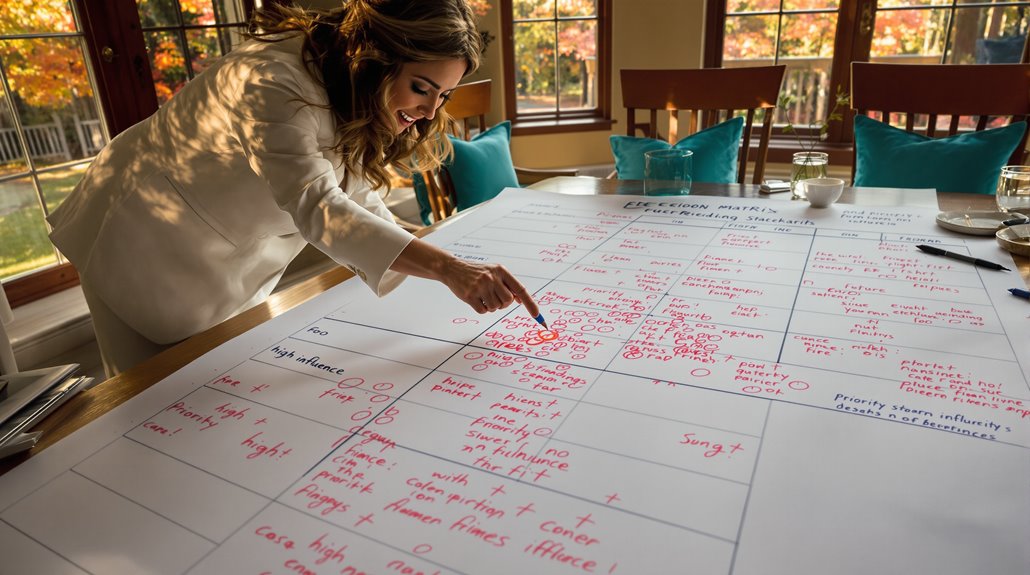
Having sidestepped the common engagement announcement blunders, you’re ready to move into strategic territory—it’s time to execute with precision. Enter the copy/paste decision matrix template, your tool for streamlined execution. Imagine this: columns and rows that bring clarity to your stakeholder chaos. List your stakeholder groups horizontally, define criteria vertically—interest, influence, impact, criticality, effort. Assign weights, rate each group, and let the scores guide you. High scores? They’re your first call. Low scores? They can wait. This isn’t just a matrix; it’s your GPS to engagement efficiency. Share it with your team, validate collectively, and keep refining mid-project. Remember, precision is your ally. Next steps? Execute smartly, track progress, and pivot when necessary.
FAQ (quick answers to common edge cases)
You’re staring at two options and can’t decide? Start by weighing the risks and rewards of each, then execute a fallback plan that’s already lined up—after all, you’re not leaving anything to chance. When dealing with guest count fluctuations (hello, chaos!), run through scenarios with vendors to confirm they’re ready to pivot; this is your non-negotiable safety net.
What if I’m stuck between two options?
Stuck between two engagement announcement options? Let’s cut through the chaos and gain momentum with these swift decision strategies. First, execute a quick priority check: immediate family often tops etiquette lists, so start there. If both options involve close ties, strategically pivot to the person most likely to hear your news elsewhere—avoid accidental surprises. Proximity can streamline decisions: who can you call today? Use reciprocity: who heard about past milestones first? When all else fails, defer to cultural norms for a non-negotiable tie-breaker.
Communication methods matter. Opt for a video call if in-person isn’t feasible—it captures those emotional nuances. Stagger your channels: immediate family first, then friends, then social media. Psychology research shows that open communication patterns strengthen trust and understanding between partners during major life events. Action this plan, and you’re on your way.
What’s the easiest way to reduce risk with either option?
When you’re caught between two engagement announcement options, risk management isn’t just smart—it’s crucial. Start by identifying high-risk recipients. Your list might include employers, creditors, or ex-partners. Use a minimal-disclosure approach for these folks to keep sensitive info under wraps. Assign a trusted intermediary to handle legally delicate notifications—this guarantees consistent messaging and avoids accidental escalation.
Next, stage your announcements: closest family first, then close friends, and finally, the wider circle. This strategic sequence lets you solve issues before they snowball. Validate your communication channels—confirm preferred contact methods to maintain confidentiality. Ultimately, document everything: who you notified, when, and how. This reduces surprises later. Remember, your engagement’s a project—execute it with precision.
What should I ask vendors to confirm assumptions?
How do you confirm your vendors are as organized as you are? It’s all about asking the right questions upfront. First, confirm their availability on your wedding date and if they’ve worked at your venue before—no surprises here. Strategically, make certain they’re clear on backup plans if they can’t make it and their willingness to travel, including any fees. Delve into the nitty-gritty of packages, pricing, and contract specifics. Understand payment terms, cancellation policies, and any extra fees. Logistics-wise, verify final headcount procedures, setup times, and emergency contacts. You expect streamlined execution, right? So, request recent client references and clarify how they handle last-minute changes. Now, arm yourself with a checklist and get ready to execute like a pro.
What changes if my guest count swings by 20%?
A sudden 20% swing in your guest count is like a wedding-planning curveball, but don’t worry, you’re equipped to handle it like a pro. When guest numbers rise, shift to an immediate-family-first announcement to manage who expects an invite. If they drop, tighten your circle to avoid awkward un-invitations later. Start with private calls, then extend to family, friends, and finally social media. Tighten RSVP deadlines if reducing guests; expand flexibility if adding more. Alert vendors swiftly to adjust headcounts without triggering contract penalties. Revise your budget—rising guest lists mean scaling costs; shrinking ones bump up the cost per head. Use electronic RSVP tools to track acceptance rates and scenario-plan. Stay nimble, and keep communication crisp and strategic.
What’s the best fallback plan if something goes wrong?
Why does wedding planning sometimes feel like balancing spinning plates while juggling flaming torches? Because things go wrong. You need a strategic fallback plan, not just dreams. If family finds out early, pivot to in-person or phone updates before hitting social media. When tech fails, have printed cards or photos ready for direct sharing. Misunderstandings in wording? Keep it simple—date and location only, then clarify personally. Not inviting everyone? Target digital shares to your inner circle and use private stories. And if reactions are less-than-stellar, pause and savor your moment privately. Document your joy for later. Remember, efficiency is non-negotiable. You’re not just announcing; you’re executing a well-oiled project plan. Next step: build your communication checklist.
Next steps: make the decision + execute the plan
Once you’ve let the immediate-priority folks in on your big news, it’s time to pivot from celebration to execution. Let’s get strategic and move with precision. First, nail down a timeline. Is a short engagement your vibe, or do you want to savor the chaos a bit longer? Agree on a window and set expectations.
Next, compile your contact lists. Break it down: in-person/video call folks, phone/video contacts, and those who get the social media reveal. No accidental leaks, please!
Organize your contact lists to ensure the right people hear your news first.
Lastly, draft your announcement wording. Decide who posts what and where. Consistent messaging is non-negotiable.
Reality check: Don’t skip the provisional wedding date and budget outline. These aren’t just details—they’re your planning backbone. Now, go execute like the pro you are!