
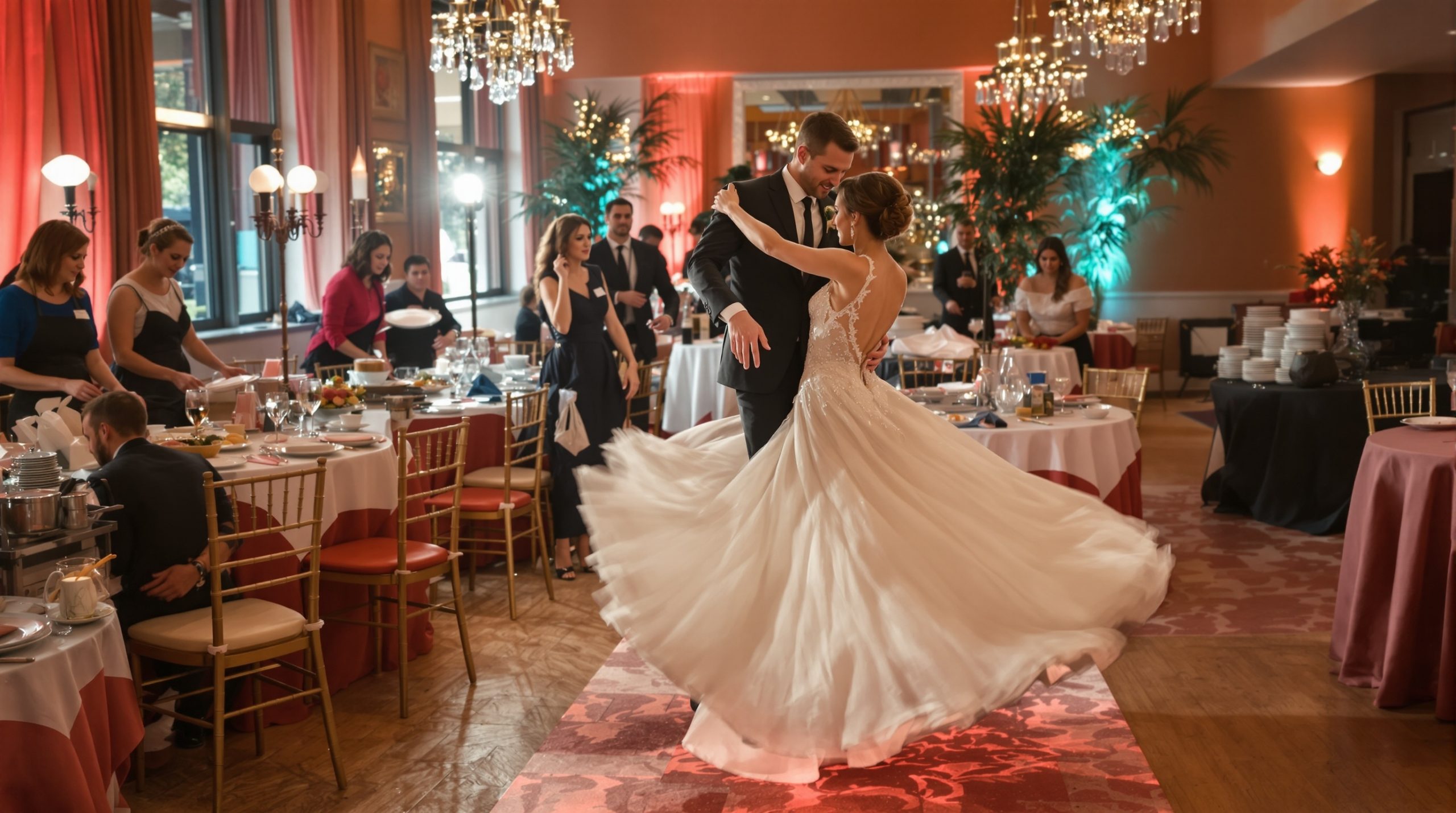
Go for a pre-dinner first dance, folks. It’s all about maximizing impact when the hype’s high and your hair’s still intact. Moving the dance right after introductions guarantees every eye’s glued on you—strategically executed, nothing less. This isn’t a Disney moment; it’s a seamless change. You’re not just managing guests; you’re managing energy. Get this move right, and you’ll ride that momentum straight through dinner. Ready for more like this? Let’s keep moving.
The short answer (what most people should do)
Let’s cut to the chase—your first dance should happen right after introductions, before dinner. This first dance timing guarantees full guest attention and preserves your fresh appearance. Why wait? Execute your first dance placement strategically to maximize focus before side conversations steal the spotlight. The dance timing reception should be a non-negotiable in your wedding timeline. By launching into your first dance right after introductions, you capitalize on momentum and seamlessly shift into the open dance floor, avoiding awkward gaps. Given that average wedding costs exceed $30,000 in 2024, ensuring an organized and memorable event is essential. Here’s the deal: plan your reception so the photographer and videographer are prepped for this pivotal moment. Streamline guest list to enhance both cost-effectiveness and quality, ensuring your event remains focused and within budget. Get the job done with a streamlined approach. Now, grab your checklist, set that schedule, and let the kinetic precision of your big day gain steam.
The real answer: what it depends on
Sure, you’ve got the quick and dirty on when to schedule that first dance, but let’s get real—it depends on more than just a clock. When to do the first dance boils down to logistics and your wedding vibe. You’re not just checking off a box; you’re strategically setting the tone for the night. Consider these factors:
- GuestPresence: Wait until evening guests arrive around 7-7:30 PM. A first dance at 9 PM guarantees everyone’s there—no FOMO. Make sure to finalize the guest list early to inform your planning and ensure no one’s left out of your special moment.
- VenueFlow: Use a cocktail hour shift for a seamless move into dinner and dancing. With modern LED dance floors, couples can create a vibrant atmosphere that enhances the transition from dinner to dancing.
- AttentionSpan: Keep it short and sweet (60-90 seconds) to maintain engagement.
Execute with the precision of a project manager. The right timing? Non-negotiable. Now, let’s pivot to actionable steps.
Decision framework (choose the right move fast)
When it comes to nailing the timing for your first dance, think of it as a strategic play rather than a whimsical waltz. Make this decision swiftly by aligning it with your reception’s flow. Traditionalists might lean towards post-dinner, but modern couples often pivot to cocktail hour for a punch of energy. With the rise of choreographed performances, many couples are choosing to showcase their rehearsed routines during cocktail hour to captivate their guests right from the start. Don’t forget, catering costs often include service fees and gratuities, which can affect your overall budget if not anticipated. Here’s a quick decision matrix:
| Consideration | Timing Option |
|---|---|
| Tradition | After Dinner |
| Energy Boost | Cocktail Hour |
| Guest Arrival Stagger | Post-Dinner |
| Venue Logistics | Flexible |
| Personal Comfort | Anytime, Your Call |
Execute with precision. Choose an option that maximizes momentum and guest engagement. Your wedding’s not about fitting into a mold—it’s about strategically creating a vibe that works for you. Want efficiency? Choose swiftly and confidently.
Recommended timeline / checklist (so you don’t miss anything)
Strategically planning your first dance timeline guarantees everything flows seamlessly. Let’s cut the chaos and plunge into a streamlined checklist:
- Pre-Dinner Dance: Execute the first dance after the grand entrance. This move captures attention and lets you relax during dinner. No dancing on a full stomach, no stress.
- Post-Dinner Dance: Pivot to a post-dinner first dance to kickstart evening entertainment. This strategy builds momentum and avoids awkward pauses. Party vibes: activated.
- Cocktail Hour Dance: Close out the cocktail hour with your dance. It’s a non-negotiable attention-grabber and smoothes the shift to dinner. The first dance is highly anticipated by guests, making it an essential part of the celebration. Consider booking entertainment options early in your planning to ensure availability.
Duration matters—keep it around 60-90 seconds to maintain energy. Remember, your wedding isn’t just a day; it’s a series of well-executed moves. Next step? Lock in your timeline.
Examples (realistic scenarios)
Imagine you’re staring down a tight timeline with limited availability—don’t worry, strategic execution is your ally. An effective timeline delay can lead to ceremony disruptions, so managing the sequence of events is crucial. If your schedule is more flexible and you crave high customization, you can tailor your day for maximum impact with well-timed moves. Finally, when budget-first priorities dictate decisions, focus on streamlined solutions that get the job done without sacrificing the celebration vibe. Consider incorporating interactive food and drink experiences to encourage movement and conversation, creating a dynamic atmosphere without relying on traditional dancing.
Scenario 1: tight timeline + limited availability
Got a tight timeline and limited availability? Here’s how to execute a seamless first dance: Strategically place it before dinner. Why? It grabs full guest attention, sidesteps post-dinner distractions, and fits snugly in that sweet 60-90 second window. Evening folks roll in around 7-7:30pm—perfect timing for your dance without stretching the schedule. This isn’t just about efficiency; it’s about preserving fresh hair and makeup before the meal. Announce your dance right after seating to keep all eyes on you. Bless and stressed? No thanks. By pivoting to a pre-dinner dance, you streamline the reception flow and guarantee everyone’s engaged. Remember, flexibility in scheduling allows couples to customize their day as desired, ensuring your first dance creates a memorable moment. Consider managing vendor relationships to ensure smooth coordination and timing on the big day. Ready to move? Draft a timeline and lock in the details. Let’s get this done.
Scenario 2: flexible timeline + high customization
When your schedule isn’t locked in a vice grip, you’ve got the luxury of options—let’s use them wisely. With a flexible timeline, you’re orchestrating a wedding symphony that feels like an expertly executed Netflix series, not a one-size-fits-all rerun. Consider starting your first dance during cocktail hour. This move strategically leverages the festive atmosphere, creating a seamless shift into dinner, boosting momentum. Alternatively, execute your dance post-dinner, when guests are primed for a romantic showcase—no competing distractions, just pure focus. Ensure that vendors facilitate a seamless transition from cocktail to reception, maintaining the event’s flow. Don’t forget song length; a tight 60-90 seconds keeps excitement high and feet ready to pivot. Embrace the chaos, customize your timeline, and make those moments memorable. This approach ensures that guests feel appreciated and engaged from the outset. Next step? Draft your personalized itinerary and lock in those dance moves!
Scenario 3: budget-first priorities
With a focus on budget-first priorities, let’s cut through the fluff and get straight to the strategies that maximize bang for your buck. Execute your first dance right after the grand entrance to slash entertainment costs. This move means fewer DJ hours and no need for extended music licensing. Combining parent dances into one? Genius. It’s budget-smart, not rocket science. Strategically place the dance right before dinner—this turns your venue’s timeline into a streamlined operation, reducing labor hours and lighting expenses. Pivot from dinner into dancing without dead time. It’s a non-negotiable efficiency gain. Your guests get the full experience without extra costs. Stay sharp: avoid timeline traffic jams that trigger overtime fees. Ready to hustle? Download our budget-first timeline tool. Remember, setting a realistic budget upfront is crucial to avoid unexpected financial pain.
What to avoid (common traps)
Let’s cut to the chase: planning your first dance isn’t just about picking a song and hoping for the best. You need to avoid these common traps to guarantee a smooth execution:
- Lack of Practice: Don’t wing it. Without practice, you’ll forget your moves and look awkward. Even if you’re not aiming for “Dancing with the Stars,” repeated rehearsals are non-negotiable for confidence.
- Poor Song Selection: Songs should match your dancing skills and have personal meaning. Avoid breakup ballads or lyrics that surprise in the worst way. Couples often find it challenging to select a fitting song because the tempo determines the complexity of the dance, making it crucial to choose wisely.
- Incorrect Timing: Mistiming the dance can disrupt the reception’s flow. Coordinate closely with your planner and DJ to nail the timing. Be mindful that hidden costs during venue selection can affect your overall budget and timing, so plan accordingly.
Reality Check: Streamline your dance plan like a project—execute, don’t improvise.
1-page action plan you can screenshot
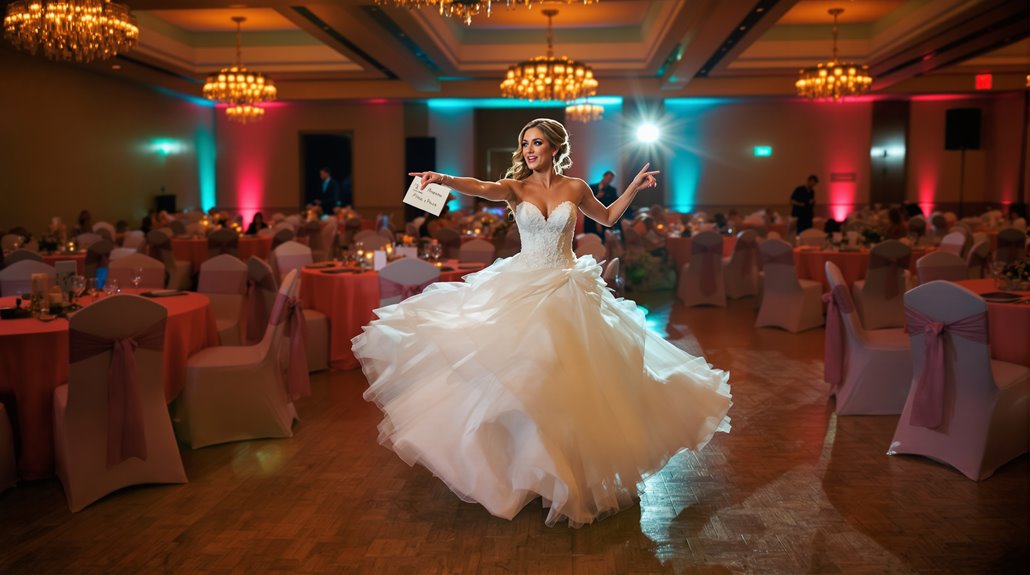
You’re not just planning a dance; you’re orchestrating a well-timed showstopper that sets the tone for your entire reception. It’s time to execute a strategic page action plan. First, choose timing: Pre-dinner for undivided guest focus, fresh looks, and seamless shifts. Post-dinner, you gain momentum for evening festivities, aligning with typical timelines of 7:45-8:30pm or even 9pm for larger guest presence.
Consider guest engagement: Pre-dinner guarantees attention, while post-dinner may find guests distracted. Keep the first dance short and sweet—2-3 minutes max, mixing tradition with modern flair. Remember, this isn’t fluff; it’s a precision-driven move. Screenshot this plan, stick it to your fridge, and kickstart your planning. Next step? Set your timeline, and hustle onward!
Adding buffer time to minimize rushing on the wedding day is crucial for a seamless experience.
FAQ
Wondering if your wedding situation doesn’t match the typical examples? Start by mapping out your non-negotiables today, so you can strategically execute a timeline that fits your unique vibe. Most common regret? Moving too fast without considering vendor changes that could streamline or complicate your day—watch for those red flags and pivot smartly.
What if my situation doesn’t match the examples?
Ever find yourself in a wedding planning bind where none of the usual templates fit your unique scenario? Don’t sweat it. You’re not alone in this bespoke chaos. When standard options feel like stuffing a square peg in a round hole, pivot and execute a plan that fits your vision. Start by listing your venue’s constraints and guest count metrics. Are there cultural traditions or a cocktail-style format? Use these as your pivot points. Streamline your event flow using a checklist to determine where your first dance best fits. Whether it’s pre-dinner for energy or post-dinner for logistical ease, make an intentional decision that accelerates the evening’s momentum. Reality Check: Flexibility is key, but non-negotiable execution keeps your timeline on track.
What’s the first thing I should do today?
Let’s face it, wedding planning is not about fitting into a one-size-fits-all mold. If you’re ready to tackle your wedding planning like a pro project manager, the first thing today is to decide when to execute your first dance. Consider your schedule—do you want it before dinner when guests are fresh and focused, or after dinner to spark evening energy? Strategically, a pre-dinner dance accelerates the celebration, while post-dinner blends seamlessly into the night. Check your timeline, evaluate your priorities, and make an intentional choice. Use a checklist to guarantee all elements align with your vision. Remember, it’s about creating momentum and maintaining flow. Next step? Lock in your decision and communicate it clearly to your planner.
What’s the most common regret?
How often do you hear about wedding day regrets? For many couples, the top regret is a chaotic timeline. You’re not alone—19% of couples wish they’d nailed down a better schedule. Rushed timelines turn your big day into a blur, and let’s face it, you didn’t spend months planning just to wing it. Strategic timing is non-negotiable. A planner can pivot your day from chaos to controlled cool, so get one early.
Bonus regrets? Inviting too many guests, which spikes costs and dilutes connections. And those DIY projects? They sound fun until logistics hit. Also, skimping on vendors like photographers means cringing at memories. Reality check: invest in pros early to streamline your day. Now, what’s your plan?
What’s a red flag that I’m moving too fast?
Rushed timelines aren’t just for wedding days—they’re a red flag in relationships too. If you’re ignoring quirks like chronic lateness or dismissing warnings from friends about a partner’s consuming nature, you’re moving too fast. Overlooking major concerns or being overly forgiving of character flaws? That’s a signal to pump the brakes. Isolation is another red flag. Spending all your free time with your partner and neglecting friends or family can create a false sense of closeness. Talking engagement after just a month? That’s not love; it’s a fast track to regret. Love-bombing—where you’re overwhelmed with affection and promises—hijacks your judgment. Stop. Evaluate. Use a checklist to assess your relationship pace. Your future self will thank you.
What changes if I add/remove vendors?
When you’re juggling the intricacies of a wedding day, the vendor lineup becomes your secret weapon—or Achilles’ heel. Adding a DJ or band? You’ll nail precise timing for the first dance, whether it’s before or after dinner. Ditch them, though, and you’re looking at chaotic shifts, delaying your groove by 30-60 minutes post-dinner. Extra lighting amps up pre-dinner visibility, while a pared-down crew means faster setup post-dinner—under 5 minutes. Want those epic photos? A photographer captures the magic best pre-dinner. More vendors mean a 15-25% cost bump, but ditching the non-essentials can slash expenses by 10-20%. Streamline or expand strategically—your choice. Now, tighten that vendor list and execute with precision. Time waits for no one.
Key takeaways
If you want a wedding that moves with precision and energy, timing your first dance strategically is non-negotiable. Here’s how to get it done:
- Maximize Attention: Execute your first dance before dinner to guarantee full guest focus, avoiding post-meal distractions.
- Streamlined Flow: Opt for a pre-dinner dance to keep hair and makeup fresh, seamlessly shifting to evening festivities without abrupt pauses.
- Guest Inclusion: Schedule your dance around 9pm after cake cutting, making certain all guests are present and excited to pivot into the night.