
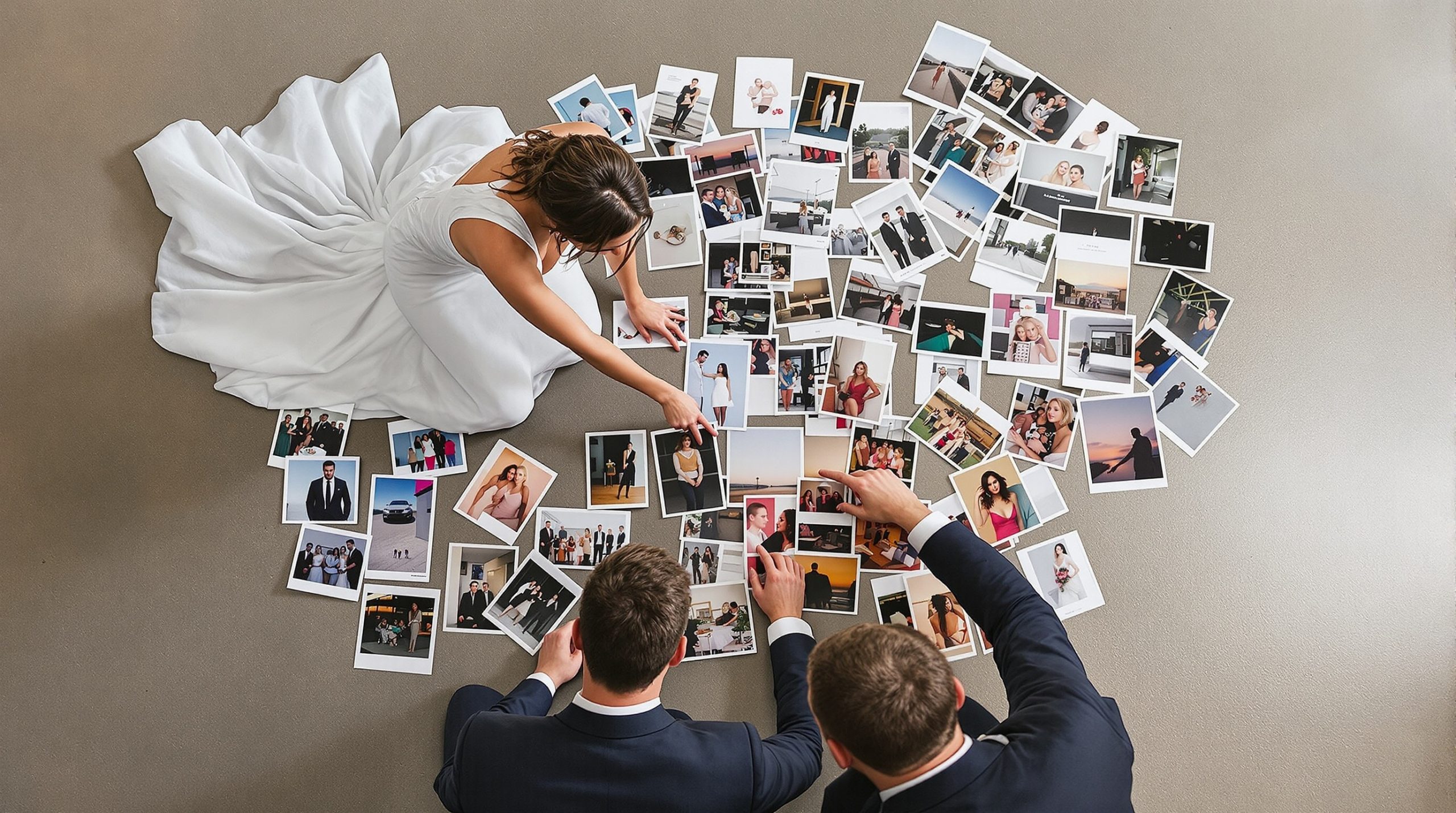
Focus on full wedding galleries—not just glam snapshots—checking consistent quality across all lighting. Analyze storytelling and technical prowess: does the photographer capture the narrative from start to epic dance-off, staying sharp and consistently lit? Leverage client reviews like performance appraisals; professionalism’s non-negotiable. Beware style inconsistencies and communication hiccups—they’re roadblocks, not quirks. Execute pre-wedding consults to define your shot wishlist ensuring the portfolio isn’t just hype, but real hustle. Want deeper insights? The playbook awaits.
The short answer (what most people should do)
When evaluating a wedding photography portfolio, the key is to be ruthless and strategic, not sentimental. You need to know how to choose a wedding photographer who delivers under pressure. Start with a photography portfolio review—look for full wedding galleries showcasing consistency, not just highlight reels. Assess images shot in diverse lighting conditions to guarantee technical adaptability. Check for storytelling prowess—does the gallery narrate a seamless journey from prep to party? Reliability is non-negotiable, so pivot towards client reviews that shout professionalism. Streamline your search by confirming the photographer’s style aligns with your vibe. If you’re seeing proof, not promises, you’re on the right track. Remember, choosing a wedding photographer is a project management task—get the job done efficiently.
The real answer: what it depends on
Evaluating a wedding photographer’s portfolio isn’t just about spotting pretty pictures—it’s a strategic mission that depends on a few critical factors. When it comes to photographer selection, you’ve got to be ruthless in reviewing:
It’s a strategic mission, not just about pretty pictures—be ruthless in your review.
- Technical Consistency: Check for consistent exposure and focus across varied lighting situations. Can they handle mixed lighting and night scenes? A capable photographer adapts to environmental challenges.
- Editing Style: Does their color grading match your taste? Look for coherent aesthetics, not gimmicky edits.
- Coverage & Storytelling: Full galleries tell a story. Do they capture key moments with emotion and consistency?
- Experience & Efficiency: Have they shot similar venues? Consider familiarity with locations akin to your wedding site, as it reflects their adaptability. Can they handle chaos with grace?
Cut through the fluff; focus on these metrics to make a smart choice.
Decision framework (choose the right move fast)
Let’s cut through the noise and dive straight into decision-making mode. Evaluating wedding photography? You need a rapid decision framework that’s all about efficiency and precision. Start by verifying multiple full galleries for consistency—not just those hero shots. Look for a style match that complements your wedding vision, and confirm that the photographer can handle your venue’s quirks. Finding the right photographer requires time and effort, but it’s essential to ensure that the photographer’s aesthetic matches your desired vision.
| Heuristic | Action |
|---|---|
| Consistency Check | Scan full galleries for quality and style alignment. |
| Speed-Risk Triage | Request recent work and check for backup processes. |
| Venue Match | Verify examples from similar venues. |
Proceed if portfolios show consistent quality, matched style, and venue-relevant examples—this is your high-probability hire. Time to make your strategic move and accelerate planning.
Recommended timeline / checklist (so you don’t miss anything)
You’ve nailed down your decision framework, now it’s time to roll into the recommended timeline and checklist to make certain nothing slips through the cracks. Streamline efforts with precision and confidence. Here’s your go-to checklist:
Streamline your wedding planning with precision and confidence using this go-to checklist.
- Portfolio Analysis: Immerse yourself in image quality, lighting, and style. Confirm it aligns with your “curated cool” vision, not just “Pinterest perfect.”
- Experience Verification: Confirm the photographer’s hustle. Are they full-time, with a solid backup plan and second shooter? Ensuring they have familiarity with the wedding site can enhance the quality and efficiency of the shoot.
- Contract & Pricing Review: Scrutinize pricing, deliverables, and copyright details. Non-negotiables? Payment schedule and work guarantee.
- Pre-Wedding Consultation: Nail down expected shots, key moments, and timeline. Decide on album styling and production time.
Stay sharp, stay proactive. Each step executed strategically accelerates your wedding day momentum.
Examples (realistic scenarios)
When you’re facing a tight timeline and limited availability, you need a photographer who can execute under pressure and pivot on the fly—no room for missed shots. For those with a flexible timeline and a penchant for high customization, find someone who strategically crafts each image to reflect your unique style and narrative. If budget-first priorities are your guiding star, prioritize photographers who streamline their processes to deliver quality without inflating costs—because your wallet should stay as happy as your guests.
Scenario 1: tight timeline + limited availability
How do you navigate a tight timeline with limited availability while ensuring high-quality wedding photography? First, demand full wedding galleries, not just snippets, showcasing the photographer’s stamina and storytelling skills. Check their ability to handle diverse lighting and venues—proof they’ve got it down under pressure. Consistency is non-negotiable: look for a unified style, crisp focus, and natural skin tones. Prioritize photographers with a track record of executing under tight schedules, evidenced by real-wedding experience, not just styled shoots. Reviews matter—confirm they align with the visuals. The quality of equipment indicates professionalism and attention to detail, ensuring the photographer can deliver excellent results even under constraints. Make sure they’re available when you need them. Finally, opt for portfolios with strong, efficient direction and the ability to capture genuine moments quickly. Ready to pivot? Book early and stay on top of your timeline.
Scenario 2: flexible timeline + high customization
In a world where your calendar’s tighter than your wedding dress, flexibility isn’t just a luxury—it’s a strategic asset. You need a photographer who can pivot and execute your vision with high customization. Check portfolios for a blend of candid and posed shots, proving they can handle your controlled chaos. Look for full galleries showing the entire wedding story, not just highlights. This tells you they can manage the whole day, not just cherry-pick the best moments. Evaluate technical consistency across varied lighting and venues to guarantee adaptability. Their experience should scream versatility, capturing personalized moments and genuine connections. Once you’ve found a match, streamline your decision-making with their demonstrated skills. Next step? Make a decision and move forward confidently.
Scenario 3: budget-first priorities
Dollars and sense drive your wedding planning strategy, and nothing screams efficiency like a budget-first approach. For those who prioritize value over frills, evaluating a wedding photography portfolio requires strategic precision. First, request full gallery access. It’s about seeing the whole picture, not just highlights. Consistency is non-negotiable—monitor editing styles and guarantee they align with your aesthetic. Check the technical quality: well-exposed, in-focus images with true-to-life colors are key. Experience indicators like varied venues and real weddings tell you if they can handle controlled chaos. Lighting significantly affects the quality of wedding photos, so ensure the portfolio reflects great lighting techniques. Reviews and client fit are vital; they’re the proof over promises. Finally, compare coverage time and deliverables against your budget. Next steps: set metrics, create a checklist, and execute with confidence.
What to avoid (common traps)
When it comes to choosing a wedding photographer, falling into common traps can derail your vision faster than a runaway flower girl. Here’s how to avoid the pitfalls:
- Booking Based on Recommendations: Your cousin’s pick might not fit your style. Verify alignment with your aesthetic instead of relying on secondhand advice.
- Choosing by Price Alone: Prioritizing budget over portfolio quality is a surefire way to get subpar results. Low rates often mean lack of experience and poor editing. Professional rates reflect experience, equipment, and editing expertise, which directly impacts the quality of the final images.
- Incomplete Portfolio Review: Don’t just skim Instagram highlights. Request full wedding galleries to assess consistent output and editing prowess.
- Ignoring Venue Lighting: Confirm your chosen photographer can handle your venue’s lighting. Mismatched lighting and photography styles can ruin your vision.
Strategically evaluate portfolios to confirm your day is executed flawlessly.
1-page action plan you can screenshot

Why waste time in analysis paralysis when you can have a streamlined action plan at your fingertips? Let’s get strategic, no fluff, just a punchy checklist you can screenshot and execute. Start by diving into the portfolio, examining styles, and ensuring they match your wedding vibe—think curated cool, not Pinterest perfect. Assess image quality and lighting; these are your photographer’s skill indicators. Consistency across weddings is non-negotiable. Include experience checks: number of weddings, specializations, and backup plans. A great portfolio serves as a promotional tool for the photography business, helping to attract potential clients. Dig into contracts—know your guarantees and cancellation policies. Outline your shot list: vital moments, guest count, and pre-wedding prep. Consult on logistics and confirm deliverables. Accelerate your decision-making process. Next step? Execute, review, and take action with precision.
FAQ
Got questions? We’ve got answers, and we’re not here to waste your time. Wondering what to do if your situation doesn’t fit the mold? Start by prioritizing your non-negotiables and strategize around them. The biggest regret we hear is rushing decisions—watch for red flags like skipping essential steps or ignoring your gut. Adding or removing vendors? Just remember, each change is a pivot requiring recalibration of your master plan.
What if my situation doesn’t match the examples?
Ever wonder if your wedding plans don’t quite fit the cookie-cutter mold? You’re not alone. Let’s face it—weddings aren’t a one-size-fits-all affair. When evaluating a photographer’s portfolio, look for variety in venues and lighting. Diverse galleries show adaptability and expertise in real scenarios—not just styled shoots. Notice their style consistency—whether it’s candid, posed, or contemporary. Does that align with your taste? Check their experience with similar venues; familiarity equals strategic execution. Look for natural skin tones and consistent editing; technical prowess is non-negotiable. Read reviews and meet them to gauge rapport. Ultimately, seek proof over promises. Evaluate if they can pivot and adapt to your unique day. Action step: Request a full gallery and compare experiences.
What’s the first thing I should do today?
Before diving into the deep end of wedding planning, today’s mission is simple: snag full wedding galleries from potential photographers. You’re not here to be wowed by a few “wow” shots. You’re here to analyze consistency, storytelling, and technical prowess. You want to see full galleries showcasing key moments—getting-ready chaos to reception revelry. Examine how well the photographer navigates different lighting environments—bright sun, shade, or dim reception halls. Consistency in exposure, focus, and composition is non-negotiable. Look for genuine event work, not just staged perfection. Compare galleries across venues and dates. This isn’t about staging; it’s about substance. So, get those galleries and start analyzing. Next up: dive deeper into technical execution and style alignment. Let’s move, hustle-lover!
What’s the most common regret?
How often do you hear couples lament over their wedding photos? It’s more common than you’d think. The number one regret? Insufficient time for photos. When hair and makeup run late, your photo timeline takes a hit. This leads to rushed portraits and missed candid moments. Want to avoid this? Budget more morning time—it’s non-negotiable. Next up is lack of communication. Without a clear shot list, photographers might miss those essential family portraits or bridal shots. Want your day captured as you envision? Strategically share a detailed timeline. Finally, don’t neglect technical issues. Confirm your photographer’s gear is first-rate and backup-ready. Your actionable step: streamline your timeline, communicate clearly, and embrace the hustle of preparation. That’s how you pivot regrets into perfect captures.
What’s a red flag that I’m moving too fast?
Zooming through wedding planning? Slow down. Spotting a red flag in a wedding photography portfolio isn’t just a gut feeling—it’s a strategic move. First, wildly varying styles? That’s inconsistency masquerading as versatility. And beware of portfolios with only one or two weddings; it’s a rookie move, not seasoned expertise. No full wedding day galleries? They’re probably hiding gaps in skill. Check for images with blown-out highlights or muddy shadows—those are technical headaches you don’t need.
And about communication? Slow responses or vague answers spell trouble. No written contract? Legal nightmare waiting to happen. Here’s your move: demand complete galleries, ask for client references, and guarantee clear, upfront pricing. You’re not just planning a wedding; you’re executing a vision.
What changes if I add/remove vendors?
Adding or removing vendors can pivot your entire wedding strategy—think of it like swapping out key players mid-game. When you adjust your vendor lineup, you’re impacting everything from the collaborative energy to execution precision. Adding a high-quality photographer? You’ve just elevated your visual storytelling game. Removing a vendor? Make sure you’ve got backup plans and flexible pricing models ready to roll. Vendor changes can shift budgets, timelines, and even the vibe of your day, so communicate swiftly using digital tools like Zoom and WhatsApp. Don’t let vendor changes derail you; strategically leverage these adaptations instead. Stay proactive—review contracts, align visions, and trust your team’s expertise. Next step: update your checklist and keep hustling forward.
Key takeaways
When evaluating a wedding photography portfolio, you’re not just flipping through pretty pictures—you’re making a strategic decision that demands precision and clarity. Here’s your streamlined checklist:
- Full Galleries Matter: View at least one or two complete galleries showcasing sun, shade, indoors, and night shots. Confirm they tell a cohesive story.
- Style Consistency: Does the photographer consistently execute the style you’re after? Whether traditional or candid, it should align with your vision.
- Technical Prowess: Look for composition, lighting, and editing consistency. Natural skin tones? Flattering colors? Non-negotiable.
- Experience and Reviews: Check for actual wedding experience, client testimonials, and a personality fit. Contracts are your safety net—don’t skip them.
Next step? Schedule a meeting and get those questions ready.