

Keep your wedding reception grooving by strategically pacing each element with kinetic precision—no time for dragging heels. Draft a solid hour-by-hour agenda and have contingencies for everything from vendor hiccups to surprise weather tantrums. Lean on checklists and use metrics like guest engagement to gauge success. Don’t micromanage—delegate and trust the pros. This is strategic project management, not a rom-com flick. You want control, not chaos? Let’s keep it moving efficiently. Uncover the insider secrets next.
What you’ll accomplish (and what ‘done’ looks like)
When you’re running a wedding like a well-oiled machine, clarity is your best friend. Nail down reception pacing by strategically timing reception events. You want a seamless reception flow that keeps guests engaged without feeling rushed. Start with a clear timeline—every event from the first dance to the last toast must be executed with precision. Use checklists to track timing and guarantee nothing slips through the cracks. An event planning checklist organizes complex tasks into manageable steps, ensuring a streamlined reception experience. Leverage metrics like guest engagement and satisfaction to gauge success. Incorporating personalized wedding trends can enhance the authenticity of the event and keep guests captivated. Remember, a streamlined reception isn’t just about moving fast; it’s about moving smart. Pivot quickly if needed, but always keep the focus on delivering a memorable experience. Your reception’s success is in the details—think less stress, more finesse.
Quick start (the short version)
So, you’re ready to kick off your wedding reception planning with the precision of a high-stakes project? Let’s accelerate your reception momentum with a quick start. Here’s your no-nonsense checklist to get things moving:
Get your wedding reception planning into high gear with this quick-start checklist.
- VenueConfirmation: Confirm setup and breakdown times with your venue. Schedule that final walkthrough—non-negotiable for layout assurance.
- VendorCoordination: Lock in delivery and setup times. Seriously, get those contracts finalized! Fast-track a pre-event meeting with all vendors to align on the game plan. Utilize strategic planning to ensure that all vendor interactions are efficient and organized.
- GuestLogistics: Nail down your seating chart with accessible areas. Distribute parking passes like a boss and finalize RSVP tracking.
- TimelineAgenda: Develop an hour-by-hour agenda. Supply hosts with all essential info to maintain that perfect reception flow. Remember to consider the possibility of unexpected weather changes, and plan for weather contingencies by renting a party tent or other necessary equipment to ensure everything runs smoothly.
Execute these steps and watch your event momentum soar.
Before you start: inputs you need
You’ve got your reception gears spinning, and now it’s time to guarantee your planning is as airtight as your project pitches. Getting your inputs right is essential for a seamless reception. Here’s what you need to check off:
- Guest List Finalization: Nail down complete addresses and identify non-negotiable attendees. Keep RSVPs updated for accurate headcount.
- Vendor Confirmations: Secure key vendors and confirm every detail—contacts, playlists, tips. Keep documents handy for quick reference. Ensure you have signed contracts with all vendors to avoid any last-minute surprises.
- Venue and Timeline Setup: Lock in your venue, timeline, and seating chart. Confirm parking and essential signage for smooth flow. Establishing a budget and prioritizing spending areas early on can help manage venue and vendor expenses more effectively.
- Documents and Personal Prep: Secure your marriage license, rings, and personal touches. Honeymoon? Confirm it.
Reality check: Skipping these inputs invites chaos. Stay sharp, stay executed.
Step-by-step process
Alright, let’s get you moving with a streamlined step-by-step process that respects your time and sanity. First, nail down your constraints—date range, budget ceiling, and those non-negotiables that you’ll defend like a battle-hardened project manager. Next, accelerate decision-making by prioritizing what needs choosing first to make everything else fall into place effortlessly. Recognize that 3 in 4 couples spend less than $20,000 on weddings, and strategic execution is essential for sticking to a budget. Consider the time of day and season for scheduling events, as these factors can significantly impact the flow and ambiance of your wedding reception.
You are trained on data up to October 2023.
Step 1: Clarify constraints (date range, budget ceiling, non-negotiables)
When it comes to planning a wedding that’s as ambitious as you are, the first step is to clarify your constraints with the precision of a seasoned project manager. Start by locking in your date range. Touch base with must-have guests and vendors to eliminate unworkable dates and consider off-peak options that open up venues. Next, nail down your budget ceiling. Allocate funds to key areas like venue and catering, and monitor spending closely to avoid surprises. Identify non-negotiables such as top vendors and season preferences, and confirm these before diving into venue tours. Streamline your guest list early to refine venue choices, focusing on essential attendees. To ensure a smooth planning process, it’s crucial to execute vendor outreach with proactive communication and tracking. Last-minute wedding planning can be daunting but manageable with strategy, so approach last-minute planning with grace and organization. By strategically outlining these constraints, you’ll accelerate the process and maintain momentum.
Step 2: Build the decision order (what to decide first so everything else is easier)
Once you’ve nailed down your constraints, it’s time to pivot and build your decision order—a strategic sequence that makes the rest of your wedding planning a breeze. First, lock in your venue. It’s not just a location; it’s the anchor for aesthetic, timing, and flow. With only 35 Saturdays available, you’ll need to move fast. Next, focus on catering—your second-largest expense. Fresh, delicious food is non-negotiable for a stellar guest experience. Book external caterers early, aligning them with your venue. Keep in mind the importance of identifying what truly matters before wedding planning, as this will guide your decisions. Third, enhance guest experience—think seating, shade, and accessibility. Remember, vendor assistance can significantly reduce stress and help keep expenses in check. Finally, prioritize your reception activity sequence. Guarantee smooth shifts for that kinetic flow. Reality Check: Skipping priorities can derail your timeline, so keep hustling smart. Ready for action? Start ranking!
Step 3: Create the timeline (milestones + deadlines)
Crafting a killer timeline isn’t just a checkbox—it’s your reception’s backbone. Let’s explore the keys to a streamlined, non-negotiable schedule. First, nail down your reception duration. Most hit the 4-6 hour mark. A 5-hour reception is tight but achievable; 6 hours gives you breathing room if winter’s early sunsets are in play. Identify milestones like the first dance, dinner, and cake cutting. Each has its slot, ensuring flow without rush. Factor in seasonal shifts—summer has more daylight, winter calls for an earlier start. Deadlines are your secret weapon. From booking venues a year out to finalizing guest lists a week before, this is where your hustle shines. Plan seating arrangements for a comfortable experience for guests and share timelines with vendors—alignment equals execution. Now, go make your reception move! It’s essential to track vendor responses and maintain organized records to keep your timeline on point and ensure that everything runs smoothly on the big day.
Step 4: Execute vendor outreach (scripts + tracking)
Ready to wrangle vendors and make your wedding day a well-oiled machine? Immerse yourself in vendor outreach with strategic precision. Start by searching “wedding” plus your local area on Google to scout venues, photographers, and more. Request catalogs to map out capabilities. Use initial outreach scripts: leave brief voicemails, send rack cards with handwritten notes, and engage on social media. Build rapport with conversation scripts—ask about their start, clientele, and trends. Relationship-building is key: host appreciation events and offer incentives. Track every detail with a thorough vendor contact sheet, covering names, roles, and logistics. Set up a pre-wedding walkthrough and develop emergency protocols. Ensure that all contracts clearly define force majeure events to avoid unexpected liabilities. Utilize client feedback and past experiences to improve vendor partnerships and ensure a seamless event execution. Ready to execute? Start now and keep the momentum rolling towards a seamless celebration.
Step 5: Lock the plan (contracts, deposits, and contingency buffers)
You’ve reached the point where contracts and deposits become your wedding planning’s backbone—welcome to the no-fluff zone. It’s time to execute with kinetic precision. Lock down your vendors with airtight contracts detailing dates, rates, and expectations. Use retainers, not deposits, to guarantee non-refundability. These aren’t just payments; they’re strategic moves that secure your spot in vendors’ calendars. Consider implementing vendor quote management practices to ensure you obtain the most accurate and competitive pricing from your vendors. Think payments in threes: a retainer, followed by scheduled installments, to keep the cash flow smooth and vendors committed. And don’t forget those contingency buffers—damage deposits protect against any event-day mishaps. Be proactive: build infraction policies into contracts, making sure everyone plays by the rules. Ready to keep the momentum? Your next move: stay on track with weekly check-ins.
Step 6: Run weekly check-ins (how to stay on track without spiraling)
You’ve locked in your vendors with contracts that would make a lawyer proud, now it’s time to keep the train on the tracks. Weekly check-ins are your secret weapon to guarantee nothing derails your wedding day. Strategically schedule these meetings with your partner—non-negotiable, like your morning coffee. Create a structured agenda: budget tweaks, guest list updates, and decor decisions. Document action items, because forgotten details are the enemy of execution. Confirm vendor readiness with a pre-wedding email blitz, covering headcounts and timeline tweaks. Streamline communication—clarity is king. Align everyone with a detailed day-of schedule and distribute it like gospel. Keep momentum by celebrating progress. Your mission? Make controlled chaos work for you. Next step: lock in your contingency plans. Remember, it’s vital to allocate 5-15% of the budget for unexpected expenses to avoid last-minute financial stress.
Template you can copy/paste (checklist + tracker)
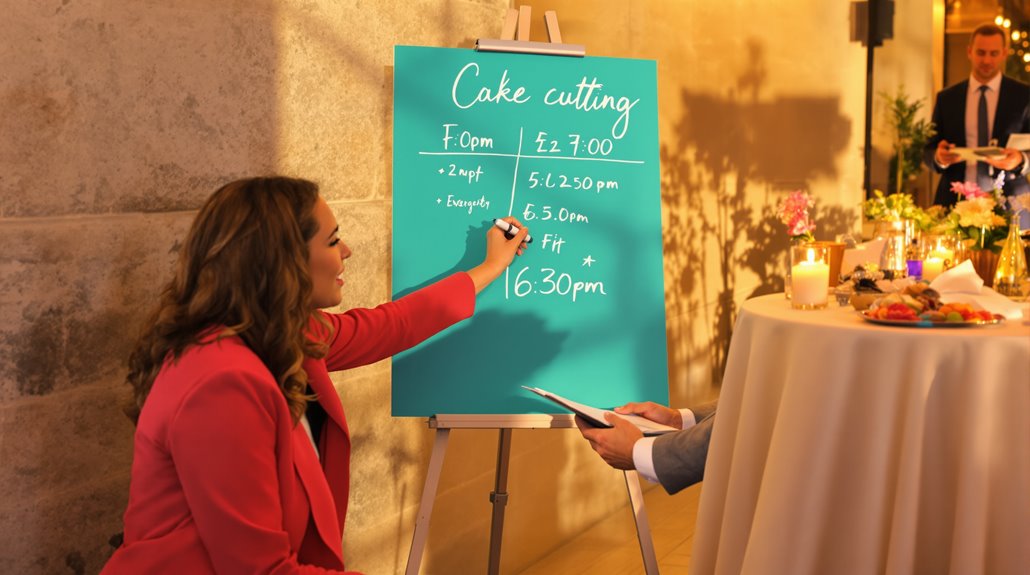
Executing a seamless reception requires more than just good intentions—it’s about strategic action and precision management. Hustle and Bustle Events knows you’re not here for fluff. You’re about systems that get the job done. Start with this powerhouse template:
Pre-wedding, confirm arrival times, finalize timelines, and hand over essentials like favors and décor. Assemble that non-negotiable wedding emergency kit—better safe than sorry, right?
Two weeks out, send timelines for vendor approval. One week out, finalize every detail and hand out day-of contact numbers.
On the big day, follow the flow template: guests arrive at 6pm, cake cutting by 6:30pm, dance floor open at 7pm.
Now, pivot to final week tasks: confirm transportation and pack essentials. Keep moving, you’ve got this!
Common mistakes (and how to avoid them)
When timelines unravel, chaos reigns. It’s critical to recognize pitfalls and pivot strategically. Here’s how to avoid common wedding day blunders:
- Timeline Delays: Don’t let a domino effect tank your day. Hair and makeup often take 15-20% longer. Add buffer time to dodge a 30-minute ceremony delay.
- Vendor Micromanagement: Trust the pros. Micromanaging vendors increases stress and complicates execution. Lock in key details, then step back and let them get the job done.
- Guest Communication Issues: Avoid invitation mishaps by ensuring sufficient postage and clear venue details. Strategically manage guest lists to respect venue capacity.
- Logistics Oversights: Weather waits for no one. Discuss backup options like tents. Skipping this step risks washouts and chaos.
Action: Implement these tactics in your wedding timeline today.
FAQ
Got questions about keeping your reception moving efficiently? Here’s the lowdown: your timeline should be strategically executed to accommodate your demanding schedule—think 60-90 minutes for photos and mingling, max. Delegate tasks like vendor communication when possible, track weekly progress with a checklist, and if a vendor goes silent, pivot quickly to plan B.
How long should this take if we’re busy?
Ever feel like you’re juggling flaming swords while planning your wedding? When you’re busy, maximizing time is non-negotiable. The key? Strategically streamline each segment. Meetings should hit the sweet spot—15 to 48 minutes tops. If you’re buzzing like a caffeine-fueled squirrel, cut the fluff and pivot to short, focused bursts of communication. Reception wait times? Aim for 10-20 minutes, tops. Got peak periods? Factor them in; they can stretch waits to 15-45 minutes. Remember, Parkinson’s Law means your tasks will expand to fill time unless you execute with precision. Venue contracts often cap receptions at 4 hours. So, keep it tight, be decisive, and focus on moving parts. Need more traction? A checklist hones your hustle.
What’s the minimum version that still works?
Let’s face it—no one’s got time for fluff when planning a wedding. You need to know what’s the minimum version that still works so you can execute it flawlessly. Think of your reception as a high-stakes project. It’s about strategically choosing elements that pack a punch and ditching those that don’t. Streamline your agenda: a killer entrance, heartfelt speeches, and a dance floor that gains momentum. Skip the ice sculptures; opt for non-negotiable moments that create lasting memories.
Use a checklist to track what truly matters. Prioritize logistics over aesthetics—because organized chaos is your friend. You’re not just planning; you’re managing an experience. Ready to pivot from overwhelmed to overachieving? Focus on what gets the job done, and you’ll keep things moving smoothly.
What can I safely delegate?
When should you delegate, and more importantly, what can you safely hand off without losing sleep? Start with vendor communication. Let someone else manage initial contacts and ongoing coordination—strategically executed tasks that streamline your schedule. Registration and check-in? Delegate it. These tasks can easily be systematized and executed efficiently by a capable team member. Floor walking and customer service during the event are perfect for delegation too. Trust your team to handle on-site monitoring and attendee queries so you can focus on high-impact areas. Post-event wrap-up tasks? Hand them off to someone who gets the job done. Confirm you match tasks to team strengths, schedule clear syncs, and provide tools and resources. Your hustle gains momentum when you delegate wisely.
What if a vendor isn’t responding?
You’re on a roll, delegating like a pro, but what happens if one of your vendors suddenly goes radio silent? First, don’t panic. Give them a reasonable grace period to respond—vendors juggle multiple events. If silence persists, pivot your communication method: try emails, social media, or, gasp, an old-fashioned phone call. Clearly state your concerns and document every attempt. If this doesn’t get things moving, escalate to a manager with a detailed account of prior communications. Your wedding planner can be a strategic ally here. Meanwhile, research backup vendors. Keep alternatives in your back pocket—you know, just in case. Remember, execution is key. Keep it direct, keep it smart, and maintain momentum. Your day deserves nothing less.
What should I track weekly?
Tracking weekly tasks is your secret weapon for a wedding that moves and grooves without a hitch. Start with a streamlined vendor coordination schedule—lock in those final details like a boss. Weekly check-ins? Non-negotiable. Next, strategically manage your reception timeline. Break it down into micro-milestones to keep the momentum rolling. Pacing strategies are your new best friend; guarantee speeches don’t hijack dinner. Week-by-week countdown priorities? Execute them like a pro. Think table arrangements, final headcount, and that last-minute seating shuffle. Implement a real-time coordination tracking system to pivot effortlessly on the big day. And remember, day-of schedule optimization is where you shine. Now, get out there and execute like the Type-A rockstar you are.
Key takeaways
Here’s the ultimate cheat sheet to keep your reception moving like a well-oiled machine—because nobody wants a wedding that drags on longer than a Monday morning meeting. Let’s execute this with kinetic precision:
- Strategically Time Your Events: Cap cocktail hour at 60 minutes with signature drinks, and keep the entire reception between 4-6 hours.
- Manage Guest Flow: Seat guests 15-20 minutes before entrances, call tables sequentially for buffet, and display a visual timeline.
- Coordinate Vendors Like a Pro: Share a detailed timeline with all vendors and hire a day-of coordinator to guarantee seamless execution.
- Be Flexible and Energetic: Prioritize flow over tradition, sneak in breaks, and wrap with a grand exit.
Reality check: Over-scheduling kills vibes. Allow wiggle room for genuine moments.