
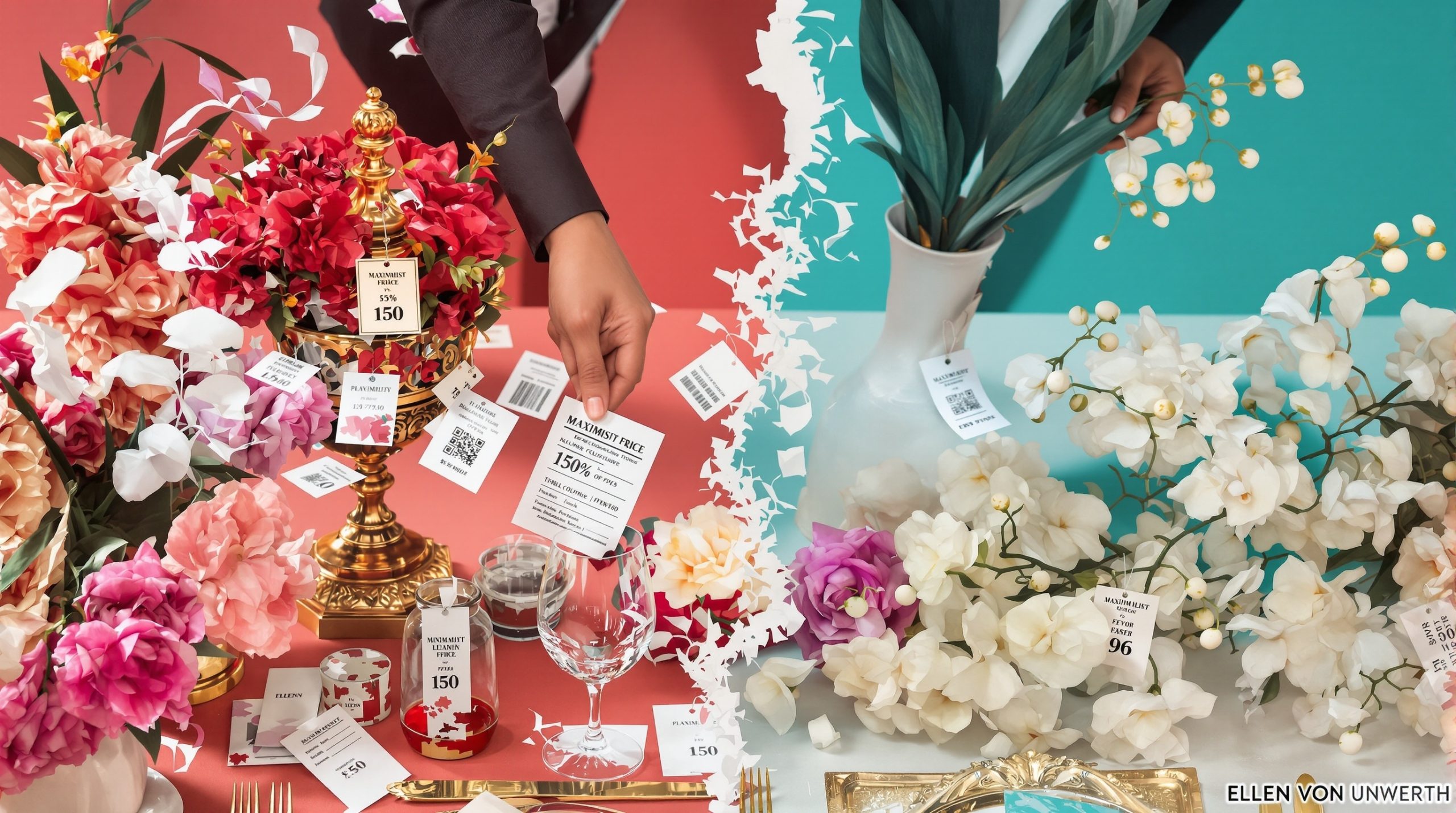
Balancing wedding design with your career demands decisions as crisp as your morning coffee. Maximalist weddings are a luxury splurge, perfect for when you want sensational impact (and can handle the price tag). It’s like cost chaos but styled beautifully. Minimalists, on the other hand, cut clutter for clarity, making every dollar count. Both need strategic planning—think timelines, checklists, exact RSVPs. Want to navigate this design dance with confidence and skill? Let’s get strategic.
Quick verdict: Maximalist vs. Minimalist Wedding Design (who each is best for)
Deciding between maximalist and minimalist wedding designs boils down to your priorities and budget strategy—let’s get straight to the point. A minimalist wedding budget slashes costs by focusing on essentials. It’s a streamlined approach that saves up to 50% by ditching the extravagant. On the other hand, a maximalist wedding cost embraces all the grandeur, with custom builds and lavish details as non-negotiable. Minimalist design can be unexpectedly expensive due to quality requirements, so it’s crucial to plan carefully. According to wedding budgeting research, understanding your financial limits from the outset is key to preventing overspending and ensuring your design style aligns with your means. Your design style budget is your compass. Here’s how to choose:
Deciding between a minimalist and maximalist wedding hinges on priorities and budget strategy—essentials versus grandeur.
- Minimalist: Ideal for intimate, budget-savvy gatherings.
- Maximalist: Perfect for high-budget, dramatic expressions.
- Minimalist: Reduces stress with strategic simplicity.
- Maximalist: Requires more vendor expertise and labor.
- Minimalist: Prioritizes authenticity over excess.
Ready to make a decision? Prioritize, align, execute.
At-a-glance comparison: Maximalist vs. Minimalist Wedding Design
Let’s break it down: Choosing between maximalist and minimalist wedding designs doesn’t have to be a labyrinth of confusion. These wedding design styles have distinct impacts on your budget, and understanding them is key. Minimalist weddings focus on essentials, saving you 30-50% on traditional costs. Maximalist weddings, conversely, are an investment in luxury—think dramatic elements and custom builds. According to consumer economics research, these choices reflect broader trends in how couples allocate resources for major life events. Here’s a quick comparison for you:
| Aspect | Minimalist Style | Maximalist Style |
|---|---|---|
| Venue | Modern, natural settings | Bold transformations |
| Decor | Neutral palettes, geometric shapes | Bold colors, intricate florals |
| Catering | Streamlined, simple | Elaborate, diverse |
| Planning | Essential-focused | Full-service coordination |
| Budget | $75,000–$120,000 (saves more) | $75,000–$120,000+ (premium features) |
Both styles can incorporate outdoor settings depending on the couple’s vision, allowing for unique and memorable experiences. Next step? Define your non-negotiables and align them with your budget strategy.
Define the options (so you’re comparing the right things)
Let’s cut through the noise and clarify: A maximalist wedding is your go-big-or-go-home moment, packed with bold colors and lavish details, but it can easily spiral into budget chaos if not strategically executed. On the flip side, a minimalist wedding is all about streamlined elegance with a focus on quality over quantity—think simplicity that makes a statement. Minimalist weddings often take place in natural settings like Lake Tahoe, offering stunning backdrops that enhance the event’s elegance without unnecessary extravagance. For those seeking luxury wedding venues, the Four Seasons Hotels offer both maximalist and minimalist couples tailored planning and elegant settings to suit their vision. Beware of common misconceptions: maximalism isn’t just clutter, and minimalism isn’t about cutting corners; both require smart, intentional decisions to truly reflect your style.
Maximalist: what it is, what it includes, and the common misconceptions
When you’re planning a wedding that screams personality and vibrancy, maximalism is your go-to strategy. It’s all about executing an eclectic mix of bold patterns, vibrant colors, and layered textures. Forget the Pinterest perfect fluff; this approach celebrates strategic excess with dramatic lighting, oversized floral arrangements, and unique statement pieces like hanging installations. Maximalism isn’t just cluttered chaos—it’s a disciplined, curated explosion of color and form. Think rich jewel tones, standout rentals, and interactive installations. Don’t let misconceptions fool you; it’s about cohesion through creativity, not chaos. Maximalism turns your wedding into an Instagrammable, sensory-rich experience without breaking the bank. Explore unique combinations for table decor, shop in-season flowers for cost-effective arrangements, and customize unexpected decor items for added impact. Ready to plunge into it? Start with a checklist and timeline to strategically plan each vibrant element.
Minimalist Wedding Design: what it is, what it includes, and the common misconceptions
Maximalism might be a riot of colors and patterns, but minimalism gets the job done with streamlined elegance. At Hustle and Bustle Events, we recognize you’re not here for fluff—you want strategic execution. Minimalism centers around quality over quantity, stripping down to essentials with clean lines and neutral palettes. Think two or three complementary colors, greenery, wood accents, and functional chic furniture. Misconceptions abound—minimalism isn’t stark; it’s warm and textured, highlighting key aspects like couple and venue beauty. It’s about intentional decisions, not chaos or over-simplification. A minimalist wedding often incorporates natural elements or sleek, modern aesthetics, creating a timeless and elegant atmosphere. A key consideration for minimalist weddings is food planning, ensuring that the menu is both intentional and memorable without unnecessary excess. This approach is cost-effective, sustainable, and adaptable, focusing on the core elements that matter. Ready to pivot? Start with a checklist of essentials, ditching anything that doesn’t spark joy or value.
Cost breakdown (upfront vs hidden costs)
When it comes to breaking down wedding costs, knowing the difference between upfront and hidden expenses is essential for keeping your budget on track. Upfront costs like venue rentals and decor are easy to spot, but hidden fees—like customization and transport—can sneak up and throw a wrench in your plans. The time of year can lead to drastic price variations, making it crucial to plan accordingly. Factoring in food styling tips can also affect your budget, especially if you opt for elegant presentations or specialty catering. To strategically manage these expenses, use detailed line-item comparisons and pinpoint what actually drives cost changes, ensuring your perfect day is executed without financial surprises.
Line-item cost comparison by tier/budget
Let’s cut to the chase: when you’re strategizing your wedding budget, knowing where to spend and where to save is non-negotiable. Whether you’re embracing minimalist chic or maximalist grandeur, each choice impacts your wallet. Here’s a quick breakdown:
| Budget Tier | Minimalist Moves | Maximalist Gains |
|---|---|---|
| Economy ($75K) | Focus on essentials, skip frills | Design limits, strategic execution |
| Mid-range ($100K) | Reallocate savings to experiences | Moderate custom elements allowed |
| Premium ($120K+) | High-end craftsmanship achieved | Lavish execution requires precision |
Decide on your vibe and allocate strategically. Minimalist? Save on décor, invest in quality. Maximalist? Brace for bold colors, intricate designs. Remember, every choice should move you closer to that perfectly executed day. Next step: align your vision with your budget. If you need help comparing options, a wedding location marketplace can simplify your search for venues and vendors that fit your style and spending plan.
What actually drives cost changes
Though it might seem like your wedding budget is a straightforward equation, it’s the hidden costs that can turn your meticulously planned day into a financial surprise party. To avoid getting blindsided, you need to strategically tackle both upfront and hidden expenses. Here’s what to watch for:
- Venue Size and Type: Blank-slate venues demand extra decor, while larger spaces need more rentals.
- Geographical Location: Metropolitan areas and tourist hotspots jack up transport and labor fees.
- Guest Count: More guests mean more tables, chairs, and decor, scaling linearly.
- Upfront Rentals: Costs for essentials like chairs and tables add up quickly.
- Hidden Fees: Setup, breakdown, and delivery charges can surprise you post-quote. If you choose a venue with official wedding venues and celebration packages, some of these fees may be bundled, providing more transparency and fewer surprises.
It’s essential to remember that professional services, such as full-service decor options, can also influence your budget, as they often include both setup and breakdown, which can help alleviate stress but may add to the overall cost.
Reality Check: Ignoring these can pivot your budget from streamlined to stressed.
Planning workload & logistics impact
When you’re juggling a high-octane career and a wedding, planning becomes a strategic operation, not a Pinterest dream board. The sheer complexity of maximalist designs demands seasoned vendors and a well-oiled coordination machine, while minimalist settings require laser-focused curation and venue compatibility checks. Vendor flexibility isn’t just nice-to-have—it’s non-negotiable; their ability to pivot and adapt can make or break your timelines and sanity. Minimalist décor often requires a higher budget for fewer, high-quality items, which emphasizes intentionality and careful selection of elements.
Time, complexity, and coordination differences
Steering through the intricate world of wedding design, you quickly learn that every choice, from minimalist elegance to maximalist splendor, impacts your planning workload and logistics. A minimalist wedding demands meticulous curation, meaning you’re hunting for quality over quantity, aiming for a seamless vibe without the clutter. In contrast, maximalist celebrations involve less initial fuss but require ongoing tweaks to avoid chaos.
- Minimalist:
- Focus on quality, not quantity.
- Requires precision to prevent imbalance.
- Maximalist:
- Bold elements demand constant adjustments.
- Increases complexity with personalized touches.
- Needs robust coordination for custom builds.
Recent UC Berkeley sociology research highlights how marriage and celebration practices shape not just the event’s atmosphere, but also the intensity of coordination and time investment required for different wedding styles. For both styles, strategic execution is non-negotiable. Use AI tools and personalized websites to streamline coordination. Prioritize tasks and embrace the hustle confidently—your wedding project is a powerhouse, not a Pinterest board.
Vendor availability + flexibility considerations
Managing vendor availability and flexibility isn’t just about ticking boxes; it’s about orchestrating your wedding like a pro-level project manager. Minimalist designs adapt seamlessly to various venues, letting the inherent beauty shine without overshadowing. Maximalist designs, on the other hand, require larger spaces and more setup time, demanding a strategic logistics plan. Don’t get bogged down; pivot your plans to align with your vision and venue capabilities.
- Minimalist: Works with modern lofts, rustic barns, and rooftop restaurants.
- Maximalist: Needs ornate ballrooms or historic estates.
- Flexibility: Minimalist adapts to existing features; maximalist transforms spaces.
- Budget: Minimalist shines with quality items; maximalist thrives on DIY.
- Logistics: Minimalist is streamlined; maximalist needs expert management.
Reality Check: More isn’t always better; strategically execute to fit your vision. If you’re searching for distinctive spaces, consider exploring a wedding venue marketplace to find unique event locations that match your design and logistical needs.
Guest experience impact
Let’s break down the guest experience impact—where your hustle meets their joy. Guests will notice how your design choices create either seamless flow or unexpected friction, so executing strategically is non-negotiable. Streamlined paths, clear signage, and intuitive layouts guarantee guests are engaged and focused, not lost and frustrated; it’s about making every movement feel intentional and every interaction memorable.
How guests perceive it + where friction shows up
When it comes to guest perception, the minimalist and maximalist wedding designs each bring distinct experiences. Minimalism focuses on intimacy, drawing attention to the couple with clean lines and neutral palettes. It’s all about quality over quantity, fostering connections and serenity. Maximalism, on the other hand, immerses guests in vibrant, sensory-rich spectacles—think bold colors, dramatic entrances, and personality-driven designs. But beware, maximalism can overwhelm if not executed strategically. Friction shows up when:
- Minimalism lacks personal touches in large crowds.
- Maximalist details overwhelm small venues.
- Pattern clashes disorient guests.
- Minimalism demands impeccable quality.
- Maximalism can create chaotic energy.
Next step? Strategically curate your design to balance these elements and execute a memorable, friction-free experience.
Best-fit scenarios (choose based on constraints)
When you’re balancing a packed schedule with a high wedding budget, a maximalist design lets you release bold drama and custom elements without batting an eye. But if time is tight and minimalism matches your eco-conscious priorities, a streamlined approach with essential-only focus keeps it chic and efficient. Decide what aligns with your constraints, then strategically allocate resources to execute your vision without unnecessary stress.
Choose Maximalist if…
Ever wonder if a maximalist wedding vibe is the right fit for you? If you’re not one to shy away from bold statements and your budget can handle a bit of extravagance, maximalist design might be your cup of tea. Think about it:
- High Budget Tolerance: You’re ready to invest in top-tier vendors for unforgettable drama.
- Personality-Driven Couples: You crave creative freedom to express a vibrant, eclectic style.
- Social Media Focus: You want every moment to be Instagram-worthy and unforgettable.
- Venue with Preexisting Drama: Your chosen location already screams opulence.
- Themed Excess Enthusiasts: An elaborate theme ties everything together with style.
If you’re considering a venue with an established reputation for luxury, Ritz-Carlton official luxury wedding venues offer the perfect setting for maximalist celebrations.
Reality Check: Maximalism means embracing complexity. Keep your eye on the prize—strategically plan each detail to guarantee everything aligns seamlessly.
Choose Minimalist Wedding Design if…
If you’re tired of excessive fluff and ready to streamline your wedding planning with laser focus, a minimalist design might be your ticket to success. You value efficiency and strategic execution, and a minimalist approach aligns beautifully with that mindset. Your wedding becomes a project managed with precision, not an endless Pinterest scroll.
- Tight Budget Constraints: Smaller guest lists cut costs on everything from food to rentals.
- Stress Reduction Needs: Streamlined planning equals fewer headaches and more time for what matters.
- Small Guest List Preference: Intimate gatherings mean meaningful moments with your VIPs.
- Sustainability Priorities: Fewer elements, less waste—because you’re eco-savvy and proud.
- Venue Highlighting Desires: Let the venue’s natural beauty shine, not be overshadowed.
Reality Check: Cut the fluff, not the essentials. Prioritize wisely.
Real-world scenarios (examples with numbers)
Let’s break down three wedding scenarios so you can strategically plan without sacrificing style. Imagine the following: a 100-guest minimalist Lake Tahoe wedding, executed at 50% of the traditional cost by leveraging natural scenery and streamlined decor. Contrast that with an Austin maximalist event for 200 guests, where intricate details and lush florals boost the budget to $120,000; it’s all about intentional choices and getting the job done with precision.
3 sample scenarios: guest count + budget + priorities
Planning a wedding can feel like juggling flaming torches while riding a unicycle, but with the right strategy, you won’t even break a sweat. Let’s break down scenarios to streamline your wedding project. First, know your guest count, budget, and priorities. Here’s a cheat sheet:
| Guests | Budget | Priority |
|---|---|---|
| 50 | $50K | Intimacy |
| 100 | $75K | Scenery |
| 150 | $100K | Authenticity |
| 200 | $120K | Drama |
| 75 | $90K | Opulence |
Aim for minimalist designs to save up to 30% on decor, or go maximalist for opulence, but remember, extravagance hikes costs. Leverage natural venues and focus on quality over quantity. Next step: Decide what’s non-negotiable and pivot accordingly.
Common mistakes (and how to avoid them)
Despite your desire for a streamlined wedding planning process, common pitfalls can derail your meticulously crafted budget if you’re not careful. Before you know it, hidden fees and unexpected costs can add up faster than you can say “I do.” Avoid these budget busters:
- Ignore hidden fees: Taxes, gratuities, and delivery fees aren’t always obvious. Build a 5-15% buffer.
- Underestimate the total budget: Outdated cost expectations? Draft a thorough budget early.
- Overspend on venue: Aesthetic allure can mask logistics nightmares. Get a detailed inclusions list.
- Expand the guest list: More guests mean more expenses. Categorize early to trim down.
- Choose poor vendors: Opt for experience over cost. Consolidate services for package deals.
Keep these in check, and your wedding budget will stay on track.
Copy/paste decision matrix template

Maneuvering the wedding planning minefield? Don’t sweat it. A copy/paste decision matrix template is your strategic ally. It’s like having a turbo-charged checklist that keeps your wedding planning on track. You’ll evaluate options against solid criteria—think venues, vendors, and budget priorities. Excel or Google Sheets are your playgrounds for customizing these matrices.
First, define your objective, say, choosing the perfect venue. List your options, determine criteria like cost and capacity, and assign weights. Multiply and score for a clear winner. Resources like Template.net or Smartsheet offer ready-made templates to streamline the process.
Reality Check: Overweighting criteria can skew results. Stay balanced and keep it real. Next up, download a template and start plugging in numbers.
FAQ (quick answers to common edge cases)
Stuck between two options? Streamline your decision with a pros-and-cons checklist and prioritize what aligns with your non-negotiables. For risk reduction, confirm vendor assumptions with precise questions and have a ready-to-execute plan if your guest count shifts by 20% or something goes sideways.
What if I’m stuck between two options?
When torn between a minimalist and maximalist wedding design, it’s time to shift from indecision to action. First, assess your personal style: Are you drawn to serene, clean lines or bold, dynamic statements? Next, evaluate your budget constraints. Minimalist weddings can slash costs by up to 50%, while maximalist designs demand higher investments in florals and rentals. If you’re the kind who thrives in controlled chaos, consider a strategic hybrid approach—think minimalist venues with maximalist floral accents. Map out your priorities using a checklist: What absolutely must be included? Finally, consult with vendors experienced in both styles to guide your change. Whatever you choose, make sure it aligns with your authentic story. Ready to get moving? Time to execute.
What’s the easiest way to reduce risk with either option?
Though weddings come with their fair share of chaos, minimizing risk is all about precision and smart moves. Start by securing event-specific insurance. It’s your safety net against unexpected hurdles like vendor cancellations or rogue weather. Boost your homeowners policy to cover valuables—think sterling silver gifts. Use detailed, legally-vetted contracts with penalty clauses to hold vendors accountable. Remember, a backup for critical roles like photographers isn’t just smart; it’s non-negotiable. Execute a risk assessment early, identifying potential pitfalls and mapping responses. Strategic contingency planning is key—set aside a 10-15% fund for unexpected expenses. Finally, don’t skip ongoing monitoring. Regularly check in with vendors, and use work management software to streamline risk control. Get moving and stay ahead.
What should I ask vendors to confirm assumptions?
Before the wedding day hustle hits full throttle, you need to pin down a few vendor details to keep chaos in check. Start by confirming the number of team members attending, backup plans, and contingency measures. Ask about their response time and clarity of communication. Get a detailed wedding day timeline, including setup and breakdown. Verify vendor arrival times and integrate all schedules to prevent conflicts. Triple-check contracts for dates and payment schedules; align these with your budget. Share inspiration boards to guarantee vendors align with your vision. Push for personalized touches and tailored services. Remember, understanding and communication are non-negotiable. Finally, confirm vendor recommendations for design consistency. Next step: schedule a vendor check-in to solidify plans.
What changes if my guest count swings by 20%?
You’ve got your vendors in check, now let’s tackle the wildcard: a 20% swing in your guest count. First, know that catering costs move linearly with guest numbers—more guests mean more food, drinks, and staffing costs. Fewer attendees? Consider upgrading your menu. Florals and decor scale as well; more tables demand extra centerpieces, while fewer guests let you splurge on premium blooms. Rentals like chairs and linens adjust per guest, so always order a bit extra. Save-the-dates and RSVPs also rise or fall, with digital RSVPs offering flexibility. Your overall budget pivots with guest count changes: fewer guests can mean reallocating funds towards luxe elements like high-end entertainment. Remember, accurate RSVPs are your best friend—always.
What’s the best fallback plan if something goes wrong?
When chaos strikes your big day, the best fallback plan is a strategic toolkit that gets the job done—no drama, just solutions. Your wedding is a project, not a fairy tale. Equip yourself with essentials: safety pins for wardrobe malfunctions, a stain remover pen for spills, and a portable phone charger to keep lines of communication open. Health and comfort? Non-negotiable. Pack Tums, ibuprofen, and breath mints to combat minor health hiccups. Weather won’t catch you off-guard; have a cute umbrella and veil weights ready to pivot seamlessly. Nothing derails a wedding faster than disorganization—keep backup timelines and vendor contacts on hand. Accelerate your problem-solving, not your stress. Remember, a well-executed plan isn’t luck; it’s pure kinetic precision.
Next steps: make the decision + execute the plan
Once you’ve decided between a minimalist or maximalist wedding design, it’s time to accelerate into execution mode. You’re not here to daydream—you’re ready to make it happen with precision. Here’s your no-nonsense action plan:
Time to stop dreaming and start doing. Execute your wedding vision with precision.
- Set a non-negotiable budget: Define your financial boundaries and stick to them.
- Create a streamlined timeline: Map out key milestones and deadlines. No detail’s too small.
- Prioritize key elements: Focus resources on standout features that make the biggest impact.
- Leverage strategic partnerships: Work with vendors who get your vision and execute flawlessly.
- Monitor progress: Use metrics to measure success and adjust as needed.
Reality Check: Don’t get sidetracked by trends. Stay focused on what truly matters to you. Ready? Let’s get this show on the road.