
Cutting plus-ones from your wedding guest list isn’t a cruel twist; it’s the strategic sanity check your budget and venue need. You’re managing a project—data-driven, efficient decisions are essential. Tossing automatic plus-ones helps you prioritize real connections and control costs. You get more flexibility and less chaos. Explain the move to guests with humor and transparency, and you’re golden. Want more insights? Your wedding day won’t plan itself—let’s hustle.
The thesis (what people get wrong)
When it comes to wedding invites, the myth that everyone automatically gets a plus-one is as outdated as dial-up internet. Let’s be real: the wedding plus one policy is more strategic than generous. Sure, 61.4% of guests might be more likely to attend with a plus-one, but a well-executed single guest policy keeps your guest list streamlined and your budget intact. Plus one rules are all about intentionality—single guests knowing others at the event might not need a companion. It’s not about being rude; it’s about smartly allocating resources. Guests believe a romantic relationship should last at least 5.1 months before inviting as a plus one, which underscores the importance of intentional and meaningful invitations. As you plan, remember that finalizing your guest list early is essential for effective venue and catering scaling, helping you avoid budget creep and unnecessary stress. So, pivot from the assumption that every invite requires a “+1.” Think execution over emotion, and you’ll craft an event that respects logistics and relationships alike. Ready to move forward? Stick to your plan.
Why this happens (the real root causes)
Understanding why the plus-one dilemma even exists starts with recognizing the multifaceted pressures at play. Guest additions aren’t just social niceties—they’re logistical landmines. Here’s the real talk:
Guest additions are logistical landmines, not just social niceties.
- Financial Strain: Each plus-one means extra food, seating, and venue space. It’s not just a dinner; it’s a budget buster.
- Logistical Chaos: Unpredictable RSVPs mess with seating plans and can leave you with ghost chairs and wasted meals.
- Venue Constraints: Intimacy and quality time get sacrificed when overcrowding turns your event into a bustling bazaar. Familiar faces encourage guests to mingle and participate more actively, contributing to a more vibrant and dynamic wedding atmosphere.
You’re not just trimming fat; you’re strategically streamlining. Your wedding is a project, not a party. Execute it with precision. Remember, more bodies don’t mean more fun—they mean more stress. Be intentional. Plan smart.
What to do instead (the better framework)
Let’s cut to the chase: the plus-one game is a logistical nightmare that you don’t need to play. Instead, focus on creating a streamlined, non-negotiable guest list that gets the job done. Here’s how:
- BudgetAndCapacity: Determine your max attendees by crunching numbers based on budget and venue capacity. Stick to a firm cap—100 guests for a 100-seat venue, no over-inviting here. Remember, each additional guest increases costs, so keep this in mind when finalizing your list.
- GuestTiering: Break guests into tiers. Tier 1 is for must-invites like immediate family. Use this system to protect your core list from cuts.
- ListTrimming: Apply the one-year rule—invite only those you’ve spoken to recently. Limit plus-ones to long-term partners.
Execute this with digital tools to track RSVPs, and pivot your strategy as needed.
How to apply it in real life
Envision this: you’re crafting the guest list and your old college buddy insists on bringing a date, even though he knows half the room. Politely explain that your no-plus-one policy promotes intimate connections and strategically saves space for those who don’t. When your boss wants to bring their new partner to your meticulously planned reception, firmly uphold your boundary while offering seating with fellow colleagues to keep the conversation flowing and the event streamlined. Remind guests that venue capacity and budget constraints mean every invitation is intentional, making the gathering more meaningful for those present. Limiting plus-ones helps manage budget and venue capacity, ensuring a well-organized and enjoyable event for everyone.
Example 1: a common scenario + the better move
Envision this: You’re planning your wedding, juggling spreadsheets and timelines like a high-stakes project manager, when the dilemma of plus-ones rears its head. Imagine this: single guests feeling like third wheels amidst couples. You can smartly pivot with a streamlined seating strategy. Group solo attendees by mutual interests or connections—think “mixer tables” with lively personalities. This executed move boosts guest rapport and satisfaction. Acknowledge that providing a plus-one means respecting guests’ personal lives and enhances the celebratory atmosphere, but sometimes it’s necessary to limit plus-ones for a more intimate event. Communicate your no-plus-one policy with precision. Clearly state it on your wedding site—something like “Intimate event limits plus-ones to committed pairs.” Make it non-negotiable but kind. Transparent communication is essential to avoid misunderstandings and help manage expectations gracefully. Pre-event chats with key singles explain your rationale—reinforce it’s about meaningful connections, not restrictions. Follow up with emails thanking them for understanding. Your focus: a close-knit, memorable celebration. Reality check: Avoid arbitrary exclusions; guarantee clarity.
Example 2: a high-stakes scenario + the better move
When the budget feels like it’s shrinking faster than your patience for small talk, it’s time to get strategic about guest lists. High-stakes scenarios demand efficiency. Limit plus-ones to prevent budget overruns and keep your celebration first-rate. With 75-85% of guests attending, accurate headcount projections are essential. Allocating 20-35% of your budget to the venue ensures you keep financial control as your guest list grows. Remember, every plus-one accelerates venue and catering costs. Destination weddings naturally cap plus-one acceptance rates, so leverage that to maintain exclusivity. For large events, a 32.2% spike in plus-one requests can derail your financial plan. Strategically curating your guest list preserves the experience, ensuring meaningful interactions and smooth logistics. Keep in mind that 44% of people consider it inappropriate to request a plus-one, which can help justify your decision to limit them. Ready to streamline? Make a checklist to verify relationship statuses, and keep momentum by executing intentional decisions. Your wedding, your rules.
Example 3: a ‘we’re busy’ scenario + the better move
Despite a calendar jam-packed with deadlines and commitments, you can master the art of wedding guest lists without losing your sanity. Let’s keep it real: when venue space and budget are tight, nixing plus-ones becomes non-negotiable. Execute this strategically by stating “by invitation only” on your wedding website—clear, polite, and direct. Invitations should be addressed individually, signaling single guests to mingle with familiar faces. Forget the “no ring, no bring” mantra; evaluate relationship seriousness instead. Use seating plans to your advantage: place singles with known acquaintances for seamless socializing. Track RSVPs with digital tools to uphold your guest list boundaries. Remember, your energy’s precious. Don’t waste it on unmanageable extras. Now, go execute like a pro and enjoy your day! To keep your process stress-free, use structured vendor communication documents to clarify guest policies with your planning team and ensure everyone is on the same page.
Counterpoints (when the old way is actually fine)
Let’s face it—sometimes the old-school approach deserves a standing ovation. Sure, allowing plus-ones might seem like an outdated practice, but it delivers results. Think about it:
- Enhanced Atmosphere: With a larger guest list, your wedding transforms into an electric event brimming with laughter and lively conversations. More people equal more joy filling the air. Many couples find inspiration for these lively gatherings by browsing real wedding photography on Instagram.
- Guest Comfort: Plus-ones ease the stress of maneuvering a room full of strangers, ensuring guests are at ease and less likely to sneak out early.
- Social Connections: New friendships blossom when guests arrive with company, creating room for expanded social circles.
While “no plus-ones” can streamline logistics, the traditional route has its perks. Sometimes, the old way simply gets the job done. Allowing plus-ones enhances guest comfort by providing familiar company and making the event more enjoyable for everyone involved.
Action plan (do this next)
Kickstart your no plus-one plan with precision. First, define and communicate your policy: married, engaged, or long-distance guests get plus-ones. Period. Share this on your wedding website or RSVP cards to set the stage. Second, manage expectations by having pre-invite chats with guests. This proactive approach clears up any misconceptions and keeps the peace. Third, seat solo guests wisely. Group them with familiar faces or shared interests to foster a lively atmosphere. Ensure that you communicate to guests that budget constraints may limit the ability to extend plus-ones to certain attendees, helping them understand the practical reasons behind your decision. Remember, focusing on guest experience over the pressure to please everyone can lead to a more memorable and enjoyable wedding for all.
- Define Policy: Offer plus-ones to married, engaged, cohabitating, or long-distance guests.
- Manage Expectations: Discuss policy early to prevent surprises.
- Seat Thoughtfully: Arrange solo guests with known acquaintances.
Execute this plan, and you’ll streamline your guest list while embracing controlled chaos.
Visual summary you can share
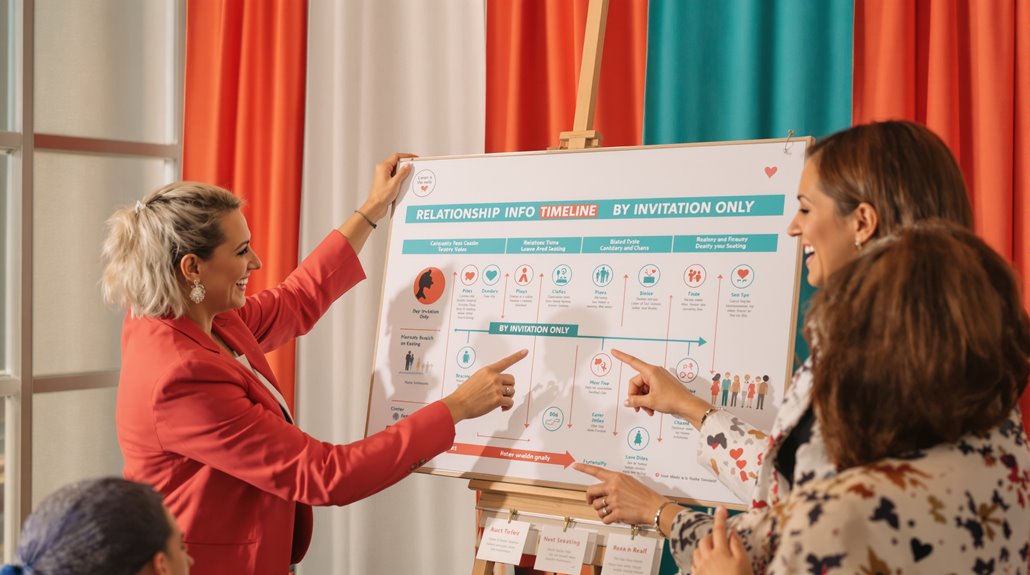
When it comes to sharing your no plus-one strategy, a sharp and snappy visual summary does wonders. Hustle and Bustle Events gets it—your time’s valuable, so let’s streamline. Create an infographic that lays it all out: coworkers don’t get plus-ones, casual relationships under a year skip it unless you’ve got budget room, and single guests already familiar with the crowd go solo. Use bold colors and kinetic graphics to reflect your decisive, no-nonsense approach. Highlight that serious relationships get prioritized without needing a ring. Include a “By Invitation Only” reminder to reinforce boundaries. {img} Suggestion: Image of a timeline with icons showing relationship durations, guest type, and decision points. {save_text} “no_plus_one_visual_summary”. Remember, wedding spending prioritization helps you keep the guest list—and your budget—in perfect balance.
FAQ
You’re in the thick of wedding planning, and now the no plus-ones policy is causing waves—what’s your next move? If family or vendors push back, stand firm and reiterate your strategy; it’s about executing a vision, not pleasing everyone. Made a misstep? Pivot by communicating clearly with guests, and realign with your partner through an honest, efficient pow-wow. Need a quick win? Revisit your guest list for potential oversights and refine your invitation language—because clarity gets the job done. When discussing your policy, be transparent about refund conditions and deposit types to set expectations and reduce confusion for both guests and vendors.
What if my family/vendors push back?
In the whirlwind of wedding planning, pushback from family or vendors on plus-one decisions can feel like an inevitable showdown. But it doesn’t have to be. Strategically approach these conversations with facts and a non-negotiable stance. Use polling data to illustrate that plus-ones aren’t always expected—recent weddings without them sparked no complaints. Vendors might argue for plus-ones to fill seats, but it’s your call—your budget, your rules. Reinforce that having a curated guest list isn’t rude; it’s efficient. Remind family that cousins and single guests can enjoy company without a plus-one. Utilize seating plans to mix familiar faces, minimizing discomfort. Research shows that prioritizing purpose and setting non-negotiables early leads to smoother planning and less stress for everyone involved.
Reality Check: Resist the urge to cave under pressure. Stick to your well-executed plan—it’s your day, not a democracy.
What if I already made the ‘wrong’ decision?
So you think you’ve stepped on a wedding planning landmine by offering plus-ones? Don’t fret. First, recognize the metrics: 61.4% of guests are more likely to attend with a plus-one. While it might seem like a misstep, strategically assess if this aligns with your wedding vision. Consider factors like relationship duration norms (5.1 months minimum) and guest list priorities—childhood friends over casual dates. If it’s a juggernaut of a wedding, plus-ones could be a buffer against boredom, but they don’t always align with streamlined execution.
Reality Check: Offering plus-ones can inflate your budget and logistics. Pivot by focusing on intimate connections over obligatory invites. Next steps? Strategically reevaluate your guest list and keep track of RSVPs to adapt swiftly.
What’s the fastest way to course-correct?
How do you pivot when a wedding plan veers off course? Embrace the principle of small, strategic adjustments. Forget 180-degree turns; opt for 2-degree tweaks to accelerate progress. These minor shifts, executed consistently, compound into significant results, much like financial investments. Focus on active listening and delivering vivid, positive feedback. Think of it as an engagement metric—track it, refine it, and watch satisfaction scores climb. Constructive feedback isn’t just nice; it’s non-negotiable. Use it to halt negative vibes and foster positive ones. Remember, relationship dynamics outshine individual quirks. Streamline your approach with metrics and checklists. Ready for the next move? Start with a relationship reflection session. It’s a reality check that gets the job done.
How do I get my partner aligned?
Course-correcting can be a wild ride, but it’s nothing if you and your partner aren’t synced up like a well-oiled project management machine. Start with active communication: actively listen, reflect, and paraphrase to guarantee mutual understanding. Establish shared goals by identifying relationship objectives and transforming them into actionable plans. Regular check-ins are non-negotiable for maintaining alignment. Use “I” statements to express feelings without blame—it’s strategic and defuses defensiveness. Implement empathy techniques by acknowledging your partner’s perspective and validating emotions, even in disagreement. Manage conflict with structured communication—take timeouts, consider viewpoints, and practice stress-reducing conversations. It’s not about grand gestures; it’s about executing clear, intentional steps. Aligning here accelerates your journey, turning chaos into streamlined success. Now, what’s your next move?
What’s the easiest win I can do today?
When you’re juggling wedding plans and a thriving career, the easiest win today is to leverage #MicroFocusBlocks to make a tangible dent in your to-do list. Dedicate 20 minutes to a task—it moves mountains. Allocate 15 minutes for learning; compound those gains into mastery. A mere 30-minute workout can pivot your brain into completion mode. These aren’t just buzzwords; they’re your non-negotiable keys to streamlined success.
Ever thought about structuring your environment? Laying out tomorrow’s essentials tonight reduces friction and enhances execution. Plan your day like it’s a GPS—Bill Gates style. Start small, execute big. You’re not just planning a wedding; you’re orchestrating a masterpiece.
Next step? Reflect on wins and recalibrate. That’s strategic hustle.
Key takeaways
Steering through the plus-one dilemma can feel like walking a tightrope, but with the right strategy, you’ll execute a seamless guest list that respects both your budget and relationships. Here’s the game plan:
- Consistency is King: Apply plus-one rules uniformly. Wedding party members get the nod, while coworkers and casual acquaintances don’t. It’s fair, it’s strategic, it’s non-negotiable.
- Relationship Thresholds: Prioritize those with romantic involvement of at least 5.1 months if space and budget allow. It’s a streamlined, data-backed decision that cuts through the chaos.
- Respect the Metrics: 44% find asking for unoffered plus-ones inappropriate. Leverage this data to maintain clarity and control.
Execute these moves, and you’ll pivot from guest list headaches to a wedding that flows. Ready to streamline? Let’s hustle.