

Streamline wedding chaos with a disaster plan. No one needs the stress of vendor no-shows or a surprise storm. A bulletproof strategy swaps chaos for calm, letting you execute with military precision. Contracts, backup plans, a Wedding Protector Plan®, and pre-vetted vendors form your non-negotiable safety net. So pivot, don’t panic! Grab the metrics, weekly check-ins, and crisis roles; you’ve got this. For the savvy couple who demands efficiency, there’s more to discover.
The thesis (what people get wrong)
While many couples believe a simple Plan B will suffice for any wedding mishap, treating disaster planning as an afterthought can land you in a world of stress you didn’t pencil into your tight schedule. Strategic contingency planning benefits extend beyond mere backup plans. It’s about why plan for problems to guarantee your big day moves smoothly. Preparedness reduces stress by transforming potential chaos into a streamlined action plan. Ignoring this is like expecting a marathon to run itself. Contracts, insurance, and vendor reliability aren’t just details—they’re your safety net. Execute plans with precision, and you’ll pivot gracefully around mishaps. Understanding local challenges, such as seasonal weather patterns, enhances disaster preparedness. Embracing weekly check-ins ensures that your wedding planning remains on track and adaptable to any unforeseen changes. Want a wedding day that doesn’t derail your sanity? Make preparedness your non-negotiable mantra. Ready to start planning? Immerse yourself in timelines and checklists now.
Why this happens (the real root causes)
You’ve got your wedding day precision-planned—or so you think. But here’s the kicker: disaster planning psychology reveals the real root causes behind all that stress.
- Uncertainty – You can’t stick to the budget, finalize guest lists, or manage timeframes without clarity. It’s stress on steroids. Average U.S. wedding costs range from $33k to $36k, so understanding your financial boundaries is crucial.
- Lack of Preparation – No backup plans? That’s a recipe for chaos. Weather disasters or vendor no-shows leave you scrambling. Incorporating a contingency fund of 10-15% in your budget can help mitigate unexpected costs and provide a safety net.
- Overwhelm and Burnout – Taking on too much without setting boundaries? You’re fueling a burnout cycle that zaps your energy.
- Control Illusions – Trying to control every detail? That only ramps up frustration when reality doesn’t match your vision.
Reality check: Planning isn’t about perfection; it’s about strategic execution.
What to do instead (the better framework)
Executing a seamless wedding isn’t about chasing perfection—it’s about streamlining your approach with a laser focus on what truly matters. Prioritize and pivot with strategic precision, ditching the fluff for what gets the job done. Here’s how:
- Identify Non-Negotiables: Pinpoint 1-3 critical elements. Allocate your budget and energy where it counts, cutting out the noise.
- Set Deadlines: Create a timeline with specific deadlines. This minimizes last-minute chaos and keeps you cool under pressure. Incorporating tech-driven tools like Zola or Bridebook can help streamline the planning process and ensure you stay on track.
- Delegate Smartly: Hand off tasks to trusted allies. You’re not a one-person band, so stop acting like it.
- Preserve Perspective: Schedule couple time. Remember, this is about celebrating commitment, not creating a circus.
Incorporating relaxation techniques, like meditation and controlled breathing, can significantly reduce stress levels during the wedding planning process. Reality Check: Overemphasizing perfection invites stress. Prioritize, delegate, and breathe.
How to apply it in real life
Imagine this: your photographer calls in sick on the big day. Instead of panicking, you’ve strategically pre-vetted backup vendors, and your designated coordinator executes the plan with precision. In a high-stakes scenario like a sudden venue closure, your wedding insurance and contingency fund pivot the situation into a manageable hiccup, ensuring nothing derails your curated cool. With secure communication channels using two-factor authentication, vital records and contacts are protected, allowing you to focus on celebrating without worry. It’s crucial to confirm essential contract elements, including dates and contingency plans, to safeguard your interests and ensure a seamless transition if unexpected changes arise.
Example 1: a common scenario + the better move
When a vendor bails last minute, it feels like the universe is conspiring against your perfectly orchestrated day. But don’t panic. You’ve got this. Pre-vet replacement vendors; they’re your safety net when things go sideways. Assign wedding party members specific roles to handle vendor coordination—think of them as your event SWAT team. Keep direct vendor contact lines handy—office numbers are useless in a crisis. Establish an escalation hierarchy to make rapid decisions when vendor hiccups happen. It’s not about if something will go wrong, but how smoothly you’ll handle it. Considering that 84% of brides report feeling stressed during wedding planning, having a well-organized backup plan can significantly alleviate last-minute anxiety. Incorporating weekly check-ins into your planning process can help you stay on top of potential issues before they become crises. So, streamline your plan with clear roles, and you’ll pivot seamlessly when the unexpected knocks.
Reality Check: Ignoring backup plans is a rookie mistake—anticipate, adapt, and execute.
Example 2: a high-stakes scenario + the better move
Vendor no-shows and severe weather aren’t just hypothetical hurdles—they’re what keep wedding planners on their toes. Imagine having your dream photographer vanish or a snowstorm threatening your outdoor vows. What’s your move? Strategically pre-vet backup vendors and secure direct contact lines. Assign specific roles for vendor crises, backed by printed contact lists. For weather, hire a meteorologist for real-time updates and build 30-minute buffers into your timeline. Equip guests with umbrellas and waterproof essentials, ensuring comfort in any storm. Including explicit financial terms in contracts can help prevent misunderstandings when shifting plans. A Wedding Protector Plan® can safeguard against financial losses caused by these unexpected events. Wedding insurance isn’t an optional luxury; it’s a non-negotiable safeguard against rescheduling costs. Streamline your crisis management with clear communication protocols. The result? A day that moves with kinetic precision, no matter the chaos. Next step: craft your disaster-ready checklist.
Example 3: a ‘we’re busy’ scenario + the better move
Amidst your hectic schedules and endless to-do lists, wedding planning can feel like adding a rocket launch to your agenda. But let’s pivot that chaos into precision. You’re busy—let’s own it. Instead of juggling every detail yourself, strategically delegate tasks. Use a project management tool to streamline communication and keep everyone on the same page. This isn’t about losing control; it’s about executing smarter.
Create a ‘non-negotiable’ checklist for must-haves and a flexible one for nice-to-haves. That way, if life throws a curveball, you’re ready to adjust without losing momentum. Couples who start their marriage with a state of stress and resentment may undermine their long-term success, so it’s important to manage your planning effectively.
Reality check: Avoid the trap of micromanaging every tiny aspect. It’s a time-suck. Focus on big gains, not minor tweaks. You’ve got this—let’s get the job done. Keep in mind that vendor utilization can alleviate stress and help maintain your budget, allowing you to focus on what truly matters for your big day.
Counterpoints (when the old way is actually fine)
Let’s be real: sometimes the old-school approach gets the job done with less chaos. Embracing traditional wedding methods can strategically reduce stress. Here’s how:
- Predictability: Using established ceremony protocols and timelines minimizes uncertainty and decision fatigue. You know what’s next, and so does everyone else.
- Support Systems: Involving family early distributes responsibilities, allowing you to focus on big-picture execution without getting bogged down in details. Open communication and compromise are essential for success, especially in negotiating between families to bridge cultural differences.
- Vendor Simplicity: Familiar vendor categories offer streamlined communication and predictable pricing, saving time on negotiations and avoiding scope creep. Establishing clear objectives and planning tools early on can enhance vendor communication and prevent unnecessary complications.
- Budget Control: Conventional elements have known costs, preventing those budget-busting surprises. Predictable expenses mean you can allocate and track funds with precision.
Action plan (do this next)
Start by nailing down your emergency kit—it’s your wedding day insurance policy, ensuring you’re ready to tackle any hiccup with precision. Here’s how you execute this:
- Health & Safety: Band-aids, antiseptic, and pain relievers are your non-negotiables. Toss in stain remover wipes and a lint roller for quick fixes.
- Toiletries & Personal Care: Toothbrush, deodorant, and breath mints—because freshness isn’t optional. Add feminine products and quarters for restroom emergencies.
- Tech & Power: USB cords, portable chargers, and a printed timeline. Strategic power moves keep chaos in check.
- Makeup & Hair Touch-Ups: Blotting pads and mini hairbrush pivot your look from frazzled to fabulous.
Check these essentials off your list, and watch your stress evaporate. Next step? Delegate responsibilities to your squad. Additionally, consider creating a detailed monthly reconciliation to maintain financial control and anticipate hidden costs, ensuring everything stays on track.
Visual summary you can share
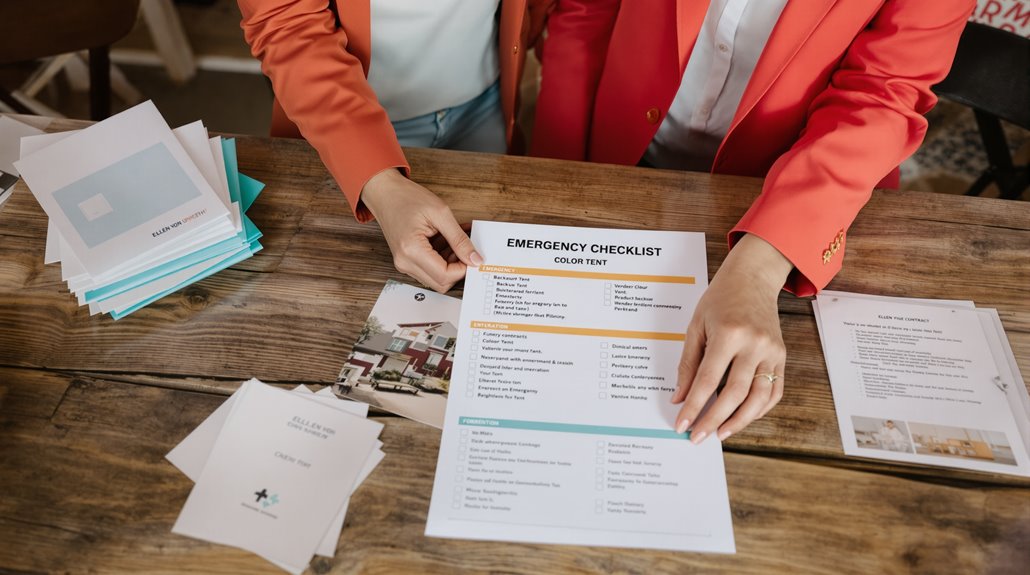
Here’s a visual summary you can share with your wedding squad to keep chaos at bay and streamline your big day like a boss. Start with a checklist: include insurance—it’s not just for car accidents. Vendor issues? They’ve accounted for 27% of claims. Illness? Another 24%. Extreme weather? 22%. Property damage? 15%. Rising costs mean financial stress, so plan smartly. Create backup plans for outdoor events—tents aren’t just for camping. Review contracts like you’re reading fine print on a million-dollar deal. Communicate with vendors and assemble emergency kits for glitches. Think of insurance as your safety net—protects against venue cancellations and unwanted surprises. By strategically integrating cost driver analysis, you pivot from stress to success. Now, grab that checklist and go execute! {img} {save_text: visual_summary_wedding_disaster_planning
FAQ
You’ve got questions, and we’ve got answers that cut the fluff and get straight to the point. If family or vendors push back, strategically align your goals with theirs—remember, you’re the CEO of this event. Made a “wrong” decision? No worries. Execute a pivot plan fast, ensuring you and your partner are on the same page with a streamlined checklist. Want a quick win today? Establish clear crisis roles and deadlines to prevent chaos before it starts.
What if my family/vendors push back?
When family or vendors push back, your wedding day plans can feel like a high-stakes juggling act. You’ve got a plan, but Aunt Linda questions your contingency fund while your florist balks at backup blooms. Here’s the deal: strategic planning isn’t overkill—it’s essential. Vendors resisting backup plans? Remind them that 19% of South African claims come from vendor mishaps. Family frowning at reduced guest lists? Point out that 58% of 2020 weddings did the same. Stay firm; execution requires clear communication. Use shared timelines and escalation hierarchies to streamline decisions. Face resistance with facts and pivot when necessary. Non-negotiable: your peace of mind. Next step? Create a communication plan that’s bulletproof, not bullet-pointed.
What if I already made the ‘wrong’ decision?
So, you think you’ve made a “wrong” decision in your wedding planning—it’s not a death sentence, it’s an opportunity. Flexibility is your ally. Revisit your contracts; you might find escape clauses or modification options that let you pivot without penalties. Vendors often renegotiate terms if you communicate early. Buffer time is your secret weapon—add 15-30 minute cushions to absorb any hiccups. Consider vendor substitutions for a swift pivot. Professional planners can reorganize timelines and renegotiate contracts, salvaging suboptimal choices. Eliminate low-priority events to reduce strain; it’s about meaningful moments, not marathon schedules. Delegate tasks to trusted professionals to prevent cascade failures. You’ve got this—strategically execute, streamline, and pivot. Next step? Communicate changes with vendors.
What’s the fastest way to course-correct?
Faced with a wedding planning hiccup? First, breathe. Then, execute a strategic pivot. Revisit your backup plans—these aren’t just theoretical; they’re your lifeline. Got a vendor hiccup? Hit that hot list of backup pros you’ve already vetted. Tech failure? An extension cord and portable lighting are your secret weapons. If the timeline’s slipping, adjust with built-in cushions. Communicate clearly with your team and vendors—calmly delegate tasks to maintain momentum. Your wedding’s not a fairy tale; it’s a project. Treat it like one with timelines and checklists. Stay composed, and remember: controlled chaos is your domain. Next step? Tackle the big picture—schedule a quick team meeting to re-align and keep the day on track.
How do I get my partner aligned?
Aligning with your partner on wedding planning isn’t just helpful—it’s non-negotiable. Start by defining your top five wedding values together. This aligns your visions and slashes conflict by 90%. Prioritize tasks to avoid overwhelm, focusing on budget, vendors, and logistics. Remember, shared decision-making is key. Split tasks so neither of you feels the full weight of planning. Use checklists and timelines to streamline efforts, pivoting from chaos to strategic execution.
Implement communication strategies like pause phrases—“I need 10 minutes to cool down”—during heated moments. Post-conflict, ask, “What can we learn from this for next time?” This builds momentum and maintains mutual respect. Engage with vendors to offload stress, ensuring both voices are heard. Now, go execute that wedding plan!
What’s the easiest win I can do today?
You’ve got your partner on board, now let’s score an easy win today. First, unfollow any social media accounts that scream “Pinterest perfect” nonsense. Trust me, less scrolling equals more sanity. Next, define your top five wedding values. What’s non-negotiable? Knowing this streamlines all decisions, pivoting you from chaos to clarity. For a turbo boost, sync up with your vendors. Two-thirds of couples say vendor support slashes stress—so lean on them. Finally, set a pause phrase like “I need 10 minutes to cool down.” It’s a game-changer when tensions rise. Execute these today and watch the stress levels drop. Action step: Craft a quick checklist for these tasks and tick them off. You’re in control—keep accelerating forward!
Key takeaways
Insurance isn’t just another line item on your wedding budget—it’s a strategic safeguard against the chaos that can derail your big day. It’s a must-have in your wedding project management toolkit. Here’s the scoop:
- Financial Shield: For about $160, wedding insurance can save you thousands. Vendor no-shows or weather tantrums? Covered.
- Vendor Vetting: Nearly 27% of claims arise from vendor issues. Contracts won’t cut it—keep documented failures for claims.
- Weather Woes: Extreme weather events demand strategic pivots. Weather monitoring and flexible venues are non-negotiable.
- Emergency Systems: Master contact lists and trained coordinators streamline chaos management.
Reality Check: The hustle is real, but strategic execution cuts down stress. Prioritize these safeguards and tackle your wedding planning like the project it is.