

Planning for wedding disasters isn’t just smart—it’s your secret weapon. When shit hits the fan, and it will, a solid crisis checklist and pre-vetted backup vendors keep you moving like a well-oiled machine. It’s not about fearing chaos; it’s about mastering it. With each strategic choice and contingency plan, you don your superhero cape, ready to conquer the day. Tired of being ‘bless and stressed’? Crush wedding day madness by diving deeper into smart planning moves.
The thesis (what people get wrong)
Let’s get one thing straight: wedding planning stress isn’t just about bridezillas losing it over napkin colors. You’re smart enough to know that skipping contingency planning is like leaving your umbrella at home during monsoon season. The benefits are real: prepared couples strategically reduce stress by having backup plans. Why plan for problems? Because disasters are more common than you think. With wedding costs soaring to $33,000, the financial hit from unexpected mishaps isn’t pretty. Preparedness reduces stress by transforming chaos into controlled efficiency. Think of it as project management, not a fairy tale. When you execute with precision, you accelerate solutions and pivot effortlessly. For example, recognizing that property damage accounts for 19% of wedding insurance claims can lead to securing the right insurance coverage, which acts as a safety net. Venue expenses can consume a significant portion of your budget, so understanding their role in your overall financial plan is crucial. So, start building that crisis checklist—consider it your new best friend.
Why this happens (the real root causes)
You’re not just planning a wedding; you’re managing a high-stakes project with moving parts and unpredictable elements. Disaster planning psychology shows that having a game plan reduces anxiety by transforming chaos into controlled chaos. Here’s the real root of why this happens:
Managing a wedding is a high-stakes project; a game plan transforms chaos into controlled chaos.
- Predictability: Knowing potential pitfalls makes you proactive, not reactive.
- Control: Preparedness gives a sense of mastery over uncertainties.
- Confidence: Executing a solid plan boosts your self-assurance.
- Focus: Streamlined strategies eliminate distractions.
- Resilience: Strategic pivots guarantee you bounce back from hiccups. Significant life changes bring a full spectrum of emotions, which is normal during this transition. Recognizing that wedding planning is inherently stressful, it’s crucial to acknowledge that stress can be managed, minimized, or avoided.
Planning for disasters isn’t just smart; it’s non-negotiable. You’re not just dreaming of your perfect day; you’re actively making it happen. Duke University’s wellness guidance emphasizes that effective planning involves stress management techniques to maintain a balanced approach. Next, we’ll explore better frameworks to streamline this process even more.
What to do instead (the better framework)
When it comes to planning your wedding, ditch the fluff and embrace a streamlined approach that gets the job done. Strategically prioritize your top three non-negotiable elements. This might mean choosing a specific photographer or a dog-friendly venue. By focusing your budget here, you create room for flexibility elsewhere. Delegate tasks based on strengths and keep lines of communication open—no assumptions, just clear roles and regular check-ins. Remember, the cultural emphasis on filial piety can amplify expectations from parents, so open communication is key to balancing their wishes with your personal vision. Effective risk management and insurance planning can also help alleviate unforeseen stressors by providing financial protection and peace of mind.
- Identify top 1-3 priorities.
- Focus budget on key elements.
- Reevaluate and tackle stressors.
- Delegate tasks and communicate effectively.
- Choose venues with in-house services.
How to apply it in real life
Envision this: your photographer bails last minute, and chaos looms. Instead of panic, you’ve strategically secured a backup who’s pre-vetted and ready to step in, keeping your timeline intact. Now, imagine a sudden downpour turning your outdoor ceremony into a mud bath; your guests are dry and cozy under a rented marquee because you planned for this—it’s called being smart, not lucky. By implementing detailed, legally-vetted vendor contracts with penalty clauses for non-performance, you mitigate risks and ensure that such unexpected situations don’t spoil the big day. Additionally, confirm all verbal agreements in writing to ensure clarity and prevent future misunderstandings.
Example 1: a common scenario + the better move
Even the best-laid plans can unravel when vendors go rogue. Imagine this: your photographer no-shows on the big day. Don’t panic; strategically pre-vet backup vendors. It’s the non-negotiable safety net you need. Secure wedding insurance too, covering vendor failures. You’re investing £100-£450 for peace of mind—worth every pound when chaos knocks. Wedding insurance is crucial, as it can reimburse you for lost deposits when vendor issues arise.
Now, let’s talk execution. Create a streamlined contact list with direct vendor lines. Store digitally and keep printed copies handy. Assign crisis roles within your planning team. When Vendor X ghosts, you seamlessly pivot to Plan B. This isn’t just planning; it’s project management on steroids.
Ensure your contracts have specific force majeure clauses to mitigate unexpected disruptions. Next step: draft a checklist of pre-vetted vendors. No fluff, just hustle. You’ll thank yourself when things get wild.
Example 2: a high-stakes scenario + the better move
Weather can turn your dream wedding into a logistical nightmare faster than you can say “I do.” South Africa’s unpredictable storms don’t just rain on your parade—they test your strategic mettle. But here’s the thing: you can outsmart Mother Nature. Have a crisis plan. Secure wedding insurance to cover weather-related damages. Monitor forecasts hourly 72 hours ahead. Build timeline buffers; those extra 30 minutes could save your sanity. Prep weather kits: umbrellas, waterproof makeup, and mats for mud. Establish indoor alternatives and guarantee guest safety protocols are in place. Assign specific roles—your bridesmaid isn’t just there for photos, she’s your supply sergeant. And remember, flexibility is your secret weapon. You’re not just planning a wedding; you’re executing a flawless operation. Consider allocating a portion of your budget to safeguard against unexpected weather-related expenses. Financial concerns contribute significantly to stress levels, so it’s important to budget for unexpected weather-related costs to ensure you remain financially prepared.
Example 3: a ‘we’re busy’ scenario + the better move
You’re an urban professional juggling more balls than a circus clown, and guess what? Planning your wedding doesn’t have to be another ball in the air. Let’s streamline this: First, secure wedding insurance—consider it a non-negotiable safety net for £100-£450. Next, get strategic with your timeline by building in 15-30 minute buffers. This isn’t just padding; it’s a smart pivot for managing real-time chaos. One way to further ease stress is by communicating plans to guests effectively, ensuring everyone is informed about any changes or updates. Keep a crisis communication protocol ready with both printed and digital contacts. Assign roles and create an escalation hierarchy—think of it as your wedding day SWAT team. To further reduce stress, familiarize yourself with common wedding day issues and have solutions ready in case they arise. Ultimately, it’s about prepping like a pro, so when vendors flake or storms brew, you’ve got it covered. Now, go execute that dream day with kinetic precision!
Counterpoints (when the old way is actually fine)
While high-energy, bespoke weddings have their allure, there’s a strategic simplicity to going traditional that shouldn’t be overlooked. Traditional weddings are like the Swiss Army knife of nuptials—efficient, dependable, and stress-tested. You save time and money by sticking to proven structures and avoid the chaos of customizing every detail.
- Predictable timelines keep your day moving like clockwork—no surprises, just smiles.
- DIY decor cuts costs while preserving cherished rituals like cake cutting.
- Family-hosted receptions transform homes into heartfelt venues, reducing vendor costs.
- Standard dress codes eliminate attire debates, making the morning routine a breeze.
- Classic rituals offer comfort and joy, sidestepping the stress of inventing new traditions.
Opting for a lean budget approach allows smart choices that emphasize essentials and negotiations, ensuring you stay within financial limits without sacrificing quality. Creating a wedding budget breakdown ensures staying on track, allowing you to focus on the joy of the day without financial worry. Choosing tradition isn’t settling—it’s smart planning that gets the job done.
Action plan (do this next)
Incorporating strategic planning into your wedding approach isn’t just a smart move; it’s a non-negotiable step to keep stress at bay. You’re not just planning a day; you’re executing a high-stakes project. Here’s your action plan to make sure you’re prepared for any curveballs:
- Secure wedding insurance: Cover vendor failures and weather issues. Costs start at £100.
- Build timeline buffers: Add 15-30 minutes between events for flexibility.
- Pre-vet replacement vendors: Establish crisis communication protocols.
- Create weather-specific kits: Think umbrellas, fans, or even snow gear.
- Invest in redundancy: Cameras with dual card slots save the day.
- Consider the importance of a Day-Of Coordinator to ensure smooth execution and handle unexpected issues.
These moves aren’t just smart—they’re the backbone of a streamlined, stress-free wedding day. Now, execute with confidence!
Visual summary you can share
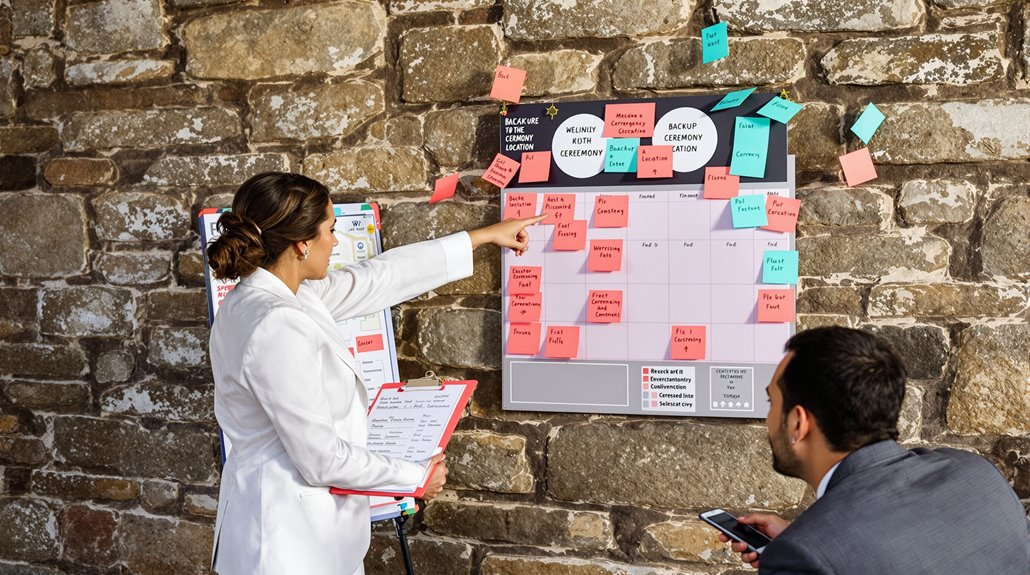
When it comes to your big day, a visual summary can get everyone on the same page faster than you can say “I do.” Forget the frills and fluffy language; you need a clear, concise snapshot that cuts through the chaos and spells out exactly what’s happening and when. Think of it as your wedding’s blueprint—a non-negotiable tool to strategically coordinate vendors, manage timelines, and handle any curveballs. With 27% of wedding issues tied to vendors alone, having a streamlined visual guide helps pivot from potential disasters. Include backup plans for weather changes, illness, or technical failures—like securing 3+ cameras with dual card slots. This isn’t about pretty aesthetics; it’s about executing a flawless event. Planning for disasters with contingency plans for common issues reduces wedding day stress by preparing for unexpected challenges. Now, strategize your visual summary and watch the stress fade.
FAQ
Let’s cut to the chase: when your family or vendors push back, you need a strategic pivot—negotiate with facts and align on non-negotiables. If you’ve made a wrong decision, execute a course correction by reassessing priorities and streamlining what can be adjusted today. Getting your partner aligned is all about clear communication and shared goals, while the easiest win you can grab now is to nail down a bulletproof timeline that gets the job done without drama.
What if my family/vendors push back?
Even the best-laid plans can hit a snag when faced with family or vendor pushback. You’ve got a lot on your plate, and when someone isn’t playing ball, it can feel like managing a circus. First, use strategically crafted contracts—they’re your secret weapon. They lay down the law on penalties, cancellations, and weather-related changes. Communicate clearly and frequently; sharing updates with all parties keeps everyone aligned. If vendors flake, activate your planner’s backup network to stay on track. Families? Well, sometimes you need to set clear boundaries—explain your decisions with confidence and respect. Remember, you’re steering this ship, not them. Execute with a plan, and don’t be afraid to pivot if necessary.
Reality Check: Pushback requires diplomacy and decisiveness.
What if I already made the ‘wrong’ decision?
Mistakes happen—even the most meticulously planned weddings hit unexpected snags. So, you’ve made a decision that feels off? Don’t sweat it; pivoting is part of strategic execution. Maybe you booked a venue too hastily or underestimated floral costs. Let’s streamline the damage control. First, identify the core issue: Is it timeline delays, venue missteps, or vendor chaos? Use a checklist to assess the impact and determine non-negotiables. Once pinpointed, set up a tactical meeting with your planner or trusted confidant. Review contracts for loopholes or exit clauses. Gather metrics—what’s feasible within your budget and timeframe? Remember, hustling smart isn’t about perfection but moving efficiently toward your vision. Next step: realign and execute with precision.
What’s the fastest way to course-correct?
How do you course-correct faster than you can say “wedding meltdown”? Start with proactive backup plans. Keep a hot list of ready-to-go vendors like photographers and DJs. Maintain indoor venue options and connections with rental companies for last-minute needs. Equip yourself with a robust emergency kit—think beyond crafts to include phone chargers and portable lighting.
Communication’s your secret weapon. Delegate tasks discreetly and adjust timelines calmly with vendors. Leverage your professional logistics team for real-time rerouting. Plan for inevitable cancellations by budgeting time gaps and preparing for a slightly larger guest count.
Reality Check: Don’t underestimate the power of preparation. Sure, it’s not glamorous, but neither is a meltdown. Stick to your systems, and you’ll pivot with precision.
How do I get my partner aligned?
Envision this: you’ve nailed down your backup plans, but there’s one more essential element—getting your partner on the same page. Start by establishing communication systems. Use agreed-upon pause phrases like “I need 10 minutes to cool down” to defuse tensions. Repair attempts, such as “This is important to both of us. Let’s start over,” can reconnect you during disagreements. Define a value-based decision framework to eliminate 90% of conflicts. Agree on your top five wedding priorities to streamline decisions and reduce fatigue. Divide responsibilities evenly to avoid one person feeling overwhelmed. Use collaborative tools for decision-making to guarantee shared ownership. Remember, clarity and teamwork are non-negotiable. Next step? Schedule a sit-down to hash out priorities—because teamwork gets the job done.
What’s the easiest win I can do today?
Here’s a game-changing move you can execute today: define your core wedding values to strategically streamline your planning process. Pin down your top five non-negotiables—things like intimate connections or killer food. This focus accelerates decision-making, aligning your budget with what truly matters. Forget the fluff; clarity here slashes 90% of potential conflicts.
Want less stress? Use your core values as a decision framework. It’s like having a GPS: keeps you on course amid chaos. Your wedding is about quality time, not perfection. So, pivot your mindset.
Next step: jot down those values, stick them on your fridge. Use them to filter every decision. You’re not just planning a wedding; you’re executing a mission with precision and confidence.
Key takeaways
Planning for your wedding like a project manager might seem overzealous, but it’s your best move for minimizing stress and sidestepping disaster. You’ve got a career, a life, and a wedding to execute without a hitch. Here’s why a strategic approach wins every time:
- Economic Gains: For every $1 spent on resilience, you save $7 post-event. Now, that’s a return on investment.
- Insurance Armor: Protects against venue cancellations and vendor no-shows. It’s your wedding shield.
- Emergency Preparedness: CDC’s got your back—plan like a hurricane is coming.
- Relationship Boost: Turns out, a shared disaster can temporarily boost spousal satisfaction.
- Practical Planning: Choose vendors with flexibility and venues with weather options.
Reality Check: Assume nothing. Verify everything.