
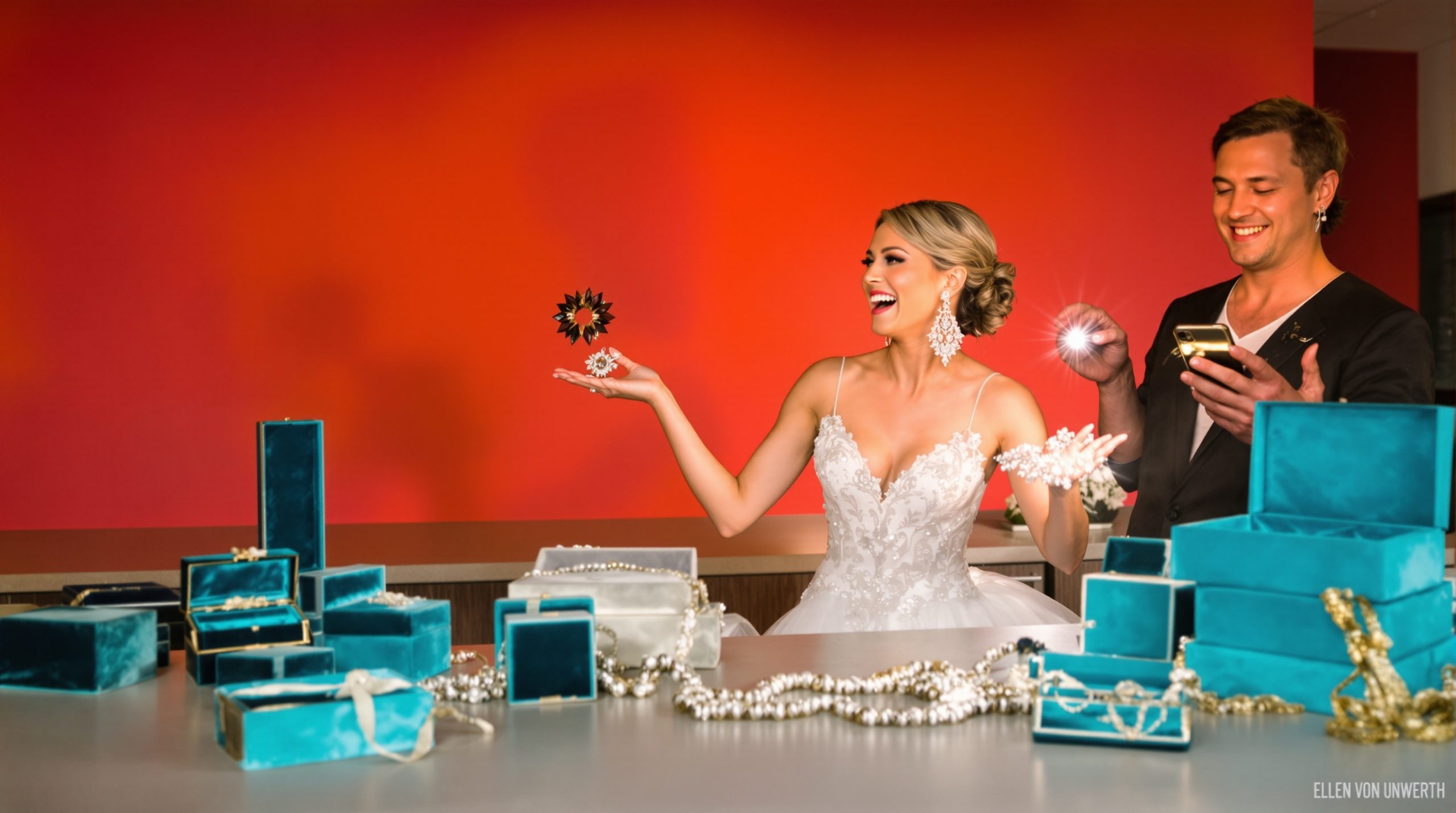
When it comes to wedding photos, real jewelry is your MVP, delivering that authentic sparkle absent in costume bling. It’s all about strategic choices here—real jewelry elevates photos with depth and shine, whereas costume jewels can slip under flash scrutiny. If dazzling snaps are non-negotiable, prioritize the real deal. Consider what makes a statement last under the lens. Set your sights on execution, because the journey into strategic event brilliance awaits.
Quick verdict: Real Jewelry vs. Costume for Your Wedding (who each is best for)
When it comes to choosing between real and costume jewelry for your wedding, let’s cut through the fluff and get straight to the point—each has its own place in the chaos of wedding planning. Real jewelry combines timeless elegance with durable wear, capturing light with unmatched sparkle. Its heirloom value promises consistent quality in photographs. You’ll also benefit from exceptional craftsmanship and dedicated customer support when choosing real pieces. Costume jewelry, on the other hand, offers trendy, bold styles that make a statement without breaking the bank. Here’s how you can decide:
Real jewelry offers timeless elegance, while costume pieces provide budget-friendly boldness. Each serves its purpose in wedding planning chaos.
- Quality vs Cost: Real jewelry offers enduring quality. Costume jewelry works for budget-friendly experimentation.
- Photographic Impact: Real gemstones provide a classic sparkle; costume pieces pop in wide-angle shots. Costume jewelry often mimics fine jewelry but uses cheaper materials, which can sometimes lead to a misleading appearance in close-up photographs.
- Comfort & Maintenance: Real jewelry wins for long-term comfort and low upkeep. Costume jewelry suits active poses.
Execute wisely; your wedding deserves it.
At-a-glance comparison: Real Jewelry vs. Costume for Your Wedding
Let’s get straight to the nitty-gritty: the real vs. costume jewelry debate is more than just a style choice. It’s about how strategically you can capture those killer wedding photos. Real jewelry? It photographs like a dream. Authentic light refraction from diamonds means they sparkle naturally, while costume jewelry might struggle under a flash, revealing plating flaws or artificial sheen. Bridal jewelry made from precious metals and genuine gemstones is crafted for longevity and often serves as heirlooms or symbols of commitment. For couples desiring truly iconic pieces, Cartier’s engagement and wedding jewelry collections exemplify timeless elegance and luxury.
| Feature | Real Jewelry | Costume Jewelry |
|---|---|---|
| Photography | Authentic sparkle in photos | Less realistic under flash |
| Durability | Resists heat, tears, and stress | Prone to tarnishing and breakage |
| Material | Precious metals, genuine gemstones | Base metals, synthetics |
Reality Check: Real jewelry’s a lifelong investment, but costume’s budget-friendly. Decide what aligns with your wedding priorities.
Define the options (so you’re comparing the right things)
When comparing real jewelry to costume options for your wedding, let’s get clear about what you’re actually choosing. Real jewelry means high-quality metals and natural gems that last a lifetime, not just for show-and-tell. A great example of this is found in Harry Winston bridal jewelry collections, which are renowned for their timeless elegance and exceptional quality. Meanwhile, costume jewelry offers trendy, flashy pieces that won’t break the bank or your heart if they wear out faster than your wedding playlist. Real jewelry, often crafted from precious metals, showcases exceptional craftsmanship and can be considered a lasting investment.
Real Jewelry: what it is, what it includes, and the common misconceptions
Real jewelry is your non-negotiable ally in the wedding playbook—crafted with precision from precious metals like gold, platinum, or silver and adorned with genuine gemstones that don’t just sparkle, they shine with the weight of a thousand life moves. This isn’t about dreams; it’s about executing a vision with real-world elements like heirloom-quality rings and necklaces. Pieces made by expert artisans stand out for their intricate details and timeless design, elevating not just your look but also the emotional value captured in every photograph. Forget perfect renders; real pieces reflect light and texture, capturing authenticity in photos, especially when professionally shot. Sure, they might show minor marks—proof of their journey, not a flaw. They’re not clunky; if they are, it’s a design fail, not a material issue. To nail your wedding shots, strategically use ring boxes and style with other accessories. Jewelry rendering can also showcase designs before creation, but for genuine sparkle, real jewelry is the way to go. The next step? Schedule a professional shoot—don’t DIY this.
Costume for Your Wedding: what it is, what it includes, and the common misconceptions
While the allure of real jewelry is undeniable, costume jewelry steps onto the wedding stage as the savvy, budget-friendly understudy ready to play its part in your big day. Crafted from base metals and adorned with glass, synthetic stones, and faux pearls, it provides a punch of style without the sticker shock. Think of necklaces, statement rings, and tiaras that scream ‘regal’ without rattling your wallet. Costume jewelry, crafted from less expensive materials, focuses on design and fashion, making it ideal for adding style to outfits without significant financial investment. Don’t be fooled by the misconceptions—costume jewelry isn’t just cheap or vintage. With high-end designs from brands like Dior, it blurs lines with fine jewelry. But remember, they’re not indestructible; plating might wear off. In fact, algorithm-driven trends can sometimes influence what jewelry styles are most accessible and popular, leading to a surprising overlap in looks between real and costume pieces. Strategically choose pieces that complement your gown and add personality. Ready to pivot towards smart choices? Create your jewelry checklist now.
Cost breakdown (upfront vs hidden costs)
When planning your wedding jewelry budget, it’s essential to weigh upfront costs against hidden expenses. Costume jewelry might seem like a steal with its low initial price, but frequent replacements and maintenance can sneak up on you. On the other hand, fine jewelry demands a heftier starting investment, yet its durability and potential resale value can strategically offset long-term costs. For regular gold/diamond wearers, investing in real jewellery could be beneficial as it aligns with their usage habits and offers a significant investment potential for the future.
Line-item cost comparison by tier/budget
Let’s cut to the chase: when you’re balancing wedding planning with a packed calendar and a demanding career, jewelry costs need to be crystal clear. Here’s a quick breakdown:
| Tier/Budget | Costume Jewelry | Fine Jewelry |
|---|---|---|
| Low-End (<$100) | $10-$50 basic, no extras | $100+ minimum, cleaning $20-$50/year |
| Mid-Range ($100-$1,000) | $50-$200 branded, replace $50 yearly | $800+ gold, insurance $10-$20/year |
| High-End (>$1,000) | Few hundred, no repair | Thousands, appraisal $100-$300 |
Costume jewelry is upfront and disposable, while fine jewelry demands maintenance and insurance. Choosing fine jewelry means factoring in hidden fees like insurance, cleaning, and potential appraisals—costs that can add up significantly over time. Costume jewelry offers a budget-friendly option, often ranging from $10 to $50, allowing for quick wardrobe updates without breaking the bank. Strategically choose based on your budget tier. Need a reality check? Fine jewelry’s long-term costs can snowball, so calculate those hidden expenses. Time to assess your priorities and act accordingly.
What actually drives cost changes
Even the savviest budget planner can be caught off guard by the hidden costs of wedding jewelry, which sneak up like a deadline you swear wasn’t in your calendar. Let’s break it down:
- Sales Tax: It’s not just the sticker price you’re paying. An 8% tax on a $10,000 ring? That’s $800 extra—consider it your welcome to adulthood.
- Insurance Costs: You’re not just protecting a ring; you’re securing peace of mind. Expect to shell out $100–$200 annually. Insurance requires an appraisal, which adds to the initial expenses, further emphasizing the importance of planning for these hidden costs.
- Resizing Fees: Rings rarely fit perfectly off the bat. Budget an extra 10–15% for adjustments—because who doesn’t love surprise expenses?
Reality Check: Hidden costs aren’t just nuisances; they’re strategic opportunities to streamline and get ahead.
Planning workload & logistics impact
When it comes to planning your wedding jewelry, you’ll need to contemplate the time, complexity, and coordination involved in choosing between real and costume pieces. Real jewelry requires earlier vendor bookings and more strategic coordination, especially if you’re aiming for custom designs or rare stones. Meanwhile, the flexible timeline of costume jewelry means you can pivot quickly, even if vendor availability gets tight—perfect for keeping your planning process streamlined and efficient. Considering the overall vendor management and execution approach can help you avoid last-minute stress and ensure all jewelry decisions fit seamlessly within your wedding timeline.
Time, complexity, and coordination differences
Steering through the time, complexity, and coordination differences between real and costume jewelry for your wedding is like executing a high-stakes project. You want to hit those deadlines and keep your sanity intact. Real jewelry demands a strategic timeline. Custom rings take 4–12 weeks to produce, and sourcing special gemstones can extend that. Costume jewelry? It’s off-the-shelf simplicity, skipping the lengthy custom processes. Here’s your game plan:
- Time Management: Start early—real jewelry requires 6–7 months of lead time, while costume options need less than six months.
- Design Complexity: Real designs mean intricate fabrication; costume jewelry is ready to go.
- Coordination Wins: Align timelines with jewelers, stack those rings, and trial your full look during fittings.
Factoring in these elements is similar to managing the planning workload and coordination involved in overall wedding budgeting approaches, where precision and strategic execution can make all the difference. Execute with precision. Go conquer.
Vendor availability + flexibility considerations
Maneuvering vendor availability and flexibility is where your wedding planning really gains momentum. The decision between real and costume jewelry isn’t just about style—it’s about execution. Offline vendors dominate, offering touch-and-feel experiences and personalized service. But don’t sleep on online options; they’re growing fast thanks to:
- Shorter Lead Times: E-commerce accelerates delivery, perfect for tight timelines.
- Global Reach: Virtual appointments and digital marketing expand choices beyond local shops.
- Customization: Online platforms provide bespoke designs without leaving your desk.
When juggling jewelry decisions, leveraging professional vendors can help reduce chaos and ensure a smoother, less stressful planning process.
Guest experience impact
When it comes to jewelry at weddings, your guests’ experience is a game-changer. They want to move freely without the weight or worry of losing expensive pieces, so opting for lightweight costume jewelry can be a strategic win. Plus, choosing pieces that don’t scream “look at me” guarantees the spotlight stays right where it belongs—on you.
How guests perceive it + where friction shows up
Jewelry isn’t just an accessory when it comes to weddings; it’s a statement that speaks volumes about your taste and your guests’ experience. Your guests notice quality—trust us, they do. Here’s how it shakes out:
- Prestige Perception: Real jewelry with premium materials like gold and platinum signals timeless appeal and prestige, making your event feel significant.
- Social Media Influence: Platforms like Instagram have guests expecting visual trends. Costume jewelry might not cut it when your day is trending.
- Durability Concerns: 69% report lost or broken jewelry experiences, and costume pieces often show visible wear in photos, affecting long-term satisfaction.
Reality Check: Opt for real jewelry to minimize friction and maximize your guests’ experience. Prioritize durability—it’s a strategic move. Remember, just as you would break down expenses by category for your wedding budget, investing in quality jewelry ensures your most photographed moments look their best for years to come.
Best-fit scenarios (choose based on constraints)
When choosing between real and costume jewelry for your wedding, think strategically about your constraints. If longevity and timelessness are non-negotiable for you, real jewelry is your go-to, offering durable elegance that transcends trends. Conversely, if your goal is to maximize style impact without denting your budget, costume jewelry gets the job done with its bold designs and wallet-friendly price tag.
Choose Real Jewelry if…
Opt for real jewelry when you want your wedding investment to do double duty. It’s about more than just looking stunning on the big day. Real jewelry gets the job done, offering longevity, timeless appeal, and investment value. Here’s why:
- Longevity: Crafted to last, these pieces resist discoloration and wear, maintaining their beauty for generations.
- Photographic Quality: High-quality materials capture light perfectly, ensuring your wedding photos stay iconic, not ironic.
- Investment Value: Real jewelry retains or potentially increases in value, making it a strategic choice for savvy couples.
Don’t just plan a wedding; execute a legacy. Choose pieces that move with you through life, gaining value and meaning. Next step? Schedule a consult to align your jewelry strategy with your wedding plans.
Choose Costume for Your Wedding if…
If you’re all about making strategic moves rather than emotional investments, costume jewelry might be your secret weapon in wedding planning. It’s all about smart choices, folks.
- Budget Constraints: Costume jewelry costs a fraction of the real deal, letting you funnel cash into high-impact areas like killer venues or gourmet catering. Plus, you can experiment with styles without fretting about finances.
- Theme Matching Needs: Whether you’re channeling vintage vibes or beachy chic, costume pieces adapt seamlessly, enhancing your theme without breaking the bank.
- Low-Risk Environment: Don’t stress about scratches or losses during those high-energy photo shoots. Costume jewelry thrives in chaos, just like you.
Reality Check: Don’t let affordable options tempt you into over-accessorizing. Keep it sharp, not cluttered.
Real-world scenarios (examples with numbers)
You’re planning a 150-guest wedding with a $50K budget, and you’ve prioritized killer photography over bling. Opt for costume jewelry to keep more cash for your top-tier photographer; just make certain it plays well under flash. If your budget stretches to $75K and high-quality optics are non-negotiable, investing in real jewelry guarantees those shots stay timeless, even in 20 years.
3 sample scenarios: guest count + budget + priorities
Planning a wedding that respects your time and budget is like orchestrating a symphony with a rock band’s energy—intense, intentional, and insanely gratifying when it all clicks. Consider these scenarios:
| Guests | Budget | Priority |
|---|---|---|
| 50 | $500 | Photography |
| 100 | $2,000 | Heirloom Value |
| 200 | $5,000 | Design Flexibility |
| 300 | $10,000 | Durability |
| 500 | $20,000+ | Luxury Prestige |
Scenario one: costume jewelry pops in photos on a tight budget of $500, maximizing your photography game. Meanwhile, a $2,000 budget lets you invest in real pieces, perfect for heirloom value. For larger gatherings, costume options offer design flexibility and real jewelry commands attention with durability and luxury. Next steps? Decide your non-negotiable: photography, heirloom value, flexibility, durability, or luxury.
Common mistakes (and how to avoid them)
When it comes to photographing wedding jewelry, avoiding common mistakes can mean the difference between a shot that dazzles and one that falls flat. Let’s cut to the chase:
- Lighting Pitfalls: Direct sunlight or harsh artificial light? Both are out. Use diffused LED setups to avoid reflections and keep your gems sparkling.
- Reflection Control: Glare from improper angles is a no-go. Employ diffusers and V-flats to balance light—keeping the spotlight on your jewelry, not reflections.
- Equipment Oversights: No macro lens? Rookie move. For those intricate details, it’s non-negotiable. Softboxes are your best friend for metals, so don’t skip them.
Copy/paste decision matrix template
Let’s face it, choosing between real and costume jewelry for your wedding isn’t just about sparkle—it’s a strategic decision that affects your budget, comfort, and those all-important photos. You need a decision matrix to execute this choice smartly. Start by listing priorities: budget flexibility, style variety, durability, photo impact, and comfort. On one side, costume jewelry offers budget gains and trendy vibes but may tarnish under scrutiny. Fine jewelry pivots with timeless elegance and investment value but hits the wallet harder. Weigh these against your non-negotiables. Use a simple table: Pros vs. Cons, Costume vs. Fine. Don’t overthink it—plug in your priorities, check the alignment, and move forward confidently. This decision isn’t a dream; it’s a streamlined action plan.
FAQ (quick answers to common edge cases)
Stuck between real and costume jewelry? Strategically pivot by listing your priorities—budget, style, durability—and execute a decision with confidence. Ask vendors about warranties and maintenance specifics to confirm assumptions, and streamline your backup plan by having a go-to jewelry piece that works regardless of any unexpected guest count changes or if something goes awry.
What if I’m stuck between two options?
Stuck? When you’re torn between jewelry options for your wedding, think of it as a strategic decision rather than an emotional one. Start by identifying which pieces you’ll wear beyond the big day. Real jewelry offers lasting value, but don’t underestimate premium costume pieces crafted with designer precision. They photograph brilliantly and won’t break the bank. Execute a hybrid approach: mix heirloom jewels with statement costume pieces for flexibility across events. This not only maximizes your budget but also adds layers to your look. Strategically choose pieces that photograph well under different lighting conditions. Pivot your mindset—this isn’t about choosing between luxury or thrift; it’s about making impactful, smart decisions. Ready to hustle? Compare photos, consult with your planner, then decide.
What’s the easiest way to reduce risk with either option?
When you’re choosing between real and costume jewelry for your wedding, risk management isn’t about playing it safe—it’s about executing a strategy that’s as bold as your vision. First, invest in lighting that gets the job done. Opt for LED lights with CRI 96+ for consistent color fidelity and shadow control. Strategically position them at 45-degree angles with softboxes to mimic natural light. This setup guarantees every sparkle is captured without harsh shadows. Second, streamline your shoot with reflection-reduction strategies; use white paper cyc walls or foam boards to create smooth backgrounds. This non-negotiable approach minimizes post-production headaches. Finally, execute with precision: schedule your shoot during overcast conditions to enhance true-to-life tones. Actionable next step? Create a checklist for your lighting setup.
What should I ask vendors to confirm assumptions?
How do you separate the genuine from the generic when quizzing jewelry vendors? Start by asking for proof of material quality—certificates for solid gold, silver, or natural gemstones. Verify craftsmanship by inquiring about handmade versus mass-produced items and durability testing. Ask how they perform under wedding lighting—will they shine or just show up?
Strategically question vendor authenticity: Do they offer third-party authentication? What’s their return policy in case of wedding-day mishaps? Confirm pricing transparency; you don’t want to pay for branding over quality.
The next step? Make a checklist of these questions and hold vendors accountable. You’re executing a project, not a fairy tale. Want a wedding that’s “bless and stressed”? Didn’t think so. Keep moving, stay sharp.
What changes if my guest count swings by 20%?
Brace yourself—if your guest count jumps by 20%, you’re not just adding chairs. You’re accelerating into a logistical whirlwind. Photography coverage? Expect to hire additional shooters for extensive shots and extended family photo sessions. Lighting? High stakes—strategically placed multi-light setups become non-negotiable, especially in dim venues. Timelines? Stretch them; every candid moment and group shot demands more time. Venue impacts? Larger crowds mean more lighting adjustments, indoors and out. Budget pivots? Photography and lighting costs climb, redirecting those savings from minimal décor. Execute a plan—coordinate vendors, streamline timelines, and allocate resources wisely. Don’t just survive the chaos, dominate it. Power move: Have a contingency checklist ready to keep everything on track. Now, go crush it!
What’s the best fallback plan if something goes wrong?
If something goes sideways on your wedding day, it’s all about having a solid fallback plan that’s as cool under pressure as you are. Think of it as your wedding day toolkit: streamlined, non-negotiable, and ready to execute. Wardrobe malfunction? Safety pins and a mini sewing kit are your best friends. Jewelry issues? Superglue and tweezers—done. Makeup meltdown? Blotting sheets and a compact mirror keep you photo-ready. Feeling under the weather? Ibuprofen and electrolytes pivot you back into action. Tech fails? Portable power banks and backup timelines keep everything on track.
Reality Check: The chaos isn’t the enemy; disorganization is. Strategically prep your kit and delegate tasks so you can focus on celebrating—because that’s the real goal, right?
Next steps: make the decision + execute the plan
While the wedding countdown ticks like a time bomb, it’s time to execute the jewelry plan with laser-focused precision. You’ve weighed budgets, evaluated longevity, and considered photography impact. Now, let’s streamline your decision-making:
- Go Hybrid: Mix real everyday pieces with costume for the big day. Buy one standout necklace and supplement with practical costume items. Borrow heirloom jewels for that extra flair.
- Shop Smart: Acquire fine jewelry with hallmarks and certificates for quality assurance. Opt for premium handmade costume pieces to elevate your look without breaking the bank.
- Plan Post-Wedding: Lend costume pieces to friends, minimizing waste. Use real jewelry for versatile post-wedding wear—think long-term value.
Reality Check: Don’t overlook maintenance; fine jewelry demands care. Execute, measure, and pivot as needed.