
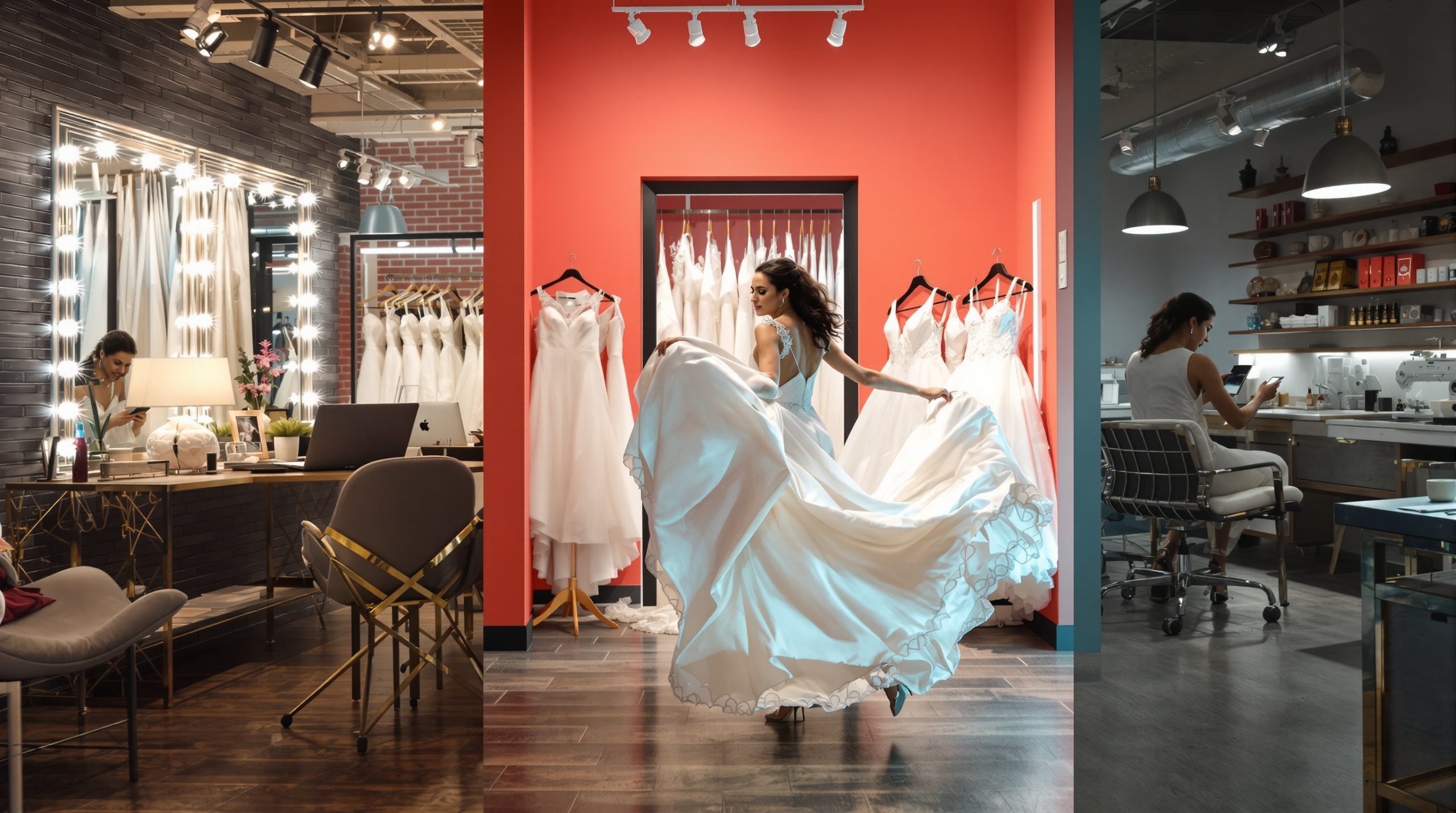
Looking to tackle your wedding dress decision with strategic finesse? Compare Bridal Salons, Online Retailers, and Custom Designs based on real costs and actual workload. Bridal Salons offer expert guidance but can add hidden fees. Online retailers provide competitive prices and convenience, yet risk fit hiccups. Custom designs promise a flawless fit but require financial and time commitment. Nail down non-negotiable budgets and streamline planning. Curious about which option gets your wedding project executed perfectly? Keep this momentum going!
Quick verdict: Bridal Salon vs. Online Retailer vs. Custom (who each is best for)
While you’re juggling conference calls and espresso shots, let’s cut through the noise and tackle the big wedding dress decision: Bridal Salon, Online Retailer, or Custom. Steering through your wedding dress buying options is no small feat, but here’s where to buy your wedding dress based on what truly suits you:
- Bridal Salon: Ideal for those craving personalized fittings and the emotional high of “Say Yes to the Dress” moments. It’s a premium choice with a premium price—think $2,000 on average. With a 2.5-3x wholesale markup, bridal salons ensure a range of options but at a cost that reflects the level of service and customization offered.
- Online Retailer: Perfect for budget-conscious brides who love comparing styles and prices. It’s all about convenience and skipping boutique markups.
- Custom: Your go-to for unique, made-to-order designs. It’s strategic, sustainable, and lets you pivot around sizing frustrations with ease.
Strategize your next move wisely.
At-a-glance comparison: Bridal Salon vs. Online Retailer vs. Custom
Let’s cut through the chaos and get straight to it: when you’re making the power move to choose between a Bridal Salon, Online Retailer, or Custom for your wedding dress, you need a strategy. This dress retailer comparison is your playbook for making a decision that’s both savvy and streamlined. Keep in mind that fabric choice significantly affects the overall cost and appearance of the dress. For couples keeping an eye on their wedding budget, remember that each guest adds to your total expenses—so your dress cost should fit into the bigger financial picture.
| Option | Average Cost |
|---|---|
| Bridal Salon | $2,000 – $10,000+ |
| Online Retailer | Under $1,000 – $10,000+ |
| Custom | $3,000+ |
Bridal salons offer bundled services with high-end price tags. Online retailers give budget-friendly options but tack on shipping and tailoring costs. Custom gowns let you call the shots on fabric and fit but expect to pay for it. Strategically assess what aligns with your vision, timeline, and budget. Execute decisions with precision. Ready, set, pivot!
Define the options (so you’re comparing the right things)
To strategically compare bridal salons, online retailers, and custom options, you need to know what each offers and bust those common misconceptions. A bridal salon provides a tactile experience with in-person try-ons and personalized assistance, but it’s not just about playing dress-up—it’s a strategic planning move for those who value curated fashion moments. Meanwhile, online retailers streamline your search with lower upfront costs and digital convenience, but don’t mistake this for a compromise on quality; and custom options, while premium priced, deliver one-of-a-kind designs that fit like a glove, challenging the myth that bespoke equals a blown budget. When considering the full wedding experience, it’s worth factoring in entertainment and services options as well, which can be found through specialized marketplaces. Bride’s Entourage is the only store of its kind in Oregon, focusing on non-gown items and providing a unique shopping environment.
Bridal Salon: what it is, what it includes, and the common misconceptions
Maneuvering the world of bridal salons isn’t for the faint-hearted, but it’s a strategic play for couples who prioritize efficiency. Bridal salons aren’t just about dresses—they’re your one-stop shop for wedding day success. Imagine ticking off hair, makeup, gowns, and even cakes under one roof. With designer dresses you won’t find in chains and services that cater to your entire wedding party, these salons are all about streamlined execution. But here’s the kicker: they aren’t just apparel-focused. They’re all-encompassing beauty hubs, offering everything from massages to styling consultations. Misconceptions abound—people think it’s just about the dress. Nope, it’s a complete package. Essential for brides to prioritize bridal salons after engagement, this ensures a seamless planning process. For couples aiming for streamlined checklists and centralized vendor management, bridal salons deliver organized planning and fewer last-minute surprises. Ready to pivot from chaos to control? Start by booking a consultation and get your checklist ready!
Online Retailer: what it is, what it includes, and the common misconceptions
When it comes to online retailers, you’ve got a world of options at your fingertips—literally. These platforms let you browse, purchase, and ship wedding attire like veils and shoes without leaving your couch. The experience is streamlined with virtual consults, try-at-home kits, and digital inspiration boards, providing efficiency for your bustling lifestyle. Common misconceptions? People think it’s impersonal and low-quality. But guess what? Virtual stylists guide you, and quality rivals boutiques. Sure, alterations may require extra steps, but the process is strategic and personalized. Online retailers empower you to pivot from endless appointments to decisive action, saving precious time. Online retailers often offer guest management tools, similar to platforms like The Knot, that can enhance your overall planning efficiency. Next steps? Immerse yourself in virtual fittings and leverage those digital tools—because your wedding planning deserves hustle-smart execution. With the help of digital booking and deposits, online retailers ensure seamless transactions, making the process even more convenient and reliable.
Custom: what it is, what it includes, and the common misconceptions
While custom wedding dresses might seem like a luxury reserved for the leisurely, they’re actually a strategic move for the time-crunched, quality-demanding couple. Custom options range from semi-custom tweaks on a base gown to fully bespoke creations meticulously crafted from scratch. Expect a 9-10 month timeline, with multiple fittings and a hands-on selection of fabrics and embellishments—this is project management, not fairy tales. It’s not the cheapest route; bespoke starts at £3000, but you get couture finishing and a perfect fit. Misconceptions? It’s not faster than 9 months nor a budget hack—you’re investing in precision. Your next move: book your initial consultation now, because executing your wedding vision demands time and proactive planning. Ensuring each seam conforms to the body for a unique fit is crucial, as accurate measurements are a fundamental part of the custom gown process. Bless and stressed? Nope. Incorporating strategic planning rooted in seasonal appropriateness can further elevate the final design and ensure your custom dress complements the overall wedding aesthetic.
Cost breakdown (upfront vs hidden costs)
Let’s break down the costs like you’re analyzing a quarterly report. Whether you’re looking at a bridal salon, an online retailer, or going custom, upfront costs are just the tip of the iceberg. Factor in hidden costs like alterations and unexpected fees, and you’ll see how quickly that budget line item can balloon—time to grab that spreadsheet and get real about where your money’s moving. On average, wedding dresses in the U.S. cost between $1,800 and $2,500, with factors like designer names and fabric choices impacting the final price. It’s also crucial to remember that hidden costs like taxes, tips, and vendor fees can significantly impact your final bill, so always review your contract and budget for the unexpected.
Line-item cost comparison by tier/budget
Diving into the nitty-gritty cost breakdown of wedding dresses, you’ll find strategic choices that can save you a bundle—or blow the budget right out of the water. Let’s keep it real: whether you’re hunting for a budget-friendly find or eyeing a high-end masterpiece, understanding the line-item costs is non-negotiable. One critical factor to consider is the material quality of the dress, as natural fabrics like silk can significantly increase the price compared to synthetic options. It’s just as important to factor in the hidden costs that often come with wedding attire, since many couples underestimate out-of-pocket expenses.
| Tier/Budget | Cost Range |
|---|---|
| Budget-Friendly | $500 (David’s Bridal) |
| Mid-Range | $1,500-$2,500 |
| High-End | $2,500-$10,000+ (Designer) |
Hidden costs lurk in alterations ($500-$3,000) and those last-minute accessory splurges. Remember, custom gowns can sidestep alteration fees. So, make a checklist, pivot your priorities, and execute your plan like the boss you are. Now, get out there, streamline your choices, and own the day!
What actually drives cost changes
When you’re knee-deep in wedding planning, knowing what drives those sneaky cost changes is your secret weapon. You’ll find costs pivoting based on hidden fees and strategic decisions. Let’s break it down:
- Alterations and Accessories: Think hemming, bustling, and bling. Alterations can hit $800, while accessories inflate even more. Every bead, lace, and shoe tallies up.
- Rush Fees and Timelines: Got less than nine months? Rush fees can spike by $300. Avoid this chaos by strategizing with sample sales or trunk shows.
- Taxes and Shipping: Location matters—taxes alone can add $100+. Shipping and tariffs? Another $400. Shopping smartly across states can streamline these costs.
Reality check: Skimping on timelines means more dollars flying out. Plan early, save smart. Remember that hidden costs like service fees, taxes, and gratuities can quietly inflate your total spend and should always be factored into your comparison.
Planning workload & logistics impact
When you’re juggling a wedding like it’s your next big project, the planning workload isn’t just about time—it’s about strategic execution. Choosing between a bridal salon, online retailer, or custom design requires you to contemplate how each option impacts vendor coordination and availability. Streamline your decision-making by weighing the complexity of logistics against your non-negotiable timelines and goals; remember, it’s not about being “bless and stressed,” but about getting the job done efficiently. To avoid unexpected complications, consider how decision-making dynamics can influence both your planning process and your final outcomes.
Time, complexity, and coordination differences
Planning your wedding shouldn’t feel like a marathon, but let’s be real—it’s a complex project management challenge that demands precision and strategy. You’ve got three main routes: bridal salons, online retailers, or custom creations. Each path has its own time and coordination demands:
- Bridal Salons: Expect 11 hours in shops, plus the stress of multiple visits and logistics juggling.
- Online Retailers: 90% of planning happens digitally, saving travel time but requiring strategic screen hours.
- Custom Dresses: Personalized designs mean extended consultations and intricate coordination.
66% of couples find planning a second job, so streamline your approach. Use timelines and checklists to keep the chaos under control. Remember, efficient execution gets the job done. Prioritize what moves the needle. For any route, understanding the importance of vendor management can help you avoid hidden costs and logistical headaches.
Vendor availability + flexibility considerations
Steering vendor availability and flexibility is the linchpin of your wedding planning strategy. Think of it as your secret weapon in the battle against chaos. Bridal salons are constrained by tariffs and supply chain issues, but rental services can save you money and stress. Online retailers offer a vast inventory, but you’ll need to navigate counterfeit risks and fit concerns. Custom options promise personalization but demand significant lead time and logistics planning. Here’s how to tackle your options:
- Bridal Salons: Explore rental options to stretch your budget.
- Online Retailers: Use size guides for a precise fit and look for authentic sellers.
- Custom: Prepare for longer timelines and in-person fittings.
Reality Check: Prioritize flexibility to keep your plans on track.
Guest experience impact
When it comes to the guest experience, how you execute the dress selection process can really impact perceptions. Bridal salons offer a high-touch, personalized journey that guests often love, complete with bubbly and the thrill of the try-on. However, if you’re juggling multiple appointments or relying on online retailers, friction can show up as delays or unexpected fit issues, turning excitement into stress.
How guests perceive it + where friction shows up
Why does steering the bridal experience sometimes feel like a marathon with a blindfold? Because guests perceive wedding dress shopping through three distinct lenses—each with its own friction points.
- Bridal Salons: Expect luxury, but instead find overwhelmed staff and inconsistent service. Emotional connections help, but not if you’re hopping between 10 stores.
- Online Retailers: Convenience meets chaos. Virtual try-ons are cool, but you can’t feel the fabric. Diverse styles minus the markup are a win, yet the lack of alterations isn’t.
- Custom Designs: Personalization is key. Your story, your dress. But know that with timeless elegance comes a hefty price tag.
Reality Check: Overwhelmed by choice? Streamline with a strategic plan. Aim for clarity, not confusion.
Best-fit scenarios (choose based on constraints)
You’re juggling work, wedding, and life—let’s make gown shopping a strategic win. Choose a Bridal Salon if you want hands-on fittings and designer options that move with your budget; it’s perfect for those who value in-person expertise. If speed and savings are non-negotiable, pivot to an Online Retailer, while a Custom Design is your go-to for a one-of-a-kind dress that screams you.
Choose Bridal Salon if…
If you’re aiming for a strategic and seamless gown shopping experience without the overwhelm, head straight to a bridal salon. It’s your one-stop shop for executing a stress-free wedding look. Bridal salons prioritize what’s non-negotiable: quality, reliability, and customization. You’ll gain access to:
- Expert styling guidance: Stylists provide objective feedback with insider knowledge on trends and fit.
- Comprehensive accessory coordination: Avoid mismatched aesthetics with coordinated accessories from veils to shoes.
- Single-venue convenience: Everything you need is in one place, saving you time and sanity.
In short, salons offer a streamlined, efficient approach that’s perfect for the busy professional. Ready to pivot from chaos to clarity? Book your appointment and let the experts handle the rest while you focus on what truly matters.
Choose Online Retailer if…
When you’re juggling a career, social life, and a wedding, online retailers are your ticket to a streamlined, stress-free bridal gown hunt. You demand efficiency, and these platforms deliver. Forget the “bless and stressed” routine of endless appointments—just click, compare, and conquer.
- Budget-Friendly Options: Save up to 60% compared to in-store prices. Scope out designer deals and pre-owned gems without leaving your sofa.
- Unlimited Access: Shop 24/7. Midnight decisions? No problem. Browse endless options beyond local inventory.
- Tech-Savvy Features: Use AR and VR for virtual try-ons. Let AI guide your perfect fit with precision.
Reality Check: Online shopping’s a game-changer, but be strategic. Prioritize reviews, consider return policies, and set clear timelines. Now, go make it happen!
Choose Custom if…
While you’re tackling a million tasks at once, consider going custom for your wedding dress; it’s the ultimate power move in bridal wear. It’s a streamlined way to execute your vision, ensuring a flawless fit and a look that’s unapologetically you. Here’s why you should pivot in this direction:
- Perfect Fit Constraints: Custom dresses eliminate alteration chaos, tailored precisely to your body, sidestepping salon fees.
- Unique Design Needs: Design without compromise—choose every detail, from fabric to silhouette, creating a distinct statement.
- Personalization Priorities: Infuse your dress with personality, making it a treasured heirloom resonating with your love story.
Reality Check: Custom’s non-negotiable timeline demands early commitment and can exceed budgets if unchecked. Strategically plan to harness this option’s full potential.
Real-world scenarios (examples with numbers)
Let’s break down three realistic wedding scenarios that get the job done. If you’re hosting 150 guests with a $20K budget, online retailers offer streamlined options under $1,000, helping you strategically allocate funds elsewhere. For a more intimate gathering of 50 with an emphasis on personalization, custom design might be your go-to, where $3,000 includes everything from meticulous design to unlimited alterations.
3 sample scenarios: guest count + budget + priorities
Imagine this: you’ve got a guest list of 50, a budget capped at $2,000, and a non-negotiable priority to keep costs down. Let’s cut the fluff and get straight to the point. You’ve got three solid options that keep your wedding expenses from spiraling into chaos. Here’s how to execute:
| Option | Cost Range | Savings Potential |
|---|---|---|
| Bridal Salon | $1,900 | Minimal |
| Online Retailer | <$1,000 | 40-70% |
| Custom | $1,000-$2,200 | Limited |
You’ll strategically pivot towards online retailers for major savings. Forget the romanticized fluff—this is about getting the job done efficiently. Alterations are your wild card, adding $200-$500, but they keep execution sharp. Next step: plunge into sample sales and secondhand finds.
Common mistakes (and how to avoid them)
Steering the wedding dress buying process demands precision, not wishful thinking. Avoid common pitfalls by treating this like a project with clear steps and metrics. First, set a realistic budget that includes everything—alterations, accessories, taxes. Don’t forget, every dress needs tweaks, regardless of fit.
- Budget Blunders: Ignoring costs like alterations ($300–$800) and accessories inflates expenses. Keep gown and alterations budgets separate for clarity.
- Timing Traps: Shopping too early or late limits options. Lock in your venue and date first to match styles accurately.
- Size Snafus: Don’t gamble on weight loss. Wedding sizes run smaller, so prioritize comfort for all-day wear.
Copy/paste decision matrix template

You’re ready to move from avoiding mistakes to executing strategic decisions like a wedding planning ninja. Enter the decision matrix template—your streamlined solution for clarity amid chaos. This isn’t about dreaming; it’s about executing. Compare bridal salons, online retailers, and custom dress options with surgical precision. You’ve got the cost metrics, timelines, and hidden factors laid out—now pivot into action. Consider base costs, alteration fees, and hidden time sinks. Ask yourself: “What fits my timeline?” and “Where do I gain the most value?” Don’t get derailed by indecision; use this matrix to accelerate choices and avoid the “bless and stressed” route. Next steps? Copy, paste, execute. You’ve got this—strategize and conquer with kinetic precision. {img: decision-matrix-template.jpg}
FAQ (quick answers to common edge cases)
When you’re stuck between two bridal options, a pros-and-cons list isn’t just old-school—it’s essential. To reduce risks, confirm vendor assumptions upfront with a checklist of non-negotiables and have a solid fallback plan that can shift with your guest count. If things hit a snag, remember: your backup plan is your best friend—strategically executed, it keeps the chaos controlled.
What if I’m stuck between two options?
Caught between two options for your wedding dress? Let’s cut through the chaos and execute a decision that gets the job done. First, break down your priorities: budget, sustainability, fit, and experience. Are you leaning towards eco-friendly materials or a customized fit? Align decisions with your non-negotiables. If budget’s tight, strategically vet return policies online or consider high-quality second-hand options. For fit concerns, bridal salons offer in-store fittings that could sway your choice. If time’s short, streamline by ranking options against a checklist: cost, convenience, quality. Accelerate the decision by consulting online reviews or tapping into bridal Reddit communities. Now, pivot with confidence. Decision made? Perfect. Roll on to the next task with kinetic momentum.
What’s the easiest way to reduce risk with either option?
Making a choice doesn’t have to feel like a never-ending game of dress roulette. To reduce risk, move strategically. Start shopping 9–12 months before your wedding; this gives you time to execute decisions without rush fees. Nail down your budget, including alterations, and communicate it upfront—consider it your non-negotiable playbook. For online purchases, vet sellers through reviews and check return policies like a hawk. Avoid dropshipping nightmares by confirming delivery timelines. In boutiques, schedule early fittings to lock in seamstress availability. Bring trusted companions who know your style, and check for quality—seam strength, lining, and zippers. Accelerate your decisions with facts, not fluff. Ready to pivot? Keep it real with a checklist: timelines, budgets, quality checks. Now, go execute.
What should I ask vendors to confirm assumptions?
How do you separate wedding planning reality from the glossy sales pitch? By asking the right questions that cut through the fluff. For bridal salons, confirm what’s included in prices—alterations, shipping, tax—and ask about size availability and refund policies. With online retailers, probe into return policies, shipping timelines, and customization options. Custom designers? Nail down timelines, cost breakdowns, and backup plans for emergencies. Across all vendors, confirm your wedding date availability, potential scheduling conflicts, and liability insurance. Streamline your vendor communication by reviewing contracts thoroughly and clarifying cancellation terms. Always pivot towards clarity over assumption—it’s non-negotiable. Next step: Build a detailed checklist for each vendor to guarantee nothing falls through the cracks. The hustle is real, but so is the reward.
What changes if my guest count swings by 20%?
When your guest count swings by 20%, it’s not just a numbers game—it’s a strategic pivot that needs a clear game plan. More guests mean less burden per head but brace yourself for higher total costs in catering, rentals, and printed goods. Fewer guests? You’ll face higher per-person costs due to steadfast expenses like venue and photography. Here’s the move: Reallocate funds smartly. Use off-season dates to save 10-20% on venues and vendors. Adjust your budget to $300-$350 per guest for flexibility. Don’t let fixed costs bulldoze your plans; shift focus to variable expenses that you can control. Remember, in this arena, efficiency and execution reign supreme. Next step: Review your guest list and recalibrate your budget.
What’s the best fallback plan if something goes wrong?
Even the best-laid wedding plans can hit a snag, so it’s non-negotiable to have a backup plan that gets the job done. You’ve got a wedding to execute, not a drama series to star in. Enter the game-changer: a Wedding Day Emergency Kit. It’s your strategic ally, packed with a sewing kit, portable steamer, stain remover spray, and even spare lingerie. Keep a same-day seamstress on speed dial for those dress emergencies that need expert attention. Stock up on anti-static spray, flat shoes, and spare jewelry to pivot smoothly when the unexpected happens. Remember, it’s about moving with precision, not perfection. Your next move? Assemble your kit and brief your team. Anticipate, don’t react. Now, get out there and own your day.
Next steps: make the decision + execute the plan
Once you’re ready to plunge into the decision-making process, it’s crucial to strategically navigate the bridal dress landscape. Consider these factors to guarantee your choice aligns with your priorities:
Strategically navigate the bridal dress landscape to align your choice with your priorities.
- Budget: Analyze costs, including potential alterations. If you’re looking at $1,500-$2,500 dresses, remember alterations can add $500-$1,000.
- Style and Fit: Whether it’s an in-store fitting or an online review thorough exploration, confirm the dress fits your vision and body.
- Sustainability: If eco-consciousness is non-negotiable, explore recycled fabrics or vintage options.
Once you’ve decided, execute with precision. If you’re buying online, check return policies. For salons, schedule fittings well in advance. Custom orders? Confirm timeline and materials. Accelerate your decision-making with confidence and precision.
Reality Check: Don’t let social influences push you off-plan.