
Tall floral centerpieces can guzzle your budget faster than VIP tequila at an open bar, with obstructed views and awkward neck cramps as added bonuses. Sure, they may scream elegance, but more often, they’re just a rude interruption. Go low or mid-height for arrangements. Mix-in seasonal buds and non-floral goodies to keep sightlines clear while saving cash and sanity. You’ll execute a wedding that’s beautifully streamlined, non-negotiably stylish, and ready to wow. Curious for a strategic pivot?
The thesis (what people get wrong)
Let’s cut through the floral fog and get to the heart of the matter—tall floral centerpieces often get way more hype than they deserve. You might think that taller means better visual impact and seamless conversation flow. But here’s the kicker: tall centerpiece drawbacks are real. Instead of enhancing interaction, centerpiece height issues can lead to awkward neck craning and obstructed sight lines. Plus, the assumption that height equals elegance? It’s a classic centerpiece mistake. The dramatic flair you’re after might not justify the inflated cost. Remember, when you’re strategically planning your wedding budget, every dollar should accelerate your vision, not just elevate it. Tall centerpieces can significantly spike the decor budget with potential surcharges similar to those in catering, which can range from $5-$30 per guest. Pivot to smarter choices that deliver style and function without the unnecessary hype.
Why this happens (the real root causes)
While tall floral centerpieces may seem like the go-to choice for making a splash, the real root causes behind their hype boil down to costs, labor, and misallocated budgets. Let’s break it down:
- High Costs: Glass vases alone can cost $60-$100 each. When you’re spending $300-$1,800 per arrangement, it’s not just flowers you’re buying—it’s sticker shock.
- Labor Intensity: Setting up tall arrangements demands more hands on deck. You’re not just paying for blooms; you’re funding an army of florists in a race against the clock. Designing flowers requires long hours, typically 12 to 16 hours before the wedding, and entails on-site setup and potential cleanup or teardown on the wedding day. It is crucial to evaluate if the event qualifies as an act of God or government action under the contract to avoid unexpected disruptions.
- Inefficient Budgeting: Tall centerpiece problems include hogging your floral budget while blocking guest interactions. Smart moves? Shift focus to impactful, cost-effective designs.
Ready to pivot from flashy to smart? Let’s execute.
What to do instead (the better framework)
When tall floral centerpieces threaten to devour your budget and sanity, it’s time to pivot to smarter strategies. Let’s ditch the impracticality and embrace a streamlined approach that gets the job done without sacrificing style or efficiency. Here’s how:
- Use Seasonal Blooms: Snag these cost-effective beauties and mix with greenery for lush designs that feel anything but budget. Chrysanthemums and orchids are your allies here.
- Incorporate Greenery Fillers: Eucalyptus and ferns deliver texture and depth for a fraction of the cost. Think of lush, draped garlands creating an organic atmosphere.
- Opt For Non-Floral Elements: Candles, vintage frames, and potted herbs not only look chic but also offer functionality. Consider celebrant-led ceremonies to further personalize the event, ensuring every detail aligns with the couple’s unique story. Monochrome arrangements, such as all white blooms like roses, hydrangeas, orchids, and lilies, can create an understated sense of refinement that elevates the event’s ambiance.
This framework moves you from “bless and stressed” to strategic success.
How to apply it in real life
Envision this: you’re ready to execute the perfect wedding reception, but those tall floral centerpieces are threatening your budget. Instead of going overboard, strategically choose a mix of statement pieces and budget-friendly options to balance impact and cost. For the high-stakes couple juggling back-to-back meetings, streamline your choices with a pre-approved checklist that guarantees every decision gets the job done efficiently, leaving no room for last-minute chaos. Remember, underestimating labor costs can lead to profit loss, so always factor in the time spent on tasks like prep time, pulling inventory, and cleaning/restocking when planning your floral arrangements. Setting a clear budget upfront is crucial to avoid unrealistic expectations and financial derailment.
Example 1: a common scenario + the better move
Steering wedding reception florals can feel like a high-stakes game of Jenga, especially when tall centerpieces are involved. Imagine this: you’ve planned for 15 tables with towering arrangements, and suddenly you’re staring at a $4,000 floral bill. Ouch. Sure, they look grand, but those sky-high stems demand extra labor and mechanics, adding to the chaos. It’s important to remember that labor costs should also be 30-35% of retail sales, so opting for extravagant centerpieces can significantly impact your budget. Additionally, just like plated dinners in catering, extravagant centerpieces require more effort and resources, driving up costs. Instead, pivot strategically. Swap 80% of those tall centerpieces for low or mid-height designs. Hydrangeas, with their robust blooms, fill space efficiently and cost just $3-$7 per stem. This move not only slashes your floral budget but also keeps sight lines open for guests without having to hire an acrobat to set them up.
Actionable next step? Grab our cost-plus pricing checklist to streamline your floral choices.
Example 2: a high-stakes scenario + the better move
Planning a corporate gala? Let’s cut through the fluff. Tall floral centerpieces might look grand, but they’re a financial sinkhole. You’d spend $5,000-$10,000 on 20 tables—not cool when you’re aiming for strategic impact. Those towering beauties not only block sightlines for VIPs but also risk toppling during high-traffic networking, adding replacement costs by 20-30%. Instead, pivot to low clustered arrangements at $50-$150 each. You’ll save $3,400-$7,000 without sacrificing style. These sleek designs offer unobstructed views, keeping the focus on keynote speeches and meaningful connections. You’ll streamline setup, slash labor costs, and maintain visual impact. Get the job done right: choose arrangements that work for you, not against you. Establishing a single point of contact with your vendors ensures streamlined communication and prevents costly mistakes. Ready to execute? Let’s move.
Example 3: a ‘we’re busy’ scenario + the better move
You’re the kind of couple who can orchestrate a career move and a weekend getaway without breaking a sweat, but now you’re staring down the barrel of wedding planning chaos. Tall centerpieces? They’re a time-wasting money pit. Let’s pivot to low arrangements—strategically streamlined for your kinetic lifestyle. Ditching the towering florals cuts costs by $75-$150 per table. That’s a smart reallocation toward high-impact elements like altar arrangements or ceremony installations. Low centerpieces eliminate logistical headaches: no sightline obstructions, minimal setup fuss, and rapid execution. Florists can pre-design these beauties, accelerating your planning timeline. Low arrangements are often more cost-effective and easier to arrange, making them perfect for couples on the go. Focus on guest comfort by eliminating potential barriers and enhancing the overall experience. Don’t get bogged down by floral fluff; focus on what gets the job done. Ready to make moves? Prioritize efficiency—your schedule will thank you.
Counterpoints (when the old way is actually fine)
While it might be tempting to dismiss traditional floral centerpieces as passé, there’s a compelling case for sticking to tried-and-true methods that simply get the job done. You know what works, and there’s no shame in executing it flawlessly. Here’s why the old way still shines:
- Mood Boosters: Flowers aren’t just pretty—they’re scientifically proven mood elevators. Rutgers says they trigger dopamine, making guests happier and more relaxed.
- Practical Elegance: Low-profile arrangements facilitate conversation and keep spaces flowing, perfect for your high-energy, career-driven event. Consider using compote vessels, which elevate focus and add a touch of elegance without obstructing views.
- Efficient Harmony: Seasonal blooms not only cut costs but enhance thematic and aesthetic cohesion. They pivot your event’s vibe seamlessly. Additionally, using seasonal availability of flowers ensures that arrangements are fresh and naturally charming, adding authenticity to the overall decor.
Action plan (do this next)
You’ve weighed the merits of tradition, now let’s execute a centerpiece strategy that respects your time and budget. Pivot to a plan that delivers impact without the cost bloat. Here’s how:
- Mix and Match: Alternate between elegant candle centerpieces ($20-$50) and impactful greenery arrangements. This saves you from shelling out $3,000 on tall florals for 15 tables. According to industry insights, overordering increases costs and can significantly impact your budget, so being mindful of your choices is crucial.
- Rental Revolution: Rent vases, lanterns, and holders. Why buy when you can rent? It slashes costs and reduces post-wedding clutter.
- Strategic Height Variations: Combine tall and short setups for visual intrigue without the price tag. It’s about smart contrasts, not monotony. Tall centerpieces are best for large venues, creating a grand visual impact, but they may block conversation if not designed well.
Execute these strategies, and you’ll find that your budget doesn’t just survive—it thrives. Now, onto designing your reality check!
Visual summary you can share
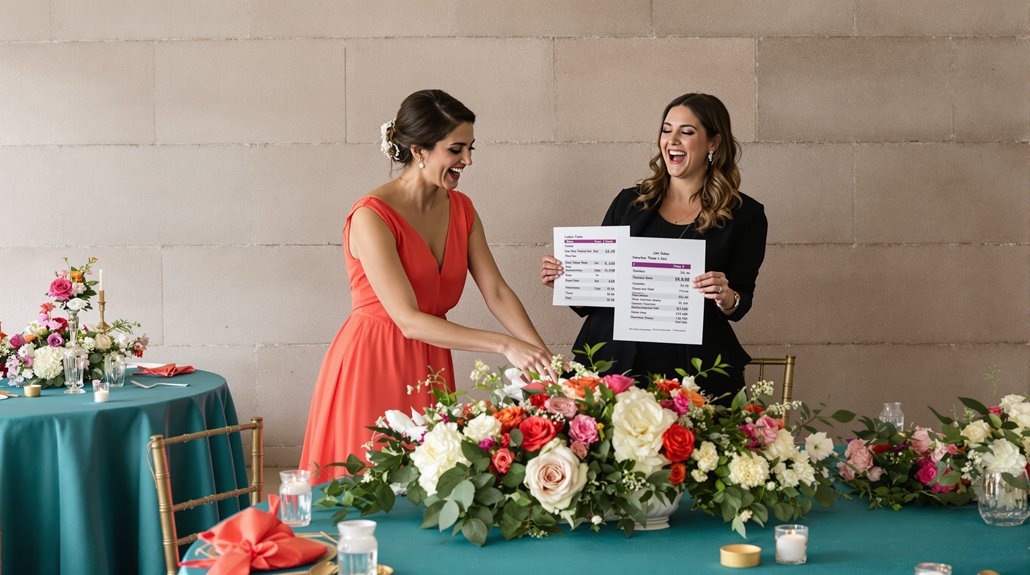
Get ready to streamline your centerpiece strategy with a visual summary that cuts through the clutter and delivers clarity. Tall floral centerpieces may look grand, but they’re budget-busters. Each table could cost $250-$500+. Think about this: 15 tables could drain $3,750-$7,500 from your budget. Why? You’re paying for more flowers, structural support, and labor-intensive setups. Florists often apply a 3-5x markup, inflating prices on those premium roses and hydrangeas.
Instead, pivot to lower arrangements that cost $50-$600 per table. They’re strategically executed to maximize impact without the overhead. By focusing on low centerpieces, you gain budget flexibility and clearer sightlines. Ready to cut the fluff? Create a checklist, compare costs, and make your move.
FAQ
When your family or vendors push back, remember: you’re the captain of this wedding ship, and it’s time to steer. If you’ve made a ‘wrong’ decision, pivot quickly by identifying the smallest tweak that can yield the biggest impact—like switching centerpiece designs. Need to get your partner on board? Use a clear, concise plan that outlines the benefits and efficiencies of your choices, because nothing says “teamwork” like a streamlined strategy. Remember to anticipate obstacles to reduce surprises during planning and maintain control over your vision.
What if my family/vendors push back?
Facing pushback from family or vendors over your choice of tall floral centerpieces? Time to pivot smartly. First, identify objections: Are they concerned about cost, visibility, or style? Address these directly. Cost-conscious? Share a streamlined budget breakdown that highlights savings in other areas. Worried about visibility? Propose a clever seating arrangement that keeps sightlines clear. Vendors pushing back? Assert your non-negotiables and leverage a well-prepared checklist to show how your vision gets the job done efficiently. Communicate with confidence, using metrics and timelines to back up your decisions. Remember, your wedding is about executing your vision, not appeasing everyone. Next step: Schedule a quick meeting to present your strategic plan, showing them how you’ve already thought it all through.
What if I already made the ‘wrong’ decision?
Let’s say you’ve already pulled the trigger on those tall floral centerpieces, but now you’re second-guessing your decision. First, breathe. A decision made is a decision executed, and you can pivot strategically. Instead of dwelling on what feels like a misstep, consider how these centerpieces can enhance your event’s visual impact. Metrics matter: they fill grand spaces and keep sightlines clear, a non-negotiable for high-energy interactions. They’re more than decor—they’re functional assets. If budget worries creep in, evaluate how they align with your event priorities. Did they streamline your planning process? Do they support your event’s vibe? Harness momentum by embracing their benefits. Remember, every choice moves you closer to a well-executed event. Reality Check: Flexibility is key.
What’s the fastest way to course-correct?
How do you pivot when those tall floral centerpieces feel more like a budget buster than a showstopper? Start by swapping them out for cost-effective alternatives. Mix candles ($20-$50) and lanterns ($30-$100) with greenery to trim costs without sacrificing style. Opt for seasonal, local flowers to avoid unnecessary import fees and extend freshness.
Rent decor elements like vases and candle holders to slash expenses further. Alternating tall and short designs not only creates visual interest but also minimizes costs. Remember, greenery isn’t just filler—it’s a budget-friendly hero.
Reality Check: Trade elaborate for efficient. You don’t need towering flowers to impress; what counts is creating a memorable atmosphere. Ready to streamline? Execute these steps and watch your budget and style align effortlessly.
How do I get my partner aligned?
So, you’ve streamlined floral centerpieces—what’s next on the agenda? It’s time to align with your partner. Start by setting a shared vision for life’s big and small moments. Define granular goals and schedule quarterly check-ins to stay on track. Practice joint decision-making; it’s a non-negotiable for avoiding isolation in choices.
Get into the communication groove with active listening and “I” statements. Reflect back what you hear and ask open-ended questions. Validate emotions, even if you disagree.
Identify distress patterns and practice eye contact to assess connection. Develop daily rituals for connection, and set boundaries against external chaos. Clarify core values and strike a balance between independence and togetherness. Align your expectations to avoid resentment. Now, execute with precision.
What’s the easiest win I can do today?
Ready to snag a quick win today? Let’s talk movement. It’s the simplest, most accessible boost you can give yourself. We’re not talking marathons—just 10 minutes of walking or stretching is all it takes. Strategically anchor this habit to your morning coffee routine or post-lunch break. This isn’t just about burning calories; it’s about executing a mental and emotional upgrade. You’ll gain focus, balance, and energy—key assets for tackling the day.
Ready for another power move? Use habit stacking. Link this mini workout to something you already do. Mark it in your calendar as non-negotiable. Track progress with apps or checklists. These small actions, when executed consistently, compound into serious momentum. Now, go make it happen.
Key takeaways
While tall floral centerpieces might seem like a towering symbol of elegance, they often fail to deliver the guest experience you’re after. Let’s break it down:
- Guest Experience: Guests appreciate clear sightlines and engaging conversations over floral height. Tall centerpieces just don’t add value here.
- Budget Efficiency: These arrangements can hijack your floral budget without offering proportional visual impact. Redirect funds to impactful elements like bouquets or ceremony flowers.
- Labor Costs: Elevated designs mean more labor, complexity, and mechanical components—equals higher costs and stress.