
Nailing convo flow at weddings is like balancing Tetris blocks mid-fall. Short centerpieces keep chats cozy and eye contact friendly—perfect for moments that double as career networking. Tall centerpieces? They’re your drama queens, but strategic design avoids pesky view-blocking. Mix heights for visual impact and guest engagement. Your move: define your priorities, run a cost-benefit analysis, and get those timelines rolling. Stay tuned to see how to master the centerpiece game.
Quick verdict: Tall Centerpieces vs. Low Centerpieces (who each is best for)
When it comes to picking centerpieces, are you aiming for intimate conversations or dramatic visuals? Let’s explore the centerpiece height comparison to help you make the ultimate centerpiece design choice.
- Intimate Gatherings: Short centerpieces, under 12 inches, are your go-to for seamless eye contact and cozy conversations. Perfect for when you want guests to connect without craning necks.
- Grand Celebrations: Tall centerpieces, over 24 inches, strategically draw the eye upward, adding a wow factor that’s non-negotiable in spacious venues. They’re not just decorative—they’re conversation starters. Tall centerpieces fill vertical space beautifully, making them ideal for high-ceilinged rooms. These centerpieces can also elevate the overall experience by complementing other dramatic elements like lighting and decor.
- Balanced Approach: Mix both tall vs short centerpieces to accelerate the room’s energy. This pivot caters to varied interaction levels and visual intrigue.
Choose wisely, because in wedding planning, execution trumps romantic notions every time!
At-a-glance comparison: Tall Centerpieces vs. Low Centerpieces
Choosing between tall and low centerpieces isn’t just about style—it’s a strategic move that impacts your wedding’s vibe. Let’s break it down. Centerpiece height plays a significant role in conversation dynamics and budget. Tall centerpieces? They’re a grand statement, perfect for making high-ceiling venues feel intimate. But beware—if they’re not above 24 inches, they could block those essential sightlines. Low centerpieces, on the other hand, keep the table cozy and your budget happy, fostering interaction like a networking pro. Centerpieces enhance the visual allure of event decor, setting the tone for the occasion and complementing other elements like table runners and napkins. Wedding insurance can also be a critical consideration to ensure that your investment in decor and other facets remains protected against unforeseen circumstances.
| Feature | Tall Centerpieces | Low Centerpieces |
|---|---|---|
| Visual Impact | Dramatic and grand | Subtle and soft |
| Conversation | Potentially blocks | Promotes mingling |
| Budget | Costly | Budget-friendly |
Reality Check: Choose centerpiece height based on venue and guest interaction goals.
Define the options (so you’re comparing the right things)
When you’re choosing centerpieces, knowing the difference between tall and low options is non-negotiable. Tall centerpieces tower elegantly but require strategic execution to avoid blocking guest interactions—nobody wants a floral wall between them and their dinner date. Conversely, low centerpieces streamline the setup and enhance conversation, but don’t underestimate their impact; they get the job done in intimate spaces without compromising style. Tall centerpieces, defined as 24 inches or more in height, create a dramatic effect, especially in spacious venues, enhancing the overall ambiance.
Tall Centerpieces: what it is, what it includes, and the common misconceptions
Tall centerpieces are wedding planning’s secret weapon, turning heads and creating buzz without blocking views or stalling conversations. They’re the epitome of elegance, strategically placed to maximize impact. Think tall vases, candelabra holders, and airy floral arrangements that fill space with drama and sophistication. Ideal for venues with high ceilings, they transform altars and sweetheart tables, defining visual space and adding grandeur. The biggest myth? They always block conversation. Not true. Smart designs use negative space and thin structures to keep lines of sight clear. Don’t pigeonhole them to tables—they’re versatile enough for room corners too. Ready to execute? Measure height with precision: 24 inches minimum, ensuring your centerpiece is a statement, not an obstruction. Varying heights creates rhythm and flow in overall design. Now, pivot to your timeline and checklist.
Low Centerpieces: what it is, what it includes, and the common misconceptions
Low centerpieces bring a different kind of sophistication to your wedding tableau, offering style that’s right at eye level without the big-budget drama of towering arrangements. Strategically designed to keep conversations flowing, these arrangements cap at 12 inches, guaranteeing no blocked views. Picture floral compote vessels, greenery garlands, and compact potted topiaries that perform without pretense. Ideal for venues with low ceilings or breezy outdoor settings, low centerpieces pivot effortlessly, adding charm to both intimate dinners and grand receptions. Despite their smaller stature, low centerpieces excel in creating a cozy atmosphere and being budget-friendly, making them a versatile choice for various event themes. Common misconceptions? They’re not always the budget option—flower type and quantity make them an investment. Skilled design is non-negotiable for impact. Low centerpieces can align well with flexible budgeting approaches, allowing couples to prioritize their financial well-being while still achieving their desired aesthetic. Next step: Map out your venue layout. Decide where low centerpieces will accelerate the vibe and make sure they don’t get lost in larger rooms.
Cost breakdown (upfront vs hidden costs)
You’re about to strategically navigate the financial terrain of centerpieces, where upfront and hidden costs play as essential as your favorite project management tools. Tall centerpieces may boast grandeur but will also escalate your budget with pricier blooms and added labor, while low designs streamline expenses without sacrificing style. Pinpoint what really drives costs—be it the sheer volume of flowers or the complexity of setup—and let’s pivot towards making smarter, budget-friendly decisions. Remember, floral business operational costs also contribute significantly to pricing, impacting both upfront and hidden expenses.
Line-item cost comparison by tier/budget
When it comes to wedding centerpieces, knowing your budget tiers can save you a world of hassle and keep your event on track. Here’s the breakdown you need:
| Budget Tier | Low Centerpieces ($) | Tall Centerpieces ($) |
|---|---|---|
| Budget-Friendly | 40-200 | N/A |
| Mid-Range | 125-250 | 150-350 |
| Premium Tier | 200-600 | 235-400 |
Budget-friendly options like basic low arrangements or candle-focused centerpieces offer strategic savings without sacrificing style. Mid-range choices allow for greater floral density, while premium tiers are all about bold statements. Remember, tall centerpieces often require extra labor and structural elements. Pivot to low options if you’re aiming for streamlined costs. Consider ceiling height to match centerpiece height appropriately. Next steps? Map your budget to centerpiece style and get executing! Keep in mind, peak season bookings can inflate costs, so opting for off-peak times may help maximize your budget.
What actually drives cost changes
Understanding what really drives centerpiece costs means breaking down both upfront and hidden expenses—because let’s face it, surprises should be reserved for the honeymoon, not your budget. Here’s how you strategically manage costs:
- Materials and Rentals: Vases range $1-$20 each, while renting stands or lanterns costs $15-$100. Thrift stores or bulk retailers slash expenses, and rentals cut buying costs dramatically.
- Flowers and Greenery: Spend $20-$300+ per centerpiece depending on flower type. Greenery is a solid budget pivot at $10-$25 per foot.
- Labor and Overhead: Design and setup labor accelerates costs, with fees $100-$500. Don’t forget hidden overheads—storage, tools, and transport add $30-$150. A significant cost-saving tip includes opting for seasonal flowers which can help reduce expenses while maintaining beautiful arrangements. Monitoring fluctuating costs is crucial to avoid financial surprises and ensure your centerpiece selections remain within budget.
Reality Check: Balancing curated style with costs means leveraging rentals and greenery. Your budget? Non-negotiable.
Planning workload & logistics impact
When you’re planning wedding centerpieces, understanding the time, complexity, and coordination differences between tall and low designs is non-negotiable. Tall arrangements add layers of complexity requiring strategic vendor coordination and availability checks—think specialty suppliers and climate-controlled logistics. Streamline your process with our checklist, ensuring that every vendor is on the same page and ready to execute without a hitch.
Time, complexity, and coordination differences
Steering through the complex world of wedding centerpieces requires more than just a good eye for design; it’s all about strategic execution and streamlined coordination. For the ambitious couple, understanding time, complexity, and coordination differences is non-negotiable. Here’s a quick breakdown:
- Tall Centerpieces: They demand advanced structural knowledge and a hefty floral design budget. Expect more time in consultation and setup, but executed well, they deliver drama.
- Low Centerpieces: They save you time and labor, allowing quick and straightforward arrangements. They’re efficient for a busy schedule but may lack the wow factor.
- Mixed Heights: This approach requires a strategic layout plan, balancing visual interest across your venue, but accelerates guest engagement.
To manage these options effectively, couples should define budget parameters and align their design choices with the venue layout for an efficient execution.
Vendor availability + flexibility considerations
Diving into the world of vendor availability and flexibility is like juggling flaming swords—it’s all about precision and timing. For ambitious couples like you, the vendor landscape is expanding, which means more options but also more coordination.
- Strategic Vendor Selection: Evaluate vendors on responsiveness and willingness to adapt. Use tools like EventsAir for real-time adjustments.
- Open Vendor Policies: Leverage venues that allow external vendors, cutting costs and headaches. This flexibility is non-negotiable for a streamlined process.
- Efficient Logistics Management: Harness e-commerce growth for rapid supplies. Platforms coordinate equipment timing and logistics seamlessly.
Reality Check: Don’t ignore venue restrictions like power access—factor them in early. To execute flawlessly, keep communication clear and regular, and pivot when needed. Clarify all details to prevent surprise fees and ensure transparency in pricing when dealing with vendors.
Guest experience impact
Executing centerpieces with precision transforms guest experience from awkward to engaging. You’ll strategically place low arrangements to foster interaction, while tall ones become dramatic focal points without causing conversational friction. Remember, alternating heights isn’t just decorative—it’s your non-negotiable tool for maximizing both visual impact and guest connection. Including a Day-Of Coordinator can further ensure smooth execution, as they manage details like centerpiece placement and timeline adherence, reducing stress for the couple and creating an enjoyable atmosphere for guests.
How guests perceive it + where friction shows up
Centerpieces aren’t just table trinkets; they’re conversation catalysts or blockers. Guests perceive low centerpieces as cozy, making eye contact a breeze, while tall ones scream grandeur but need strategic elevation to dodge view-blocking. Here’s where friction shows up:
- Low Centerpieces: They create a relaxed vibe but can get overshadowed in grand spaces. Execution tip: Go lush to avoid looking skimpy.
- Tall Centerpieces: They add drama but can obstruct views if not executed correctly. Pivot with sturdy mechanics and sleek designs.
- Mid-Height Friction: Arrangements between 12-24 inches are a no-go for sightlines. Streamline your choices by sticking to extremes.
Reality Check: Low or tall, both need strategic execution to enhance the guest experience. Ready to pivot? Let’s execute.
When planning the wedding budget allocation, consider dedicating a portion to centerpieces to ensure they complement the venue and overall theme.
Best-fit scenarios (choose based on constraints)
You’re in the centerpieces zone, and it’s time to strategically choose tall or low based on your venue’s constraints. If your event is in a grand ballroom with spacious ceilings, tall centerpieces over 24 inches get the job done by drawing the eye upward and adding dramatic flair. But for those intimate gatherings under 50 guests, where conversation flows like your last espresso shot, low centerpieces keep things cozy and connected without blocking views.
Choose Tall Centerpieces if…
When you’ve got sky-high ceilings and an ambitious timeline, tall centerpieces are your secret weapon. They fill vertical space effortlessly, transforming vast venues into sophisticated havens. Here’s why they’re your go-to move:
- Command Attention: With eye-catching designs, tall centerpieces like elegant orchids in crystal vases or candelabra holders make any room feel opulent. They’re statement pieces that get noticed without being intrusive.
- Maximize Space: In large venues, these towering arrangements strategically fill empty areas, making everything feel intentionally placed. They create depth and dimension, perfect for wide-angle shots.
- Facilitate Conversations: At 24 inches or more, they rise above eye level, ensuring clear sightlines and promoting interaction among guests.
Eco-Conscious Planning: Incorporate carbon-offset weddings to align your aesthetic choices with environmental values, enhancing both style and sustainability.
Reality Check: Don’t let size overshadow style—balance grandeur with taste.
Choose Low Centerpieces if…
Tall centerpieces steal the show, but what if your venue’s ceilings keep things a bit more down to earth? Low centerpieces are your streamlined solution, strategically executed for venues that can’t accommodate vertical drama. Here’s why they get the job done:
- Low Ceilings: Opt for low arrangements to maintain an open feel, avoiding visual overload in height-constrained spaces. It’s all about balance—not a neck-craning nightmare.
- Intimate Gatherings: Promote eye contact and conversation with designs that sit below eye level. Foster that cozy, welcoming vibe without the awkward table peering.
- Budget Constraints: Smaller arrangements mean fewer blooms and reduced costs. It’s a budget-savvy move that doesn’t compromise style or functionality.
Next steps? Grab your checklist, assess your venue’s vibe, and pivot to low if your ceiling—or budget—demands it.
Real-world scenarios (examples with numbers)
You’re tackling a wedding with 150 guests, a $10K decor budget, and a priority on mingling. Use low centerpieces under 12 inches on large round tables to keep conversations flowing, and allocate 60% of your budget here for maximum impact. For high-ceiling venues, strategically mix in a few tall arrangements to fill the vertical space without busting the budget—because who’s got time for awkward crane-necking?
3 sample scenarios: guest count + budget + priorities
Planning a wedding centerpiece strategy? You’ve got your guest count, budget, and priorities lined up. Let’s execute a plan that gets the job done.
| Scenario | Guest Count | Budget | Priorities |
|---|---|---|---|
| Intimate Gathering | 8 Guests | $150 | Cozy conversation |
| Small Wedding | 10-12 Guests | $200 | Conversation focus |
| Large Gathering | 20+ Guests | $500 | Visual impact |
| Formal Affair | 50 Guests | $1000 | Formal elegance |
Keep it streamlined. Low centerpieces for intimate settings, tall for dramatic venues. Mix heights for balance. Avoid mid-range heights—sightline killers. Prioritize your non-negotiables and pivot when needed. Reality Check: Don’t let aesthetics overpower interaction. Stay strategic and practical.
Common mistakes (and how to avoid them)
When it comes to centerpieces, the last thing you want is to unintentionally gatecrash your own reception by blocking guests’ views with towering floral barricades. Avoid these common pitfalls with strategic moves that guarantee your design doesn’t derail conversation. Here’s how:
- Height Awareness: Keep centerpieces either below 12 inches or above 24 inches. Anything in between? It’s a conversational buzzkill that blocks sightlines.
- Scale Precision: Match centerpiece size to table dimensions. Small pieces on large tables look lost, while oversized ones devour space. Rectangular tables? Go for multiple slender arrangements.
- Functional Flow: Prioritize table functionality. Guarantee arrangements leave room for plates and dishes, especially on rectangular tables. Your guests are here to see each other—and the food!
Strategically executed, these tweaks make certain your centerpieces get the job done.
Copy/paste decision matrix template
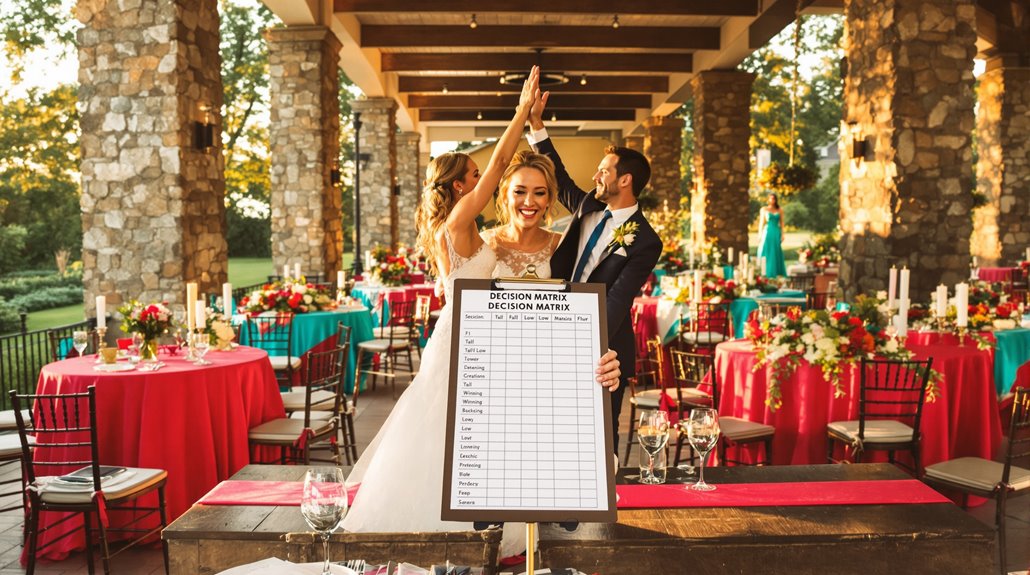
Steering through the wedding planning whirlwind and need a decision-making turbo boost? Copy/paste our decision matrix template, your new best friend for executing wedding choices with precision. Think of it as a strategic partner, making sure every choice is objectively evaluated. Establish criteria like cost and guest impact, then assign importance weights (1-5). Line up options—tall vs. low centerpieces—and score them. Calculate total scores to reveal the winner. This method streamlines collaboration, ensuring your planning team moves in sync. You’re not just hoping for the best; you’re strategically weighing options. Downloadable for Google Sheets or Excel, this template is a non-negotiable for those who demand efficiency. So, pivot from chaos to clarity and make decisions that get the job done.
FAQ (quick answers to common edge cases)
Stuck between centerpiece options? Strategically mix heights to streamline decision-making and avoid that “bless and stressed” moment. Confirm assumptions with vendors by asking about setup logistics and cost implications; if your guest count swings by 20%, be ready to pivot with a backup plan that’s already executed in your project timeline.
What if I’m stuck between two options?
Feeling torn between two centerpiece options? You’re not alone. Let’s streamline your decision-making with a mix-and-match approach. By combining tall and low centerpieces, you get the best of both worlds. Tall designs add grandeur and fill vertical space, especially in high-ceiling venues. Low centerpieces keep conversations flowing effortlessly. You’re executing a balanced look that won’t overwhelm the room. Consider guest count and venue size: Tall centerpieces provide drama for large crowds, while low pieces foster intimacy in smaller gatherings. Mixing heights offers dynamic visual interest without sacrificing interaction. Plus, it strategically balances your budget, making the most of each centerpiece. Ready to pivot your centerpiece game? Grab your checklist and start planning a layout that gets the job done.
What’s the easiest way to reduce risk with either option?
Reducing risk with centerpiece choices is as easy as 1-2-3—literally. First, adhere to height guidelines: keep low centerpieces at 12 inches or shorter and tall ones at 24 inches or higher. This guarantees conversations flow and sightlines stay clear. Second, mix heights strategically. Alternate between tall and low centerpieces on tables to avoid monotony and balance grandeur with intimacy. It’s a visual win-win. Third, match your venue’s vibe. Tall pieces suit high ceilings; low options work wonders in intimate settings or outdoors. Consider table size and ceiling height—non-negotiable metrics.
Reality Check: Don’t get sucked into the “Pinterest perfect” trap. Balance aesthetics with function. Next step: Execute a quick mock setup to see it live.
What should I ask vendors to confirm assumptions?
Why gamble when you can strategize? Confirming assumptions with centerpiece vendors is non-negotiable. Request detailed designs and mood boards to guarantee your vision gets executed without obstructing views. Ask about flower types, colors, and centerpiece diameters to match your event theme. Verify setup logistics, including ladder needs for tall pieces and arrival times for low ones, to streamline operations. Confirm venue compatibility—ceiling heights, aisle clearance, and table stability are critical. Designate a single point of contact to pivot quickly if any issues arise. Use shared calendars for real-time updates and request contingency plans. Finally, demand post-event feedback—metrics matter! Measure conversation engagement and gather guest comments to refine future plans. Now, move this strategy forward with confidence!
What changes if my guest count swings by 20%?
Planning a wedding is like juggling flaming torches—add a guest count swing of 20%, and it’s time to pivot with precision. When your count spikes, you’re not just adding chairs; you’re strategically multiplying tables and centerpieces. More guests mean more tables, and that’s where centerpiece height becomes essential. Tall designs elevate the room, preventing the dreaded “table sea” and keeping sightlines clear. But let’s not blow the budget—tall centerpieces come with a cost. Low designs can offer a cozy, conversation-friendly vibe, perfect for smaller swings. Execute a balance: mix heights to keep things fresh. Stay sharp with your guest list to avoid setup chaos. Use a checklist to guarantee centerpiece distribution and prevent last-minute scrambles.
What’s the best fallback plan if something goes wrong?
When chaos hits, pivot with precision by having a rock-solid fallback plan. Start with backup vendors—it’s non-negotiable. Keep a trusted list for immediate deployment when your first choice flops. Redundant equipment? A must. Think spare microphones, extra computers, and backup AV devices. Secure an indoor venue option for any outdoor wedding. Weather is a fickle beast, but your plan isn’t. Got a staffing hiccup? On-call float pools and agency contacts mean no role gets left behind. Prepare pre-recorded content and engage alternative tech tools to dodge platform fails. Consistent, pre-drafted messaging keeps everyone in the loop. Finally, conduct pre-event drills to guarantee your team executes seamlessly. Ready to hustle? Start checking those boxes now.
Next steps: make the decision + execute the plan
As you shift from vision to execution, it’s crunch time to finalize your centerpiece strategy—because let’s face it, nobody’s got time for indecision. You need an efficient, executed plan that strategically balances aesthetics and conversation flow. Here’s your streamlined path:
- Assess Venue & Tables: Match centerpiece heights to ceiling height. Opt for tall if ceilings soar; choose low for intimacy on round tables (10-12 seats) or linear designs on long tables (12+ guests).
- Set Budget & Form: Calculate costs—tall equals more flowers; low keeps it cost-effective. Decide if grandeur or intimacy is your non-negotiable.
- Finalize Logistics: Confirm tall centerpieces are stable with sturdy bases. Assign extra staff for setup. Prioritize easy transport and repurposing for low designs.
Execute with confidence, and watch your event move seamlessly from plan to reality.