

Nail your processional music timing by aligning it with the exact walk pace—skip those awkward silences and song cutoffs. Start with a tune of the right length, have your musicians primed to loop or fade, and rehearse, to the song’s emotional peaks. Pro tip: match song segments to each walker’s 30-second stroll. Use checklists, strategic planning, and your unstoppable get-it-done mindset to turn this into a perfectly orchestrated masterpiece. Stay tuned, because we’ve got more strategic insights for you.
What you’ll accomplish (and what ‘done’ looks like)
When it comes to timing your processional music, precision is non-negotiable. You’re not just picking a song; you’re executing a perfectly timed entrance. Processional timing guarantees the ceremony music timing aligns with your walk timing down the aisle. Imagine your guests fully immersed as music covers your entrance seamlessly, no awkward silences or premature endings. By strategically choosing a song length that matches your walk, you streamline the entire experience. Musicians adjust, guaranteeing the music peaks just as you reach the altar. This isn’t about tradition; it’s about executing a plan that gets the job done. Rehearse with your chosen tune to nail the pacing. Remember, it’s all about the hustle—timing is everything. Consider gentle piano tunes or orchestral pieces for a magical effect. Additionally, explore Songkick live music options to find the perfect band or musician who can deliver a live performance that complements your processional music. Now, let’s make it happen.
Quick start (the short version)
You’ve nailed the vision of a perfectly timed processional, so let’s cut to the chase and accelerate your planning. This isn’t about Pinterest fantasies—it’s about executing your vision with strategic precision. Focus on the essentials:
- Choose a song length: Average songs run 3-5 minutes. Guarantee it covers the entire processional.
- Tempo matters: Slower songs suit graceful walks; faster ones add energy.
- Natural pacing: Walk naturally, not forced by the music. Rehearse for perfect alignment.
- Flexible execution: Fade or loop the music if needed. Your musicians should adjust seamlessly.
Your processional is a project, not a daydream. Test everything in a rehearsal. With these streamlined steps, you’ll pivot from overwhelmed to overjoyed. Remember, wedding music serves as the soundtrack to your love story, capturing each moment from the guest arrival to your final exit. By planning for potential risks, you ensure your day goes smoothly, allowing you to focus on the emotional connections with your guests.
Before you start: inputs you need
Before diving headfirst into your wedding processional, gather your essential intel—consider this your pre-game checklist. Your wedding’s a project, not a fairy tale, and it demands precision. Start by knowing your aisle specifics; venue coordinators are your allies here. Shorter aisles? Select songs accordingly or pinpoint starting points in longer pieces. You’ll want your walking speed smooth and deliberate—more float, less sprint.
- Venue Timing: Confirm when doors open to finesse your prelude.
- Song Duration: Align song length with the procession’s needs; musicians can loop or fade as necessary.
- Participants Count: More people, more time. Know who’s walking and when.
- Musician Coordination: Communicate clearly with your musicians about music start points, not just song titles.
- Contingency Planning: Prepare backup plans for unforeseen issues, such as delays or missing participants, to ensure the ceremony proceeds smoothly.
Now, move with purpose.
Step-by-step process
Let’s get down to business with a strategic step-by-step plan to nail your processional music timing. First, clarify your constraints—think date range, budget ceiling, and non-negotiables—because knowing your limits is half the battle. Next, build a decision order that streamlines choices, craft a timeline with clear milestones, and execute vendor outreach like a pro; lock it all in with contracts and a safety net for those unexpected curveballs. Managing vendor communication before the event is crucial to ensure that everyone is aligned and any issues are quickly addressed. Timing your processional music involves considering factors like the number of people in the bridal party and aisle length to ensure the music matches the actual walk duration.
Step 1: Clarify constraints (date range, budget ceiling, non-negotiables)
When you’re ready to nail down your wedding music timeline, start by clarifying your constraints—it’s like setting the parameters for a mission that needs precision execution. First, lock in your date range. Prelude music kicks off 20–30 minutes before the ceremony, so plan 5–10 songs. The processional lasts 3–10 minutes, with each person taking about 30 seconds to walk. Budget-wise, you’ll need at least 15–16 songs. Musicians can loop or fade tracks to fit your budget. Non-negotiables include matching song length to the aisle, keeping tempos suitable, and ensuring smooth changes. Coordinate with your venue on specific limits and rehearse the day before. Be sure to account for hidden costs like service charges and vendor overtime to ensure your budget remains intact. Now, grab a checklist, map it out, and execute with precision.
Step 2: Build the decision order (what to decide first so everything else is easier)
You’ve nailed down your constraints, so it’s time to hit the gas on decision-making to confirm everything flows smoothly. First, decide on the music style and tone; this sets the stage for every other choice. Pair your wedding’s vibe with music that complements it—classical for timeless elegance or pop for a modern twist. Next, select distinct musical pieces for each processional phase. Divide tunes between family, wedding party, and your grand entrance. This strategic selection keeps the event moving like a well-oiled machine. Don’t overlook instrument compatibility; consult with musicians about what they can play confidently. Consider using Pandora music streaming to create the perfect playlists for your wedding reception and cocktail hour, ensuring a seamless musical experience. Finally, calculate song durations to align with your processional timeline. This confirms your walk is seamless, not rushed. A traditional processional typically begins with grandparents, followed by parents, and concludes with the bride, creating an emotional build-up to the ceremony’s start. Ready to execute? Let’s move.
Step 3: Create the timeline (milestones + deadlines)
Creating a rock-solid timeline isn’t just advisable—it’s non-negotiable. You’re managing a full-scale operation here, not a Pinterest board. Start by setting vendor arrival milestones; everyone’s in at 11 am but the florist gets a noon call time. Your getting-ready deadlines are a choreographed dance—bridesmaids start glam at 11:15, while the bride gets her moment at noon. By 2:30, it’s showtime: dress on, photos at 2:45. The ceremony’s a tight ship: guests seated by 4:25, processional kicks off at 4:30. Rehearsals? Make them count—it’s your dress rehearsal for success. To avoid chaos and ensure a structured approach, consider the importance of wedding insurance for financial protection against unforeseen issues. Ensure key information is prominently displayed for easy reference to facilitate seamless coordination on the big day. Finalize every minute detail a month in advance. Include buffers; delays happen. Now, streamline these plans and get ready to execute like a pro.
Step 4: Execute vendor outreach (scripts + tracking)
Executing vendor outreach is your next strategic move—it’s showtime. Start with scripts that cut to the chase. Ask vendors about their business longevity, annual wedding load, and typical booking process. Don’t forget to request full photo galleries, sample timelines, and contract breakdowns upfront. You’ll need this data to make decisions as sharp as your morning espresso. Use a three-part email template to nail down estimates based on your date, vision, and budget. Track responses in a spreadsheet or app to maintain momentum. Evaluate vendor communication—not just promptness, but also energy and engagement level. It’s essential for gauging how they’ll act on game day. Conduct reputational research through user reviews and social media mentions to gather perspectives from previous clients on vendor performance. Follow up with client references to solidify your choices. Remember to trust your instincts; they can be invaluable in ensuring personal comfort with vendor selections. Now, let’s get this vendor machine rolling!
Step 5: Lock the plan (contracts, deposits, and contingency buffers)
Locking down the plan for your wedding music isn’t just about signing on the dotted line—it’s about securing the rhythm of your big day with precision. Start by executing contracts with your chosen vendors. This isn’t just paperwork; it’s your mission control. Strategically allocate deposits to lock in dates and services—non-negotiable. Make sure every detail aligns with your timeline and expectations. Create contingency buffers, because let’s face it, even the best plans need a safety net. Consider the potential hidden fees that can inflate your budget unexpectedly and factor these into your planning. It’s important to remember that musicians may relocate if weather conditions threaten their safety or the integrity of their instruments, so ensure your contingency plans include alternative locations or protective measures. Think of this as your insurance policy against chaos. Use project management tools to track contracts, deposits, and deadlines. Keep your finger on the pulse with regular updates. This is where precision meets peace of mind. Ready? Execute your plan and pivot smoothly when needed.
Step 6: Run weekly check-ins (how to stay on track without spiraling)
When it comes to staying on track with your wedding planning, weekly check-ins are your secret weapon. Imagine this: you’ve got a streamlined timeline, a checklist in hand, and a laser focus on execution. These check-ins allow you to pivot quickly, ensuring nothing spirals out of control. Set a non-negotiable day each week for a 30-minute hustle session. Review your progress, tackle any roadblocks, and strategically map out the next steps. Use real tools—spreadsheets, project management apps—to track metrics and move efficiently. These sessions aren’t fluff; they’re your powerhouse for gaining momentum. And remember, bless and stressed? No thanks. Execute with intent, and your wedding planning will move like a well-oiled machine. Next step: prioritize your to-do list. Allocate around 10% of your budget for photography to capture lasting memories, ensuring you focus on elements that provide the highest emotional ROI.
Template you can copy/paste (checklist + tracker)
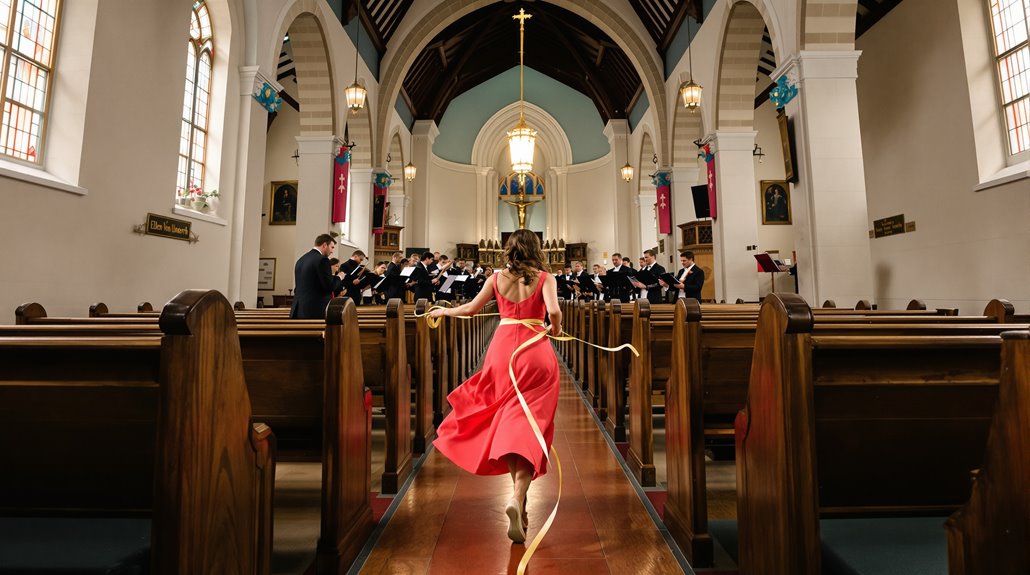
Let’s cut straight to the chase: a killer processional needs strategic timing, and we’ve got just the checklist and tracker to help you pivot from planning paralysis to execution excellence. It’s non-negotiable: efficiency reigns supreme. Here’s your go-to template to streamline this chaos:
- Measure Aisle: Note the length—it’s your baseline.
- Song Selection: Pick two—one for the party, one for the bride.
- Timing & Pacing: Align song sections with walkers.
- Rehearsal Practice: Sync up at the venue; stagger starts for flow.
- Musician/DJ Cues: Coordinate tempo and shifts.
This checklist isn’t just a guide; it’s your playbook to guarantee every step, note, and beat gets the job done with kinetic precision. Ready to accelerate your processional planning? Let’s move.
Common mistakes (and how to avoid them)
Strategically nailing the timing of your wedding day is non-negotiable, but common pitfalls lurk in every corner, ready to derail your perfectly planned timeline. Here’s how to sidestep these landmines:
- Insufficient Buffer Time: A 23-minute delay by ceremony start is a domino effect waiting to happen. Insert 10-15 minute cushions between major events.
- Underestimating Travel Time: Buses don’t race; they crawl. For a 10-minute drive, plan 30 minutes. Avoid rushed shifts.
- Poor Timeline Communication: Your timeline’s a secret without informing vendors. Make sure everyone knows their role for a seamless flow.
- Inadequate Getting Ready Time: Allocate at least an hour each for hair, makeup, and dressing. Falling behind early snowballs fast.
Next step? Double-check your timeline and confirm with all vendors—because hustle is nothing without execution.
FAQ
Got questions about timing your processional music? Let’s tackle the essentials—how long this should take, the minimum viable version, and what you can safely delegate without losing control. If a vendor’s ghosting you or you’re wondering what to track weekly, we’ve got strategies to keep your processional planning on track and executed like a pro.
How long should this take if we’re busy?
Ever wondered how to nail the timing of your wedding processional without turning it into a logistical nightmare? In busy scenarios, expect the whole shebang to run between 3 to 10 minutes. Busy couples, this isn’t the time to dawdle—strategically streamline your song choices. Go with three songs tops: one for the family, one for the bridal party, and one for you. Got a big entourage? Group entrants under a single tune, looping if needed. Your musicians should know when to pivot and fade if everyone reaches the end early. Practice during rehearsal to guarantee each segment matches the music. Remember, coordinating a processional is like a high-stakes project—precision and timing are non-negotiable. Now, hustle and execute!
What’s the minimum version that still works?
How do you keep your wedding processional from becoming a chaotic mess, but instead a well-executed masterpiece? Start with one non-negotiable: a minimum three-minute song. This isn’t about perfection; it’s about practicality. A three-minute piece strategically covers all essentials—from officiant to couple—without awkward halts. Short aisle? Perfect. Longer walk? Loop it. Instrumentals? They’re a godsend; no lyrics to trip over. Musicians can pivot seamlessly, starting at the “fast part” of Canon in D or fading early if needed. Test your timing during rehearsal—this isn’t guesswork. This approach isn’t just efficient; it’s smart. Remember, the goal is a streamlined experience where the processional moves smoothly, not snooze-inducing. Next up: how to delegate and keep your sanity intact.
What can I safely delegate?
So, what can you safely delegate without feeling like you’re losing control? Let’s cut to the chase: music. Your musicians are your secret weapon in streamlining processional timing. Delegate the start point of your processional song—say, the upbeat section of “Canon in D”—to them. They’ll handle the song’s length based on your procession size and aisle length, guaranteeing a smooth fade-out once the bride reaches the altar. You’re not babysitting tempos; you’re orchestrating a well-oiled machine.
For the recessional, hand over the reins to the musicians for seamless blending with clapping and cheering. Their expertise guarantees no awkward silences or rushed exits.
Reality Check: Trust isn’t just a handshake—rehearse timing with musicians the day before.
What if a vendor isn’t responding?
When a vendor goes radio silent, don’t just sit there twiddling your thumbs. Time to pivot and gain control. First, double-check your communication strategy. Did you use their preferred contact method? Send concise emails and texts, and follow up with calls if needed. Document everything—timestamps, summaries—because proof is power. If a week passes, escalate: contact backup reps or drop by their office. Still no dice? Enlist your wedding planner as your secret weapon. Social media can also nudge them gently. Meanwhile, line up backup musicians or DJs; you need options ready to execute. Include response time clauses in contracts to safeguard against future ghosting. Prioritize action over hesitation, and keep your ceremony timeline on track.
What should I track weekly?
Why let chaos reign when you can execute with precision? Each week, drill down on key processional metrics to keep your wedding trajectory on point. First, finalize roles and distribute the printed order. Don’t assume everyone remembers their cues—confirm music cues and volume levels, ensuring the tunes match aisle lengths and participant counts. Check participant availability, and have alternates ready for any last-minute pivots. Review weather forecasts and plan for any late arrivals. Make those bridal party runs count; practice pacing with full song playbacks to avoid day-of surprises. These steps aren’t optional—they’re your non-negotiables for a hitch-free processional. Next step: level up your rehearsal strategy. It’s time to move from planning to executing like a pro.
Key takeaways
Let’s cut to the chase: timing your processional music isn’t just about picking your favorite song and hitting play. It’s about executing a smooth, non-negotiable shift from prelude to altar. Here’s the deal:
- Match Song Length to Walk: The average aisle walk is 30 seconds per person, so choose music strategically to avoid awkward silences or unnecessary tension.
- Communication is Key: Collaborate with musicians and venue staff. They know the drill and can start mid-song or loop sections seamlessly.
- Select the Right Starting Point: Identify the “emotional peak” in a song for a powerful entrance.
- Rehearse Like It’s Opening Night: Pre-ceremony run-throughs guarantee your team moves in sync.
Reality check: Avoid the “bless and stressed” vibe—plan, pivot, and execute.