

Got your wedding venue contract in hand? Here’s your critical checklist: steer clear of pressure tactics pushing you to sign faster than a delivery pizza. Massive non-refundable deposits sound alarm bells, and “subject to additional charges” is retro glitter for hidden fees. Guarantee every vow and promise is in black and white—no unfulfilled fairy tales here! Be ruthless with timelines and vendor mandates. Master these moves, and you’re ready for the next strategic wedding planning phase.
The short answer (what most people should do)
When you’re steering through a venue contract, don’t let the pressure tactics trip you up—your wedding isn’t a race to sign on the dotted line. Spot wedding venue warning signs early. If they demand a large deposit far in advance or insist on immediate commitment during a tour, it’s time to pump the brakes. Venue red flags include vague language like “subject to additional charges” or “standard industry rates.” Service charges can quickly add up, with combined service charges and gratuity potentially totaling 40% or more on base costs. Make sure every detail is crystal clear. The FTC provides consumer protection guidance for wedding vendor contracts, which can help you identify and challenge unfair terms before you commit. Dig deep for hidden fees that aren’t in writing—those surprise overtime charges or unlisted taxes can gut your budget. Tackle venue contract issues head-on with strategic questions and insist on taking the contract home for a thorough review. Your wedding deserves precision, not panic.
The real answer: what it depends on
Maneuvering a venue contract isn’t just about spotting red flags; it’s about understanding what you’re truly signing up for. Your goal? Spot those bad venue signs before they derail your event. Here’s how you do it:
- Hidden Charges: Look for sneaky fees. Taxes, service fees, or security charges shouldn’t be a surprise. Many reputable venues, such as Hilton’s wedding services, are transparent about their pricing to help you avoid unexpected costs.
- Payment Terms: Nonrefundable deposits or full payments upfront? That’s a risky move if the venue goes bust.
- Staffing and Services: Be sure they’ve got backup plans for no-shows. It’s not just a nice-to-have; it’s non-negotiable.
- Contract Clarity: Vague terms? Walk away. Ambiguity breeds chaos, not control. Professional vendors should always provide detailed written contracts to prevent misunderstandings and disputes.
Decision framework (choose the right move fast)
Crafting a killer decision framework for venue contracts is your ultimate hustle move—think of it as your secret weapon against chaos. Here’s how you pivot from overwhelmed to overachiever in record time: First, dissect the contract for ambiguous language and hidden fees, then strategize your response. Non-negotiables? Transparency and flexibility to avoid financial pitfalls. Inspect facilities, including restrooms and common areas, for signs of neglect, as poor maintenance can indicate future service issues. Stay sharp with this streamlined table:
| Red Flag | Strategic Move |
|---|---|
| Vague Pricing | Demand clear itemized fees |
| Hidden Charges | Insist on full disclosure |
| Vendor Restrictions | Negotiate exceptions |
| Rigid Access Times | Secure flexible terms |
| Liability Clauses | Seek mutual indemnity |
Execute these moves with precision, and you’ll gain momentum. Now, grab that contract and get the job done!
Recommended timeline / checklist (so you don’t miss anything)
Every detail in the timeline and checklist is your armor against venue contract chaos. You’ve got a million things happening, so let’s cut straight to the chase—strategize your venue contract like a pro. Here’s your non-negotiable checklist:
Strategize like a pro; master your venue contract with precision.
- Research: Grab a full contract copy, verify permits, and hunt down three client references. Don’t skip checking reviews and insurance requirements.
- Payments: Lock in a clear deposit and payment timeline. Insist on refund terms and cancellation cutoffs.
- Fees: List inclusions and extra charges, and clarify overtime rates and damage assessments.
- Access: Define setup and teardown windows, vendor policies, and exclusivity clauses. Poor communication can lead to increased stress during planning, so ensure your venue is responsive and establishes clear lines of communication from the start.
Execute these steps, and you’ll pivot from planning chaos to kinetic precision. Now, get moving!
Examples (realistic scenarios)
Imagine you’re racing against a tight timeline with only a few venue options left, and suddenly, surprise fees rear their ugly heads—talk about a curveball. Or maybe you’ve got time to customize everything down to the monogrammed napkins, but the venue’s restrictions make it clear it’s their way or the highway. For those of you prioritizing budget, watch out for venues that initially woo you with a sweet deal only to pile on hidden costs like a bad infomercial—what’s the real bottom line here? If you’re considering luxury wedding venues, it’s even more important to be vigilant about contract clarity, as upscale packages often include exclusive amenities and strict policies. It’s crucial to understand the importance of detailed contracts to avoid unexpected fees or changes in services.
Scenario 1: tight timeline + limited availability
When you’re staring down the barrel of a tight timeline and a venue’s limited availability, the adrenaline is real, and so are the stakes. You need a plan that’s executed with precision. Limited setup or teardown windows under three hours? That’s a non-negotiable risk for rushed execution. Watch for contracts with vague clauses about “additional access fees”—they’re budget grenades waiting to explode. If your venue can double-book or shift your date, you’re looking at a scheduling nightmare. Familiarity with typical clauses aids in navigating the contract effectively and helps identify potential pitfalls, ensuring smooth execution. Vendor arrival within a single hour? That’s a disaster waiting to happen if traffic doesn’t play nice. Always demand a detailed timeline attachment and verify vendor coordination rules. Reality Check: Strategic planning and clear communication are your allies; don’t let chaos hijack your event.
Scenario 2: flexible timeline + high customization
Steering through a venue contract with a flexible timeline and high customization opportunities isn’t just a walk in the park—it’s a strategic maneuver that demands precision. À la carte pricing might seduce you with its promise of bespoke options, but watch out—those costs stack up like a Jenga tower. Overtime and timeline fees lurk, ready to pounce if your event runs over. Vague contracts? They’re a minefield without legal GPS. Restrictive customization clauses might shackle your unique vision; nobody wants a “one-size-fits-all” wedding, right? Non-refundable deposits and tricky cancellation policies are deal-breakers—make certain you’ve got an escape hatch. Consider obtaining event insurance for an extra layer of protection, as many venues may require it and it provides peace of mind during the planning process. Next step: Grab a highlighter, dissect that contract, and verify it aligns with your vision without bleeding the budget dry.
Scenario 3: budget-first priorities
Steering venue contracts with a budget-first mindset doesn’t mean sacrificing the dream day; it means playing smart and staying sharp. Start by scrutinizing à la carte pricing like a hawk. While it seems customizable, it often balloons beyond flat fees. Watch for hidden costs—bathroom access, parking, or basic services shouldn’t ambush your budget. Demand clear, written breakdowns for every penny spent; ambiguous terms are your enemy. Non-negotiable: nix those 100% non-refundable deposits. Guarantee deposits are tiered with rescheduling options. Payment schedules should match your cash flow, not drain it. Research from Columbia University consumer economics shows that couples who actively negotiate vendors’ terms and demand written clarity save significantly more in wedding costs. Protect yourself from one-sided clauses; if the venue cancels, you shouldn’t be left hanging. Make sure the cancellation policies are reasonable to avoid financial pitfalls. Reality Check: Budget buffers are essential—hidden fees aren’t just frustrating; they’re financially fatal.
What to avoid (common traps)
You know that feeling when you’re cruising through tasks like a boss, and then BAM—contract confusion hits like a surprise Monday meeting? Guiding through venue contracts can be a potential minefield. Watch out for hidden costs and restrictions that can derail your big day. Here’s what to sidestep:
Cruise through tasks like a boss, but beware of contract confusion lurking like a surprise Monday meeting!
- Vague payment terms: Confirm deposit conditions and refund policies are crystal clear.
- Surprise fees: Scrutinize line items for sneaky charges like cleaning or security.
- Restrictive vendor rules: Exclusive vendor mandates can limit your control and balloon costs.
- Lax liability clauses: Undefined damage or theft responsibilities can stick you with unexpected bills.
Stay sharp, and don’t let these traps derail your progress. Keep a detailed checklist to dodge pitfalls and stay in control.
1-page action plan you can screenshot
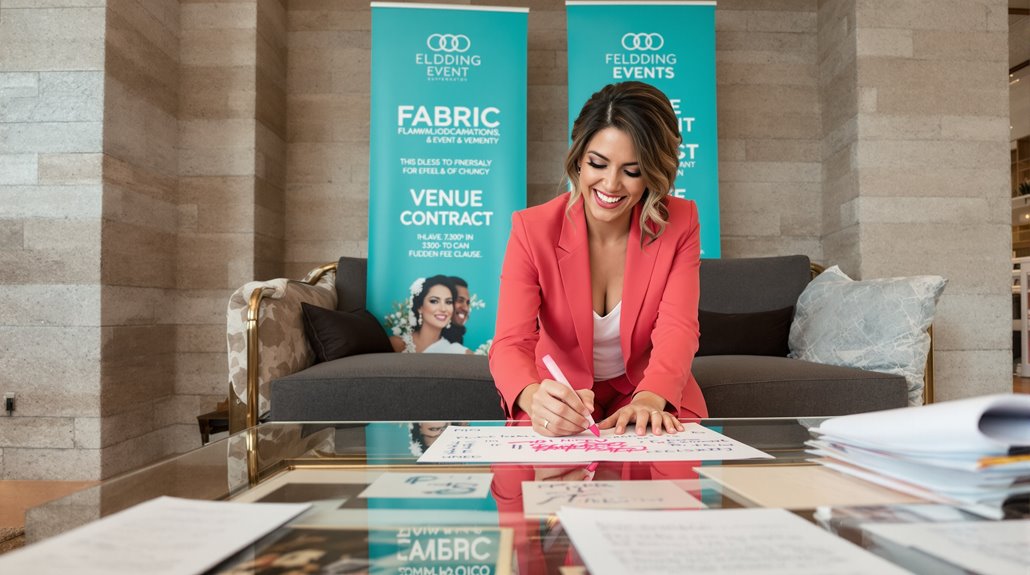
When maneuvering the labyrinth of venue contracts, having a streamlined action plan you can screenshot is like arming yourself with a blueprint for battle. First, dissect the contract with surgical precision. Look for overly complicated clauses that mask details—get specifics. Don’t let hidden fees ambush your budget; demand a breakdown of every cost. Confirm verbal promises in writing—no vague language allowed.
Check staff reliability by testing their response times and researching reviews for red flags. Scrutinize restrictive clauses—exclusivity or strict cancellation policies can cramp your style. Your non-negotiable? Clarity.
For a comprehensive look at options, consider exploring a wedding location marketplace and vendor directory to compare venues and spot potential contract pitfalls in advance.
Once you’ve highlighted these elements, screenshot your annotated contract for quick reference. This isn’t a wedding; it’s a calculated mission. Now, execute with confidence and keep your plans on track.
FAQ
Got questions? Let’s tackle them head-on. Whether your situation doesn’t quite match our examples or you’re wondering about the impact of changing vendors, it’s time to strategize smartly. First, take a deep breath and prioritize clarity—checklists and timelines will be your non-negotiables for a seamless execution.
What if my situation doesn’t match the examples?
Ever feel like your situation is a square peg trying to fit into a round hole when it comes to venue contracts? Don’t sweat it—here’s how to pivot. First, request written clarification for any contract terms that don’t align with your unique needs. Compare verbal promises with the contract; insist on amendments if they don’t match. If your situation’s different—like you need extra venue capacity—get a legal review. Document all communications to counteract any sneaky clauses. Negotiate to include details not specified, like table setups or glassware. Planning a non-standard event? Challenge exclusivity clauses and negotiate vendor flexibility. Demand line-item breakdowns and lock in rates to avoid surprise fees. Execute with precision and move forward confidently.
What’s the first thing I should do today?
Next, check the venue’s reviews. Do you see recurring complaints about staff unreliability or surprise costs? That’s a red flag waving. Finally, scrutinize any restrictive clauses—non-refundable deposits or vendor exclusivity could trap you.
Reality Check: Contracts are straightforward when you know where to look. Your next move? Ask for clarifications on anything that feels off.
What’s the most common regret?
Why do so many couples kick themselves after signing a venue contract? It’s often the hidden fees and vendor restrictions that get you. You’re high-achieving, so you expect transparency, not a surprise bill. Venue contracts often have corkage fees, overtime charges, and penalties for minor decor mishaps. These are like sneaky speed bumps on your wedding planning highway—annoying and unnecessary.
Strategically, you want freedom to choose your own dream team. But exclusivity clauses and required vendor lists lock you into options that might not fit your vision. You’re not about to compromise on quality, but these restrictions can force your hand.
Many couples also overlook the importance of wedding catering tips when reviewing venue contracts, leading to unexpected issues with food service and planning. Next steps? Scrutinize every clause. Use a checklist to identify hidden costs and restrictions. Know your non-negotiables upfront. Execute with precision.
What’s a red flag that I’m moving too fast?
When a venue demands a massive nonrefundable deposit or insists on full payment just to “hold” your date, consider it a red flag waving in your face. You’re moving too fast if you’re pressured to sign with phrases like “only one date left” or “sign today.” Watch out for venues offering an unusually short review period—24-48 hours—without answering follow-up questions in writing. Verbal promises not included in contracts? That’s your cue to slow down. Insist on independent reviews and avoid signing anything that limits your options or hides fees. Confirm all terms—cancellation policies, setup windows, liability clauses—are crystal clear. Don’t fall for the “trust us” trap; demand written confirmations. Step back, breathe, and strategize your next move.
What changes if I add/remove vendors?
Adding or removing vendors in your wedding plan isn’t just a minor tweak—it’s a strategic pivot that can either accelerate or stall your event momentum. Here’s the deal: exclusive-vendor clauses can limit your options and inflate costs. Always negotiate to include alternatives if exclusive vendors don’t meet your criteria. And let’s not forget labor rules—confirm them early to dodge last-minute surprises. For contract changes, lock down procedures; written notice is your best friend. Insurance? Non-negotiable. Guarantee all vendors provide certificates and indemnify you and the venue. When it comes to costs, define who foots the bill for any vendor changes. Bottom line? Keep everything documented and mapped out. You’re not just planning a wedding; you’re executing a mission.
Key takeaways
Maneuvering a venue contract might feel like trying to decode a secret language, but don’t worry—we’ve got your back. You’re busy, ambitious, and don’t have time for hidden fees or vague terms. Here’s your streamlined checklist to keep the chaos controlled and the execution sharp:
- Clarity is king: Avoid contracts with “additional charges” or “if applicable” language. Demand transparency.
- Flex those rights: Watch for force majeure clauses that leave you high and dry. You deserve protection, not surprises.
- Vendor veto: Don’t get cornered into using exclusive vendors without clear benefits. Your choice matters.
- Time’s ticking: Overtime fees can escalate quickly. Know your setup and teardown times like a pro.
Next step? Demand clarity and streamline your venue strategy.