
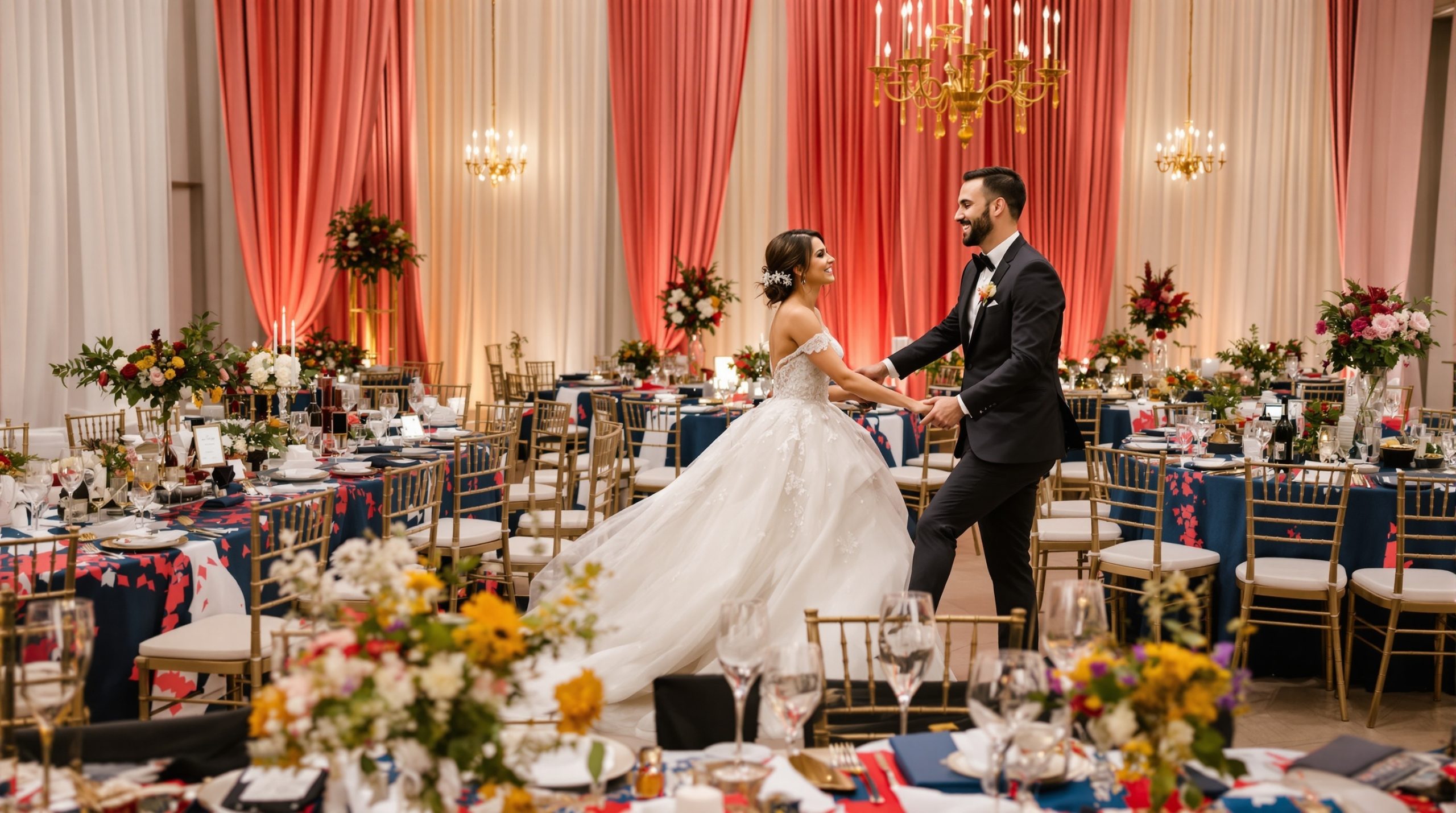
Your guest count isn’t just a number—it’s a tactical pivot point that shapes every financial decision in your wedding budget strategy. More guests mean escalating catering and venue costs, which could spike unexpectedly (thank you, hidden fees). Rentals and staffing skyrocket; think extra chairs, tables, and servers. Overestimating? You’re burning cash. Underestimating? Chaos. Efficiently plan by integrating RSVP platforms and tracking real-time metrics. Prioritize, streamline, and make every dollar pull its weight. Strategic execution? That’s your next power move.
The full list (7 items)
You’re here because guest count isn’t just a number—it’s the strategic pivot that accelerates or decelerates your whole budget. Let’s execute with precision, breaking down how each additional invite impacts the essentials: food, space, stuff, staff, and stationery. According to Columbia University wedding economics, understanding how guest count influences spending is fundamental for making informed decisions.
Here are your non-negotiables to keep things streamlined:
- Per-person catering and bar costs: Directly scales with your guest list.
- Venue size tier: Bigger room means higher price.
- Rentals: Tables, chairs, linens, and dishware add up.
- Staffing needs: More servers, bartenders, and security as headcount rises.
As your guest count increases, it’s crucial to consider the impact on your variable costs, which fluctuate based on the number of attendees, such as food and beverage expenses.
Catering and bar costs (per-person multipliers)
When it comes to catering and bar costs, per-person multipliers are your secret weapon for keeping your budget under control while still executing an unforgettable event. Understanding the wedding cost per guest is vital: it guarantees every dollar spent on the cost per person wedding is a strategic move. Guest count budget impact is real—more guests mean higher costs, but smart choices can mitigate this. Careful menu planning can help you maximize value and minimize waste when working with caterers. From $20 to $130 for food, and $10 to $100+ for drinks, multipliers vary based on menu complexity and beverage selection. Buffet style? It’s a budget-friendly hack. Open bar? Be ready for sticker shock. Each decision pivots around your guest list, so a streamlined headcount is non-negotiable. Your next step? Nail down those numbers. Remember, tiered pricing can help manage costs effectively, especially for buffet-style events where more attendees generally reduce the cost per person.
Venue size tier (bigger room = higher price)
No one said your wedding venue should feel like a shoebox, but hey, bigger digs mean bigger bucks. How your guest list affects cost is pretty straightforward: more people, more space, more cash. You’re not just renting a room; you’re securing a strategic base for an epic day. Small venues (20–75 guests) are budget-friendly, ranging from $200 to $2,000. Mid-size options (76–200 guests) elevate you to $2,500–$8,000. Opt for large venues (200+ guests), and watch costs soar to $25,000+. Bigger rooms mean higher rates due to increased capacity and maintenance. Urban venues command higher prices due to real estate costs, especially in coastal and destination areas. For truly memorable experiences, some couples choose Four Seasons Hotels for their renowned elegance and luxury wedding venues. Don’t just dream about the perfect venue—execute your vision smartly. Use a checklist to streamline your decision. Need a reality check? Bigger isn’t always better; aim for strategic fit.
Rentals (tables, chairs, linens, dishware)
Although the allure of a grand venue is tempting, let’s talk rentals—a key piece in your wedding’s execution puzzle. With 100 guests, expect rentals to cost $425-$1,000 for tables, chairs, linens, and dishware. Let’s break it down: tables scale linearly, costing about $30 per guest. Chairs? It’s one per person, plus extras for outdoor events. Linens follow table count—simple math, right? Demand pricing spikes costs 10-20% during peak times. Then there’s dishware, which scales up to 120% for larger lists. The rental game is all about strategic numbers—occupancy, revenue per guest, and scaling extras. Market demand influences rates significantly, with premium pricing during high demand periods and discounts in off-peak times being common. So, what’s next? Use a rental checklist and adjust your headcount early to streamline. Remember, you’re in control—don’t let the chaos call the shots.
Staffing (servers, bartenders, security)
Let’s cut to the chase: staffing is the silent engine behind any wedding’s success. When guest numbers climb, so does your need for servers, bartenders, and security. You can’t wing it here—staffing needs to be executed with precision. Servers should match guest volume, or you risk longer waits and lost revenue. Bartenders must be ready for guest surges, especially with complex drink menus. And don’t forget security; more guests require more vigilance. Understanding relationship dynamics among your staff can also help ensure smooth collaboration during high-pressure moments. Strategically plan with demand forecasting and cross-training to keep labor lean without sacrificing service. Employee turnover rates reflect the impact of labor cost management on retention, so each turnover is a costly misstep. Smart staffing isn’t just a line item—it’s your event’s backbone. Next step? Align your staffing with guest patterns to avoid costly chaos.
Stationery and postage (invites, place cards)
Every single invitation you send isn’t just a piece of paper—it’s a mission-critical communication tool that must be executed with precision. Your guest count determines how many households you need to reach, not individual guests. Miscalculations lead to over-ordering and blown budgets. Strategically plan your mailing list: one invite per household, not per guest. For 100 guests, aim for 75–80 suites. Digital save-the-dates? Smart move to trim costs. But remember, physical invites still follow household rules. Opt for streamlined designs—each insert and upgrade adds up. Postage is another sneaky budget buster; heavier suites mean heftier costs. Day-of items like place cards cost per seat. Choosing official stationery and paper goods from trusted sources like Paper Source can elevate the look and feel of your wedding invitations, ensuring your correspondence sets the right tone for your celebration. Next steps? Use checklists to manage households, not heads. Cut the chaos; precision is your ally. To ensure the luxury feel of your event, consider allocating a portion of your budget specifically to high-quality stationery, as it sets the mood and provides a lasting impression on your guests.
Favours and welcome bags (if any)
Favors and welcome bags aren’t just nice-to-haves; they’re strategic components of your wedding’s guest experience. Spend $2-$3 per guest, and for 150 guests, you’re looking at $300-$450. Don’t underestimate—most couples misjudge by 45%. Larger lists mean higher costs, especially in the Northeast and Mid-Atlantic regions where averages hit $591. Plan for 110-120 favors for 100 guests to cover spares. Opt for bulk orders to lower per-unit costs. Tight budget? Consider non-personalized items under $1. Most couples spend about 3-5% of their wedding budget on favors, which can help guide your planning. Some skip favors altogether, reallocating funds. Remember, extras like wrapping add up fast. Execute with precision and keep it streamlined. Reality check: The biggest mistake? Overcomplicating. Stick to what gets the job done without the fluff. Action step: Lock in your favor count early.
Transportation/parking needs (shuttles, overflow)
Why stress over transportation and parking when you can strategically plan and execute it like a pro? Larger guest lists demand more shuttle buses. Think ahead: partner early with companies to avoid rate hikes during peak seasons. Implement AI demand forecasting to optimize fleet size. Overflow parking is non-negotiable when standard options get overwhelmed. Plan for extra lots and clear signage to prevent bottlenecks. Traffic integration with city systems is essential to keep things moving smoothly. Rising vehicle costs and fuel surcharges can surprise you—lock in rates early. Reduced attendee satisfaction leads to revenue loss from refund claims, highlighting the importance of efficient transportation planning. Consider off-peak dates to reduce competition and costs. Gather transport data from guests to scale resources effectively. Remember, the best events are executed with precision and foresight, not last-minute chaos.
The ‘top 5’ that matter most (if you’re overwhelmed)
Feeling overwhelmed by the nitty-gritty of wedding budgets? Focus on the top five essentials that’ll keep your head above water and your spreadsheet from combusting. Here’s what you need to tackle head-on:
- Catering and bar costs: These per-person expenses can balloon faster than you can say “open bar.”
- Venue size tier: Bigger space, bigger price tag—choose wisely to fit your guest list without breaking the bank.
- Rentals: Tables, chairs, linens, and dishware—each adds up, so prioritize what’s non-negotiable.
- Staffing: Don’t skimp here; servers, bartenders, and security are vital to a smooth event.
If you’re brainstorming ways to impress your guests within your budget, start by exploring wedding catering ideas that balance creativity and cost, ensuring your reception menu is both unforgettable and affordable.
Priority #1: Catering and bar costs (per-person multipliers)
When it comes to wedding planning, catering and bar costs are non-negotiable line items that can make or break your budget. Let’s cut to the chase: each guest adds $20 to $200 to your tab, and that’s just the starting line. Want a sit-down dinner? You’re looking at $125 to $350 per guest. Buffets are friendlier, ranging from $20 to $60. Hosting a cocktail reception? Brace for $30 to $70 per person.
Your location impacts costs too—Midwest’s a steal at $62 per head, while the Mid-Atlantic hits $123. Factor in staffing: buffets need fewer hands, saving on labor costs. Ready to streamline? Use a detailed checklist to strategically plan, ensuring each dollar is executed wisely. Prioritize smart, intentional decisions. If you’re searching for inspiration or want to impress guests, consider gourmet wedding menu ideas that highlight the best flavors every season has to offer.
Priority #2: Venue size tier (bigger room = higher price)
Think bigger venue means better event? Not always. A larger space often leads to escalating costs that demand strategic planning. As your guest count rises, so does the venue price. Bigger rooms mean higher maintenance, utility, and staffing costs, translating into a hefty chunk of your budget—easily adding thousands. Venues operate on capacity tiers; push your guest list up a notch, and bam! You’re in a new pricing bracket, like a surprise tax bracket for lovebirds. Plus, dynamic pricing spikes rates on peak dates, hitting your wallet harder. Don’t forget staffing costs—more guests mean more hands on deck. Solution? Keep it lean and intentional. Prioritize what truly matters, and remember: a well-executed plan is your best friend. Interestingly, research from Cornell University suggests that excessive wedding spending is not linked to longer-lasting marriages, so focusing your budget on what truly matters can have emotional as well as financial benefits.
Priority #3: Rentals (tables, chairs, linens, dishware)
Rentals are your wedding’s silent backbone, and cracking the code on tables, chairs, linens, and dishware is your first step to a streamlined event. Every chair and dish adds to your bottom line with per-guest pricing that scales with your headcount. Think of it as a math equation, not a mystery. Opt for Chiavari chairs? That’s $5–$6 per guest. Add charger plates? Costs double or triple. Tables dictate linen needs; more guests mean more tables, more fabric, more dollars. Don’t forget logistics: delivery and setup fees increase with quantity. Strategically choosing layouts (rounds or rectangles) can pivot costs. Remember, every decision impacts your budget. Next step? Review guest list versus rental quotes. Hustle smart, not hard.
Priority #4: Staffing (servers, bartenders, security)
Staffing your wedding is just as critical as picking the right venue or crafting the perfect guest list. Your guest count directly impacts the number of servers, bartenders, and security personnel needed. More guests mean more staff, which means higher labor costs. Think of staffing like a well-oiled machine—each cog must be in place to keep the event running smoothly. Misjudge this, and you risk either overstaffing, leading to wasted budget, or understaffing, resulting in lost revenue and frazzled guests. Strategically forecast demand to match staff with guest volume to avoid unnecessary 3-5% cost variances. Remember, versatile staff executing multiple roles can save costs and boost efficiency. Pivot your planning with these insights to maintain control over your budget.
Priority #5: Stationery and postage (invites, place cards)
When it comes to stationery and postage, your guest count is the silent puppet master pulling the strings. It dictates how many invitation suites you need, which impacts your bottom line. Order by household, not guest, to avoid overbuying—think 131 guests translating to 97 households. But watch out! Miscounts mean wasted resources. Streamline your process: use digital RSVPs to cut enclosure costs. Postage is another beast; each mailing adds up. Those extra embellishments? They’re non-negotiable weight boosters. And don’t forget international guests—budget for those Global Forever stamps. Keep it simple to control costs. Execute with precision, streamline your choices, and pivot when needed. Reality check: More guests mean more complexity. Ready to tackle it head-on? Start with a sleek, strategic checklist.
How to use this list as a system (not a random pile of tips)
Every great wedding is like a well-oiled machine, and you’re the project manager steering it to perfection. To transform this list into a streamlined system, think strategy, not serendipity. Leverage your guest count as the pivot point for all decisions—it’s the metric that accelerates your budget’s movement.
- Prioritize key areas: Allocate funds to what truly matters, like catering, by understanding cost drivers.
- Set clear expectations: Early conversations about guest numbers help avoid last-minute chaos.
- Estimate accurately: Use historical data to sharpen your guest list predictions and adjust swiftly.
- Build flexibility: Incorporate buffers to handle unexpected changes without breaking a sweat.
Execute with precision. Treat this as a dynamic blueprint, not a static checklist. Adjust, pivot, and deliver a wedding that gets the job done. Consider integrating nutrition and wellness planning into your system to ensure you and your guests feel their best on the big day.
Printable / copy-paste checklist
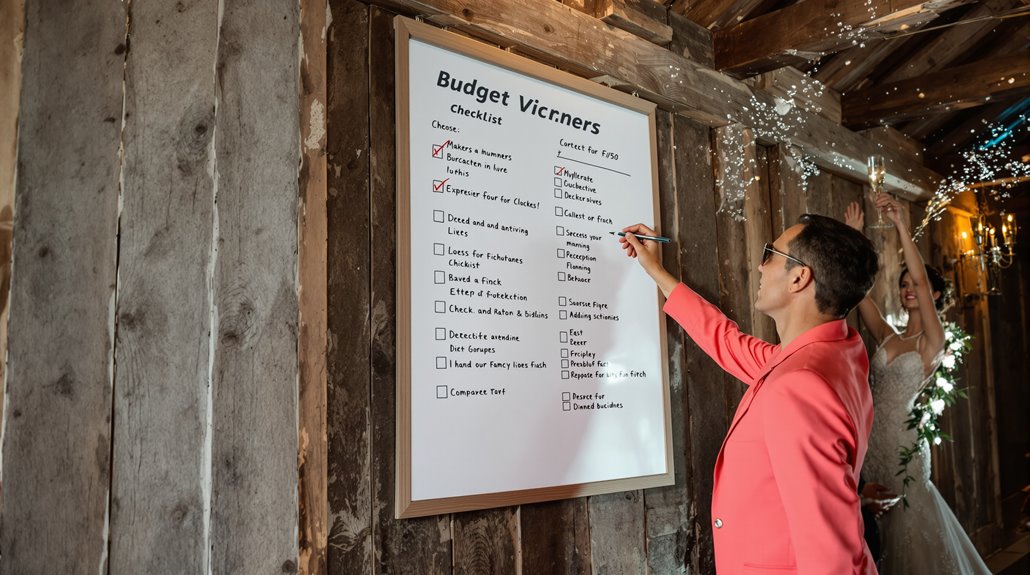
You’ve got the strategy sorted—now let’s turn that into action with a checklist that respects your time. This isn’t just a list; it’s your wedding execution plan, designed to keep your budget under control while managing the guest count chaos. Ready? Let’s go:
- Venue Strategy: Confirm capacity, negotiate setup/teardown times, and align on thresholds.
- F&B Precision: Decide on meal style—plated, buffet, or stations—and lock in your alcohol model.
- Rental Realities: Calculate tables, chairs, and décor by guest count; over-order by 3–10%.
- Staffing Savvy: Plan for extra labor costs—setup, teardown, and any necessary overtime.
- Contingency Cushion: Add a 10–15% buffer for surprises.
Looking for inspiration? Check out wedding reception food ideas that make a big impression without breaking the bank.
Execute these points with laser focus, and your budget will stay agile and ready to pivot.
Common mistakes when applying this list
Let’s face it—miscalculating your guest count can throw your whole plan into a tailspin. You’ve got the drive, but execution needs precision. Here are some common slip-ups that can derail your budget:
- Underestimate the guest count: This rookie move skews catering, rentals, and staffing costs.
- Ignore per-guest scaling: Invitations add more than RSVPs—think centerpieces, paper products, and transportation.
- Forget taxes and gratuities: These sneaky add-ons inflate your bottom line without warning.
- Fail to revise estimates: A spike in guests demands immediate recalibration to avoid budget chaos.
Streamline your approach: test your budget by dividing costs by guest count to find realistic limits. Adjust as needed to maintain focus on quality without compromise. Prioritize precision—it’s non-negotiable.
FAQ
To prioritize when you can’t do everything, make a “must-have” list focused on essentials like venue and catering—these are your non-negotiables. Delegate tasks that don’t require your personal touch to save time, and set regular check-ins to guarantee everything stays on track. Remember, a streamlined plan executed with precision beats a chaotic one every time.
How do I prioritize if I can’t do everything?
Struggling to juggle every detail of your wedding without losing your mind? First, identify your non-negotiables: venue, catering, and security are essential. Sort your expenses into must-haves and good-to-haves. Allocate the biggest budget chunks to high-impact areas like your venue and entertainment—these directly contribute to event success. Meet with your stakeholders early, align goals, and justify cuts to less impactful requests. Implement a tiered budgeting system—basic, premium, and all-out—to give yourself flexibility. Use this to pivot funds where they matter most. Remember, it’s about strategic choices, not sacrificing quality.
Reality Check: Don’t stretch every dollar thin. Instead, focus resources where they’ll make the biggest splash. Nothing says “I do” like a well-executed, streamlined budget.
What’s the minimum I can do and still be safe/on-track?
You’re in the thick of planning, juggling priorities like an expert, but what if you need to strip it down to the bare essentials? Start by nailing the must-haves—immediate family and closest friends, forming your core guest list. Prioritize these relationships strategically and ditch anyone you haven’t spoken to in a year. Aim to invite 20% more than your venue’s minimum to buffer RSVP declines. Stick to committed plus-ones only to streamline. Choose a venue with flexible layouts to pivot smoothly if numbers change. Confirm guest minimums, and negotiate final payments based on RSVPs 10 days out. Avoid overpaying with precise estimates. Accelerate decisions using real metrics, not dreams. Ready to execute? Grab your checklist and move!
What should I delegate vs own myself?
Delegation isn’t just a buzzword; it’s your lifeline when juggling a high-stakes wedding with a bustling career. You’re no stranger to efficiency, so let’s get strategic. Use the Eisenhower Matrix to prioritize tasks—urgent vs. important. Delegate operational details like guest accommodations and transportation. You own creative decisions—venue vibe, color scheme—because they need your personal touch. The RACI model guarantees clarity on who’s doing what, avoiding chaotic overlaps. High Delegators see a 1,751% growth rate; apply this mindset to your wedding. Trust your team, but verify—checklists and timelines are your best friends. Remember, delegation isn’t a sign of weakness; it’s a power move. Accelerate your planning by focusing energy where it’s most impactful. Next step: Implement the WHO/WHAT/BY-WHEN model.
How do I keep this from becoming a time sink?
Why let your wedding planning become a vortex of time and stress when you can execute it like a well-oiled machine? Start by strategically setting your maximum guest count based on budget and venue capacity. Use RSVP platforms like Eventbrite for real-time tracking; automate reminders so you’re not chasing down replies. Categorize your guests—family, friends, colleagues—to prioritize invites. Implement shared Google Sheets for seamless team collaboration. Pivot smoothly with waitlist apps to fill last-minute cancellations. Expect 85% local and 55% out-of-town attendance, adding a 5% buffer for surprises. Maintain a dynamic A-list and B-list to cover all bases. Finally, leverage data from past events to predict attendance, ensuring every decision is intentional. Next step? Execute these strategies with precision.
How often should I revisit this list?
It’s game time, and your guest list should be as agile as your career moves. You’ve got deadlines and decisions—don’t let your wedding planning become a tangled mess. Strategically revisit your list weekly if guest counts fluctuate by more than 5–10%. Monthly reviews? Non-negotiable for budget reconciliation and cash flow tweaks. Immerse yourself in quarterly checks to align with seasonality and major contract renewals. Got a big holiday or unexpected shift? An ad-hoc review is your secret weapon. And let’s not forget those daily mini-checks during peak chaos—perfect for immediate fixes. Execute these moves, and you’ll streamline the chaos into controlled efficiency. Reality Check: Overlooking fluctuations means you’re gambling with your budget. Pivot now, thank us later.
Key takeaways
When you’re planning your high-energy wedding, guest count is the silent power player that dictates everything from venue size to staffing needs. It’s not just a number—it’s a strategic move. Here’s how to wield it with precision:
- Venue Costs: Larger guest lists mean bigger venues and heftier rental fees, especially on peak days.
- Catering Expenses: Food and drinks account for a third of your costs, and more guests mean more dollars.
- Staffing Needs: Bigger crowds demand more coordinators and a staffing buffer to avoid chaos.
- AV Production: More attendees mean more tech, lighting, and entertainment—plan to save on virtual options.
Reality Check: Ignoring guest count can derail your budget. Get it right, and everything else follows. Ready to execute like a pro? Adjust your guest list strategically, and track every detail.