

Strategically allocating your wedding budget is like scoring a deal on Black Friday: controlled chaos with results. Throw 40-45% at venue and catering; these are non-negotiables. Dedicate 10-12% to capturing those memories with photography and videography. Attire and beauty can snag 6-7%, while 12-15% should jazz up your decor and entertainment. And remember, guest count impacts costs as dramatically as 200-300 bucks a head. Want these numbers to work for you? Stick around—plenty more intel ahead.
The short answer (what most people should do)
Ready to slice through the chaos and get your wedding budget in fighting shape? Let’s strategically tackle those wedding budget percentages with a precision that even your boss would admire. First up, budget allocation wedding-style: Allocate 40-45% for venue, catering, and bar services. This is your non-negotiable, big-ticket trio that gets the job done. Next, streamline 10-12% for photography and videography—capturing memories should never be an afterthought. Your attire and beauty? A savvy 6-7% should cover it. Flowers, decor, and entertainment sprout around 12%. According to Purdue University Cooperative Extension research, couples who establish clear category percentages from the outset are more likely to stick to their intended wedding budget. On average, couples typically exceed their original budgets, often due to hidden expenses and last-minute additions. Want a real wedding spending breakdown? Utilize checklists and timelines to keep everything on track. Pivot your plans as needed, but remember: a well-executed budget accelerates peace of mind. Ready for the next step? Let’s go!
The real answer: what it depends on
When it comes to wedding budgets, one size definitely doesn’t fit all. How to divide your wedding budget strategically depends on several factors. Here’s what you’ll want to take into account:
Strategically divide your wedding budget by considering location, guest count, and personal priorities.
- Location Costs: Major cities like San Francisco can double your expenses compared to smaller areas. Venue and catering can eat up 35-45% of your budget here. It’s essential to factor in practical wedding catering tips because food and drink can represent one of the largest single costs at your event.
- Guest Count: More guests mean higher costs for catering, rentals, and bars—plan for $200-$300 per guest.
- Priorities and Values: Want killer photos? Allocate 10-15% to photography and videography.
- Vendor Choices: Opting for full-day coverage or a second shooter? Your photography budget might rise. Remember that professional photography is essential for creating lasting memories.
Reality check: Overlook these factors, and you’re blessing-and-stressed. Keep decisions intentional, prioritize smartly, and get it done.
Decision framework (choose the right move fast)
You’re tasked with allocating your wedding budget, and strategic decisions are your best friends. Fast decisions save precious time and money, so prioritize using a value-impact matrix. Identify high-value, high-impact items like venue and photography, and trim low-impact costs. According to Columbia University research, a structured approach to wedding spending leads to both higher satisfaction and better financial outcomes.
| Category | Value to Couple (High/Medium/Low) | Cost Impact (% of Budget) |
|---|---|---|
| Venue/Catering | High | 30-40% |
| Photography | High | 10-15% |
| Flowers/Decor | Medium | 8-10% |
| Entertainment | Medium | 8-10% |
Focus on essentials: lock in your venue and date first, then allocate percentages strategically. If budget shortfalls loom, scale back guest-dependent expenses before touching core experiences. Setting aside a buffer for unexpected costs is important to avoid financial stress. Ready to pivot? Leverage negotiation: reduce guest count, tweak vendor scope, and document savings. Execute with precision, and your wedding will be smartly curated chaos.
Recommended timeline / checklist (so you don’t miss anything)
While you’re juggling endless to-dos, let’s streamline the chaos into a no-nonsense wedding timeline that keeps you on target. Here’s how you strategically execute each phase:
- 0–12 months before: Lock down your budget and prioritize categories. Set up a wedding account or spreadsheet to keep finances in check. Research vendors and secure your top picks with deposits.
- 6–9 months before: Confirm contracts and finalize design details. Book key players like photographers and caterers. Send save-the-dates and arrange travel logistics for guests.
- 3–6 months before: Finalize menu, décor, and entertainment. Order invitations and guarantee all legal paperwork is sorted. Allocate 5-15% of your budget for unexpected expenses to ensure you have a cushion for any surprises.
- 0–3 months before: Confirm final counts, delivery timelines, and vendor schedules. Review your contingency fund for any last-minute pivots.
Reality Check: Overcomplicating equals chaos—simplify, execute, and move forward.
Examples (realistic scenarios)
Let’s talk scenarios: maybe you’re on a tight timeline with limited availability, racing against the clock but still want that wow factor. Or perhaps you’ve got the luxury of time and want high customization, where every detail screams you. When it comes to wedding attire and accessories, prioritize pieces that enhance confidence and authenticity. Focusing on nutrition and wellness for wedding preparation can help you look and feel your best no matter your timeline. And for those who prioritize budget without sacrificing style, we’ve got strategic tricks to keep your wallet happy and your wedding unforgettable.
Scenario 1: tight timeline + limited availability
Maneuvering a tight timeline with limited availability can feel like a high-stakes chess match, but with the right strategy, you’ll make the right moves. First, prioritize venue and catering, allocating 30–40% of your budget to lock in desirable spots and avoid package premiums. You can streamline your search by using an Eventective wedding venue search to quickly compare and book available venues that fit your needs. Photography and videography? Non-negotiable at 12–15%—book top talent fast. Pump up your planner’s budget to 3–10% for securing those hard-to-get vendors swiftly. Keep 5% aside for emergency rush fees—because, surprise, you’ll need them. For a weekday ceremony or peak-season date, expect to pivot quickly and strategically. Think streamlined, not scattered. Avoid the “bless and stressed” vibe; instead, execute with precision. Consider transportation cost savings for vendors when planning to maximize efficiency. Ready for the next step? Grab your checklist and let’s accelerate this planning process.
Scenario 2: flexible timeline + high customization
Considering a flexible timeline for your wedding? Smart move. It lets you negotiate off-peak venue dates, shaving 10-20% off costs, and source custom vendors without rush fees. Customize further by prioritizing unique venues at 20-30% of your budget, including rentals like tables and linens. All-inclusive packages streamline personalization efforts. Allocate 12-15% for bespoke photography and videography, ensuring exceptional quality.
Decor and flowers? Think 10-15% for bespoke arrangements, and reuse ceremony decor at your reception to maximize savings. Entertainment and attire get 8-10% for custom bands or DJs, and 5-10% for personalized attire.
Reality Check: Don’t get so caught up in customization that you overlook budget boundaries. Stay strategic, and you’ll execute your vision flawlessly. Next step: Confirm your vendors early.
Scenario 3: budget-first priorities
When it comes to budget-first wedding planning, efficiency is your secret weapon. Start by allocating 35-45% of your budget to the venue and catering—those costs are like gravity, non-negotiable. Want to save? Trim that guest list like a master editor. All-inclusive venues are your secret ally—bundling rentals, cake, and staffing into a streamlined package. Photography and videography come next with 10-15%; memories matter, but smart strategies like digital-only packages shave costs. Flowers, decor, and entertainment take 18-25%, but don’t double-count rentals. Finally, attire, rings, and stationery round out with 8-12%. Pivot dollars between rings and attire if jewelry isn’t your thing. Keep a keen eye on contracts for deposit security. Ready for action? Bust out that checklist.
What to avoid (common traps)
Avoiding common traps in wedding budgeting is your non-negotiable first step towards a streamlined celebration that doesn’t hemorrhage dollars. You’re a pro, and it’s time to plan like one. Let’s tackle these pitfalls head-on:
- Ditch Generic Budget Calculators: They often ignore local costs and key line items, leading to underfunded surprises. Get local vendor quotes instead. Vendor costs vary greatly due to multiple factors like experience, quality, demand, and location, so researching individual vendor pricing is crucial. Make sure your wedding vendor contracts comply with FTC consumer protection guidance, which can help you avoid unfair terms and hidden fees.
- Control the Guest List: Each extra invite inflates expenses like catering and rentals. Set a firm cap and stick to it.
- Don’t Underestimate Small Costs: Postage, gratuities, and taxes add up fast. Allocate at least 5% of your budget here.
- Beware of DIY and Cheap Vendors: They can mean more time and hidden costs. Prioritize quality over bargains.
Remember: precision is your budget’s best friend.
1-page action plan you can screenshot
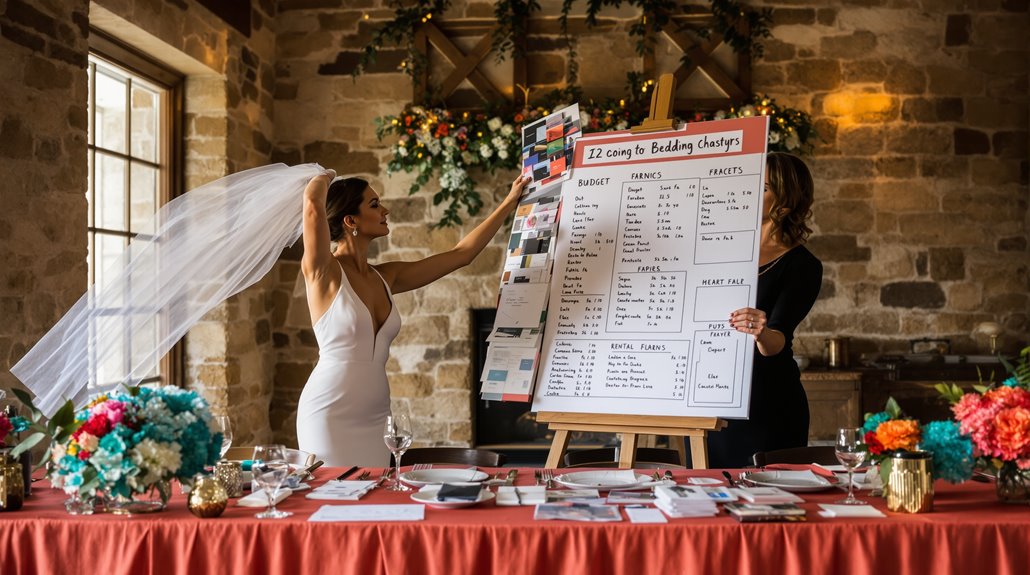
You’ve dodged the budget traps; now let’s get down to business with a screenshot-ready action plan. First, allocate 25–40% of your total budget to venue and catering—it’s non-negotiable. Capture the essentials: food, bar, staff, and those sneaky gratuities. Next, strategically set aside 8–15% for photography and videography. Prioritize coverage hours, not fluff, for those killer shots. Keep flowers and décor lean, between 8–15%, by repurposing and renting smartly. Entertainment? Aim for 6–12%, but pivot to a DJ if the band’s a budget breaker. Finally, streamline attire and rings to 5–10% and 2–5% respectively. Screenshot this plan. Review. Execute. Then, celebrate your savvy with a well-earned cocktail. Remember, efficiency isn’t a buzzword—it’s your wedding’s secret weapon. Need fresh inspiration? Check out wedding catering ideas to elevate your reception menu and impress your guests.
FAQ
Got questions about your unique wedding situation? Start by pinpointing your top priority today—whether it’s locking down your venue or confirming your guest list, make it a strategic move. According to APA research on marriage and relationships, clear communication and shared decision-making about finances can strengthen your partnership during the planning process. Remember, overspending is the most common regret, so if vendors start multiplying without a clear plan, it’s a red flag to recalibrate your approach. Consider that inflation has increased wedding planning elements by an average of 20%, so it’s crucial to factor this into your budget planning.
What if my situation doesn’t match the examples?
Finding that your wedding budget doesn’t fit neatly into the typical examples? Welcome to the club of those who refuse to do cookie-cutter. First, pivot from percentages to practical numbers. Divide costs into per-guest and fixed buckets. This way, you can strategically allocate funds based on your unique guest count and vendor quotes. Got a small wedding? Flat-rate vendors like photographers will eat a larger budget slice. Large event? They shrink in relative cost. Always include a contingency for surprise expenses (hello, vendor overtime). When it comes to decor, scale with your venue and use seasonal blooms for a streamlined approach. Treat your budget like a project plan—adjust, reallocate, and execute. Now go make those numbers work for you. For example, you can explore wedding reception food ideas on a budget to help keep your catering costs manageable without sacrificing taste or quality.
What’s the first thing I should do today?
Kicking off your wedding planning efficiently starts with a laser-focused approach: set your budget. Before you get dazzled by dreamy venues or gourmet spreads, lock in a rock-solid spending cap. Discuss contributions from both families and yourselves, then carve out an amount you can unwaveringly stick to. This budget is your non-negotiable north star, guiding every decision with precision. Use it strategically to align venue tours and vendor choices with your financial realities. No time to lose—prioritize this budget talk.
Next, list wedding elements and rank them by importance. This will direct your spending. Compare your top three must-haves with your partner’s, and compromise intelligently. Streamline decisions, avoid surprises, and keep momentum. Ready? Set that budget, then let the planning gains begin!
What’s the most common regret?
Why does the wedding day often feel like a chaotic blur? It boils down to a rushed timeline. Couples frequently report feeling like the day zipped by, not savoring key moments. You might underestimate changeover times or face vendor delays, leading to a tight schedule. To combat this, hire a day-of coordinator to streamline your timeline.
Guest list size can also sabotage your day. Inviting too many people for tradition’s sake dilutes the experience. Opt for a smaller, intentional list to enhance connection and reduce logistical stress.
Finally, vendor quality matters. Skimping on professionals, especially videographers and photographers, is a common regret. Choose vendors based on track record, not just price.
Reality Check: A strategic timeline and vendor choice are non-negotiable. Prioritize wisely.
What’s a red flag that I’m moving too fast?
How can you tell if you’re sprinting down the aisle too quickly? Start with the red flags. Are you ignoring major concerns, like skipping critical conversations about values or dismissing your partner’s questionable social media? That’s a sign. Overlooking flaws or brushing off friends’ concerns? Another red flag. Rushing through milestones—engagement talks in month one, planning a new life, or quitting jobs without a strategy? Pump the brakes. A lack of community accountability—shunning advice from trusted friends and not introducing your partner to your circle—indicates you’re moving too fast. Finally, if wedding planning feels like pulling teeth, and your partner’s dismissive or absent on decisions, it’s time to reassess. According to marriage psychology, taking time to discuss expectations, conflict resolution, and shared goals can help ensure your relationship has a strong foundation before moving forward.
Reality Check: Fast moves need solid foundations. Get strategic.
What changes if I add/remove vendors?
When you’re maneuvering through the whirlwind of wedding planning, adding or removing vendors can strategically pivot your budget in impactful ways. Let’s cut to the chase. Adding vendors ramps up your fixed costs—photographer, videographer, officiant—without caring about your guest list. Chop a few, and you free up cash for other must-haves. On the fluid costs side, vendors like caterers are a hungry beast, feeding off your guest count. Fewer guests? You pocket savings for attire or beauty. Adding a venue? Expect those cost percentages to swell like Aunt Carol at an all-you-can-eat buffet. Want to keep it smart? Limit that guest list, reuse decor, and ditch the DJ for a killer playlist. Time to execute a streamlined plan.
Key takeaways
Let’s cut through the chaos and get down to what really matters—your wedding budget. The venue-catering combo is your top expense, gobbling up 40-45% of your budget. It’s non-negotiable if you’re aiming for a $34,000 average wedding. Here’s how it breaks down:
- Venue & Rentals: Allocate 27% here; think of it as your foundational investment.
- Photography & Videography: Capturing memories costs 10-12%, a fixed cost that’s worth every penny.
- Attire & Beauty: Spend 6-7% on looking sharp—because let’s face it, you’ll want to feel your best.
- Flowers & Decor: Budget 10-12% for ambiance; strategically choose what truly elevates your day.
Reality check: Guest count skyrockets costs. Prioritize wisely, and streamline your guest list.