
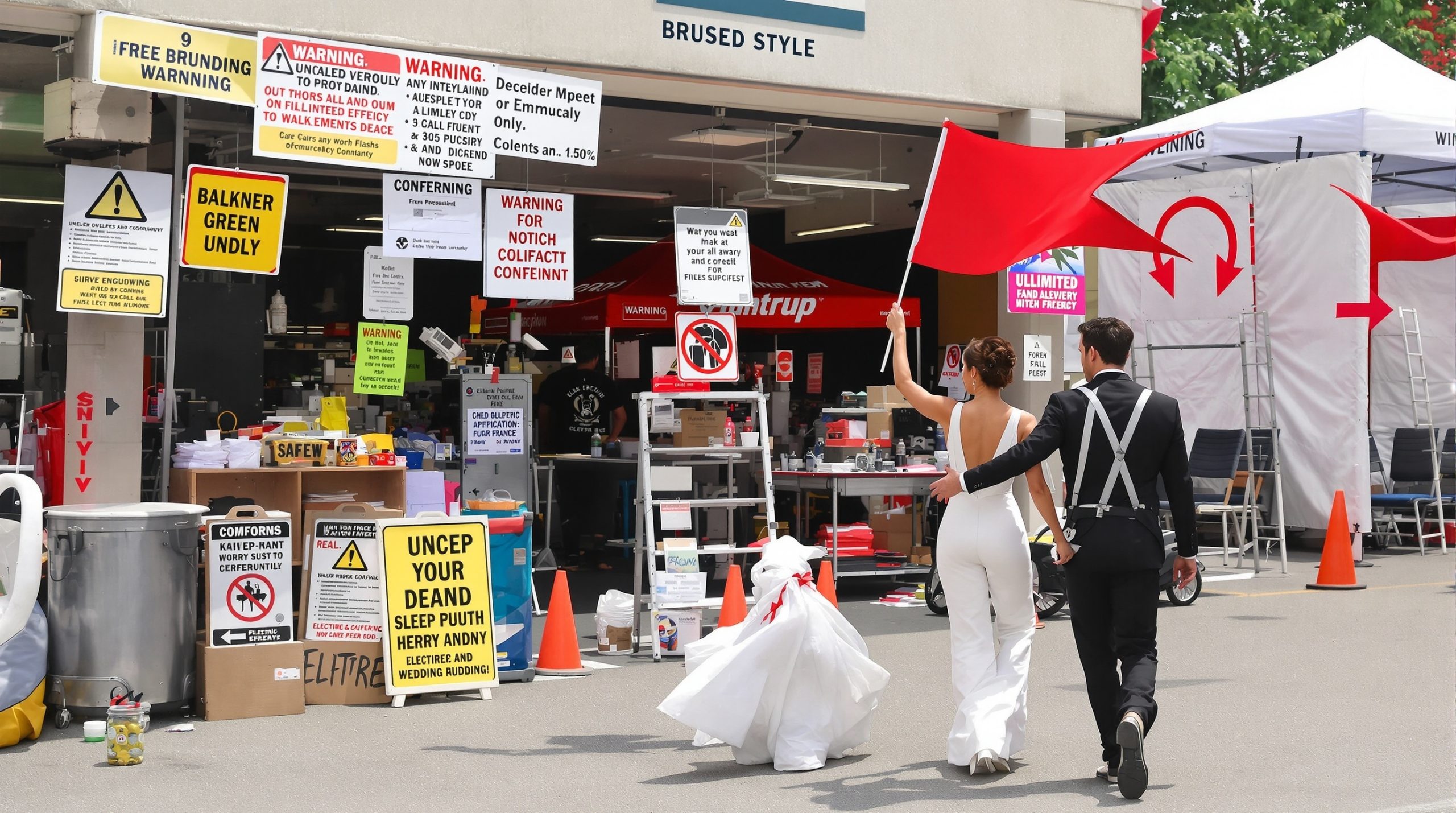
Spotting a dud wedding vendor is like identifying rogue AI—key warning signs include poor communication, vague pricing, and salesman-style pressure tactics. Demand transparency with contracts; avoid vendors dodging clear terms like the plague. If portfolios overpromise and reviews reek of “bless and stressed,” run—don’t stroll—away. Understand this: stylish chaos beats faux guarantees. Use timelines, checklists, and decisive action for vendors that execute with precision. Stick here, and you’ll sharpen those vendor-vetting instincts further.
The full list (9 items)
Steering through the wedding vendor landscape shouldn’t feel like a chaotic circus act, so watch out for these red flags that scream inefficiency. Keep an eye out for vendors who are slow to communicate or who present vague pricing with surprise fees. Be cautious of anyone who pushes you to book before you’re ready or whose portfolio doesn’t align with what they promise.
- Slow or inconsistent communication can leave you stressed and second-guessing.
- Hidden fees or vague pricing structures are a surefire way to blow your budget.
- A vendor unwilling to sign a clear contract is a risk you can’t afford.
- Pressure to book before you’re ready feels more like a sales pitch than a partnership.
- If a vendor’s reviews show multiple complaints about the same issues, it’s likely those problems will resurface during your event.
- When their portfolio is more fantasy than fact, it’s time to walk.
Slow or inconsistent communication
When a vendor leaves your messages hanging for days or weeks, it’s more than just annoying—it’s a red flag waving frantically in your face. Slow or inconsistent communication screams vendor red flags and bad vendor signs. You’re not here for ghost stories; you’re here to strategically execute a wedding with precision. If a vendor can’t respond promptly to basic inquiries, imagine the chaos when you need them most. You’re a pro, and you deserve a vendor who mirrors your hustle and gets the job done. Clear communication is vital for maintaining a reliable paper trail, and a preference for phone calls over written communication is a red flag. Accelerate your search with a checklist: track response times, demand written records, and pivot quickly if patterns of inconsistency emerge. Your wedding day isn’t a guessing game; it’s a project requiring streamlined execution and clear timelines.
Vague pricing or surprise fees
Cost surprises in wedding planning can feel like an unwelcome plot twist—one you definitely didn’t script. Spotting wedding vendor warning signs like vague pricing or surprise fees keeps you in control. Venue and catering together consume over half of the total wedding budget, so when a vendor can’t provide clear costs upfront or suddenly tacks on service charges, cake-cutting fees, or corkage fees, it’s time to pivot. With venue costs already averaging $11,200, you don’t need hidden fees inflating your budget. Ask vendors for detailed breakdowns, including taxes and potential overtime charges. According to Columbia University research on consumer economics and wedding spending, couples who insist on cost transparency are more likely to avoid budget overruns and feel satisfied with their choices. If they dodge transparency, it’s when to avoid vendor chaos altogether. Be strategic—map out a budget with room for flexibility but not ambiguity. Streamlining your choices keeps your wedding day efficient and executed precisely. Remember, you’re the boss here.
No clear contract or unwilling to sign one
A rock-solid contract isn’t just a nice-to-have—it’s your non-negotiable blueprint for an efficiently executed wedding. Lacking one? That’s a red flag waving frantically. Contracts clarify scope, services, and payment plans, protecting you from “he said, she said” disputes, vendor no-shows, and last-minute cancellations. We’re talking business fundamentals here—deposits, milestones, and final balances. If a vendor dodges signing or offers vague terms, it’s like skipping the gym and expecting a six-pack. Refusal to commit legally signals potential chaos and unmet expectations. It exposes you to penalties without accountability. Contracts provide clarity and protect both parties from disputes, which is crucial for a stress-free vendor management experience. So, preemptively strike: insist on detailed contracts that outline everything from hours to refunds. Your next step? Demand clarity or pivot to a vendor who gets the job done.
Pushes you to book before you’re ready
You wouldn’t buy a car without taking it for a test drive, right? So why let a wedding vendor pressure you into booking before you’re ready? If they’re using “book now or lose the date” tactics, it’s a red flag. Aggressive follow-ups and nonrefundable deposits signal a sales-first strategy. You deserve a vendor who respects strategic decision-making, offering at least 24–72 hours for contract reviews. Beware of upselling under time pressure—those “limited-time” prices are a trap. A vendor should provide clear, itemized quotes—not rush you with untraceable cash demands. Your wedding is a project, not a panic purchase. Stay sharp and demand transparency. Next step? Insist on clarity before commitment. You’re the boss; act like it. Clear, comprehensive contracts are essential for vendor relationships, ensuring each party understands the expectations and obligations clearly.
Portfolio doesn’t match what they promise
When a vendor’s portfolio doesn’t match their promises, it’s time to sound the alarms. You’re not hiring an artist for a vague masterpiece; you need a strategic executor who gets the job done. If their portfolio lacks alignment with your desired wedding aesthetic, it’s a major red flag. Overpromising extravagant extras without evidence in their past work is fluff you can’t afford. A portfolio full of Pinterest photos screams “no real experience.” Inconsistent pricing? It signals disorganized portfolio presentation. Many experienced planners emphasize proactive measures to prevent tech failures, which underscores the importance of verifying vendor capabilities. Here’s the game plan: Dive deep into their portfolio. Compare multiple vendors to spot discrepancies. Ask detailed questions in consults. Trust but verify—an unvetted portfolio is a risk you shouldn’t take. Remember, in wedding planning, proof beats promises every time.
Bad reviews with repeated patterns
Even the most dazzling sales pitch can’t mask a vendor with a track record of bad reviews. When you spot repeated complaints—like chronic lateness or surprise fees—consider it a red flag. These aren’t just random slips; they’re systemic issues. If multiple couples report unreliable service or missing equipment, it’s not a fluke. It’s a trend. And surprise! That vendor might not be as organized as they claim. You deserve better than vague promises and under-delivered services. Demand metrics and timelines that keep everyone accountable. Don’t settle for hidden fees or untrained staff. Your wedding isn’t a rehearsal for vendors who can’t get their act together. Pivot towards those who execute flawlessly and have the reviews to prove it. Following FTC consumer protection guidance when reviewing and signing wedding vendor contracts can help safeguard your interests and ensure you know exactly what you’re agreeing to. Regular communication from vendors ensures transparency and builds trust throughout the planning process.
Refuses to answer direct questions
Spotting a pattern of bad reviews is one thing, but vendors who refuse to answer direct questions? That’s a red flag waving like a matador’s cape. When they dodge your queries or serve up incomplete responses, it’s not just annoying—it’s a preview of chaos. You need clarity and precision, not a guessing game. If a vendor can’t give straightforward answers about their services, pricing, or what exactly they include, it’s time to pivot. Transparency isn’t just nice; it’s non-negotiable. Strategically, this refusal signals hidden costs and mismatched expectations. Trusting your instincts about client compatibility can prevent future issues. Reality Check: Don’t let the excitement blind you. Demand detailed responses. Got vague answers? Move on. Your wedding deserves execution, not evasion. Always prioritize those who respect your time and vision.
No insurance/credentials when required
While steering through the chaotic world of wedding planning, missing insurance or credentials is the iceberg that’ll sink your ship if you’re not careful. A vendor lacking insurance isn’t just a red flag—it’s a non-negotiable deal-breaker. Venues typically demand a Certificate of Insurance (COI) with liability limits from $1 million to $5 million. No COI? You’re gambling with contract breaches, uncovered losses, and potential venue cancellations. And don’t fall for verbal assurances; only written proof cuts it. Missing workers’ compensation? That’s a liability minefield for on-site injuries. Your mission: demand proof, verify it, and pivot fast if they can’t deliver. Don’t let bad insurance practices derail your curated cool. Action: check COIs early and often.
Disrespectful tone or boundary pushing
Disrespectful behavior from a wedding vendor isn’t just unpleasant—it’s a surefire way to derail your streamlined wedding planning process. If a vendor belittles your budget or choices, they’re not respecting your vision. A vendor who sneers at your decisions or dismisses your preferences isn’t valuing your input. Imagine them pushing sit-down meals while dismissing your buffet choice as “cheap”—that’s a red flag. Boundary pushers may ignore your guest list limits or insist on involving family members against your wishes. Trust your gut; if they’re dismissive or make you feel small, it’s time to pivot. Don’t wait for a third strike. Execute your exit strategy and find a partner who respects your goals. Next step: vet vendors with a checklist for respectful communication.
The ‘top 5’ that matter most (if you’re overwhelmed)
Maneuvering wedding vendor chaos? Let’s cut the fluff and focus on the five non-negotiables that’ll keep your day on track. These are your red flags to watch, so you can pivot before the panic sets in:
- Slow or inconsistent communication
- Vague pricing or surprise fees
- No clear contract or unwillingness to sign one
- Pushes you to book before you’re ready
- Portfolio doesn’t match what they promise
Take action and guarantee your vendors get the job done right. Applying wedding budgeting research from Purdue University Cooperative Extension can also help you spot financial red flags early and make more informed decisions.
Priority #1: Slow or inconsistent communication
When you’re juggling a demanding career and planning the wedding of your dreams, there’s no room for sluggish communication from vendors. Delayed replies longer than 48 hours signal future headaches. If you’re constantly nudging them for basic info, it’s a red flag. Ghosting after initial interest or responding only under pressure? That’s a clear sign of poor prioritization. You deserve vendors who align with your high-energy, efficient mindset.
Demand clarity. Insist on written responses to maintain a paper trail and prevent disputes. Avoid those who dodge direct answers or fail to provide concrete timelines. Use tools like checklists and automated confirmations to guarantee accountability. If communication feels like pulling teeth, pivot swiftly. Your time is valuable—don’t let inefficiency derail your wedding plans.
Priority #2: Vague pricing or surprise fees
Let’s face it—slow communication is frustrating, but vague pricing can tank your budget faster than a toddler on a sugar high. When vendors hide behind “starting at” quotes, you’re left guessing what’s included. It’s a chaotic mess for budget forecasting, making comparisons nearly impossible. Surprise fees like service charges, taxes, and overtime can sneak up, inflating costs unexpectedly. Want to avoid this? Demand itemized quotes. Insist on per-guest or per-hour rates to see how headcount or schedule changes impact costs. Scrutinize bundled packages for hidden add-ons. Don’t let verbal agreements slide; get everything in writing. This isn’t a fairy tale; it’s a project that needs strategic execution. Review quotes with a fine-tooth comb and pivot away from vagueness.
Priority #3: No clear contract or unwilling to sign one
Contracts are your wedding’s insurance policy—non-negotiable and essential. Without one, you’re flying blind, ready to crash land in a mess of verbal promises. A lack of written agreement opens the door to no-shows and last-minute chaos. Imagine chasing down a vendor in small claims court—it’s a nightmare. If a vendor refuses to sign or even review a contract, it’s a red flag waving brightly. They’re dodging liability and avoiding clear terms like cancellation and refunds. You need a contract that outlines deliverables, timelines, and liability protections. Anything less is a risk you don’t want. Keep your wedding on track by demanding clarity and accountability. Next step: Insist on a thorough, signed contract before booking anything.
Priority #4: Pushes you to book before you’re ready
Demanding a signed contract isn’t where your vigilance ends. When vendors push you to book before you’re ready, it’s a red flag. They might sway you with limited-time discounts or claims of high demand. But here’s the truth: 68% of vendors are under 10% booked for 2023. You’ve got time. Don’t let urgency overshadow informed decisions. The power is yours—plan strategically, not frantically. Use digital planning tools to compare options, read reviews, and guarantee your choice aligns with your vision. Remember, last-minute planning is in, offering flexibility. Avoid rushed commitments that ignore your needs. Want to make your wedding a project that gets the job done? Take your time. Next step: create a vendor comparison checklist.
Priority #5: Portfolio doesn’t match what they promise
When a vendor’s portfolio doesn’t match what they promise, it’s not just a red flag—it’s a blaring siren. You’re not just planning a wedding; you’re managing a project. If a vendor claims versatility but shows only moody film photos, they’re not aligned with your vision. Promises of “unlimited edits” or “luxury rentals” without hard evidence? Move on. You need proof, not fluff. A portfolio heavy on styled shoots and light on real events tells you they might not get the job done when it counts. Check for recent work and confirm claims with client testimonials. Always match displayed pricing with portfolio scope to avoid budget blunders. Prioritize transparency—strategically, it’s non-negotiable. Next step? Vet their work like you’d vet a new hire. For couples seeking true professionalism, looking at official luxury wedding venues like Four Seasons can provide a clear benchmark for quality and consistency.
How to use this list as a system (not a random pile of tips)
Although wedding planning can feel like herding cats with a to-do list, using this list as a system rather than a random pile of tips is your secret weapon for strategic execution. Treat vendor evaluations like the projects you crush at work—systematic and efficient. Start by categorizing red flags:
- Communication: Prioritize response times; anything over 24 hours? Red flag.
- Contracts: No clear terms or insurance? That’s a non-negotiable exit.
- Professionalism: Track interactions. Does it align with their pitch?
- Pricing: Compare claims with actual quotes; inconsistencies scream trouble.
- Experience: Benchmarks aren’t just for resumes; check their credentials.
Execute your vendor selection with precision. Your wedding deserves no less than a streamlined, smartly executed plan. Now, get moving and bring your wedding vision to life with kinetic precision!
Printable / copy-paste checklist

Here’s where the rubber meets the road: a streamlined, copy-paste checklist that transforms wedding planning into a well-oiled machine. First, scrutinize communication. Slow replies or missed calls? That’s a red flag. Next, dissect contracts like a seasoned detective—vague terms and hidden fees? Walk away. Check reputation thoroughly; consistent negative reviews or sparse portfolios scream “unreliable.” Look for professionalism—rude interactions? High staff turnover? Pivot swiftly. Finally, demand clear deliverables. Promises without matching contracts invite disaster.
This checklist isn’t just a tool; it’s your wedding planning GPS, ensuring every detail is strategically executed. Copy, paste, and conquer. Remember, you’re in control, not the chaos. Next step: Implement this powerhouse list and keep your wedding plans on track without compromise.
Common mistakes when applying this list
Diving headfirst into wedding planning with a checklist sounds foolproof—until you stumble over the potholes of incomplete vendor vetting and vague contracts. You can’t afford missteps. Strategically vet vendors; don’t just rely on glossy portfolios. Read contracts as if they’re legal puzzles—every piece matters. Be mindful of these pitfalls:
- Ignoring business licenses? Liability nightmare.
- Relying on social media trends? Aesthetic won’t execute logistics.
- Skipping contract reviews? Opens financial Pandora’s box.
- Prioritizing price over quality? Recipe for chaos.
- Neglecting communication? Expect last-minute fire drills.
Treat wedding planning like a high-stakes project; it’s non-negotiable. Align checklist deadlines with vendor timelines. Hustle smart, not hard. Ascertain every choice moves you closer to a seamless execution. Ready to pivot? Let’s get the job done. For additional confidence in your planning, consider exploring a wedding service professional marketplace directory to help you find reputable vendors and avoid common mistakes.
FAQ
Feeling a bit overwhelmed by the whole vendor vetting process? Let’s streamline it: prioritize by identifying non-negotiables that align with your wedding vision and delegate tasks that don’t require your personal touch. To prevent this from becoming a time sink, revisit your checklist monthly and use it strategically to keep the momentum going—because who has time for vendor drama when you’re busy executing the perfect day?
How do I prioritize if I can’t do everything?
Struggling to prioritize when you can’t do it all? Start by ranking tasks using an impact vs. effort matrix. Focus on high-impact outcomes like vendor reliability and guest safety. Guess what? You can ignore the bespoke napkin folds. Estimate time and cost, aiming for low-effort, high-impact wins like confirming vendor contracts. Calendar-block by function—vendor management, guest logistics—to avoid multitasking chaos. Delegate tasks like RSVP tracking to someone else—trust me, they’ll live. Automate where possible; digital RSVP forms are your new BFF. Budget-wise, allocate funds to big returns—venue, food, and photography. Keep a contingency fund in case things go south. Reassess priorities after big changes and reserve buffer capacity for last-minute issues. Research shows that family dynamics in wedding planning can complicate decision-making, so communicate early and often with relatives to avoid misunderstandings. Ready to execute? Let’s move!
What’s the minimum I can do and still be safe/on-track?
Let’s cut to the chase: you don’t need to do it all, but you do need to do it right. Start by determining your budget constraints—use a spreadsheet to track vendors, deposits, and deadlines. Verify contracts meticulously—ensure they include all pricing elements, from services to overtime fees. Research vendors in key categories like photographers and caterers, and check references like a hawk. Book those high-demand vendors 12-18 months ahead and lock in caterers 10-12 months prior. Confirm all details with vendors two weeks before the big day. Designate a day-of contact to streamline chaos, and create a vendor communication group for seamless coordination. Before finalizing any plans, make sure you understand the Los Angeles County official marriage license eligibility and application requirements to avoid last-minute surprises. Remember, strategic execution trumps unnecessary stress. Now, go crush it!
What should I delegate vs own myself?
It’s all about knowing when to hold ’em and when to fold ’em—your time, that is. In wedding planning, strategically delegating tasks is non-negotiable. Focus on high-impact decisions like vendor selection and budget oversight, but delegate detail-heavy tasks. Hand off vendor coordination to a detail-oriented friend or hire a pro to manage florists, caterers, and entertainment. Use a day-of point person to handle setup and last-minute adjustments. Streamline RSVP tracking with a spreadsheet or online tool—trust a reliable friend with guest management, from welcome bags to seating arrangements.
Need research done? Assign venue and vendor exploration to someone in your network. DIY? Delegate to capable helpers. Remember, your role is to orchestrate, not micromanage. Next steps: create a delegation checklist, and identify your team. For added peace of mind, consider the official wedding venue and event planning services offered by Hilton Hotels to help ensure every detail is managed by professionals.
How do I keep this from becoming a time sink?
How do you keep a wedding from turning into a time sink? Execute like a pro—start with written communication standards. Require explicit response times and a single contact per vendor to streamline. Flag vague replies early; they’re repeat offenders. Insist on clear scopes and itemized contracts to dodge scope-creep. Verify everything’s in writing: staffing levels, deliverables, fees. Ambiguity is your enemy.
Strategically vet vendors. Check portfolios and references for reliability. Limit interviews to a shortlist of 3-5 to avoid comparison paralysis. Get price schedules for add-ons and set firm deadlines for any changes. A shared master timeline? Non-negotiable.
Apply project management principles such as defining deliverables, timelines, and clear roles for every stakeholder to further ensure your event stays on track.
Next steps? Implement these systems and keep hustling. You’re not here to babysit; you’re here to execute.
How often should I revisit this list?
When you’re moving at the speed of life, that vendor list needs more than a once-over—it demands strategic revisits. You’ve got a wedding to execute, not a Pinterest dream board to stare at. First, check your vendor list right before reaching out to confirm availability and pricing. Major changes? Time to pivot and revisit vendors—your date, venue, or guest count can shift dynamics. Contracts? They’re not just paperweights. Scrutinize them immediately and again in a week. As your wedding gains momentum, revisit key contract terms at planning milestones. And hey, if vendors start dropping deadlines or communication, consider replacements. Keep your check-ins streamlined and documented—think email, not ad-hoc chats. Just like you would with food planning, regular reviews of your vendor list are crucial to keeping your wedding on track. Now, go get it done.
Key takeaways
Maneuvering the whirlwind of wedding planning demands precision and strategic execution, and knowing when to walk away from a vendor is a non-negotiable skill. You need vendors who execute, respond, and pivot as fast as your career moves. Don’t settle for evasive answers or vague promises. If a vendor can’t streamline communication or provide clear contracts, it’s time for a hard pass. Here are the key takeaways:
- Delayed responses signal low priority. You’re not a back-burner client.
- Weak contracts mean chaos on the big day. Demand clarity.
- Portfolio authenticity matters. No stock-image smoke and mirrors.
- Pricing transparency isn’t optional. Avoid hidden fees with clear baselines.
- Reliability gaps? No thanks. Insist on backup plans.
Strategically vet vendors—your day deserves nothing less.