
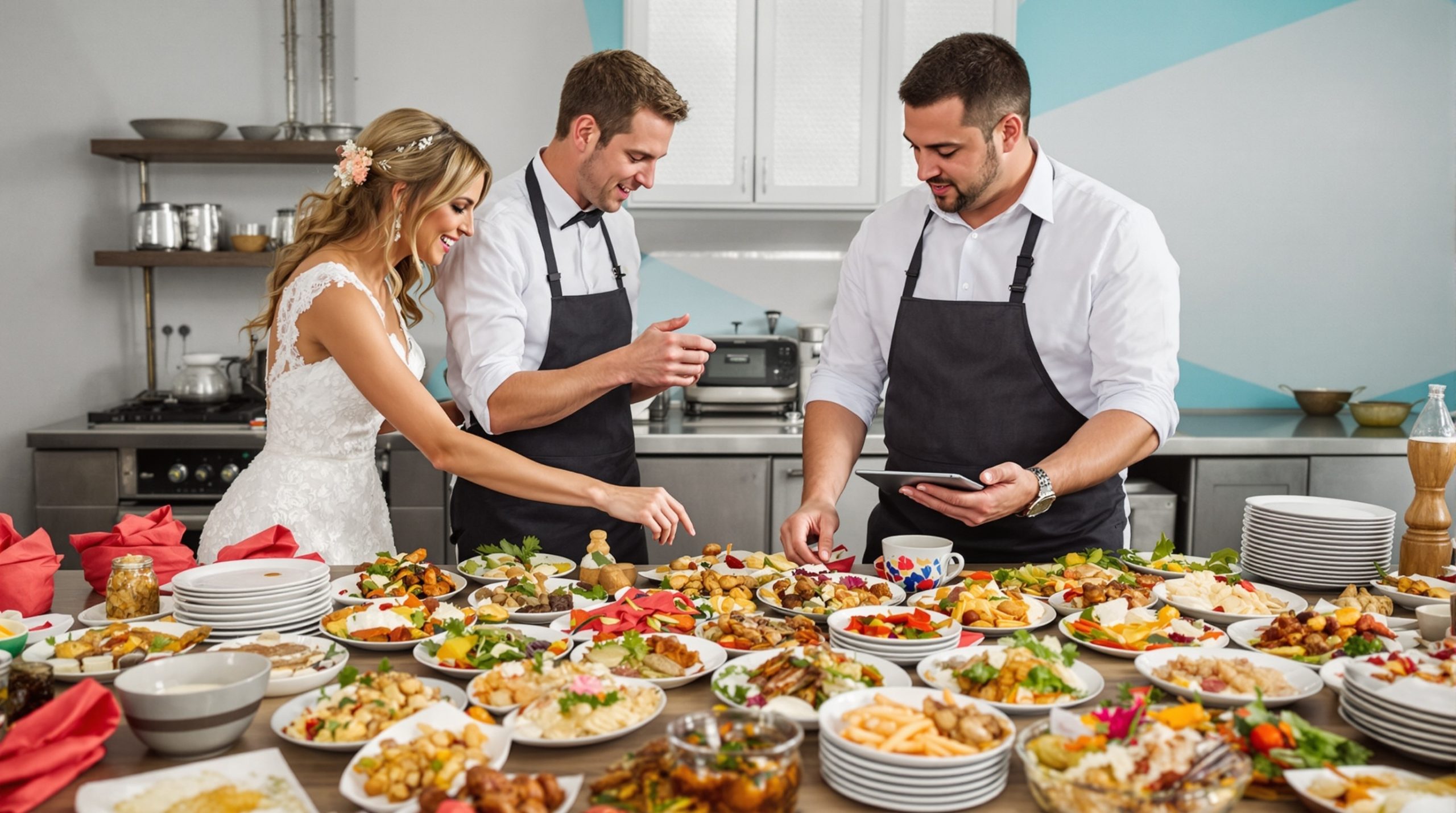
Caterers push you to overorder because unpredictable RSVPs and profit margins are real, but let’s cut the fluff. Don’t get caught up in unnecessary excess. Accurately executed planning means strategic armor—add a 5% buffer, nail your headcounts, and leverage RSVPs. This gets your event moving like a well-oiled machine. Stick to metrics and streamlined processes. Stop sweating over piles of pan-seared salmon. Keep it tight, keep it realistic, then hypercharge your plan with precision strategies. There’s plenty more where this came from.
The thesis (what people get wrong)
Let’s cut through the noise: the biggest myth in catering is believing that perfect RSVPs equal perfect food orders. You’d think nailing those numbers means no waste, right? Wrong. Caterers often engage in catering quantity manipulation, overestimating how much food to prepare. It’s called food quantity padding, and it’s all about avoiding a shortage that could haunt your big day. Excess is mistaken for quality, but it’s really just inefficiency dressed up. Sure, everyone loves abundance, but it’s your wallet that takes the hit. In Europe, the hospitality sector generates about 10% of national food waste, highlighting the inefficiencies in catering practices.
Why this happens (the real root causes)
The chaos of catering isn’t just a culinary circus; it’s a high-stakes game of strategic survival. When you order catering, you’re stepping into a world of profit margins pressure, operational uncertainty, and cost structure challenges. The catering portion truth lies in understanding these root causes:
Navigating catering chaos demands strategic survival amidst profit pressures and unpredictable operations.
- Profit Margins Pressure: With thin margins, catering thrives on volume. Orders need to be big to make financial sense.
- Operational Uncertainty: Demand shifts like a startup’s stock price. Without precise forecasting, overordering is a safety net. In fact, the global catering market is projected to reach $498 billion by 2032, highlighting the scale of operations and the importance of managing unpredictability.
- Cost Structure Challenges: High labor and food costs push caterers to prepare extra to avoid running short.
- Customer Expectation Risks: Customization demands and dietary needs drive caterers to cover all bases.
Understanding these dynamics is key to maneuvering the catering chaos.
What to do instead (the better framework)
When it comes to executing a seamless catering order, know that precision isn’t just a nice-to-have—it’s non-negotiable. To avoid overordering, focus on strategic planning. Here’s how you can get the job done with kinetic precision:
- Accurate Headcount Planning: Collect RSVPs early and add a 5% buffer for unexpected guests. Use past data for precision.
- Dietary Restrictions Management: Log food restrictions in a spreadsheet. Customize menus to accommodate all needs.
- Clear Communication Practices: Share detailed schedules, headcounts, and preferences. Reconfirm orders 24-48 hours before the event. Effective communication between sales, kitchen, and delivery teams is essential to ensure seamless coordination and prevent potential breakdowns.
- Precise Quantity Optimization: Use technology to analyze past orders. Standardize recipes and implement portion control tools.
With these moves, you’ll pivot your planning and streamline your event like a pro.
How to apply it in real life
Envision this: you’re knee-deep in wedding planning chaos, and you realize a catering order needs tweaking—strategically use online systems to upsell and lock it down. In high-stakes moments when the pressure’s on, rely on pre-order data to forecast like a pro and reduce waste by 30%. When it’s all hands on deck and you’re swamped, enforce strict order cutoffs to prevent burnout and keep kitchens running like a well-oiled machine. Early-bird discounts and VIP corporate tiers incentivize clients to place orders early, ensuring that predictable demand simplifies labor and purchasing decisions. For the most seamless experience, consider customizable menus and flexible portions, as recommended by wedding catering experts, to adapt to last-minute changes and guest preferences.
Example 1: a common scenario + the better move
Even in the whirlwind of wedding planning, you’d think catering an office lunch for 25 would be a cakewalk. Spoiler: it’s often more like a three-ring circus. With average checks hitting $381 and upsells boosting revenue by 25%, the stakes are high. So, how do you execute without overordering? Strategy. Implement a non-negotiable 72-hour order cutoff to streamline schedules and avoid chaos. Pre-ordering isn’t just smart—it’s transformative, trimming waste by 30% and ensuring kitchens aren’t overwhelmed. Opt for direct online ordering to hit that $500+ sweet spot, sidestepping third-party fees. For truly consistent results, it’s crucial to apply food science best practices to menu planning and portion calculations, ensuring both taste and safety for every guest. Track metrics religiously: average order value, repeat guests. Make intentional choices; it’s about efficiency, not excess. Next step? Lock down those orders and let precision lead. With the growing corporate catering market projected to reach $124 billion by 2032, understanding these strategies is more crucial than ever.
Example 2: a high-stakes scenario + the better move
Holiday season chaos creeping in? It’s a high-stakes scenario for caterers. Last-minute order surges overwhelm kitchens, causing errors and burnout. With catering transactions up 71% in Q4 2023, you’ve got to play it smart. Don’t fall for the overordering trap—caterers love it, but your wallet won’t. Instead, strategize with pre-order cutoffs. Lock in orders 72 hours ahead to streamline operations and trim waste by 30%. Use online systems for 75% of orders, enforcing boundaries and capturing upsells without the frenzy. Menu engineering boosts profits by 15%, focusing on efficient platters over excess. Reality check: Overordering means higher costs and stress. Make pre-order cutoffs your non-negotiable move for a seamless holiday event. Corporate catering is growing rapidly, with nearly half of caterers reporting increased demand for office events, so planning ahead ensures you capitalize on this trend without unnecessary stress.
Example 3: a ‘we’re busy’ scenario + the better move
When the calendar’s bursting and you’re knee-deep in wedding chaos, smart ordering becomes your secret weapon. You’re juggling a packed schedule, so let’s execute with precision. First, nail down that headcount with realistic no-show estimates. Ask your caterer for a buffer percentage tailored to your event’s chaos level—ditch the generic overorder spiel. Strategically prioritize menu items: larger buffers for crowd-pleasers, smaller for niche tastes. Efforts to meet dietary needs foster goodwill among guests and can prevent dissatisfaction on your big day. Drawing inspiration from reception menu inspiration ensures your food choices match both your crowd and the occasion. Leverage real-time tools and checklists to manage and pivot as needed. Remember, it’s not about excess; it’s about having your bases covered. Your caterer’s not just asking you to overorder for giggles; they’re safeguarding your big day against last-minute hiccups. Ready to own your event? Get those numbers and let’s hustle.
Counterpoints (when the old way is actually fine)
Sometimes, the old-school way gets the job done just fine—especially when you’re dealing with small-scale events that don’t need the digital razzle-dazzle. You know when to keep it simple and strategic. Here’s when sticking to tradition works:
- Low-volume catering: Streamlined menus and batch cooking reduce chaos and errors.
- Corporate preferences: A quick call can seal the deal for straightforward orders, avoiding digital headaches.
- Impromptu meetings: Local vendors and direct negotiation mean consistent quality and flexible pricing.
- Traditional strengths: Locally sourced ingredients and personalized menus guarantee quality without tech.
Traditional food ordering, with its direct interaction, fosters a personal touch that is especially effective for limited daily orders. Strategically leveraging these methods means less overthinking and more executing. Respect the hustle, but remember—sometimes, simplicity is your powerhouse move. No need to overcomplicate when the basics suffice.
Action plan (do this next)
Ready to transform your catering chaos into streamlined perfection? Let’s get strategic and leave no room for last-minute surprises. Start by confirming your final headcount and lock in your deadlines. Here’s how:
- Set a firm RSVP cutoff date: Reduce the risk of overordering by nailing down numbers early.
- Consult your caterer’s buffer: Understand their headcount margin (5–20%) to align your expectations.
- Schedule a reconfirmation window: Allow 24–72 hours for late changes without blowing the budget.
- Lock delivery and setup times: Prevent rushed prep and unnecessary waste.
Visual summary you can share
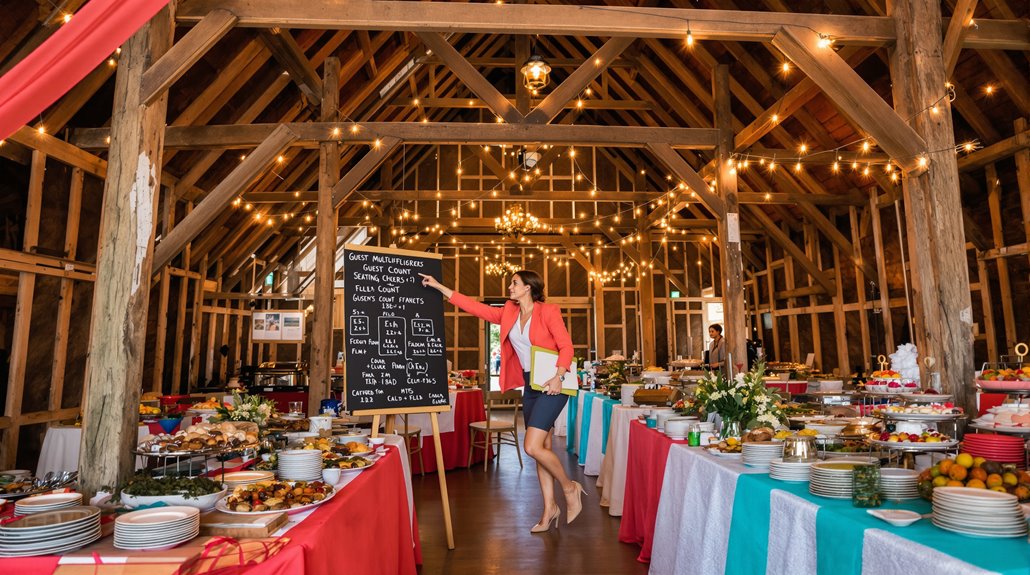
Let’s cut through the noise and get straight to what you need—a visual summary that’s not just pretty but powerful. This isn’t about dreaming; it’s about executing. Imagine a sleek diagram: start with your confirmed guest count, then strategically apply these multipliers—plated events at 1.05–1.10, buffets at 1.15–1.25, receptions at 1.20–1.30. For mixed-age gatherings, pivot by adjusting for kids who munch 50-75% of adult portions. This isn’t fluff; it’s your roadmap to a streamlined, non-negotiable service that meets expectations without waste. Use this guide to accelerate your planning—sharp, efficient, gets the job done. Forget being “bless and stressed”; this is about gaining control and ensuring your event is executed like a pro. Ready to move? Let’s do this.
FAQ
Got family or vendors pushing back? It’s time to pivot and get everyone aligned—fast. When you’re worried about a decision gone wrong or need a quick win today, let’s streamline those strategies and get your partner on board for a seamless execution.
What if my family/vendors push back?
When family or vendors push back on your catering decisions, it’s a negotiation, not a standoff. You’ve got the power to strategically pivot. Start with a graduated buffer—suggest a 5% or 10% increase instead of a massive overorder. Ask for itemized proposals showing costs per extra plate and leftover handling options. This streamlines decisions and cuts through the fluff.
Want to keep it real? Use data. Show prior event metrics or industry averages for no-show rates to justify your stance. Propose flexible contract terms, like on-site micro-orders or final cut-off windows. Split risk with vendors by agreeing to pay for a smaller guarantee. Remember, this is a project to be executed efficiently, not a stress fest. Get it done.
What if I already made the ‘wrong’ decision?
If you’ve already made a catering misstep, don’t sweat it—you’re not alone, and there’s a way to pivot. First, access your online ordering platform to see if you can add-on or adjust quantities. With 38% of orders placed just hours before the event, there’s often room for quick modifications. Discuss scalable options with your caterer—half-pan or full-pan choices are flexible lifesavers. Boost efficiency with a 5-10% buffer to handle unexpected guests without drowning in leftovers.
Communicate transparently with your vendor, aligning menu adjustments with your revised guest count to avoid delays and negative reviews. Use this experience to refine future orders, leveraging data for smarter decisions. Remember, precision is your ally—execute, streamline, and move forward.
What’s the fastest way to course-correct?
You’ve realized a catering hiccup—no biggie, it’s time to kick into high gear and execute a rapid course correction. First, confirm your headcount with precision. Use your point-of-contact to update the caterer on any attendee fluctuations. A 3–10% safety buffer is your non-negotiable backup plan. Next, pivot your menu. Opt for scalable dishes and have a list of pre-approved substitutes ready. Communicate these changes clearly to your guests—nobody likes surprise menu swaps. Streamline logistics by reassigning staff and adjusting service zones to keep everything moving smoothly. Finally, adjust portions strategically to minimize waste. Keep an eye on consumption rates to manage remaining service time. Execute these moves and you’ll swiftly regain control, ensuring a seamless experience.
How do I get my partner aligned?
Getting your partner aligned on catering decisions is like merging two high-speed trains on a single track—it demands clarity, precision, and impeccable timing. Start by writing down your shared event goals: guest experience, budget limits, dietary needs. Turn these into measurable targets like guest-to-food ratios and per-person budgets. Record non-negotiables to streamline your choices. Use a decision checklist to avoid last-minute disputes. Schedule regular checkpoints with fixed agendas to keep things on track, and adopt a shared document for all details to avoid confusion. Agree on who signs off on changes to prevent decision paralysis. With these strategies, you’ll pivot from chaos to control, ensuring you both feel confident and aligned as you accelerate toward your big day. Exploring wedding menu planning together can also inspire creative solutions and help you both feel invested in the final choices.
What’s the easiest win I can do today?
How can you score an easy win today in the wedding catering chaos? Simple: strategically use your caterer’s portion guides. Request their sample menu-pack sizes and follow recommended servings. You’re not here to reinvent the wheel; leverage their expertise. Opt for pre-portioned items like boxed lunches to eliminate guesswork and waste. Stick to a streamlined menu—2–3 mains, 2 sides. This cuts complexity and makes forecasting a breeze.
Communicate efficiently: confirm headcount 24–72 hours prior and adjust orders accordingly. Specify service style in confirmations to align portions perfectly. Keep it sharp and direct; request a written order summary to catch errors.
Next step? Log post-event data to refine future orders. You’re not just planning; you’re mastering.
Key takeaways
When it comes to catering, nailing the details isn’t just nice—it’s non-negotiable. You need a plan that gets the job done without excess. Here’s how to execute like a boss and avoid the overordering trap:
- Clarify Headcounts: Precision is key. Use RSVPs and analytics to forecast demand accurately.
- Understand the Economy: Catering margins are 4-5 times higher than restaurants—leverage this for smart negotiations.
- Embrace Technology: With 75% of orders online, use apps to streamline your process.
- Minimize Waste: Over-ordering leads to 20% waste—strategically order less and monitor consumption.
Reality Check: Don’t let traditional contracts box you into wasteful minimums. Pivot to data-driven decisions and keep your event sharp and efficient. What’s your next move? Double-check those RSVPs!