
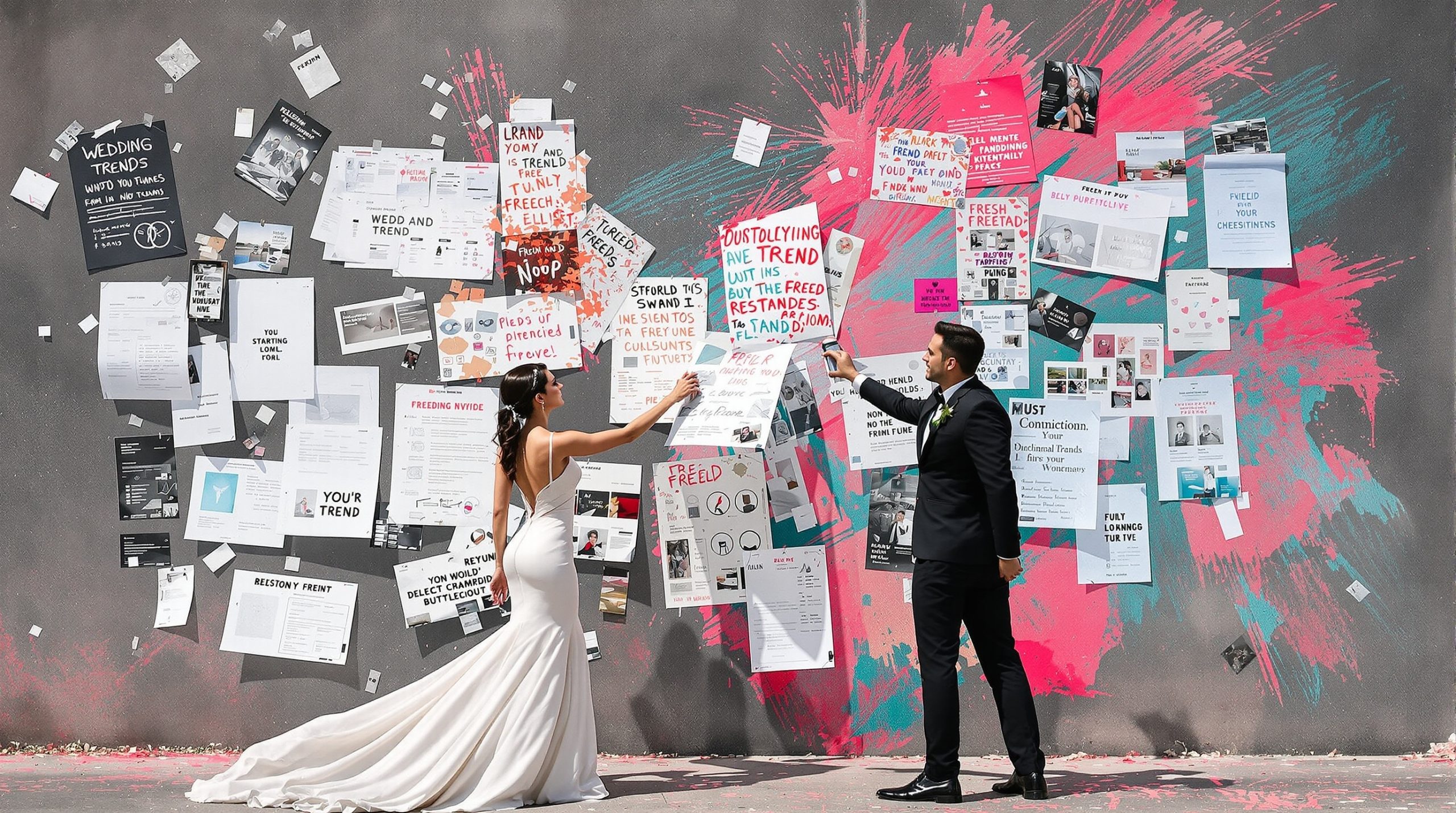
Every 18 months, wedding trends do a 180 because the industry loves to keep cash and chaos flowing. Imagine a trend treadmill—it’s engineered for vendors to pivot and gain, not you. They’re masters at turning “overdone” into “must-have.” Instead of chasing it, prioritize your non-negotiables and streamline like a pro. Project management’s your secret weapon here. Nail that budget, control the chaos, and stay nimble. Trust us, there’s more beyond the wedding whirlpool.
The thesis (what people get wrong)
While it might seem like wedding trends evolve purely from couples’ desires, the reality is a bit more complex. You’re not just witnessing a wedding trend cycle; you’re seeing trend manipulation at play. Design trend economics guide these shifts, driven by industry insiders who strategically pivot styles every 18 months to keep you on your toes—and your wallets open. Recent Columbia University consumer economics research highlights how shifts in consumer spending are influenced by both subtle and overt cues from the wedding industry itself. Forget the notion of timeless wedding styles. The market thrives on change, with profits soaring from cleverly executed shifts. It’s not just about what you want; it’s about what moves the market. With the U.S. wedding services market valued at approximately $64.93 billion in 2024, the industry has a vested interest in continually reinventing the wheel to maintain growth and profitability. So, when planning your big day, think like a project manager: streamline decisions, focus on what’s non-negotiable, and use checklists to stay ahead. Skip the fluff; aim for efficiency.
Why this happens (the real root causes)
You might think wedding trends change because of collective couple whims, but the reality is more strategic—and a lot more caffeinated. The wedding industry trends are driven by a cycle of perpetual motion and savvy vendor strategies. Here’s why:
- Seasonal Business Cycles: Engagements peak in winter, filling vendor books fast. The cycles repeat annually, guaranteeing a fresh trend slate each year. Research into couple decision-making shows that the timing and social context of engagement often influence how trends are adopted and passed on within the industry.
- Vendor Booking Pressures: Venues book 18-24 months ahead, pushing early commitments and innovation.
- Trend Evolution: Vendors pivot from “overdone” styles monthly, keeping their offerings fresh and unique.
- Market and Economic Drivers: Vendors profit from constant trend turnover, timing marketing pushes with engagement seasons. During the busy season, 68% of couples plan their weddings, which adds to the pressure on vendors to continuously innovate and introduce new trends.
These drivers guarantee trends aren’t whims—they’re strategically executed, keeping the industry buzzing.
What to do instead (the better framework)
Forget blindly chasing trends that vanish faster than a Snapchat story. You need a framework that saves your sanity and respects your hustle:
- Prioritize Purpose:
- Define your wedding’s non-negotiables.
- Align your choices with your core values.
- Use a streamlined checklist to stay on track.
- Measure decisions against your dream day vision.
- Keep the focus on what truly matters.
- Budget Smart:
- Set a realistic financial cap.
- Allocate funds based on importance, not trendiness.
- Use metrics to track spending.
- Consider ROI on big expenses.
- Invest in elements with lasting impact.
- Embrace Timeless:
- Opt for classic over trendy.
- Lean into personal style.
- Choose quality over quantity.
- Avoid fleeting fads.
- Balance tradition with innovation.
- Plan Strategically:
- Treat your wedding like a project.
- Utilize planning tools like timelines and checklists.
- Delegate tasks to trusted allies.
- Regularly assess progress.
- Pivot when necessary.
- By centralizing all planning features in one platform, tools like That’s The One (TTO) can significantly reduce the time and stress involved in wedding planning.
Reality Check: Timeless decisions beat trendy chaos.
How to apply it in real life
You know the drill: you’re at the start of planning, overwhelmed by a mountain of decisions. Instead of spiraling, strategically streamline by setting non-negotiables early—think guest count and venue type—and everything else falls into place. More than half of couples initially budget under $10,000 for their entire wedding, so setting a realistic budget can help guide your choices and reduce stress. Research from Cornell University found that couples who spend less on their wedding may experience a longer-lasting marriage, suggesting that keeping costs reasonable can have benefits beyond your wallet. When chaos hits high-stakes, pivot with a checklist that prioritizes must-haves over nice-to-haves, and for those juggling demanding schedules, embrace smart shortcuts like AI tools for speech writing—it’s about executing efficiently, not just dreaming big.
Example 1: a common scenario + the better move
Let’s face it: following the latest wedding trends can feel like running on a hamster wheel. You’re spending $11,200 on venues that scream boho-chic today but might be passé tomorrow. Why? Because the industry taps into your FOMO, pushing seasonal updates through social media, keeping you—and your wallet—on their rollercoaster. But you? You’re smarter than that.
Rather than chasing fleeting fads, opt for timeless elegance. Classic venues not only sidestep that $11,200 premium but also offer flexibility for your curated cool. Many couples are now considering luxury wedding venues like those offered by Four Seasons Hotels, which combine enduring style with expert planning. With the wedding planners market projected to reach $1.5 billion by 2025, it’s crucial to prioritize essentials over decor whims; budget that $27,100 wisely. Choose local, versatile venues to mimic luxury without the destination price tag. Your move: book midweek micro-events, saving costs while maximizing value. Voilà—your wedding, executed with precision and style.
Example 2: a high-stakes scenario + the better move
When staring down the barrel of a destination wedding venue investment, the stakes are high and the decisions must be razor-sharp. To accelerate profitability, pivot towards a diversified venue revenue model. Combine event space with lodging to command 30-40% higher rates. This strategic move guarantees multiple revenue streams—event fees and nightly lodging rates can yield USD 5,000-USD 10,000+ per weekend. Don’t get bless and stressed; be the venue that offers vendor referrals, décor rentals, and exclusive catering. With micro-weddings on the rise, capitalize on premium décor and dining. Execute seasonal pricing strategies—spring and fall dominate with 75% of bookings. Venues modeled after luxury wedding venues like Ritz-Carlton can further elevate their appeal and pricing power by offering destination services and curated experiences. Next step? Build strong vendor relationships for referrals and maintain competitive pricing despite rising operational costs. The growing demand for personalized and memorable weddings is driving the global wedding planning market towards significant growth, with a projected value of USD 399.94 billion by 2031.
Example 3: a ‘we’re busy’ scenario + the better move
In the whirlwind of wedding planning, time is your most precious commodity, and decisions must be made with ruthless efficiency. When you’re slammed with back-to-back meetings and looming deadlines, weddings can feel like an unwelcome project. Here’s the move: ditch the traditional venue hunt. Embrace micro-weddings during off-peak seasons. Spring and fall may hog the spotlight, but summer and winter offer killer opportunities. Strategically book a weekday micro-wedding—fewer guests mean bigger budget per person for that “curated cool” vibe. Tap into venues offering bundled services like lodging and exclusive catering to streamline logistics. You’ll sidestep peak season chaos and gain a unique, unforgettable experience. For couples seeking convenience and luxury, official wedding venues from major hotel groups like Marriott International provide destination packages that simplify planning without sacrificing style. With 50% of weddings being planned with the assistance of wedding planners, it’s clear that professional guidance can help navigate the complexities of modern wedding trends. Reality check: Don’t chase trends—create a wedding that’s authentically you, not just Instagrammable.
Counterpoints (when the old way is actually fine)
While it might seem tempting to ditch the old-school wedding for something more “now,” traditional ceremonies have their own savvy merits that shouldn’t be overlooked. Traditional weddings are not just nostalgic; they’re strategic. Here’s why sticking to the classic might be your most efficient move:
Traditional weddings blend nostalgia with strategy, offering timeless elegance and efficient execution.
- Predictability: Traditional ceremonies reduce anxiety with their clear-cut format, making execution a breeze. Couples in Illinois, for example, benefit from official wedding destination information that helps streamline the planning process and ensure everything goes smoothly.
- Validation: They provide a built-in approval system with family and friends, reinforcing your choice.
- Cultural Roots: Personalized traditions honor heritage while adding a unique flair.
- Stability Signal: Public vows in a traditional setting underscore a serious commitment.
Non-negotiable metrics show traditional weddings are still a smart choice. They offer emotional bonds and practical ease—just what a busy professional needs. Additionally, eco-friendly practices are becoming common among non-traditional brides, with an emphasis on sustainable venues, zero-waste decorations, and ethical catering options, which can also be incorporated into traditional weddings to align with modern values.
Action plan (do this next)
Let’s get this show on the road and bring the wedding of your dreams to life—project-manager style. You’re busy and don’t have time for fluff, so here’s a streamlined plan to get things moving efficiently.
- Set a Budget: Establish a realistic budget first. With the U.S. wedding services market projected to hit USD 95.35 billion by 2030, strategize where you’ll allocate funds.
- Choose a Venue: Secure a venue early. Venues offering lodging can command higher rates, so decide on non-negotiables.
- Build Vendor Relationships: Strong vendor ties lead to better rates and referrals. This strategy boosts satisfaction and bottom line.
- Plan Destination Details: If going destination, book accommodations early. Integrate lodging for streamlined logistics.
You can find top options for both venues and vendors by browsing a wedding location marketplace that also features a comprehensive vendor directory.
Reality Check: It’s about execution, not perfection. Make decisions, then pivot as needed.
Visual summary you can share

Ready to accelerate your wedding planning game? Let’s cut through the fluff and get strategic. The US wedding market is set to hit $68.63 billion in 2025, so you’re not alone in this hustle. With an average wedding cost of $29,000, it’s essential to streamline decisions and maximize value. Venue choices can make or break your budget—think $7,000 per venue, or $11,200 for event plus lodging.
Destination weddings are gaining momentum, claiming 70.7% of revenue share, so if travel’s on your list, get ready to pivot fast. Lean into micro-weddings or elopements for higher guest spend. Use real tools—timelines and checklists are non-negotiable. Your next move? Prioritize what’s important, ditch the rest, and keep your planning kinetic and precise. More couples are using TikTok wedding planning tips to discover trends and creative shortcuts, making it easier than ever to stay ahead of the curve.
FAQ
Feeling the pressure from family or vendors? It’s time to streamline: if you’ve made a wrong move or can’t get your partner on board, don’t stress—pivot with a clear action plan. Identify one quick win today that aligns everyone and accelerates your wedding planning forward; think of it as a project management sprint that gets the job done. According to wedding budgeting research, setting clear financial boundaries early can help couples make confident decisions and reduce planning stress.
What if my family/vendors push back?
How do you navigate the inevitable pushback from family and vendors without losing your cool or control? Start by setting clear boundaries. Strategically communicate your budget and vendor choices early. Use a budget breakdown to illustrate rising costs since 2019. When family questions your decisions, pivot to value discussion—how each vendor elevates the guest experience. For vendor negotiations, leverage data. Show them average booking timelines and costs—they’ll respect your informed approach. If they resist, remind them of your non-negotiables. Streamline communication with a shared checklist; it keeps everyone aligned and reduces chaos. Remember, you’re not just planning a wedding, you’re executing a vision.
Actionable Step: Draft a one-page budget summary to share with family and key vendors to prevent miscommunications.
What if I already made the ‘wrong’ decision?
Ever feel like you’ve already blown it with a wedding decision? You’re not alone. Decision paralysis in wedding planning is real. It’s that nagging feeling of “what if I chose wrong?” amplified by the endless options out there. But here’s the deal: no wedding is flawless. Pursuing perfection only leads to overanalyzing and regret. Embrace the imperfections—cold food or a wine spill might just make your day more memorable. Remember, wedding planning is about strategic choices, not chasing trends. Recognize your cognitive biases and move past them. You’ve made decisions—own them. Pivot when necessary, and focus on what truly matters. Keep pushing forward, and use each decision as a stepping stone toward a day that’s uniquely yours.
What’s the fastest way to course-correct?
Already feeling the heat from a ‘wrong’ wedding decision? Don’t panic. Immerse yourself in a strategic pivot that gets the job done. First, prioritize core elements—define your wedding mood, nail down ceremony length, and lock in one non-negotiable like food or venue. Create a one-page planning compass listing three must-haves, two nice-to-haves, and a signature motif. Categorize elements to streamline budget allocation and establish priorities. Next, build a flexible timeline. Start with a high-level 12-18 month plan, then zoom into the last 4-6 weeks for precise execution. Hiring professional help? Smart move. A part-time consultant can craft a solid blueprint, while a day-of coordinator guarantees smooth execution. Finally, prepare contingencies. Always have backup vendors and plans. Ready to pivot? You’ve got this.
How do I get my partner aligned?
When it comes to getting your partner aligned on wedding plans, the trick lies in treating it like a strategic partnership rather than a romantic guessing game. Schedule weekly sit-downs to discuss priorities—get those Google Sheets ready. Active listening is key: repeat back their thoughts, and tackle emotional triggers early. Think of it as a board meeting, not a candlelight dinner. Set mutual goals with clear timelines, ensuring decisions are data-driven and aligned. Remember, industry averages show weddings cost $27,100, so adjust visions accordingly. Use visual boards to nail down inspirations and update them quarterly. If conflicts arise, pause, breathe, and revisit. Your mission? Strategic execution without drama. Now, get those vendor calls rolling. Hustle, don’t hassle.
What’s the easiest win I can do today?
Looking to snag an easy win today? Start by strategically expanding your venue offerings. This isn’t just about adding more chairs or floral arrangements. No, we’re talking vendor referrals and décor rentals. It’s a move that accelerates your profits, spreads fixed costs, and gains you some serious leverage. Target those micro-weddings—weekday bookings with a higher per-guest spend. They’re less bless-and-stressed, more efficiently executed. Offer exclusive catering deals to boost referrals. Think of it as a streamlined partnership that gets the job done. For a real power move, book destination wedding lodging for 2–3 nights. The reality check? Don’t get lost in the fluff. Focus on intentional decisions that drive actual momentum. Ready to pivot? Let’s hustle.
Key takeaways
So, you’re diving into wedding planning. Let’s pivot straight into action mode, where efficiency meets controlled chaos. Here’s how to strategically execute your wedding plans with kinetic precision:
- Timing is Everything: With December reigning as the engagement king, aim to start planning 12 months out. Remember, 52% of couples do this—join the efficient club.
- Decisions, Decisions: You’ll face a mountain of them. Streamline by discussing ring and proposal preferences in advance, just like 43% of savvy couples.
- Guest-Centric Planning: Prioritize guest experience over costs. With 72% of couples doing it, it’s non-negotiable.
- Tech-Savvy Execution: Leverage tech tools for seamless planning; think AI for speechwriting and video mapping. Stay ahead.
Reality check: A curated cool wedding demands hustle—not stress. Prioritize and execute without fluff.