
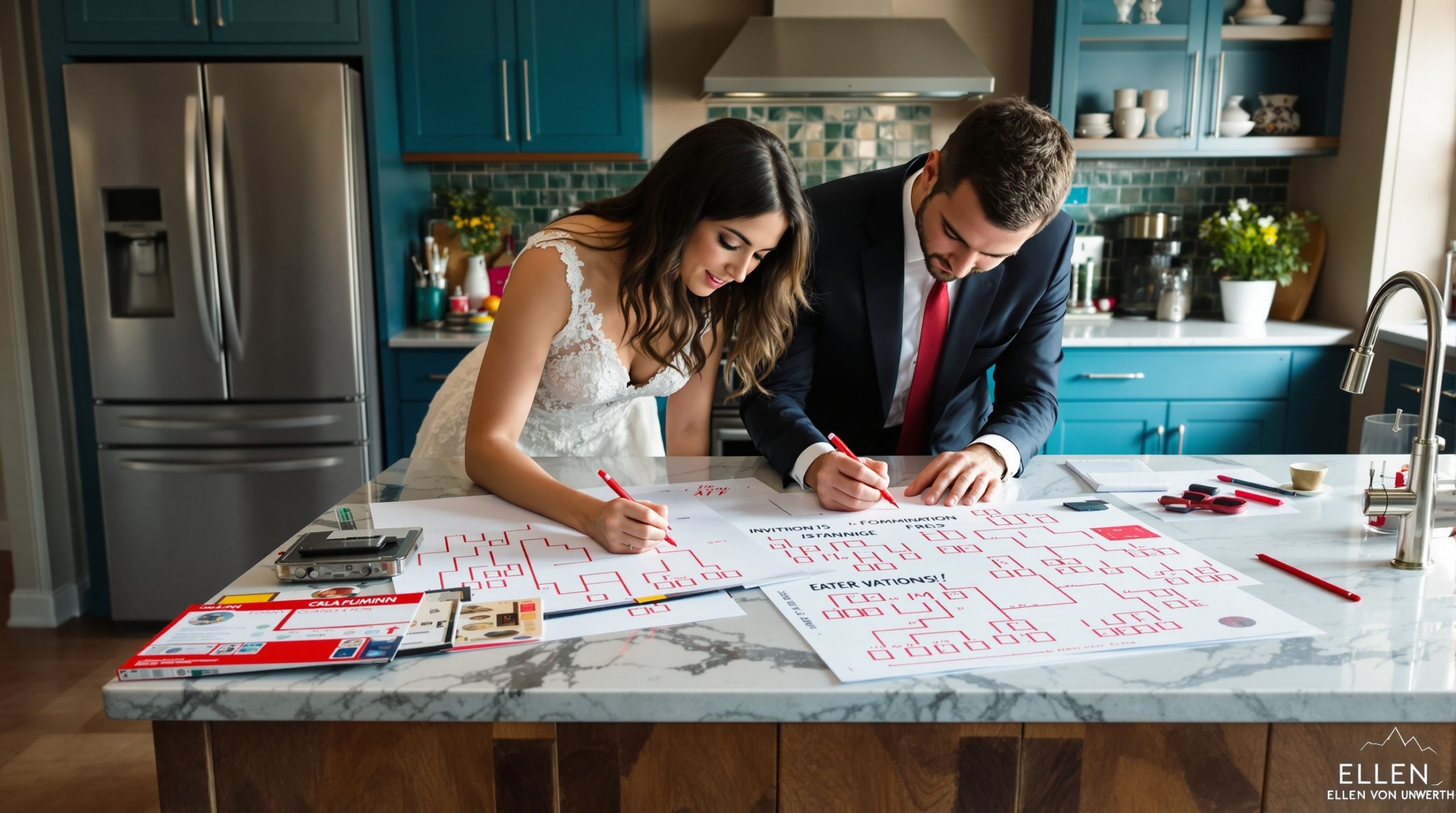
Nailing tricky invitation wording is a power move in your wedding playbook. You’re juggling family dynamics like a pro—use inclusive phrasing like “Together with their families,” and separate divorced parent names to keep the peace. Proof every detail, because “Uncle Joe with a typo” is not the vibe. Leave the fluff to Pinterest. This is about streamlining clarity and defusing tension with precision. Ready for more expert hacks that’ll keep the chaos controlled?
What you’ll accomplish (and what ‘done’ looks like)
Let’s cut to the chase: when you nail the wording on your invitations, you’re not just inviting people to a wedding; you’re setting the tone for a well-oiled celebration machine. Mastering invitation wording etiquette is your first victory in this high-stakes event project. With tricky invitation wording, you’ll navigate family dynamics like a pro, ensuring clarity amidst potential chaos. Proper family invitation wording can defuse tension before it even starts, making your guests feel appreciated and included. The dynamics of family conflict, as explored in the FamC study, show that understanding family characteristics and relationships can significantly impact event planning. In fact, research from the University of Minnesota Extension highlights how family dynamics in wedding planning can influence both guest experience and overall event success. Here’s the hustle: strategically executed invitations act as your opening move in a seamless event. They communicate your celebration’s vibe while respecting family nuances. So, grab your favorite pen and start drafting. Streamline the process with bulletproof templates—because in wedding planning, precision gets the job done.
Quick start (the short version)
First things first: get your family event invitations done right, and you’ll sidestep a world of chaos. When you need invitation wording help, it’s all about execution and precision. Here’s a streamlined approach to get you moving:
Get your family event invitations done right and avoid chaos with precision and execution.
- Start Strong: Begin with a warm greeting like “Dear Family” or “Hello Everyone” to set the tone. For formal occasions, roll with “Mr. and Mrs. [Name]”.
- State the Occasion: Clearly mention the event, e.g., “Celebrate Grandma’s 80th birthday” or “Carter Family Reunion”.
- Handle Blended Families: Use inclusive language like “Together with their parents” or “Two families, joined together by love”. To ensure the invitation reaches all intended guests, consider using personal phone calls for older family members.
- Include Key Details: Date, time, location—non-negotiable. Add RSVP info and event specifics like “Backyard BBQ Style”.
Now, go execute like a pro!
Before you start: inputs you need
Before diving headlong into crafting those family event invitations, pause for a tactical assessment. You’re not just sending invites; you’re maneuvering through a minefield of family dynamics. First, pinpoint potential conflict areas. Are there divorced parents or siblings who clash? Next, understand your family’s communication style—are they direct or do they prefer subtle hints? Finally, consider past events: what’s been the drama trend? Remember, interpersonal conflict is unavoidable and necessary for maintaining relationships; it’s important to be prepared for mismatches and repairs. Here’s what you’ll need for a streamlined approach:
- Family Dynamics Report: Know your players—who’s in sync, who’s not.
- Communication Style Audit: Analyze if your family thrives on directness or diplomacy.
- Conflict Resolution History: Learn from past family events’ triumphs or disasters.
- Event Outcome Goals: Define what you want—peace, fun, or both.
Plan strategically and execute with precision.
Step-by-step process
To kick off your invitation strategy, first clarify your constraints—think date range, budget ceiling, and non-negotiables that can’t be ignored. Next, build a decision order to streamline the process; decide what needs tackling first and watch everything else fall into place. Then, create a timeline with milestones and deadlines to keep your planning on track and your sanity intact. It’s also important to consider clear communication with family members to avoid misunderstandings or stress during the invitation process. Remember to use formal language appropriate for the event, as it ensures clarity in date, time, and location details.
Step 1: Clarify constraints (date range, budget ceiling, non-negotiables)
When you’re juggling family schedules tighter than a New York minute, start by pinpointing your date range with strategic finesse. Act fast—lock in dates 6-12 months out for ideal travel arrangements. Don’t let peak season costs ambush you; balance convenience with realistic pricing. Next, set your budget ceiling. Prioritize key areas like accommodations, activities, and food—research local living costs to avoid financial pitfalls. Gather family input to guarantee everyone’s on board and distribute costs fairly from the get-go. Define your non-negotiables: Is your event a single-day sprint or a multi-day marathon? Consider venue restrictions and accessibility needs. With these constraints crystal clear, everything else falls into place like a well-oiled machine. Reviewing major metro area costs can provide vital context for setting your event budget and anticipating higher expenses. Researching the cost of living in your chosen location ensures your budget is realistic and allows for a more enjoyable planning process. Ready to accelerate? Let’s move forward.
Step 2: Build the decision order (what to decide first so everything else is easier)
You’re ready to move this family event from chaos to control. First, define the purpose and objectives. This sets the stage for all your decisions—theme, location, activities, everything. Got it? Next, poll your family’s availability. Use tools like Doodle or SurveyMonkey to lock in a date that maximizes attendance. No one wants a half-empty event. Then, form a planning committee. Rally the natural organizers in your clan to take on specific roles, ensuring all voices are heard. Prioritize budget elements by gathering quotes and setting clear financial expectations. Create a comprehensive budget to guide financial decisions and prevent stress. It’s also crucial to allocate the budget effectively by prioritizing venue and major vendors early, based on expert recommendations for optimal event planning. Finally, choose the date and location, considering factors like weather and accessibility. With these decisions in order, you’ll streamline the chaos and execute a memorable event. Now, go hustle!
Step 3: Create the timeline (milestones + deadlines)
Buckling down to craft your timeline isn’t a tedious chore, it’s the linchpin that propels your wedding plans into motion. Start with the timeline foundation—establish your budget and lock in your venue. This decision is a non-negotiable anchor. Next, select your wedding style and draft that guest list. Move to the save-the-date phase; send those notices 9-8 months out for ideal planning. Destination wedding? Bump that to 10+ months. Ensure all contracts are reviewed and understood when booking key vendors to avoid any future miscommunication or issues. Remember, establishing a clear total budget early helps prevent overspending and provides a safeguard for unexpected expenses. Immerse yourself in formal invitation dispatch 3-5 months ahead. Coordinating your design with your wedding aesthetic is essential. Finally, confirm vendors 4-2 months prior. Think caterer, photographer, and officiant. The key? Execute strategically, pivot swiftly, and streamline meticulously. You’re not just planning a wedding; you’re running a project.
Step 4: Execute vendor outreach (scripts + tracking)
Nailing vendor outreach is a non-negotiable step in your wedding project management journey. First, identify vendors through regional chambers and vendor databases—no time for aimless scrolling. Be strategic: research target companies, find decision-makers, and prepare to articulate your event goals and expectations clearly. Craft tailored outreach scripts that highlight mutual benefits and offer meetings to forge strong ties. Ensure you invite the right mix of people to achieve a balanced and productive interaction. Streamline communication by establishing a single point of contact and using centralized channels for updates and check-ins. When reaching out, it’s wise to request standardized RFP formats to ensure you receive comparable quotes and can spot cost discrepancies early. Now, let’s talk tracking: Use checklists and event management systems to keep everything on point. Confirm vendor services a month prior and finalize lists two weeks before the event. Real-time feedback is your friend—monitor, adapt, and pivot as needed. Time to execute!
Step 5: Lock the plan (contracts, deposits, and contingency buffers)
Securing your wedding plan isn’t just a task—it’s a strategic maneuver that demands your sharpest focus. First, execute airtight contracts with vendors. Outline deposits, payment schedules, and cancellation terms. Don’t forget the hidden costs—factor in overtime, setup, and travel fees. Lock in vendor insurance certificates and liability details. Strategically negotiate payment schedules to match your cash flow, and break down line items like taxes upfront.
Next, build contingency buffers. Prepare for unexpected expenses with budget wiggle room. Develop weather contingency plans for outdoor events and have a backup professional ready. Ascertain every agreement is attorney-reviewed and balanced. Secure signatures from all payment-responsible parties.
Reality Check: Overlooked details can derail your plan. Get granular, be proactive, and save yourself from future stress. Remember, clearly defining non-refundable deposits and fees in your contracts is essential to avoid costly disputes and manage expectations effectively.
Step 6: Run weekly check-ins (how to stay on track without spiraling)
Locking in your wedding plan is just the beginning; now it’s time to keep that momentum rolling with weekly check-ins that guarantee nothing derails your perfectly choreographed event. Strategically set a weekly agenda to streamline conversations and keep the chaos controlled. Review last week’s goals, tackle new ones, and address concerns. This isn’t just a chat—it’s a non-negotiable progress checkpoint. Select a frequency that suits your team: weekly for steady momentum, or daily if you’re in full hustle mode. Use centralized systems for real-time updates, ensuring everyone’s aligned. Delay is the enemy; reschedule canceled meetings immediately. Your wedding’s a project, not a Pinterest board. Make each check-in count—because executing your vision demands kinetic precision. Next step? Lock down your timeline. Remember, establishing a contingency fund is essential during these check-ins to safeguard against unexpected expenses that can threaten your planning progress.
Template you can copy/paste (checklist + tracker)

When you’re racing against the clock to orchestrate the wedding of your dreams—without losing your mind or your lunch break—a well-crafted invitation template is your secret weapon. With Hustle and Bustle Events, we understand your time’s a premium. Our copy/paste templates are your go-to for streamlined execution. Hosting solo? List your names first, no fluff—just pure agency. For family-inclusive invites, balance both sets of parents with strategic grace. If one side’s footing the bill, tactfully acknowledge their role. Dealing with divorced or remarried folks? Keep names tidy and formal—no awkwardness here. Limited guest list? Specify seats and names directly—clarity wins. Each template, a precise tool in your project management arsenal. Now, execute those invites with confidence and move on. If you’re feeling overwhelmed by options, remember that wedding decision paralysis is common and embracing imperfection can help you move forward confidently.
Common mistakes (and how to avoid them)
Mistakes in wedding invitations aren’t just inconvenient—they’re momentum killers. Let’s face it, clarity and precision in your invites aren’t just ideal; they’re downright non-negotiable. Avoid these common blunders and keep your wedding planning on track:
- Vague Guest List Clarity: Use full names on envelopes to avoid unexpected guests. “The Jones Family”? Think again.
- Insufficient Event Details: Don’t leave guests guessing. Include full date, time, and location—no “in the morning” vagueness.
- Improper Names and Titles: Proofread for typos and verify formal names and titles are used. Nicknames? Not today.
- Quantity and Logistics Oversights: Order extra invites and test one before bulk printing. Forgetting this? Rookie mistake.
When planning, remember that family dynamics in decision-making can influence how invitations are received and should be handled with extra care.
FAQ
Got a packed calendar but still want to nail those wedding invites? Let’s streamline this: aim to execute the process in a week with a minimum viable plan that doesn’t skimp on impact. Delegate tasks where you can, track your progress weekly, and if a vendor ghosts you, pivot swiftly to alternatives—non-negotiable.
How long should this take if we’re busy?
In the whirlwind of wedding planning, nailing down your invitation timeline is essential, especially when your schedule’s as packed as a rush-hour subway. You’re busy, so let’s streamline. Aim to send invitations six to eight weeks before the wedding—this is non-negotiable. For destination weddings, accelerate your timeline to four months prior; your guests need time to plan. If you’re maneuvering through holiday chaos, ten to twelve weeks gives everyone breathing room. Order your invitations eleven weeks ahead to dodge last-minute panic. Production, shipping, and assembly can consume up to two weeks. Execute your RSVP strategy three to four weeks before the big day to finalize head counts and seating charts. Now, grab your checklist and start tackling these steps.
What’s the minimum version that still works?
When you’re knee-deep in wedding planning, hitting the sweet spot between streamlined and functional is essential for your invitation game. You need the minimum version that accelerates clarity and cuts through the clutter. Focus on core elements: who, what, when, where, and how to RSVP. Skip fluff—ditch gift registry details, street addresses, and ampersands. Keep lines complete for clarity, and guarantee proper nouns are capitalized. Your invitation should read like a well-executed project brief, not a love letter to tradition. Embrace controlled chaos by strategically choosing formality levels to match your vibe, whether that’s casual or formal. Your goal? A streamlined invitation that gets the job done with kinetic precision. Next step: Guarantee consistent tone across all invitation pieces.
What can I safely delegate?
While orchestrating the chaos of wedding planning, strategic delegation is your secret weapon to maintain sanity and precision. Got RSVPs? Let someone else execute the routine sending and online tracking. Vendor communication? Delegate initial contact and coordination—it’s straightforward and essential. Let’s talk floor monitoring during events; it’s a non-negotiable task that can be expertly handled by a trusted team member. Post-event duties like tracking statistics and follow-ups? Streamline them by assigning to detail-oriented personnel. Choose delegates with the right skills, availability, and independence. Use tools like the Eisenhower Matrix to prioritize tasks and match them to strengths. Provide clear instructions, set deadlines, and empower decision-making. Conduct weekly syncs to keep momentum. Next step: inventory your tasks and delegate smartly!
What if a vendor isn’t responding?
Struggling to get a vendor to respond? You’re not alone. About 40% of couples wait over five days for replies. Here’s how to pivot: first, follow up strategically—send a concise email reminder. If that doesn’t move the needle, reassess. Responsiveness is non-negotiable; it signals future communication vibes. A vendor’s delay is your cue to accelerate your search elsewhere. Remember, half of couples book the first responder. Stick with your initial contact channel; consistency is king. Also, check your spam folder—sometimes good emails go rogue. If you hit a wall, it’s time to pivot and explore other options. Need a checklist? Create a response tracker to streamline your vendor hunt. Act now and keep your booking momentum alive.
What should I track weekly?
Every week leading up to your wedding, there’s a playbook to follow—because let’s face it, winging it isn’t an option. First, nail down RSVPs. Confirm guest counts and chase those who haven’t replied. Next, orchestrate vendor confirmations like a maestro—solidify arrival times and review the timeline. Guarantee your wedding day timeline is as tight as a drum, with every highlight and buffer accounted for. Now, pivot to attire and beauty—pick up dresses or suits, and double-check those beauty appointments. Assemble your emergency kit like a wedding-day SWAT team. Secure marriage licenses and finalize vendor payments. It’s about strategic moves, not fluffy dreams. Got it? Good. This week, execute each task with kinetic precision, keeping chaos controlled. What’s next? Rinse, repeat.
Key takeaways
When crafting wedding invitations for complex family dynamics, precision isn’t just helpful—it’s non-negotiable. You need to streamline your approach to guarantee clarity and respect for all involved. Here are your key takeaways:
- Blended Families: Communicate early to clarify names and formats. Use inclusive phrasing like “Together with their families” to foster unity.
- Divorced Parents: List names separately to acknowledge all parties elegantly. Prioritize host names at the top, regardless of divorce.
- Both Sets of Parents: Use balanced phrasing like “With joy and love” to include everyone. Traditionally, list the bride before the groom.
- Couple Hosting: Keep wording inclusive by placing your names last. Use clear, direct language that matches the wedding’s formality.
Your next move? Execute these strategies and pivot as needed.