
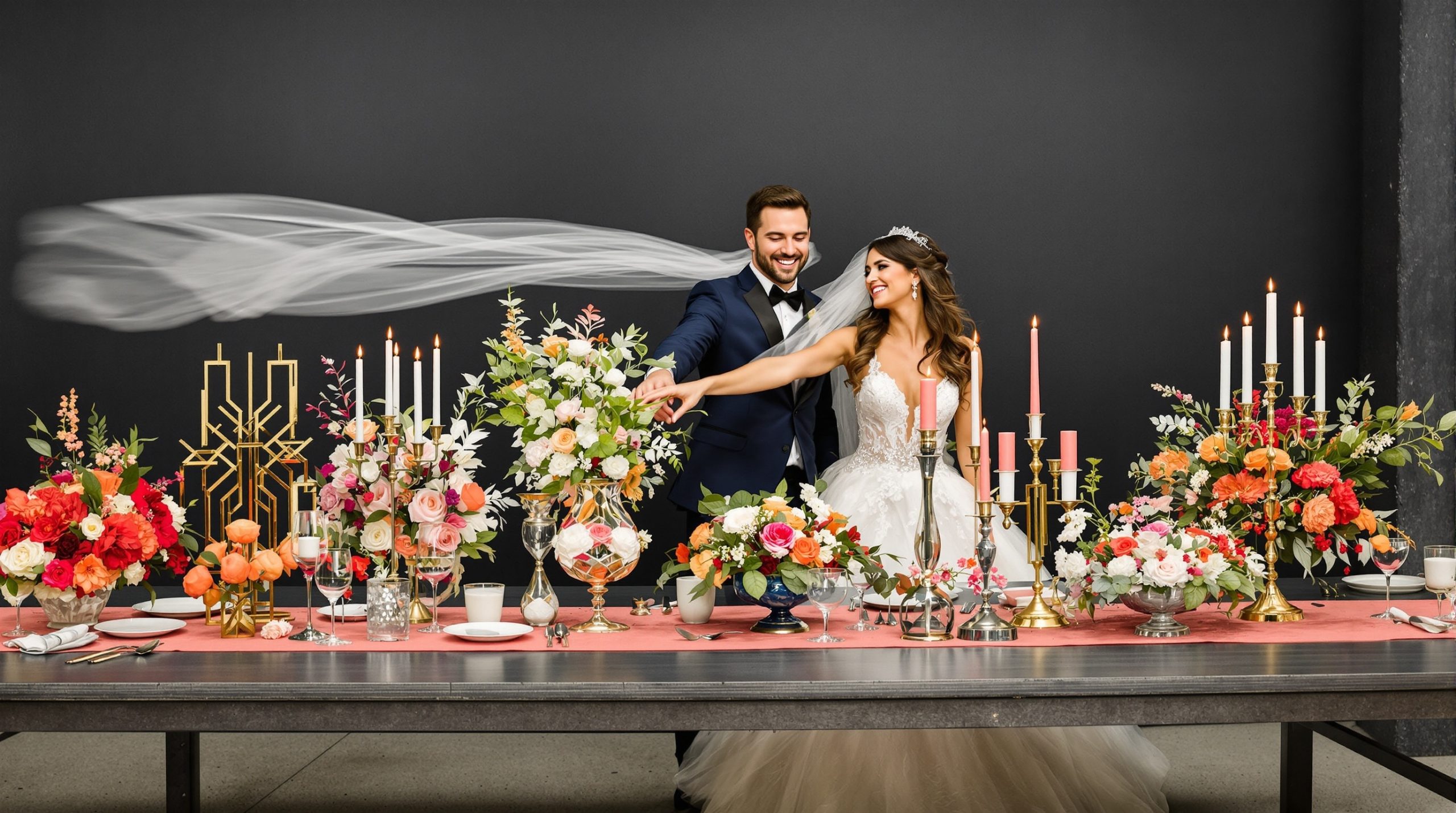
Looking to nail those wedding centerpieces without tanking your budget? Let’s break down 11 options, ranked from bang-for-buck to jaw-dropping guest impact. Candle clusters: ultra-affordable, sets a warm mood. Low-profile florals: they’ll facilitate effortless conversation. Mid-range mixes and match with garlands? Streamline elegance in one fell swoop. Go all-out with towering, high-impact arrangements but brace for a budget spike. The key pivots on your prosperity checklist: budget percentage, venue vibe, guest count. Want to see how this strategic planning accelerates decision-making?
Cost snapshot
Let’s cut to the chase: centerpieces aren’t just table fillers—they’re strategic mood-setters that can make or break the reception vibe. When it comes to wedding centerpiece ideas, you’re playing in a field where execution is key. Here’s a streamlined snapshot of centerpiece options that align with your hustle:
Centerpieces are not just table fillers; they’re mood-setters crucial to the reception vibe.
- Small Centerpieces: Perfect for tight budgets and space, rentals start at $60. Purchase if you want colors that pop—$60 base.
- Medium Centerpieces: Rentals range from $85-$110, offering a middle ground that doesn’t skimp on style.
- Large Centerpieces: Go big or go home—rentals start at $110, offering high impact.
- Sweetheart Table: Add 25% for that special touch—$70-$500 range.
With the 2026 wedding season characterized by supply volatility, strategic choices in centerpiece options can help manage both aesthetic expectations and budget constraints. Centerpieces are part of the larger wedding budget where food and beverages typically account for 20-30%, making it crucial to plan holistically. Next, strategically align these table decor ideas with your budget and vision.
What you’re actually paying for (cost structure)
Understanding what you’re actually shelling out for those centerpieces is non-negotiable. You’re not just paying for flowers; you’re investing in expertly executed designs, strategically sourced materials, and streamlined logistics. High-end blooms like peonies and orchids spike costs, while centerpiece alternatives, such as candles or lanterns, offer budget-friendly options. Labor isn’t just about arranging flowers; it’s the hustle behind planning, sourcing, and installation. Service fees, averaging 20%, cover the behind-the-scenes grind. Containers, whether rented or purchased, add layers to your budget. Additional costs, such as cake cutting fees, can be overlooked but contribute to your overall expenses. Non-floral elements like linens and lighting aren’t just decor—they’re impact accelerators. Venue packages might offset logistics fees, but mixing centerpiece styles across tables is your ace in the hole. The industry standard for wedding floral budgets is 8-10% of the overall budget. Your next step? Prioritize what’s non-negotiable for your vision.
Cost drivers (what moves the quote the most)
When it comes to cost drivers for your wedding centerpieces, a few strategic choices can make or break your budget. Keep an eye on these key factors that can swing your quote from manageable to mind-blowing:
- Flower Type Selection: Opt for in-season flowers like roses or carnations instead of premium, off-season blooms like peonies and gardenias. Exotic imports? Forget it—supply chain costs add up fast. Labor costs for complex floral arrangements can also contribute to elevated prices, especially when intricate designs require skilled craftsmanship.
- Geographic Location Variation: Where you tie the knot matters. Urban areas like LA or DC? Expect premium pricing. Rural spots offer savings, but watch for travel costs. Wedding costs in locations such as New York City can significantly exceed national averages, impacting your budget planning.
- Design Complexity and Volume: Simple designs won’t gut your budget. Go extravagant, and costs skyrocket.
- Material Composition Options: Mix fresh and silk flowers. They’re budget-friendly without sacrificing style.
Ready to pivot your plan and execute efficiently? Start with a flower availability checklist.
Example scenarios (3 budgets x 3 priorities)
Pivoting from the cost drivers, it’s time to look at real-world scenarios that align your floral budget with your wedding priorities. You’ve got three budgets; let’s match them with guest impact strategies that speak to your ambitions and efficiency. When planning wedding flowers, it’s important to consider that couples typically allocate 8% to 10% of their total wedding budget for flowers, which can help guide your financial decisions.
| Budget | Priority 1: Maximize Impact | Priority 2: Balance Budget | Priority 3: Streamline Execution |
|---|---|---|---|
| Budget-Conscious | DIY centerpieces: $40/table | Small centerpieces: $20/table | Minimalist decor: $120 total |
| Mid-Range | Mixed heights: $145–$550/table | Repurpose ceremony florals | Simplified pricing: $50/piece |
| Luxury | Statement installations: $260+ | Tall arrangements: $250–$550 | Floral ceilings: $7,500+ |
Reality Check: Cutting costs doesn’t mean cutting style. Focus on strategic repurposing and intentional choices to maintain your vibe. Next step: Create a timeline to optimize execution.
How to get accurate quotes fast
Let’s cut to the chase: getting accurate quotes for your wedding centerpieces doesn’t have to be a marathon. With a few strategic moves, you can streamline the process and pivot towards decisions that get the job done.
- Use Online Tools: Fiore Designs’ calculator gives you instant budget estimates. Input details like quantity and floral types to see itemized costs, including service fees.
- Contact Florists Directly: Email or call with specs—table count, flower preferences, budget. Expect detailed quotes within 24-48 hours.
- Leverage Seasonal Data: Use peak season info to score cheaper quotes and avoid costly out-of-season blooms. Seasonality influences costs, so timing your wedding during peak flowering seasons can result in significant savings.
- Compare Quotes: Gather 3-5 quotes to find the best average cost. Consider location factors as they can significantly impact overall wedding costs, especially in urban areas.
Now, go execute! Your centerpiece quotes are just a click or call away.
Mistakes to avoid
You’ve nailed the quote process; now let’s sidestep the usual centerpiece pitfalls. Centerpieces shouldn’t just fill space—they should amplify your wedding’s vibe without tripping over common missteps. Here’s your crash course:
- Theme Inconsistency: Confirm centerpieces echo your theme. Mixing styles without a unifying element? That’s disjointed chaos, not curated cool. Centerpiece design should reflect the wedding theme, ensuring cohesion and harmony in your overall decor. Consider how venue preferences can inform centerpiece choices, leading to a more seamless and aesthetically pleasing setting.
- Size and Sightline Issues: Avoid tall pieces that block views. Guests should chat, not play peekaboo around towering florals.
- Overdecoration and Clutter: Less is more. Overcrowding tables with decor dilutes impact and stretches your budget thin.
- Scent and Safety Hazards: Keep scents subtle and exits clear. Too many candles? That’s a fire drill waiting to happen.
Execute with strategy and streamline for success. Pivot from pitfalls to powerhouse centerpieces.
Quick cost checklist you can screenshot
A cost-efficient wedding centerpiece strategy isn’t just savvy; it’s downright mandatory for those who live life in the fast lane. Here’s your quick-hit checklist to keep costs in check and style on point.
- Low-Cost Options: Opt for simple 5-6″ arrangements at $18-$25 each or small table centerpieces for $20. DIY a centerpiece with wholesale flowers for $40.
- Mid-Range Selections: Reception table centerpieces go from $50 to $600. Sweetheart table pieces start at $70.
- High-End Choices: Consider tall centerpieces, ranging from $250-$550.
Couples often use budget flexibility to adjust floral spending within the 8–10% allocation, balancing visual impact with financial constraints. Remember that typically, couples allocate 8–10% of their overall wedding budget to florals, ensuring that flowers enhance the ambiance without overwhelming the financial plan.
For guest count, plan $1,200 total for 50 guests, scaling up to $7,500+ for 200+.
Reality Check: Repurpose ceremony flowers and compare vendor quotes. Execute strategically—your wallet will thank you.
FAQ
[Curious about centerpiece dilemmas? Let’s tackle your burning questions head-on. What’s the best style for round tables? Go low and symmetrical to keep conversations flowing. Is height an issue? Tall arrangements need venue checks for open flame rules. Want cost efficiency? Compote arrangements with candles cut down flower expenses. Long tables? Opt for garlands or bud vase clusters for a streamlined look.]
Wondering about practicality? Centerpieces help guests find their seats—no GPS needed. Low profiles mean uninterrupted chatter. How to match your theme? Romantic? Think roses. Outdoorsy? Add pinecones. Don’t forget the budget impact—centerpieces eat up floral funds. Consider the color palette that complements wedding décor for a cohesive and attractive arrangement. Average cost per guest directly impacts centerpiece budgeting, so plan accordingly.
[Next step: Make a checklist of your centerpiece must-haves and non-negotiables. Ready, set, execute!
Key takeaways
Although centerpieces may seem just like floral fluff, in the world of wedding planning, they’re strategic moves that can make or break your reception’s vibe. To nail that “curated cool” without busting your budget or sanity, keep these key takeaways in mind:
- Budget vs. Impact: Low-cost options ($18-$25) can be just as effective as luxury pieces ($600) if executed with intent. Prioritize ambiance over extravagance.
- Scale Smartly: For 100-150 guests, balance low and tall centerpieces within a $3,000-$5,000 budget. Bigger guest lists mean bigger statements.
- DIY Dynamics: Cut costs with DIY projects—$40 per table can still wow when strategically designed.
- Repurpose Resources: Double-duty your ceremony flowers at the reception. It’s a non-negotiable move that maximizes impact per dollar.
- Establishing a wedding budget is crucial to ensure that every dollar is planned strategically, allowing you to make impactful decisions without compromising your financial limits.