

Amid the wedding chaos, you gain resilience, perspective, and shared history. Controlled chaos beats “perfection.” Hurricane Hugo proved disasters boost emotional connections. Focus on the non-negotiable: love. Execute wedding strategies like a CEO. Embrace humor to navigate hitches. Use AI for budgeting and vendor logistics—no Pinterest needed! A “disaster” wedding is still a memorable milestone. Next, leverage actionable plans, pivot when needed, and know the best memories aren’t always in streamlined symmetry. Ready for more insights?
The thesis (what people get wrong)
While it’s tempting to think disasters destroy relationships, the truth is more nuanced and, dare I say, intriguing. Imagine facing wedding imperfection with acceptance, seeing wedding problems from a new perspective, and understanding wedding day reality in all its raw glory. You’d think disasters would derail these moments, but they often accelerate connection and understanding. Post-Hurricane Hugo data showed marriage rates actually increased, defying economic theories. Couples found strength amid chaos, strategically pivoting to focus on what’s non-negotiable: each other. This isn’t about perfection; it’s about embracing controlled chaos and making intentional decisions. A Day-Of Coordinator can ensure smooth execution even in unpredictable situations, easing stress for the couple. So, next time you’re thrown a curveball, grab your timeline, streamline the process, and execute with precision. And yes, even disaster can deliver a brilliantly imperfect wedding day. Interestingly, just as extreme weather events have led to an increase in child marriages as a coping mechanism in some communities, they can also paradoxically bolster existing relationships by highlighting the importance of unity and resilience.
Why this happens (the real root causes)
Ever notice how chaos can bring people closer together? An imperfect wedding can make you happy because it taps into deep-rooted dynamics that thrive in chaos. Stress-induced bonding is real—your relationship satisfaction can skyrocket post-disaster. Why? Because you’re:
Chaos has a unique way of strengthening bonds and elevating relationship satisfaction.
- Facing challenges head-on: Nothing like a hurricane to make small problems disappear.
- Building resilience together: You pivot and adapt, becoming a stronger unit.
- Finding humor in madness: Laughter is your best tool when plans go haywire.
- Appreciating the essentials: You realize what’s truly non-negotiable.
When economic pressures and mental strain hit, you’re forced to prioritize and streamline. These experiences accelerate your bond, offering a unique, kinetic energy that conventional weddings can’t mimic. Research shows that natural disasters can lead to temporary increases in relationship satisfaction, as couples often experience a sense of renewal and enhanced appreciation for each other. Studies from the American Psychological Association suggest that overcoming these challenges together can deepen emotional connections and long-term satisfaction in relationships. Embrace the chaos; it’s strategically executed happiness.
What to do instead (the better framework)
- Digital Power Moves: Use AI tools for budget tracking and vendor matching. Trust digital platforms—they’re non-negotiable for cutting down planning time. With 85% of couples utilizing digital platforms or apps for wedding planning, ensuring a mobile-first approach is crucial for managing discovery, budgeting, and timelines efficiently. Incorporating advance booking discounts can further optimize your budget and secure better rates for your venue.
- Vendor Vetting: Read online reviews and prioritize recent feedback. In-person meetings? Yes, they still matter for strategic vendor selection.
- Budget Boundaries: Set clear limits per category to prevent overspending. Inflation’s got nothing on your strategic spend.
- Decision Dynamics: Assign domain ownership for key decisions and align choices with shared values. This pivots potential conflicts into cohesive action.
How to apply it in real life
Envision this: your florist delivers only half the flowers you ordered. Instead of panicking, execute a backup plan with strategically sourced local blooms that save the day and keep your decor on point. To avoid such mishaps, consider establishing clear contracts and expectations with vendors from the start to ensure accountability and reduce the risk of miscommunications. Now let’s ramp it up—when a hurricane threatens your outdoor wedding, pivot indoors with a streamlined setup that still wows and gets the job done.
Similarly, if your tooth unexpectedly chips on your wedding day like Hilary Duff’s incident, having a trusted emergency dentist on speed dial can restore your confidence and smile just in time for the ceremony.
Example 1: a common scenario + the better move
When it comes to wedding planning, chaos isn’t just a possibility—it’s a given. Imagine this: it’s the morning of your big day, and the florist calls. They’re lost. Panic? Nah, you pivot. You’ve got a backup plan. A strategic, well-executed checklist saves the day. Here’s the move: anticipate the chaos by having a “Day-of Disaster Kit.” Identify non-negotiable tasks and assign them to trusted allies. Time is money—streamline your decisions and keep that momentum. Remember, vendor failures are common, like receiving only half the flowers you ordered, so always have contingencies in place. Reality Check: Chaos will happen. Embrace it. The better move is to prepare for curveballs with a practical mindset. Forget Pinterest perfection; focus on getting the job done. Arm yourself with timelines and metrics. Your wedding should thrive on kinetic precision, not just aesthetics. Next step? Build your own kit today. Start your planning with a sharp focus on the budget and venue capacity to ensure everything aligns with your vision and limitations.
Example 2: a high-stakes scenario + the better move
Even when you’ve got all your ducks in a row, life has a way of tossing curveballs that would make a baseball coach proud. Imagine your venue obliterated by a forest fire—not once, but twice. Talk about high-stakes chaos! Yet, this couple turned disaster into a win by pivoting to a local park, turning nature’s fury into a picturesque backdrop. Their ability to adapt was reminiscent of a wedding where an unsupervised child ran into a door, causing unexpected chaos, yet the couple managed to keep the day joyful regardless. Here’s your better move: Always have a strategic backup venue. Think of it like a contingency plan in business. Use a checklist for potential high-stakes scenarios—natural disasters, guest drama, vendor no-shows. Execute with precision. Contracts with penalties for vendors, enforced guest lists, and proactive security measures are non-negotiable. Embrace the chaos. Your wedding isn’t just a day; it’s a masterclass in crisis management.
Example 3: a ‘we’re busy’ scenario + the better move
Let’s face it, wedding planning isn’t for the faint of heart, especially when you’re juggling a full-time job, a side hustle, and a social life that’s anything but quiet. You’re not alone—94% of couples feel the stress crunch. Here’s your pro move: treat this like a high-stakes project. Break it down with a value-based decision framework. Identify non-negotiables early, then strategically delegate. Vendors are your secret weapons—tap into their expertise to streamline tasks. Consider hiring a planner; they’ll save you time and sanity. Develop a contingency plan and maintain open communication with your team. Remember, wedding planning challenges serve as practice for future marital situations, such as disagreements over guest lists and budget stress. Reality Check: Don’t let perfectionism derail you. Prioritize Non-Negotiables such as venue selection, guest list, and budget to keep you focused on what truly matters, and remember, a well-executed plan beats a Pinterest-perfect mirage. Now, let’s get this done!
Counterpoints (when the old way is actually fine)
Although the modern wedding industry often pushes innovation and trendiness, sticking with a traditional wedding can actually have its merits. Traditional weddings aren’t just about nostalgia; they’re about proven benefits that enhance relationships and family bonds. Imagine this:
- Emotional bonds strengthen: Traditional weddings encourage emotional ties, making your day about shared history and future togetherness. Planning tools like checklists for decision-making ensure that the process is streamlined and focused on what truly matters.
- Public commitment: Legal ceremonies witnessed by loved ones boost relationship accountability.
- Satisfaction levels soar: Married adults report greater life satisfaction and relationship success. Research indicates that married individuals generally have superior health due to social support and companionship.
- Predictable comfort: A structured ceremony can decrease anxiety about lifelong commitments.
Strategically executed, a traditional wedding doesn’t just happen; it’s a well-oiled machine, like a project plan with emotional payoffs. It’s non-negotiable that you focus on what truly matters—your future.
Action plan (do this next)
When it comes to kicking off your wedding planning, think like a strategist, not a dreamer. This isn’t about pastel fantasies; it’s about executing a seamless event. Start by aligning priorities with precision:
- Identify a realistic budget: Know your numbers and who’s contributing before vendor chats.
- Select your season and location: These choices strategically guide every subsequent move.
- Craft a preliminary guest list: Focus on non-negotiable attendees and target numbers.
- Communicate wedding party selections early: Avoid last-minute pivots by locking this down.
Setting a timeline based on venue and vendor availability is essential. Reserve your ceremony and reception venues pronto; they’re your event’s backbone. Remember, in wedding planning, streamlined decisions win over drawn-out dreams. Now, accelerate into action!
To ensure financial security, establish a contingency fund of 10-15% to mitigate unexpected expenses and avoid overspending.
Visual summary you can share
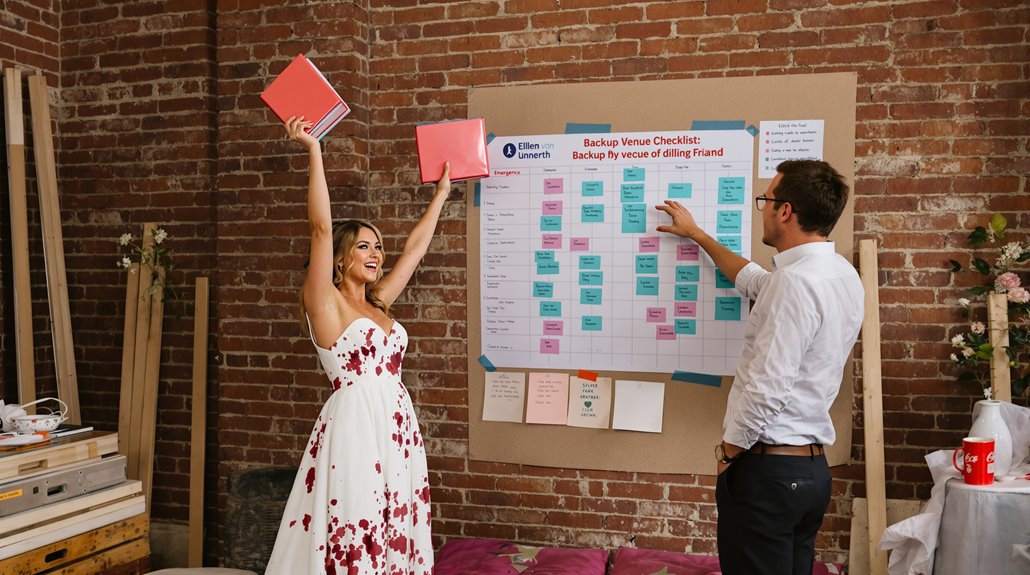
As you’ve set your wedding planning into motion with a solid action plan, it’s time to visualize the chaos-inducing scenarios that can derail even the best-laid plans. Consider venue failures: a Brooklyn venue goes bankrupt, or construction remains unfinished. Imagine the pandemonium of a guest pulling a fire alarm mid-ceremony or a no-show catering service leaving guests hungry. Picture dealing with a dress disaster from a spilled glass of red wine. These aren’t hypotheticals; they’re real scenarios that demand strategic pivots and swift execution. Create a hard-hitting visual summary—think timeline disruptions, checklist gaps, and emergency contacts. Share it with your trusted team. This isn’t about romanticizing chaos; it’s about having a plan when chaos strikes. Remember to set realistic budgets based on actual vendor estimates to avoid overspending. Now, arm yourself with proactive solutions.
FAQ
Let’s cut to the chase: when family or vendors push back, it’s time to flex those negotiation muscles. If you’ve already made a decision that feels ‘off,’ pivot strategically to course-correct—timelines and checklists are your new best friends. To align with your partner and snag an easy win today, focus on one non-negotiable task that accelerates your plan and gets the job done.
What if my family/vendors push back?
Facing pushback from family and vendors? Time to flex your negotiation muscles. When family pressures you for lavish traditions, remember: your wedding, your rules. Prioritize what matters—personal touches over outdated norms. Create a strategic checklist. List your non-negotiables and communicate them clearly. If vendors balk at pricing, counter with transparency. Use client testimonials to demonstrate value and justify costs. Trust and direct communication win here. Leverage offline consultations to customize solutions and sidestep misunderstandings. Google searches and planners can help you strike a balance in vendor selection. Remember, every decision accelerates your dream day forward. If costs spiral, pivot to creative, affordable alternatives. Embrace the hustle—after all, it’s what gets the job done.
What if I already made the ‘wrong’ decision?
Made a call you’re second-guessing? It’s not the end of the world; it’s a pivot point. Maybe you underestimated hair and makeup timing or pushed for that mid-day portrait marathon. We’ve all been there, bless and stressed! But here’s the hustle: every decision’s a learning curve. Delays are common—68% of weddings run behind. Strategically, adjust your timeline now. Focus on what matters: more partner time, less overcomplication. Don’t let vendor regrets weigh you down; reassess contracts, demand clarity, and negotiate smarter. Lack a Plan B? Make it non-negotiable. Need a budget reality check? Prioritize essentials and delegate DIY. Mistakes made? Cool. Now, let’s move those gains into a streamlined, actionable plan. Pivot and execute, because that’s what gets the job done.
What’s the fastest way to course-correct?
When a wedding plan veers off course, strategic course correction is your saving grace. You need to act fast and keep your cool. First, lean on your backup vendor list—pre-arranged and vetted for reliability. Execute a seamless vendor switch, thanks to direct contacts and upfront contingency plans. Next, embrace weather contingencies. Use indoor venues or waterproof marquees, already on standby. Monitor forecasts, and pivot as needed. Pack emergency kits with essentials like duct tape and batteries; they’re your lifeline when things get hairy. Build timeline buffers to absorb delays, maintaining momentum. Prioritize team communication: assign crisis roles and store contacts in a Google Drive. Now, take a deep breath. You’ve got this. Execute with precision and confidence.
How do I get my partner aligned?
You’ve got your wedding plan back on track, but now it’s time to make certain you and your partner are moving in the same direction. Start by practicing active listening—no interruptions, just absorb. Reflect emotions back with phrases like, “What I hear you saying is…” to confirm understanding. Swap blame for “I” statements, shifting from “You never help” to “I feel overwhelmed.” Empathy is key; ask questions like, “What was that like for you?” to gain insight. Set relationship goals, both short and long-term, to align expectations and create actionable plans. Check-in regularly with scheduled meetings to discuss progress and celebrate wins. Remember, alignment isn’t a one-time thing; it’s a strategic, ongoing pivot. Now, let’s execute!
What’s the easiest win I can do today?
What’s the one thing you can tackle today that’ll make a real impact on your wedding planning? Set a realistic budget. It’s your strategic blueprint, eliminating vendor confusion and streamlining every other decision. Not sexy, but essential. Next, book your venue. It sets the stage for all other logistics—think of it as your planning pivot point. Need a quick win? Schedule those vendor consultations. They’re non-negotiable for accelerating decisions on photographers, caterers, and DJs. Trust us, this isn’t about fluffy Pinterest boards; it’s about executing a plan that gets the job done. So, grab that fourth coffee, hit the ground running, and start ticking off these key tasks. You’ll thank us when your day runs like a well-oiled machine.
Key takeaways
Disaster-proofing your wedding isn’t just a smart move—it’s non-negotiable. Get ready to pivot like a pro by anticipating chaos and having a streamlined plan. Here’s what you need to watch for:
- Venue Volatility: Bankruptcy, fires, or double bookings can derail your day. Have a backup plan ready to execute.
- Guest Gambles: Intoxicated guests or unexpected plus-ones can cause chaos. Strategically manage your guest list with clear communication.
- Logistical Lapses: Miscommunication on timing or services can turn your dream day into a dud. Double-check every detail.
- Nature’s Whims: Weather or wildfires can force a venue pivot. Be ready to make quick decisions and have alternative locations lined up.
Reality check: You can’t control everything, but with smart strategies, you’ll be ready to tackle anything.