
Guarantee your wedding ceremony hits the sweet spot at 20-30 minutes—because attention spans and that third cup of coffee demand it. Strategically streamline your vows, keep speeches tight, and prioritize essential elements. It’s more project management than Pinterest board; focus on tactical choices that get the job done. Lengthy rituals? Leave them for another occasion. Want the efficiency-minded know-how to execute like a pro while keeping the chaos controlled? Stick around, ambitious planners.
The short answer (what most people should do)
Let’s cut to the chase: your wedding ceremony should be a swift, powerful celebration that respects both your time and your guests’ attention spans. The ideal wedding ceremony length? Aim for 20-30 minutes. This ceremony duration keeps things sharp and meaningful without straining attention spans. How long should your ceremony really be? Most non-religious ceremonies hit that sweet spot, packing in everything essential—from vows to the big exit—with precision. Don’t get bogged down by tradition; think of it as a well-executed project. A streamlined 20-minute ceremony gets the job done—efficiently covering essentials like vows and the ring exchange. Remember, it’s about making every moment count, strategically engaging your guests, and pivoting seamlessly to the next celebration phase. It’s beneficial to prioritize essential services for your ceremony, ensuring that each element adds value and keeps the focus on what truly matters. Most ceremonies last between 20 and 30 minutes, ensuring a balance that honors tradition while also respecting everyone’s time.
The real answer: what it depends on
When planning your wedding ceremony, it’s essential to understand that its length hinges on several factors, each demanding your strategic attention. Ceremony timing isn’t a one-size-fits-all deal; it’s more like a tailored suit—meant to fit just right. Here’s what you should consider:
- Religious and Cultural Traditions: Catholic, Jewish, Hindu, or civil ceremonies each have distinct durations. Know your type, and plan accordingly. Consider the venue and vendor options available to ensure the ceremony aligns with the traditions and fits your vision.
- Personalization and Ceremonial Elements: Adding personalized vows, readings, or rituals? Factor in extra minutes for each element.
- Guest Engagement and Attention Span: Keep it tight. Aim for 20-30 minutes to maintain energy and focus. Longer ceremonies risk losing your audience. Human attention spans begin to wane after 20 minutes, so crafting a captivating ceremony is crucial to maintain engagement.
Get these pieces aligned, and your ceremony timing will be executed flawlessly.
Decision framework (choose the right move fast)
Crafting the perfect wedding ceremony isn’t just about the frills—it’s about strategic execution. In the hustle of wedding planning, your ceremony should be a streamlined masterpiece that respects both time and attention spans. For most couples, a 20-minute ceremony is the non-negotiable sweet spot. This duration keeps guests engaged without them sneaking peeks at their phones. When planning your wedding, it is important to consider venue restrictions, as they may impose limits on rental periods and end times. Remember that strategic planning can significantly influence costs and the overall wedding experience, ensuring that your ceremony and reception align perfectly.
Here’s a quick breakdown:
| Component | Time (minutes) | Purpose |
|---|---|---|
| Processional | 2 | Sets the scene |
| Officiant’s speech | 8 | Captures essence |
| Vows & rings | 9 | Personal commitment |
Avoid common pitfalls: overstuffing with readings or blessing rituals. Instead, pivot to essentials that get the job done efficiently. Next, align your ceremony slot with the day’s flow for a seamless shift.
Recommended timeline / checklist (so you don’t miss anything)
Although it’s tempting to let excitement take the wheel, a well-executed wedding ceremony thrives on a rock-solid timeline. Think of it as a project that demands precision, not a daydream. Here’s your streamlined checklist to guarantee nothing slips through the cracks:
- Processional (2 minutes): This is your grand entrance. Make it count but keep it brisk. Nobody wants an aisle traffic jam.
- Ceremony Core (20 minutes): Officiant speech, vows, ring exchange, and pronouncement. It’s the meat of the ceremony—execute it with flair but keep it tight. Since non-religious ceremonies typically fit within this timeframe, consider keeping speeches concise to maintain the flow. It’s essential to prioritize your ceremony elements to adhere to your budget and timeline.
- Recessional (1 minute): Exit like you just nailed a major presentation. Clean, efficient, and onto the next stage.
Examples (realistic scenarios)
When you’re up against a tight timeline and limited availability, a streamlined 15-minute ceremony executed with precision will keep your day moving without a hitch. On the flip side, a flexible timeline allows for high customization, letting you add personal touches and rituals that reflect your story. Discussing with the officiant or planner is crucial for accurately estimating the ceremony duration, ensuring that all desired elements fit within the allotted time. For those prioritizing budget, a no-frills approach focusing on essential elements means you can have an impactful ceremony without the financial stress—because who needs a floral arch when the future is what’s blooming? Keep in mind that unresolved family dynamics can amplify stress, so addressing these early can contribute to a smoother day.
Scenario 1: tight timeline + limited availability
Facing a tight timeline and limited availability for your wedding? It’s crunch time. You’ve got a 4-6 hour venue block, so every minute counts. Execute a streamlined ceremony, maxing out at 20 minutes. Why? Overlapping bookings. Start on the second, avoid overtime fees, and keep vendors happy. Guests standing? Cap it at 20 minutes to fend off fatigue. Vendors run on precision—officiants, photographers, DJs all need that tight schedule. Outdoor venue? Watch the weather. Rain, sun, or wind can compress your timeline even further. High-traffic seasons mean 20-minute ceremonies are non-negotiable. Here’s the kicker: You’re in control. Plan strategically, execute flawlessly. Focus on creating moments that reflect personal authenticity rather than generic aesthetics. Next step? Create a detailed timeline. Make it more Jenga, less Jumanji. Remember, the typical duration of a wedding ceremony is 20-30 minutes, so staying within this range is perfectly normal.
Scenario 2: flexible timeline + high customization
So, you’ve got the luxury of a flexible timeline and a taste for high customization? Lucky you. Here’s how you can execute a ceremony that fits your style and schedule. Start with a modular base: Processional (2 minutes), vows (6 minutes), and ring exchange (2 minutes), allowing you to strategically add personalized elements. Want a special reading or ritual? No problem, just factor in an additional 3-5 minutes each. Your ceremony can expand from a non-religious 20-minute sweet spot to a 30-45 minute personalized masterpiece. Keep guests engaged by avoiding a marathon; aim for 30 minutes max. Remember, it’s about intentional choices, not endless traditions. Next steps: Craft your timeline, then streamline it with a checklist. Couples who set clear priorities early report less stress and greater satisfaction, ensuring their ceremony is both memorable and meaningful.
Scenario 3: budget-first priorities
You’ve got a budget-first mindset, and that’s smart planning in action. Prioritize your budget by allocating 2-3% for your ceremony. For a $10K wedding, think $300. Combine ceremony and reception at one venue to slash transport and vendor costs. Opt for low-fee city parks or venues with built-in amenities like chairs and tables. Focus your spend on essentials—food, venue, and photographer—while keeping ceremony details streamlined. Smaller guest lists mean fewer dollars spent. For vendors, go à la carte or snag a DJ package to cover both ceremony and reception. Remember, contracts hide sneaky fees—read them. The average cost of a wedding in the U.S. in 2025 is $33,000, so setting a budget-first approach is crucial to managing expenses effectively. To further reduce stress, implement systematic budgeting approaches to stay within your financial goals. Want to control costs? Set a flexible date and plan 5-6 months ahead. Execute your wedding like a pro.
What to avoid (common traps)
When planning your wedding ceremony, strategically avoiding common pitfalls can save you precious time and sanity. Keep it tight and efficient by steering clear of these traps:
- Excessive Religious Elements: Full Mass or lengthy rituals can stretch your ceremony to 90 minutes. Stick to essentials if you want to avoid a marathon.
- Overly Long Vows: Personal vows are sweet, but over 3 minutes each? You’ll lose guest attention faster than a bride chases a runaway veil. Balance them for a smooth flow.
- Too Many Rituals: Unity candles, sand blending—each adds minutes. Pile them up, and you’re looking at a 45-minute ordeal. Choose wisely and keep it streamlined.
Utilizing vendor assistance can significantly reduce stress and ensure you stay within budget while executing a memorable and efficient ceremony. Avoid these traps, and you’ll execute a ceremony that’s efficient and memorable.
1-page action plan you can screenshot
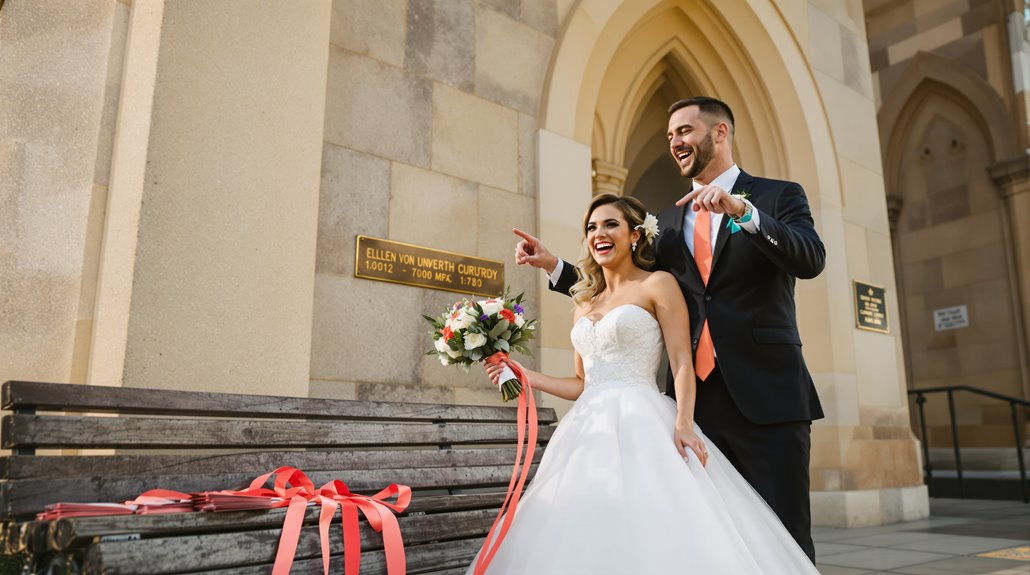
Ready to nail down your wedding ceremony timeline like a pro? Let’s get you a page action plan you can screenshot and execute with precision. Start with a 2-minute processional to set the stage. Your officiant’s speech? Keep it tight at 8 minutes. Add 3 minutes for ceremonial rituals and 6 for vows. Wrap up with a 3-minute declaration, ring exchange, and pronouncement. That’s a streamlined 22 minutes—right in the sweet spot.
Need to pivot for cultural or religious elements? Factor in extra time. Keep guests engaged by sticking to a 30-minute max for non-religious ceremonies. Discuss details with your officiant to avoid surprises. Screenshot this plan, share it, and keep your ceremony moving like a well-oiled machine. Remember, strategic execution is essential to avoid chaos and ensure your ceremony runs smoothly.
FAQ
Got questions about your wedding ceremony duration? If your situation doesn’t fit the norm, start by identifying your non-negotiables today—this helps avoid the most common regret of neglecting personal priorities. Watch out for red flags like rushing decisions; strategically consider how adding or removing vendors can streamline or complicate your plan.
What if my situation doesn’t match the examples?
Feeling like your wedding doesn’t fit the typical mold? You’re not alone. Many couples today are ditching cookie-cutter ceremonies for something that truly reflects them. Whether you’re eyeing a 10-minute elopement or a multi-day extravaganza, the key is strategic execution. Consider your core priorities: Do you want a swift, intimate exchange or a grand, dramatic affair? Factor in guest comfort—like starting later to dodge the summer heat—and logistical movements between venues. Use timelines and checklists to keep everything streamlined and efficient. Don’t let tradition dictate your day; let personal meaning take charge. Remember, it’s about what gets the job done for you. Couples are increasingly opting for unique locations that resonate with their values, allowing them to create a wedding experience that is both personal and memorable. Evaluate, decide, and pivot as needed. Your wedding, your rules. Ready to redefine the norm?
What’s the first thing I should do today?
How do you kickstart your wedding planning today? Start by strategically mapping out your ceremony’s timeline. Your mission: execute a streamlined, engaging ceremony that respects your guests’ time and your personal flair. First, decide on the ceremony length—20 minutes hits the sweet spot for non-religious events. Break it down: 2 minutes for the processional, 8 for the officiant’s speech, 3 for rituals, and 6 for vows. Don’t let logistics trip you up; factor in the venue, guest count, and any cultural elements. Remember, communication is non-negotiable—guests need clear info on start times. Accelerate your planning with a solid timeline and checklist. Plan, pivot, and gain momentum. Next up? Coordinate with vendors to guarantee seamless execution. You’ve got this.
What’s the most common regret?
Ever wonder what sends couples into a tailspin post-nuptials? It’s not always the big stuff—it’s the little oversights that snowball. Key regrets often pivot around rushed scheduling and chaotic guest lists. You spend months, maybe years, planning, only to feel the day fly by in a blur. Rushed timelines lead to last-minute chaos, leaving you wishing for more strategic prep time. Expanded guest lists might seem like a good idea until you can’t connect with half of them. Vendor mishaps, like a no-show makeup artist or a part-time photographer missing key moments, also top the regret list. The fix? Streamline your guest list, lock in reliable vendors, and carve out moments to savor your day. Your future self will thank you.
What’s a red flag that I’m moving too fast?
Rushing through wedding planning can lead to a flurry of regrets. Watch out for these red flags signaling you’re moving too fast: Skipping deep family integration means you’ve sped past foundational steps. Ignoring mutual financial discussions? That’s a non-negotiable misstep. If you’re planning your ceremony in under three months, pump the brakes—average timelines span 12-15 months. Cohabiting quickly without trial periods or overlooking friend feedback on compatibility are signs you’re accelerating without checking your mirrors.
Proposals under six months are a common regret trigger, and experts recommend dating 1-2 years before engagement. Prioritize emotional readiness and shared visions over the “event.” Feeling high anxiety about commitment timelines? That’s your cue to pivot. Next step: Strategically map out a timeline with clear milestones.
What changes if I add/remove vendors?
When you’re considering adding or removing vendors from your wedding ceremony, it’s like adjusting the gears of a finely tuned machine—every choice impacts the event’s rhythm and flow. Add an officiant, and you’re looking at 15-45 more minutes depending on religious elements. Musicians? They’ll add energy but also 2-8 minutes. Photographers and videographers guarantee you capture memories, but they’ll need a 30-60 minute buffer for changes.
Thinking of streamlining? Skip personalized vows to cut 3-4 minutes. Ditch rituals to hit a 20-minute sweet spot. Bigger guest list? Plan for a 5-10 minute seating delay. Want efficiency? Strategically pick vendors that fit your timeline and vibe. Leverage these insights to execute your ceremony with kinetic precision and confidence.
Key takeaways
Let’s cut to the chase: your wedding ceremony should be a smooth, well-oiled machine—executed with precision and leaving no room for guest yawns. Here’s the deal: aim for a sweet spot around 20 minutes to keep your guests engaged and your day on track. No fluff, just the essentials.
Key Takeaways
- Average Duration: Non-religious ceremonies typically last 20-30 minutes. Keep it tight and meaningful.
- Short Ceremonies: Elopements or civil ceremonies can be executed in 10-20 minutes without losing impact.
- Traditional Ceremonies: Expect 30-45 minutes with extra readings or rituals. Longer can risk guest fatigue.
Reality check: While personalization is tempting, don’t let it derail the flow. Stick to a streamlined schedule that gets the job done efficiently.