
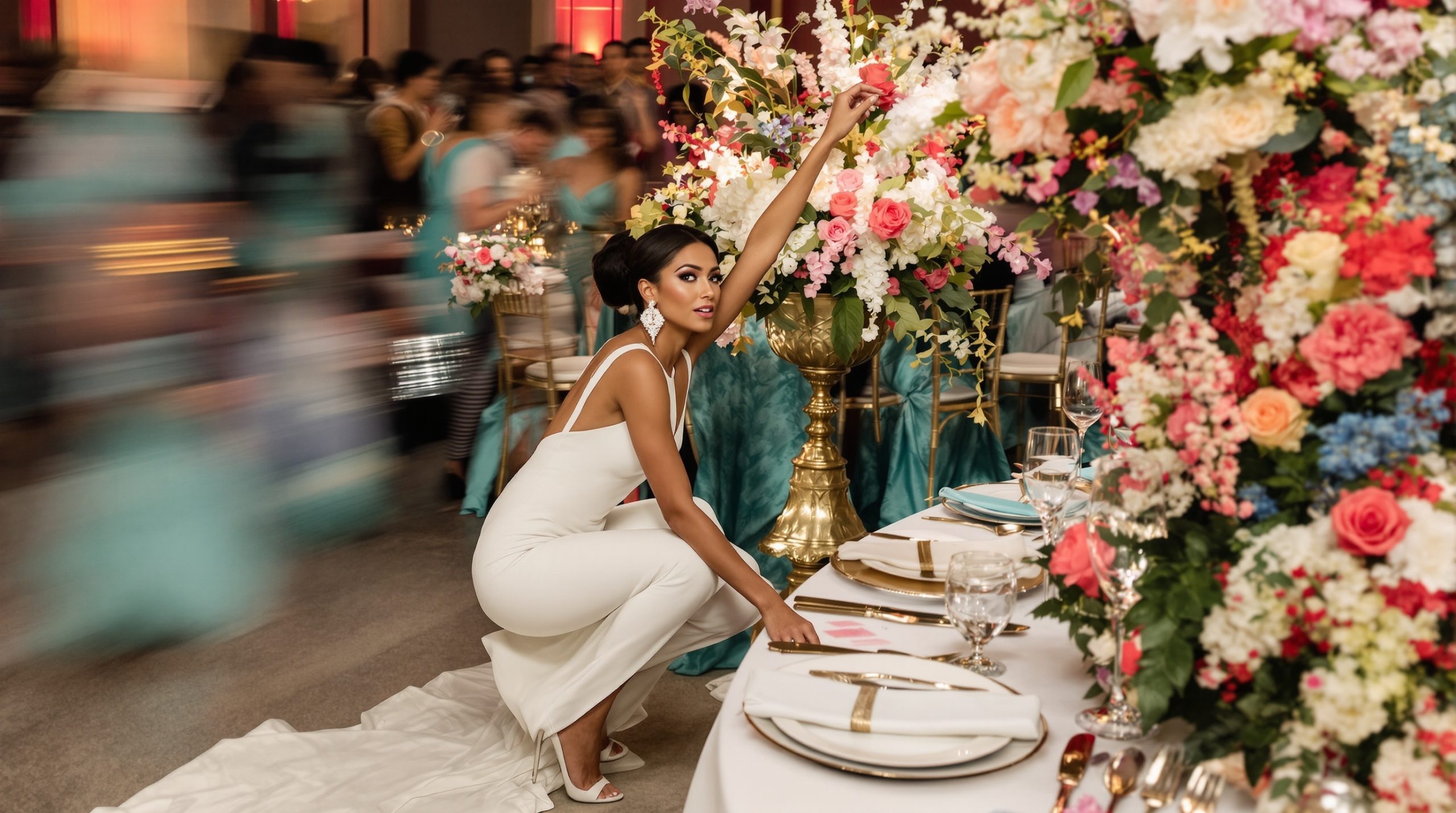
Centerpieces in wedding planning aren’t just eye candy; they’re strategically transformative elements that can revolutionize your event. Think of them as the table’s silent MVPs, sparking guest chatter and amplifying visual appeal. With 8% of your floral budget, they’re a non-negotiable must-have. Mix heights, avoid sightline blockers, and choose bold designs that get the job done. Want to level up your wedding game without getting bless and stressed? There’s more tactical insight ahead.
The short answer (what most people should do)
When you’re orchestrating a wedding amidst a whirlwind of board meetings and tight deadlines, the key to nailing table decor is simplicity with a punch. Centerpieces are non-negotiable—they transform tables from “blah” to “bam!” in seconds. The importance of a well-executed centerpiece can’t be overstated; they’re the silent MVPs, boosting guest perception and adding significant value to the entire event. Think of them as your wedding’s social glue, strategically placed to enhance guest comfort and spark conversations. It’s important to consider potential hidden fees when planning decor, as unexpected costs can impact your overall budget. Incorporating non-floral elements like fruits and artistic structures is becoming increasingly popular, reflecting a shift towards diverse and unique decor styles.
The real answer: what it depends on
How do you nail centerpieces without losing your mind (or your budget)? It depends on what matters most for your event. Do guests notice centerpieces? Absolutely. They’re not just decorative fluff; they’re strategic tools for setting the mood. Here’s how you guarantee they hit the mark:
- Visual Appeal: Choose bold designs that capture attention. Unique vessels and arrangements are non-negotiable for that “wow” factor.
- Social Interaction: Make them conversation starters. Striking designs break the ice, encouraging guests to mingle and engage. Guests value essentials like good food and lively receptions, so ensure the centerpieces complement the overall ambiance of the event.
- Thematic Cohesion: Confirm they align with your event’s theme. They should seamlessly tie together colors and elements for a cohesive look. Incorporating vibrant centerpieces can create a warm and inviting atmosphere, making guests feel welcome and enhancing their overall experience.
Reality check: Balancing style and budget is essential. Prioritize elements that elevate your guest experience.
Decision framework (choose the right move fast)
Nailing your centerpiece strategy means putting your project management hat on and getting tactical. You’re aiming for elegance with efficiency, so let’s streamline this process. Start by defining your event’s theme and atmosphere goals—these guide your decisions on centerpiece aesthetics and function. Prioritize your budget strategically; remember, about eight percent goes to florals. Centerpieces can contribute to a warm and distinctive experience for guests, making your event memorable. Decide whether to repurpose ceremony flowers or invest in unique pieces. When planning, consider using a structured template to cover objectives, audience, deliverables, timelines, budget, and stakeholders for a seamless execution.
| Decision Point | Action Plan |
|---|---|
| Theme & Atmosphere | Define style and mood |
| Budget Allocation | Dedicate 8% to florals |
| Repurpose Strategy | Use ceremony flowers as centerpieces |
| Vessel Selection | Choose impactful glass or porcelain |
| Conversation Starter | Opt for striking designs |
Accelerate decision-making by focusing on these key steps. Execute with precision, and your guests will be wowed by both your style and your savvy.
Recommended timeline / checklist (so you don’t miss anything)
Even though you’re juggling a million things, nailing the timeline for your wedding centerpieces is non-negotiable. Here’s how to execute like a pro:
- Early January: Lock in your guest count and consult a florist. This isn’t just a nice-to-do; it dictates centerpiece quantities and sets your floral budget in motion.
- Two months out: Finalize centerpiece designs, ensuring they align with your reception decor. Mixing rustic themes with crystals? Hard pass. Opt for cohesive elegance.
- Final month: Confirm table count and place your order. Remember to include extras for special tables like the head and dessert ones.
Reality Check: Over-embellishment is a trap. Intentional design is your best friend. Execute with precision, and you won’t just meet expectations—you’ll redefine them. Remember that emotional ROI should guide your decisions, ensuring that your centerpieces contribute to lasting memories.
Examples (realistic scenarios)
Imagine you’re juggling a tight timeline with limited availability and need to execute your centerpiece plans with precision. We get it—sometimes you need a streamlined approach where quick decisions and strategic shortcuts are non-negotiable. On the flip side, if you’ve got a flexible timeline and crave high customization, you’ll want to pivot towards vibrant, unique designs that reflect your personal flair while staying within budget-first priorities.
Scenario 1: tight timeline + limited availability
When you’re operating on a tight timeline with limited availability, wedding planning becomes a strategic game of chess. You need swift moves to source centerpieces amidst peak demand and vendor shortages. Start by prioritizing early florist coordination—even without finalized guest numbers—to lock in essential inventory. Repurpose ceremony florals like aisle markers for reception tables, cutting time and costs. Lean on sustainable, locally sourced elements to stay on trend while dodging scarcity pitfalls. Opt for rentable vessels to avoid creation delays—think glass cylinders, not unicorns. Taller centerpieces for head tables and shorter for guests strike a balance between impact and simplicity. Remember, bare tables are a non-negotiable no-go. Your next step: draft a realistic timeline and make those calls. Hustle on. Additionally, consider implementing the 80/20 rule to focus planning efforts on the most impactful elements of your wedding, ensuring a high-quality experience even with limited resources.
Scenario 2: flexible timeline + high customization
With a flexible timeline and a taste for high customization, your wedding planning can pivot from stressful to strategic. Dive deep into the world of centerpieces with the time and resources to execute a design that truly stands out. Think beyond the ordinary—modern trends like fruit arrangements or fine art-inspired details inject life into any table. {img} Consider repurposing elements like bridesmaids’ bouquets, maximizing both budget and impact. Centerpieces aren’t just decor; they’re conversation starters and mood-setters. They transform tables from flat to fabulous, creating a welcoming environment where guests genuinely connect. Leverage this extra time to focus on personalized touches and modern aesthetics. Next step: Create a timeline, list centerpiece ideas, and prioritize based on guest experience and budget. According to Food52 wedding menu, planning and entertaining guidance, a well-thought-out menu can complement the aesthetic of your centerpieces, enhancing the overall atmosphere of your wedding celebration. {save_text: centerpiece_flexible_custom.jpg
Scenario 3: budget-first priorities
Balancing a wedding budget can feel like trying to solve a Rubik’s cube while riding a roller coaster—every decision is a twist that impacts the whole. Prioritizing what’s non-negotiable, like a high-quality photographer or open bar, is key. Centerpieces? Not so much. They don’t need to break the bank. Opt for candles, mix centerpiece sizes, or use bud vases. Want style without splurge? Reuse sanitized wine bottles with flowers or fairy lights. These strategies save thousands, making room for bigger expenses like venue or catering, which consume 40-45% of your budget. Remember, 69% of couples exceed their budgets but find it worthwhile. Strategic choices keep your wedding efficient and your guests impressed. While managing costs, vendor choices can either enhance or complicate your planning, so consider their impact carefully. Next step: finalize your top priorities.
What to avoid (common traps)
Centerpieces can be the silent saboteurs of your wedding aesthetic when not executed with precision. Avoid these common traps to keep your decor streamlined and intentional:
- Theme Inconsistency: Verify your centerpieces don’t look like they stumbled out of a random Pinterest board. They should echo your wedding’s theme, not clash with venue architecture or other design elements. Venue fees often exclude essentials like tables and chairs, which can inadvertently affect your centerpiece choices if not budgeted properly.
- Size Obstruction: Don’t let towering floral arrangements block sightlines or conversation. Keep the widest parts on the table or high above guests’ heads to maintain social flow. Tall or wide centerpieces can obstruct guest interaction, making it essential to pay attention to their size.
- Overdecoration Clutter: Filling every inch with decor doesn’t scream “luxury”—it whispers “chaos.” Opt for statement pieces over a hodgepodge of trinkets.
Reality Check: Centerpieces should enhance, not overshadow, the experience. Prioritize practicality and cohesion.
1-page action plan you can screenshot
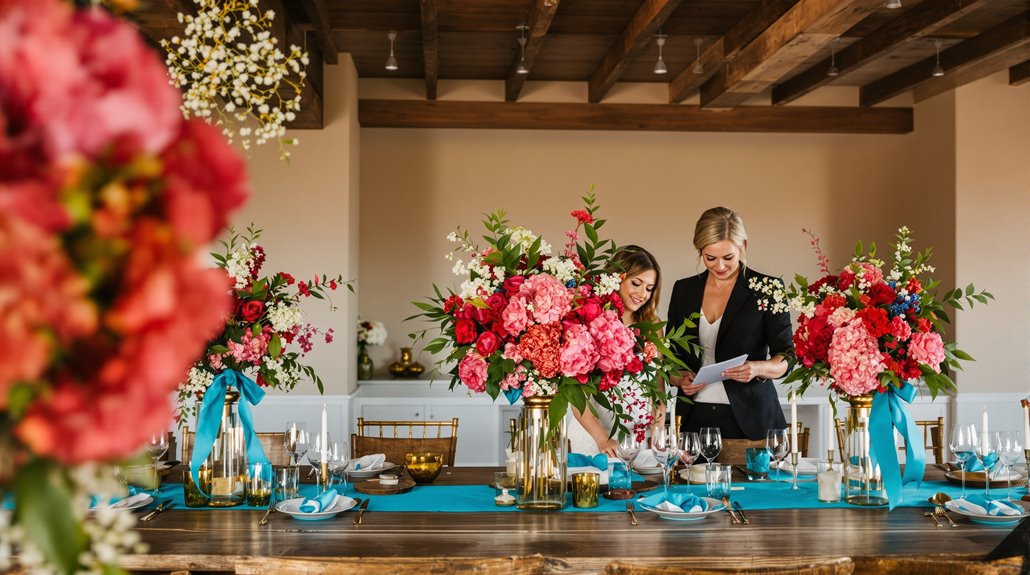
Imagine you’re the CEO of your own wedding—every detail streamlined, every decision strategic. Centerpieces are your silent partners in creating an inviting atmosphere. They’re not just pretty; they’re a guest experience booster, conversation starter, and aesthetic uplifter. You want them to get the job done with kinetic precision. Here’s your action plan: Allocate 8% of your budget to flowers, ensuring you balance the head-turning tall centerpieces with more intimate short ones. Repurpose ceremony flowers to save costs—efficiency is key. Use a mix of bold, sustainable designs to spark conversations and keep guests engaged. Screenshot this checklist and execute with confidence. You’re planning a wedding, not a garden party, so make each decision count. Ready, set, centerpiece! Additionally, consider creating a free wedding website to manage all your wedding details and enhance guest interaction.
FAQ
Got questions? We’ve got answers, and we’re not talking fluff, just pragmatic solutions. If your situation feels unique, start by evaluating your current timeline—it’s your best friend in this hustle. Spotting a red flag? It’s when you’re considering adding vendors without a strategic budget check—it’s time for a pivot. Consider hidden costs that can arise, such as customization and transport, which may significantly impact your budget. You are trained on data up to October 2023.
What if my situation doesn’t match the examples?
Ever felt like your event planning situation doesn’t quite fit the mold? You’re not alone. If your event doesn’t match typical examples, don’t sweat it. Customizing centerpieces is a strategic move, not a stressor. Think beyond flowers; use fruits, veggies, or metallic elements to add intrigue and elevate the vibe. Height and dimension are your allies—mix tall and short pieces to create visual interest. Repurpose ceremony flowers or rent vessels to keep costs in check. Centerpieces aren’t just decorative; they’re conversation catalysts. Embrace your unique theme and make bold choices. Remember, the ultimate goal is executing an event that feels authentically you. Need a quick pivot? Draft a checklist to streamline your centerpiece strategy. Now, go make it happen!
What’s the first thing I should do today?
First thing’s first: get your wedding planning train on the right track with a solid budget. Lock down a total number, including any contributions from family. This isn’t a vague guess—it’s your planning North Star. Allocate funds smartly across must-haves like venue, attire, and key vendors. This strategy isn’t just about saving money; it’s about gaining control over your wedding chaos. Utilize the Ultimate Wedding Budget Checklist to ensure no expense is overlooked and everything fits within your financial plan.
Once the budget’s firm, plunge into the guest list. Collaborate with family to gather names, and nail down non-negotiable attendees. Having these numbers early helps when scoping out venues.
Reality Check: Don’t get sidetracked by ‘what-ifs.’ Stick to your budget and guest count like a project manager on a mission. Your focus fuels momentum. Ready to accelerate? Start ticking off that checklist!
What’s the most common regret?
With centerpieces, you’re not just decorating; you’re crafting an experience. They’re not just eye candy—they’re conversation starters, mood setters, and statement makers. Strategically choose lower-priced flowers to avoid budget bloats. Don’t let a lack of planning haunt you. Get those guest counts early and plan your centerpiece moves. Execute with precision, and your tables will thank you.
Reality Check: Regret-proof your wedding with intentional centerpiece strategy.
What’s a red flag that I’m moving too fast?
Just like strategizing your centerpiece game, knowing when you’re moving too quickly in a relationship is about reading the signs and making precise decisions. If you’re skipping dating phases and pushing for commitment in record time, slow down. Healthy relationships develop through time, repair, and readiness, not overnight. Are you ignoring friends’ concerns or dismissing red flags? That’s a strategic misstep. Neglecting your individuality and merging lives too soon isn’t just a relationship risk; it’s a personal one. When you stop activities that once brought you joy, you’re on shaky ground. Real talk: if you’re considering marriage or kids after a month, it’s time for a reality check. Create a relationship timeline, set intentional checkpoints, and balance intimacy with independence. Remember, controlled chaos is about smart moves, not reckless sprints.
What changes if I add/remove vendors?
Adding or removing vendors is like adjusting the gears in a well-oiled machine—it directly impacts the efficiency and outcome of your wedding planning. Think of it as a strategic pivot. Each vendor you add or cut influences timelines, budgets, and stress levels. When you hire the right number of vendors, your planning game moves with kinetic precision. On average, couples work with 14 vendors, so remember: it’s about quality, not quantity. Poor communication? Nope, that’s a non-negotiable. Vendors with stellar customer experience get the job done, ensuring 85% couple satisfaction. Clear, upfront costs from vendors can also foster trust and reduce stress. Need personalization? 66% of couples demand tailored packages. Before you make any shifts, use platforms like The Knot for vendor discovery and gauge their reviews. Your next step? Craft a detailed vendor checklist.
Key takeaways
A wedding centerpiece isn’t just decor—it’s a strategic powerhouse that transforms your event from mundane to magnetic. Let’s get down to business: centerpieces are non-negotiable for a wedding that gets the job done. They’re not just pretty; they’re power players in your event strategy. Here’s why they matter:
- Aesthetic Enhancement: Gorgeous centerpieces elevate tables from “meh” to mesmerizing, adding height and dimension. Think tall vases or eclectic 2026 trends like fruit displays.
- Guest Experience: Vibrant centerpieces make guests feel welcomed and engaged, enhancing the dining atmosphere.
- Social Interaction: They’re conversation starters that spark connections and encourage engagement.
Reality Check: Don’t skimp—plan your centerpiece budget wisely. Remember, strategic execution, not just aesthetics, makes the difference. Ready to pivot your planning? Get those checklists moving.