
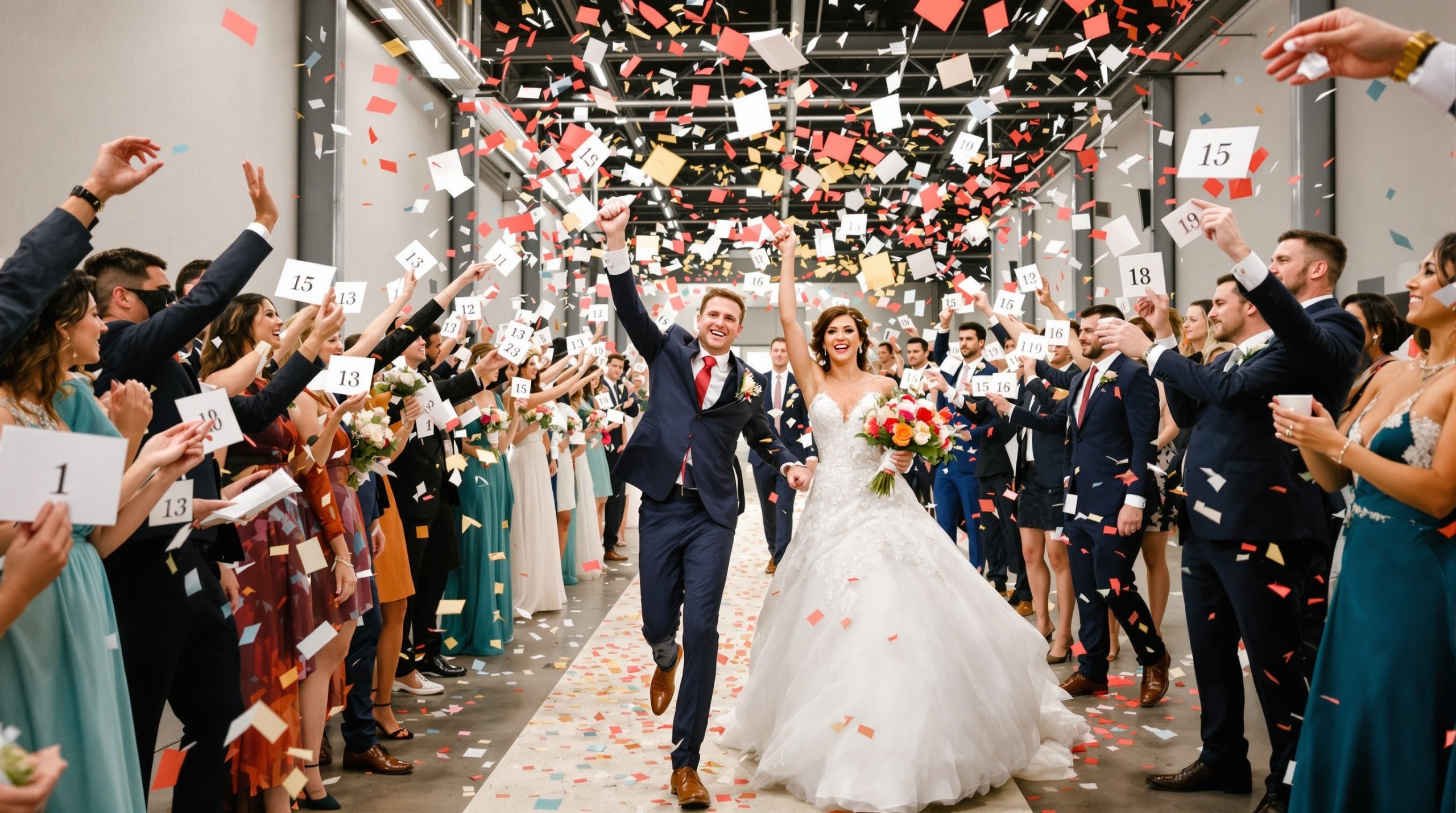
Here’s the no-nonsense lowdown: The ceremony order isn’t just fluff; it’s strategic project management, period. Start with your processional, work through powerhouse elements like vows, rings, and that killer kiss, then wrap with the recessional. Streamline each detail via a snappy checklist and strategic timeline. Save yourself from any “bless and stressed” moments. Nail these 13 elements, and you’ll dominate this ceremony like a pro. Want to guarantee flawless execution? Stick around.
The full list (13 items)
You’re ready to tackle the 13-item ceremony order list with the precision of a well-oiled project plan. Get ready to make intentional decisions by clarifying your non-negotiables and constraints, and then gather your must-haves alongside the nice-to-haves. Use this framework to streamline your process:
- Set a realistic budget and time cap to keep your plans grounded.
- Create a shortlist of options that align with your vision.
- Strategically ask the right questions to avoid surprises.
- Execute with confidence, knowing you’ve got all bases covered.
- Consider the processional’s importance in setting the tone for your ceremony.
- Allocate 80% of budget to high-impact areas to ensure the most memorable elements are prioritized.
Clarify the decision and constraints (part 1)
Before you dive headfirst into wedding planning, let’s clarify your decision matrix and constraints—it’s like checking your fuel before a high-speed road trip. First, nail down your ceremony structure. Are you envisioning a grand entrance or a minimalist vibe? Your processional order needs strategic planning, not a last-minute scramble. And let’s talk ceremony flow planning: your venue may suggest a start time, but you’re in control of the rhythm. Make sure the best man, maid of honor, and flower girl know their cues. This isn’t about fluff; it’s about execution. Assess guest list dynamics and venue selection regarding capacity and logistics. Consider whether you want a destination wedding or a traditional wedding, as each has unique pros and cons. Remember, financial contributions significantly influence your priorities, so align your budget with elements that create lasting memories. Next step? Create a checklist of non-negotiables for a streamlined approach. Ready, set, execute!
Gather must-haves and nice-to-haves (part 2)
Now that your decision matrix is locked and loaded, it’s time to gather your must-haves and nice-to-haves to keep your ceremony on track and on point. The wedding ceremony order isn’t just a sequence; it’s your blueprint. Start with ceremony decor: aisle runners, altar backdrops, and guest book tables are non-negotiable. Next, tackle ceremony tables setup, ensuring gift tables and menu cards are strategically executed. Don’t forget ritual essentials like the marriage license and unity items. Your attire checklist should cover everyone from officiant to flower girl. An emergency kit isn’t optional—it gets the job done when chaos strikes. Finally, double-check that every element aligns with your ceremony sequence. Including a well-organized wedding ceremony checklist can minimize stress and ensure that no detail is overlooked, ultimately improving the quality and meaning of the ceremony. To enhance guest experience, focus on personalized touchpoints that create lasting memories for attendees. Once you’ve gathered these essentials, you’re ready to move forward with precision and confidence.
Set a realistic budget/time cap (part 3)
When it comes to setting a realistic budget and time cap, think of it as tuning a high-performance engine—you want every cog to mesh perfectly. Allocate 50% of your budget to the reception and cap the venue at 40-50% to avoid overspending. Strategically reserve 5-10% for unexpected expenses. Use a spreadsheet to track expenses—catering (25%), rentals (5-10%), flowers (8-10%). It’s crucial to prioritize spending on elements that truly matter to ensure your wedding remains within budget while fulfilling your overall vision.
Time is just as essential. Book hair/makeup trials 3-5 months ahead, plan vendor meetings 6-9 months in advance, and finalize your timeline 1 month out. Execute tasks efficiently; a one-hour rehearsal the day before gets the job done.
Reality Check: Don’t let industry nonsense derail you. Stick to your strategic caps and timeline to maintain control. As you approach the final months, remember to finalize your wedding gown and inquire about any necessary alterations to ensure the perfect fit for your big day.
Create a short list of options (part 4)
Crafting a shortlist of ceremony elements isn’t just a task—it’s your strategic playbook to guarantee your wedding day moves like clockwork. Let’s streamline this. Here’s your non-negotiable list of 13 elements, executed with kinetic precision:
- Officiant’s tactical entrance—optional side or front.
- Grandparents escorted by ushers.
- Parents’ entrance, with the bride’s mother as the crescendo.
- Groom and best man: side or aisle.
- Wedding party pairs: groomsmen, then bridesmaids.
- Newlyweds’ triumphant recessional.
- Flower girl and ring bearer: adorable follow-up.
- Maid of honor and best man: dynamic duo.
- Reverse order for the party.
- Parents and grandparents wrap-up.
- Strategic music cues—anticipation, then celebration.
- Intentional positioning: couple and party face officiant.
- Custom tweaks for culture, religion, or preference.
A beautiful processional involves careful orchestration of timing, music, and participants, necessitating a designated team, such as a wedding planner or coordinator, to manage the flow. With strategic vendor selection, you can enhance the overall guest experience and ensure everything goes smoothly. Next step? Assign a rehearsal captain.
Ask the right questions (part 5)
No more guessing games—it’s time to ask the right questions and get to the core of your wedding logistics. Your wedding’s not a Hallmark movie; it’s a high-stakes project demanding precision. Start with the officiant: confirm the ceremony’s style and tone. Explore venue logistics—dates, capacity, rental fees. Question everything: Are tables and linens included, or is it BYO (bring your own)? Vendors next—lockdown photographers, caterers. Nail down equipment for your DJ. Your timeline? It’s your strategy playbook. Make sure it’s tight to avoid guest lag. Personalize this gig by choosing meaningful traditions and unique elements. Checklists, timelines, and execution plans will be your best friends. Ensure flexibility and creativity in scheduling to enhance the overall experience. Confirming all details with vendors and finalizing ceremony logistics is crucial to ensure everything goes smoothly. Get ahead by asking these strategic questions and watch your wedding day accelerate smoothly.
Make the decision and document it (part 6)
Even if wedding planning feels like juggling flaming swords while riding a unicycle, it’s time to make those essential decisions and document them with precision. You’ve scoped the budget and trimmed your guest list. Now, execute with strategic clarity. Allocate funds based on high-priority elements like vendor excellence and decor impact. Confirm every vendor and venue with military precision—arrival times, contracts, amenities. Document the ceremony flow: readings, vows, and officiant style. Craft a detailed checklist for aisle and altar decor, ensuring nothing’s left to chance. Secure rehearsal logistics and coordinate with your team. Remember, this is your wedding management moment. Document everything. With decisions locked down, you’re ready to move efficiently into the next phase. Ready, set, streamline! Leverage tech-driven tools to ensure efficient management and adaptability throughout the planning process, keeping everything organized and on track. To ease your journey, consider utilizing resources like the comprehensive Wedding Checklist from Here Comes The Guide, which offers structured guidance for a smooth planning process.
Communicate it to everyone involved (part 7)
Let’s cut to the chase: communicating your ceremony details is non-negotiable. You need to be as precise as a surgeon with your information. First, identify all stakeholders—think couple, vendors, bridal party, family. Compile their contact info and categorize by role. Your communication goals? Crystal-clear. Choose efficient channels: email, video, or a slick wedding website. Establish a wedding-specific email—your command center.
Craft a detailed itinerary from processional to recessional. Distribute it to the wedding party, vendors, and officiant. Don’t just send it; confirm they’ve received and understood it. Delegate tasks like a boss—assign processional cues, set deadlines, manage the recessional. Keep everyone updated with progress reports. Remember, clarity accelerates execution. Utilizing a Wedding Communication Plan Template helps organize important deadlines, tasks, and appointments. Next steps? Set reminders, follow up, and guarantee everyone’s on the same page.
Ensure that you have organized records of vendor responses and maintain these for reference, as they can be crucial for successful communication and execution.
Build a backup plan (part 8)
When you’re juggling ambitious careers and a wedding, having a rock-solid backup plan isn’t just smart—it’s crucial. You need strategies that work as hard as you do. Start by securing dual ceremony spaces, so if the weather pivots, your day doesn’t. Have a vetted list of alternate vendors ready—no-show caterers won’t derail your day. Equip yourself with an emergency kit that’s packed and ready, from safety pins to stain removers. Communication is a non-negotiable; distribute detailed directions and timelines to everyone involved. Additional safeguards like wedding insurance and extra meals guarantee nothing’s left to chance. Remember, it’s not just about planning; it’s about executing. Ready to hustle? Your action step: finalize that backup plan and breathe easier. Consider using real-time inventory tracking to enhance decision-making speed and ensure vendor flexibility.
Clarify the decision and constraints (part 9)
Success in wedding planning hinges on clarifying decisions and understanding constraints from the get-go. Identify venue restrictions—know what’s allowed and what’s not. Some venues won’t let you sprinkle fresh petals down the aisle. Others might restrict cell phone use to protect professional photography. Pin down your ceremony start time; it should align with venue availability. Don’t forget to sync rehearsal schedules early—your coordinator will thank you. Consider decor logistics: Do you need to rent chairs, or are they included? Know your guest count limits to avoid awkward surprises. Nail down vendor arrival and setup timing with a solid timeline. This isn’t a Pinterest fantasy; it’s project management. Nail these details, and you’ll execute a streamlined, effective wedding. Now, make decisions intentional. Remember to track RSVPs and guest counts meticulously to ensure catering accuracy and avoid last-minute surprises.
Gather must-haves and nice-to-haves (part 10)
To pull off a wedding that feels both personal and efficient, you need to distinguish between must-haves and nice-to-haves. Start by identifying non-negotiables: marriage license and pen, parking arrangements, microphone for the officiant, and a plan for accessibility. These essentials get the job done and keep the ceremony moving. Now, strategically layer the nice-to-haves like aisle decorations, altar greenery, and lighting options. These elements add flair without derailing efficiency.
Don’t forget personnel and entertainment—coordinate officiant attire for photos and guarantee musicians have everything they need. Signage and programs streamline guest flow; unity items and memory tables add personal touches. Accelerate your planning with checklists and timelines. Remember, a wedding isn’t a Pinterest board—it’s a well-executed event.
Set a realistic budget/time cap (part 11)
Nailing your budget and time cap isn’t just smart—it’s non-negotiable. You’re not just planning a wedding; you’re executing a high-stakes event. First, lock down your total budget by pooling personal funds and family contributions. Allocate strategically: reception eats up 50%, attire and rings about 11%, with a 5% buffer for those inevitable curveballs. Keep a tight grip on guest count—it directly impacts catering and venue costs. Track every dollar using a spreadsheet, capturing even hidden fees like vendor overtime and taxes. The key? Stick to your plan. High/low budget scenarios offer flexibility, while single venues cut transport costs. Next steps? Immerse yourself in vendor research early to lock in the best deals. Time saved, money managed—mission accomplished.
Create a short list of options (part 12)
When you’re orchestrating a wedding that feels like a full-scale launch, creating a short list of options isn’t just smart—it’s vital. For ambitious couples like you, time is money, and indecision is a luxury you can’t afford. Start by strategically narrowing down your choices. Focus on the non-negotiables: the processional’s flow, the wedding party’s entry, and the recessional sequence. This isn’t about dreaming; it’s about executing. Use checklists and timelines to streamline decisions. Make intentional choices that align with your vision—no fluff, just what gets the job done. Remember, this is about controlled chaos, not chaos uncontrolled. Pivot when necessary but always keep moving forward. Next step? Confirm your shortlist with key stakeholders to guarantee alignment and acceleration.
Ask the right questions (part 13)
Ready to move forward with laser-focused efficiency? Asking the right questions is your secret weapon in crafting a wedding ceremony that’s as precise and intentional as your career moves. Don’t just wing it—strategically plan by clarifying each element’s role. What’s mandatory (like vows and rings) versus customizable (readings, rituals)? Determine your ceremony’s tone: Are you aiming for heartfelt, humorous, or a mix? Confirm your officiant’s flexibility—are they open to your curated cool ideas, or do they lean traditional? Identify non-negotiables early on to streamline decisions. This isn’t about creating a Pinterest-perfect day; it’s about an event that feels uniquely you. Next step? Draft a timeline to guarantee each segment of your ceremony flows seamlessly.
The ‘top 5’ that matter most (if you’re overwhelmed)
When you’re juggling career ambitions and wedding planning, it’s vital to cut through the noise and focus on the essentials. Start by clarifying your priorities and constraints, then strategically gather your must-haves and nice-to-haves. Here’s your tactical checklist:
- Clarify decision and constraints: Identify what’s non-negotiable.
- Gather must-haves and nice-to-haves: Separate essentials from extras.
- Set a realistic budget/time cap: Avoid budget busters.
- Create a short list of options: Streamline choices and make execution a breeze.
Focus on asking the right questions to keep momentum and guarantee your ceremony gets the job done.
Priority #1: Clarify the decision and constraints (part 1)
Let’s cut to the chase: securing that marriage license is your non-negotiable first step. Without it, all your high-energy plans are just a dress rehearsal. You need to get this done within 60 days of your wedding. Both of you must show up with valid IDs—no excuses. A pen and two witnesses are non-negotiable on the big day to make it all official. Get this sorted early to keep your momentum.
Next, think about vows. Personalized? Classic? Decide now. Keep those vows crisp—250-300 words max. Write them 2-3 months ahead to avoid last-minute chaos. Remember, vows are the verbal commitment that seals the deal.
Reality Check: Overlooking legal details can derail plans. Prioritize these essentials now.
Priority #2: Gather must-haves and nice-to-haves (part 2)
You’ve nailed the legal details, now it’s time to execute the next phase: gathering your ceremony must-haves and nice-to-haves. Prioritize strategically—no fluff here. First, secure the essentials: marriage license, rings, vow books, and unity items. Then, focus on attire: wedding dress, tuxedo, and all the accessories. Trust me, you don’t want to forget the officiant’s coordinated look. Decorate with purpose—aisle runners and altars that pop. Pack an emergency kit for those inevitable “oops” moments. Safety pins to pain meds, have it all. Finally, nail vendor coordination with programs, microphones, and timelines. This is where streamlined systems shine. Accelerate your organization with checklists, and remember: controlled chaos wins over Pinterest perfection. What’s next? Execution. Move with purpose.
Priority #3: Set a realistic budget/time cap (part 3)
Although wedding planning can feel like balancing a dozen spinning plates, setting a realistic budget and time cap is your secret weapon to keep those plates from crashing down. Start by pinpointing non-negotiables and allocating resources strategically. Use a detailed timeline—your project management framework—to execute with precision. Set self-imposed deadlines for tasks like guest counts and vendor confirmations. Streamline by blocking time for essential activities: 2-3 hours for photos, 1 hour for cocktail hour, and capped speeches. Build in buffer zones: 30 extra minutes for makeup or 2 hours between ceremony and reception. This gains you breathing room for touch-ups or unexpected twists. The goal? A day that moves smoothly and keeps you confidently in control. Your next move: finalize that timeline.
Priority #4: Create a short list of options (part 4)
When you’re swamped with a million wedding details, narrowing down to the top five ceremony elements is your lifeline. Let’s streamline this: start with the Processional. Execute it with strategic precision—seat parents and grandparents, then let attendants pave the way for your grand entrance. Next, the Welcome/Opening sets the vibe. The Officiant’s words should be crisp and set expectations. Move to Readings/Charge; these are your love anthems, so choose passages that hit home. Vows/Rings are non-negotiable—your promises and symbols of commitment. Finally, the Pronouncement/Recessional wraps it up with a bang. Kiss, unity rituals, and a slick exit that shouts “we did it!” Prioritize these, and you’ll master the chaos. Now, jot this down and start executing.
Priority #5: Ask the right questions (part 5)
How do you cut through the chaos and get to the heart of your wedding ceremony? Start by asking the right questions—it’s non-negotiable. First, strategically confirm your budget allocation for ceremony essentials. Got handicap accessibility and seating nailed down? Perfect, move on to parking logistics. With the marriage license secured, you’re already ahead of the curve. High-priority vendor bookings? Execute early. You need the photographer and videographer locked in, with musicians on a precise timeline. Don’t forget to finalize ushers and personal touches. Programs and rental items? Confirm them now. Every detail counts. Streamline your ceremony timeline with precision and gain control over chaos. Next steps? Set clear milestones and stay agile; your wedding should move like a well-oiled machine.
How to use this list as a system (not a random pile of tips)
Think of this list as your wedding’s strategic command center, not a grab bag of random suggestions. You’re here to execute a streamlined ceremony, not to drown in a sea of chaos. Start with precision by anchoring your ceremony time—it’s the non-negotiable fulcrum of your day. Work forwards and backwards from this point to map out every detail.
Anchor your ceremony time—it’s the pivotal axis for a seamless, chaos-free wedding day.
- Nail down key times: Ceremony, reception, everything hinges on these.
- Assign roles: Delegate tasks with deadlines, ensuring nothing slips through the cracks.
- Buffer wisely: Include time for inevitable delays—no one wants to rush.
- Collaborate effortlessly: Use Google Docs for real-time vendor updates.
Your wedding moves like a well-oiled machine, not a Pinterest fantasy. Ready to accelerate? Let’s get this done.
Printable / copy-paste checklist
Ready to transform your wedding into a finely-tuned operation? Let’s pivot straight into action with a no-fuss, printable/copy-paste checklist that gets the job done. This isn’t your grandma’s flowery guide; it’s a strategic playbook for the ambitious, career-focused couple who demands efficiency.
Processional Moves:
- Officiant enters
- Groom follows, with or without parents
- VIP family seating
- Bridesmaids/groomsmen paired
- Maid of honor/best man wrap it up
Opening & Readings Accelerate:
- Officiant welcome, remarks
- Selected readings
- Optional prayer
Vows & Rings Executed:
- Vow exchange
- Ring exchange
- Declaration of commitment
Pronouncement & Kiss Strategized:
- Pronouncement, kiss, presentation
- Optional unity ritual
Recessional Streamlined:
- Couple exits
- Reverse processional order
- Optional receiving line
Download, print, execute.
Common mistakes when applying this list
When you’re juggling a high-stakes career and a wedding, timeline mishaps can turn your ceremony into a circus act. Let’s cut through the chaos and carry out with precision. Common pitfalls often stem from overlooked details:
- Timeline Overlook: Forgetting buffer times can derail your ceremony flow.
- Rehearsal Skip: Skipping the rehearsal? That’s a fast track to confusion and missteps.
- Ring Prep Fail: Unprepared rings? That’s a momentum killer.
- Guest Management Error: Empty front rows and ringing phones can ruin the vibe.
Address these blunders strategically. Use clear timelines, plan rehearsals, and delegate roles to guarantee a seamless, headache-free ceremony. Remember, it’s about making intentional choices—not winging it. Get it done right, and your ceremony will move like clockwork.
FAQ
You’re juggling a million things, so let’s cut to the chase: prioritize by identifying non-negotiables that guarantee your ceremony’s flow, and streamline the rest. Delegate tasks that don’t require your unique touch—like coordinating the processional order—to someone who executes with precision. Revisit your checklist weekly to stay on track, because a little proactive hustle saves you from a last-minute scramble.
How do I prioritize if I can’t do everything?
Even if your calendar looks like a game of Tetris, there’s a way to strategically prioritize your wedding ceremony without losing your mind. First, nail the essentials: marriage license, vows, pronouncement, and witness signatures. These are your non-negotiables. Next, streamline your ceremony by capping it at 20 minutes with a pre-planned script. Limit vows to 250-300 words—less is more. Rehearse 24-48 hours prior to smooth out any kinks.
Decide on optional elements like unity rituals or personal stories, but remember, they’re not essential. Prioritize structural elements over decor and musicians—function over fluff.
Reality Check: Don’t get sidetracked by Pinterest perfection. Focus on what gets the job done efficiently. Now, grab that checklist and start executing.
What’s the minimum I can do and still be safe/on-track?
It’s game time, and you’re ready to nail this wedding ceremony with precision. To stay on track without losing your mind, focus on non-negotiables. Secure that marriage license—costs around R60 and it’s valid for 60 days. Gather valid IDs and complete the necessary forms. Strategically plan your ceremony: a streamlined processional, succinct opening remarks, vows capped at 250-300 words, ring exchange, and a concise pronouncement. Use a proven script to keep it under 30 minutes. Ascertain essential equipment like microphones and pens are ready. Set up logistics: accessible seating, clear signage, and vendor prep 24-48 hours ahead. Now, accelerate with confidence. Reality Check: Skipping rehearsals can lead to chaos—don’t. Execute these steps, and you’re gold.
What should I delegate vs own myself?
When it comes to wedding planning, knowing what to delegate versus own yourself can feel like a game of strategic chess. You’ve got a day to execute, not a lifetime to plan. Delegate those time-consuming details: assign a day-of coordinator to handle vendors and guest questions. Have someone else cue music and line up the wedding party. Use your maid of honor for booking appointments, and let the groomsmen manage RSVPs and seating. You focus on decisions that need your unique touch—like vows and personalizing guest experiences. Remember, smart planning moves you forward. Keep your energy high by delegating non-negotiables and owning what truly matters. Next step: create a master checklist that aligns with your vision and hustle.
How do I keep this from becoming a time sink?
Why let wedding planning hijack your life when strategic execution can keep you in control? Start by prioritizing tasks like booking venues and key vendors—consider these your non-negotiables. Delegate or defer low-priority details like favors. Plan everything early: schedule hair, makeup, and vendor arrivals with extra time for hiccups. Create buffers for changes and potential delays. Limit speeches to a few minutes and streamline photos with pre-wedding shoots. This isn’t about crafting a fairy tale; it’s about executing a streamlined event that gets the job done.
Reality Check: Trying to do it all at once will derail your momentum. Focus on essentials, and keep your eye on the prize. Use timelines and checklists, and don’t let perfectionism slow you down.
How often should I revisit this list?
Although wedding planning might seem like a labyrinth of never-ending tasks, revisiting your checklist strategically can transform chaos into control. For a 15-month engagement, aim for bi-monthly check-ins. Tackling tasks in smaller bursts keeps your planning nimble and your sanity intact. Got a 12-month timeline? Monthly reviews are non-negotiable. Remember, May-October weddings demand seasonal pivots—adjust timelines as needed.
Four months out, review music and paper items. Two weeks out, confirm RSVPs and vendor details. Your mantra? “Refine, execute, accelerate.” Personalize your timeline based on engagement length or cultural customs. Flexibility is your secret weapon against unexpected changes. Need a final sweep? Confirm headcounts and vendor details one week out. Execute a rehearsal the day before. Now, go get it done.
Key takeaways
Let’s cut to the chase: nailing the ceremony order is like choreographing a high-stakes ballet where every move counts. You need precision and clarity to get it right. Here’s what you need to know:
Think of the ceremony order as a high-stakes ballet; precision is key.
- Processional Order: Officiant leads, followed by grandparents, parents, then the wedding party. Bridesmaids enter after groomsmen.
- Recessional Order: Newlyweds exit first, reversed processional for the wedding party—simple yet effective.
- Music Cues: Assign someone to manage timing. Aim for 3-5 second gaps between entrances.
- Positioning: Spacing matters. Use markers like rose petals to hit your spots.