

Coordinate groomsmen attire like the efficiency-driven pro you are by embracing suit separates instead of identical tuxes—nobody’s got time for 12 spitting images. Think of it as executing a strategic visual dance: mix and match colors that align with the wedding theme and leverage accessories like ties and pocket squares for consistency. Set non-negotiables and harmonize with the bridesmaids’ attire. It’s style meets strategy, because your life’s more PowerPoint than Pinterest. Find practical methods next.
What you’ll accomplish (and what ‘done’ looks like)
When coordinating groomsmen attire, you’re not just picking out suits—you’re executing a visual strategy that’s as dynamic as your career. Groomsmen coordination isn’t about making everyone look identical but about creating a cohesive, mismatched groomsmen ensemble that’s both stylish and efficient. Think of it as a non-matching groomsmen strategy where each member shines. You’ll achieve this by using color variation—let the groom rock a bold shade while the groomsmen play with lighter tints. Accessories become your secret weapon, strategically tying the look together with matching ties or pocket squares. Establishing a cohesive look for the wedding party ensures that all elements work harmoniously together, reinforcing the couple’s vision and intention. By focusing on high-ROI updates, you can achieve a visually impactful look without unnecessary expenses.
What does ‘done’ look like? It’s a streamlined, intentionally curated masterpiece where every ensemble feels unique yet connected. Next step? Crack open that checklist and start making those bold, non-negotiable decisions.
Quick start (the short version)
You’re on the clock, but don’t sweat it—coordinating groomsmen attire doesn’t have to derail your packed schedule. Let’s streamline this process with a few strategic moves that get the job done without breaking the bank or losing your mind. Groomsmen attire coordination can be executed with precision and flair by focusing on essential elements.
- Color Matching: Harmonize with bridesmaids using a shared color palette; think blush pink ties.
- Accessories Coordination: Match ties for unity or contrast with seasonal tones. By keeping an eye on budget allocation, you can ensure accessories don’t unexpectedly inflate your wedding costs.
- Budget Options: Rent suits or mix-and-match owned pieces with uniform accessories.
- Suit Variations: Opt for suit separates; blazers and chinos are game changers.
- Theme Integration: Align suits with your wedding’s vibe—whether beachy or city chic. Renting suits or tuxedos can significantly reduce costs, making it a practical choice for budget-conscious weddings.
Before you start: inputs you need
Before diving into the chaos that is coordinating groomsmen attire, set your foundation right by gathering the non-negotiable inputs. Nail down these essentials, and you’ll move efficiently:
- Groom’s Suit: Establish this as the benchmark—think Mayfair Navy Three Piece or a tuxedo.
- Wedding Theme: Align suit style with the venue, season, and vibe. Tux for formal, blazer optional for casual.
- Color Coordination: Strategically choose shades—deep navy for the groom, lighter blue for groomsmen.
- Bridesmaid Coordination: Accessories like ties and pocket squares should complement bridesmaid dresses.
- Timeline & Planning: Start suit orders three to four months out, with clear guidelines and fitting schedules. Bold suit colors like sage green and chocolate brown are currently trending, offering a modern twist to traditional choices.
With these inputs, your coordination game is set to execute with precision.
Step-by-step process
You’ve got a wedding to coordinate and a timeline tighter than skinny jeans, so let’s execute with precision. Start by clarifying your constraints—think budget ceilings, dates, and any sacred cows you can’t touch. Once you’ve nailed that, build your decision order for what needs tackling first, then create a timeline with milestones and deadlines to keep the chaos controlled. In 2023, trends indicate a shift away from traditional dark suits to vibrant colors, which could provide an opportunity for groomsmen to coordinate their attire in a more modern and colorful way without needing to purchase identical suits. You might also consider looking into custom wedding suits and groomsmen attire to elevate the group’s look and offer flexible options that suit everyone’s taste and budget.
Step 1: Clarify constraints (date range, budget ceiling, non-negotiables)
When coordinating groomsmen attire, start by clarifying your constraints to streamline the decision-making process. First, nail down the wedding date range—this dictates fabric choices. For fall or winter, think wool or tweed; summer demands cotton or linen. Next, establish a budget ceiling. Rentals can save you 50-70%, perfect if you’re under $500 per groomsman. Include accessories like ties and boutonnieres, which add 10-20% to costs. Finally, outline your non-negotiables. The groom’s suit sets the tone—groomsmen should echo this style and color, maintaining formality. Avoid upstaging the groom; no brighter shades or extra frills. Remember that prioritizing expenses based on what matters most to you will help ensure everyone is satisfied with the final look. Once these are clear, you’re ready to move forward. Your next step? Strategically decide what to tackle first. Consider seasonal colors and how they complement the wedding theme when selecting suit colors for the groomsmen.
Step 2: Build the decision order (what to decide first so everything else is easier)
Nailing down your constraints sets the stage, but now it’s time to orchestrate the decision order like a maestro. Start by anchoring the groomsmen attire to the groom’s suit. This isn’t about ego—it’s strategic. The groom’s ensemble sets the tone, ensuring he stands out with subtle flair. Organizing group fittings is essential for achieving a polished wedding look and ensures that all measurements are consistent across the board. Next, align on a unified color scheme that respects your wedding dress code—this isn’t a circus, folks. Consider how seasonal color trends can influence your choices and create visual harmony. Move on to selecting a consistent fit type: slim, tailored, or regular—pick one and stick to it for a cohesive silhouette. Finally, pivot to accessories, where you can add personality without chaos. Vibrant ties and unique lapel pins for the groom, subtle variations for the groomsmen. Executed well, this plan streamlines your suit coordination.
Step 3: Create the timeline (milestones + deadlines)
Before the countdown truly accelerates, you’ve got to nail down your timeline with tactical precision. This isn’t a leisurely stroll; it’s a strategic sprint. Start 6-9 months out, locking in wedding party attire decisions to sidestep last-minute chaos. Give yourself a 4-6 month buffer for suit orders—whether custom or rental. Move into the 4-2 month mark with final fittings and verify shoes and accessories are in tow. At 3-5 months, align invitations with attire details and book trials for hair and makeup. Make sure to track actual spending against your planned attire budget at this stage to stay on target with expenses. Then, 1-2 months out, finalize vendor contracts and coordinate rehearsal dinner outfits. As you hit the 2 weeks-1 month milestone, confirm RSVPs and payments. Each milestone is a non-negotiable checkpoint that gets the job done. Consider booking a florist 8-6 months before the wedding to ensure your arrangements are within budget and your timeline is well-coordinated.
Step 4: Execute vendor outreach (scripts + tracking)
Executing vendor outreach isn’t just another to-do on your list; it’s a mission-critical part of your wedding strategy. This is where your hustle gains momentum. Start by compiling a list of 5-10 vendors per location, focusing on those offering mix-and-match suit elements. Before reaching out, remember that early vendor booking can reduce stress and help you manage overall spending. Your email script is your secret weapon: open with wedding basics, outline attire needs, and fire off questions about pricing and timelines. Use a clear call-to-action like “send estimate” to cut through the clutter. Track responses in a shared spreadsheet, noting contact details, quotes, and status. Follow-up is non-negotiable—ping vendors if they ghost you. Urgency is your best friend; mention deadlines and deal expirations. Emails should leave a positive impression on clients to ensure smooth communication and collaboration. Keep the momentum going, and you’ll streamline this process like a pro.
Step 5: Lock the plan (contracts, deposits, and contingency buffers)
You’ve blitzed through vendor outreach, and now it’s time to lock in the plan like an efficiency ninja. First, execute contracts with laser focus. Secure written agreements detailing style, color, and fit. Specify rental terms, delivery dates, and include clauses for alterations. Don’t forget signatures—non-negotiable! Next, strategically handle deposits. Pay early to lock inventory and coordinate group bookings for sweet discounts. Keep your eyes on the prize by tracking receipts for those potential refunds.
Now, set up contingency buffers. Plan a 2–3 week cushion for adjustments and have backups ready for any hiccups. Anticipate weather shifts with fabric alternatives. In this kinetic dance of planning, you’ve got this! Once these steps are executed, you’ll gain momentum toward the big day. Remember to request itemized contracts to ensure all fees, payment schedules, and refund terms are crystal clear before you sign.
Step 6: Run weekly check-ins (how to stay on track without spiraling)
With the wedding day approaching like a high-speed train, it’s crucial to keep your planning on track with weekly check-ins that prevent spiraling into chaos. You’ve locked the plan, but without consistent check-ins, even the tightest ship can veer off course. Set a specific day and time each week to connect with your groomsmen. Use shared calendars and reminders—think of them as your accountability lifeline. Discuss what’s done, what’s pending, and any curveballs. Keep it tight; aim for 15-minute power huddles. This isn’t just about talk—it’s about moving the needle. Keep the energy high, the focus sharp. Keep tabs on your timeline and budget. Next step? Set and confirm all key dates for attire fittings. Consistency is your secret weapon. Remember, structured management of your planning timeline is essential to guarantee clarity and efficiency while keeping everyone on the same page.
Template you can copy/paste (checklist + tracker)
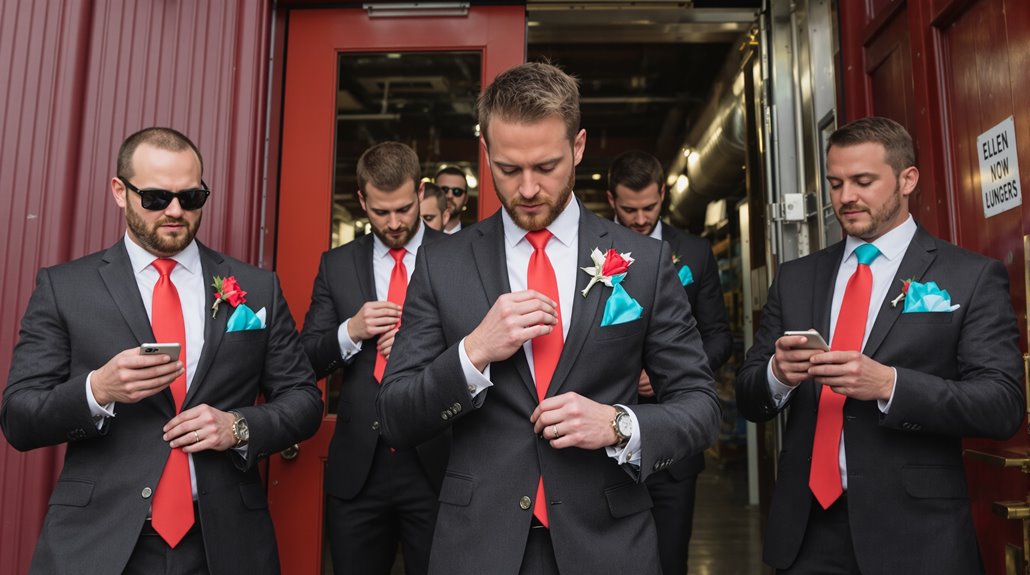
Let’s cut to the chase—coordinating groomsmen attire is like assembling a high-octane pit crew. You need a strategy that’s sharp, swift, and gets the job done. Start with a streamlined checklist that strategically tackles suit style, fit, color, and accessories. Think of this as your tactical playbook:
Coordinating groomsmen attire requires a sharp, swift strategy—think of it as assembling a high-octane pit crew.
- Suit style: Align with the wedding theme—formal tuxedos, classic linen, or modern slim-fit.
- Fit: Check shoulder fit, jacket length, and opt for custom-made, if possible.
- Color coordination: Use neutral tones; match ties with bridesmaid dresses.
- Accessories: Track essentials like matching ties, pocket squares, shoes, and more.
With this non-negotiable checklist, you’ll accelerate the process, pivot easily, and guarantee every detail is executed with kinetic precision. Ready, set, execute! For a hassle-free approach to formalwear, consider the official wedding suit rental options from The Black Tux to keep your groomsmen coordinated without requiring identical purchases.
Common mistakes (and how to avoid them)
Mismatching suit colors from different collections? It’s a rookie move that screams uncoordinated chaos in photos. Variations in fabric and shade can sabotage your streamlined wedding vision. Here’s how to dodge common pitfalls:
- Source suits from one retailer to guarantee color consistency and quality.
- Balance accessories—too many or too few can disrupt cohesion. Stick with 2-3 pieces.
- Consider climate when picking fabrics. No wool in summer, cotton in winter.
- Start early. Suit selection after the groom’s choice is non-negotiable.
- Establish style hierarchy. The groom should stand out, not blend in.
Execute these strategies, and you’ll pivot from potential disaster to a perfectly executed look. Start planning now—get those suits sorted before chaos ensues.
FAQ
Got a chaotic schedule? Let’s streamline your groomsmen attire coordination with our FAQ. We’ll cover the essentials: how much time you’ll need if you’re busy, the bare minimum that still nails it, what tasks you can delegate without a hitch, how to handle unresponsive vendors, and the key metrics to track weekly so nothing falls through the cracks.
How long should this take if we’re busy?
When you’re juggling career demands and wedding planning, every minute counts, and coordinating your groomsmen’s attire needs to fit seamlessly into your schedule. Start by setting the groundwork 6-9 months ahead—think big picture over minutiae. Initial discussions? Six months out. This isn’t a “just wing it” moment; execute strategically. Confirm styles, colors, and types 5-6 months in advance. Measurements and orders? Nail them 3-4 months out. Alterations need completion 3 months before, with final tweaks 1-2 weeks prior. Pickup is your victory lap—done 1 week to 1 month pre-wedding. Ready to ace this? Use digital tools for reminders and shared docs to track progress. Next step: sync calendars and make that first fitting appointment non-negotiable. You’re in control.
What’s the minimum version that still works?
You’ve got your timeline locked, but let’s talk about the minimum viable product for groomsmen attire that still impresses without the stress. Start with a navy or gray suit—it’s versatile, timeless, and pairs seamlessly with white dress shirts. Add a punch of personality with neckwear options: a bow tie or tie that complements the wedding’s theme without demanding uniformity. Accessories are your secret weapon; think pocket squares or cufflinks that pop, coordinating with bridesmaids’ colors. This streamlined approach respects your hustle, achieving cohesion without identical threads. Choose shoes like brown leather for a polished finish. Remember, it’s about matching the groom’s formality—no casual mismatches here. Execute with precision, save time, and guarantee everyone looks sharp. Ready? Execute this plan and shine.
What can I safely delegate?
Why juggle every little detail yourself when you can delegate like a pro? Start by having your groomsmen handle their own fittings. Just set a non-negotiable timeline—3-4 months out for ordering, with final adjustments closer to the day. Communicate your vision clearly: share color schemes and accessory guidelines so everyone stays on-brand. Streamline it by assigning a point person among the groomsmen to manage coordination. They’ve got skin in the game, right? This approach not only accelerates the process but also keeps stress levels down. You maintain control by setting the direction, but let them execute the details. The result? A cohesive look that’s effortlessly stylish. Next step: set up a shared calendar to track everyone’s progress and guarantee deadlines are met.
What if a vendor isn’t responding?
How do you handle radio silence from a vendor? First, breathe. Vendors are juggling multiple events, so patience is key. Give them a reasonable time to respond before you follow up. Don’t let panic drive you to burn bridges with aggressive tactics. Instead, strategically switch communication methods. If your calls go unanswered, try a concise email or even a social media nudge. Be clear and direct. Include a callback number for ease. If they’re still MIA, consider leveraging your wedding planner as a liaison. They’re pros at stepping in when communication falls apart. As a last resort, research backup vendors. Document their details and be upfront about your situation. Remember, execution over fluff—get what you need, no drama.
What should I track weekly?
What’s the secret to avoiding last-minute chaos in wedding planning? Track. Everything. Weekly. You’re orchestrating a high-stakes event, not a backyard BBQ. Execute with precision by confirming vendor details—arrival times, setups, and service specifics. Verify guest counts with your caterer and venue, ensuring meals are spot on. For attire, schedule final fittings and confirm pickups for those suits and accessories. No one wants a wardrobe malfunction, right? Distribute timelines to key players to keep the day running smoothly. Confirm ceremony logistics—rehearsal schedules, marriage license duties, and transportation plans. Meanwhile, your guest experience hinges on things like seating charts and welcome bags. Finally, assemble an emergency kit—because Murphy’s Law is real. Get these tasks done and watch your wedding day accelerate seamlessly.
Key takeaways
When you’re sprinting through life with a dual-income hustle, coordinating groomsmen attire might seem like just another checkbox on your wedding to-do list. But let’s streamline this. Keep the vibe kinetic and precise with these takeaways:
- Color Coordination: Use neutral suit tones like navy or gray for flexibility, adding wedding colors through ties and accessories.
- Theme Integration: Match fabrics to your wedding theme—think linen for beaches or velvet for winter.
- Accessory Matching: Coordinated pocket squares or ties add cohesion without cloning suits.
- Suit Variety Options: Allow flexibility—mix separates or roll up sleeves for outdoor events.
- Cohesion Principles: Maintain cohesion with accessories and shared color palettes, not identical suits.
Execute these strategies, and your groomsmen will look cohesive without the cookie-cutter approach.