

Your wedding guest list will twist and pivot at least five times—brace yourself, it’s normal. Why? Life’s unpredictability—economic shifts, family curves, and surprise plus-ones. Instantly rush to Google Sheets or Zola’s guest list manager. Don’t finalize too soon or miss insider insights like flexing your venue’s last-minute muscle. Strategic finesse means dodging clichés and emphasizing efficiency. Execute with precision, anticipate, adjust, and crush the chaos. Want more actionable strategies? Keep gaining those insights.
The thesis (what people get wrong)
Let’s clear the air: locking in your guest list like it’s carved in stone is a rookie move. Guest list evolution is the name of the game, people. You might think you’ve nailed it with your initial list, but brace for guest list changes—it’s as inevitable as Uncle Bob’s dance-floor antics. Revising your guest list isn’t just probable; it’s a strategic necessity. Trust me, about 15-25% of invitees will decline, and last-minute additions are practically tradition. Outdated advice suggests finalizing lists weeks ahead, but that’s a recipe for stress. Instead, accept that change is non-negotiable and plan for it. An organized guest list helps track dietary restrictions, allowing guests to fully enjoy meal options without last-minute surprises. Creating a streamlined process for tracking RSVPs and guest communication can help you manage this evolving list with less anxiety and fewer surprises. Remember, flexibility isn’t just smart—it’s essential.
Why this happens (the real root causes)
Guest list changes aren’t just flukes—they’re driven by a whirlwind of predictable factors that any savvy planner should anticipate. Budget constraints, family dynamics, and unexpected requests mean guest list iterations are practically inevitable. Your wedding isn’t just an event; it’s a strategic operation. Here’s why your list keeps shifting:
Guest list changes are driven by predictable factors, making iterations inevitable for any savvy planner.
- Economic Pressures: Rising costs and venue requirements force strategic decisions. In the UK, 81% of couples now spend less than £20K on weddings, with 46% allocating £10K or less, which naturally affects guest list decisions. Many couples are surprised to discover that hidden costs like service charges and taxes can inflate budgets by up to 30%, making guest list reductions a necessity.
- Family Dynamics: Last-minute requests from family can derail even the best-laid plans.
- Plus-One Surprises: Unplanned guests and partners can throw off counts.
- Venue Logistics: Capacity limits and minimums add to the juggling act. Sometimes, venues charge extra for essentials like setup and cleanup, which can eat into your available budget for additional guests.
- Global Events: Unpredictable happenings demand flexibility.
Navigating these realities with precision and confidence guarantees your list remains streamlined and executed to perfection. Your wedding shouldn’t stress; it should impress.
What to do instead (the better framework)
When guest lists start to feel like a game of whack-a-mole, it’s time to pivot to a more strategic approach. Execute a streamlined framework that adapts as needed. Start by defining your maximum attendee number based on your budget and venue. Categorize guests: A-list for non-negotiable must-haves (immediate family, close friends), B-list for nice-to-haves. Use digital tools like Google Sheets to track and categorize invites—ditch the paper chaos. Set clear policies on plus-ones and communicate these upfront. Building your guest list early lets you anticipate per-guest costs and allocate funds with precision. Finally, remain flexible with RSVP deadlines to adjust for inevitable last-minute changes. Partnering with the right venue can help simplify planning, as experienced teams can assist with logistics and coordinate seating and accommodations.
- Execute with precision and clarity.
- Categorize wisely for balance and sanity.
- Leverage tech to save time and headaches.
- Set non-negotiable boundaries.
- Embrace controlled chaos—strategically.
How to apply it in real life
When Aunt Susan suddenly RSVPs with a plus-one you didn’t expect, strategically reshuffle your tiered lists to keep the numbers in check—this isn’t a math test, it’s a wedding plan. In high-stakes scenarios like a last-minute venue capacity change, execute a swift pivot by contacting your venue and vendors immediately to negotiate adjustments; a well-placed call can save your day and your budget. For the time-crunched among us, streamline your process by using real-time tracking tools to monitor guest updates, so you’re moving with the chaos, not against it—non-negotiable efficiency that gets the job done. Factoring in vendor coordination logistics early can also help you stay nimble and avoid unexpected costs as your guest list evolves. With trends in guest counts varying by region, culture, and budget, couples are increasingly emphasizing personalization over grand displays, which means your guest list may reflect these evolving priorities.
Example 1: a common scenario + the better move
Envision this: you’re mid-project, and suddenly your carefully curated guest list is under siege by last-minute plus-ones and surprise family additions. Welcome to the chaos! Instead of succumbing to stress, pivot with precision. First, track plus-ones meticulously—don’t let them sneak past unnoticed. Adjust seating and catering strategically. Secure a venue that’s flexible with guest count tweaks to avoid headaches when Aunt Linda decides to bring her new beau. A flexible venue can handle last-minute adjustments with ease, ensuring your wedding vision remains intact despite changes. Keep a running list of changes and communicate swiftly with your vendors—ask about reconfiguration and fees upfront. Execute a streamlined approach: confirm headcount deadlines and guarantee your venue’s capacity has wiggle room. The better move? Anticipate, adapt, and accelerate decisions, because in wedding planning, the only constant is change. Utilizing real-time inventory tracking helps you make faster adjustments and stay ahead of unexpected guest list shifts.
Example 2: a high-stakes scenario + the better move
Facing a venue with a minimum guest count when your list can’t meet the threshold? It’s time to pivot strategically. High-stakes scenarios like these call for selecting a venue with flexible policies. Confirm guest minimums and maximums upfront. Remember, 15-25% of invitees might decline, so inviting 20% extra is your buffer. Choose a venue that allows last-minute tweaks without penalty. Use real-time tracking tools for guest RSVPs to keep your numbers in check. Budget crunch? Seek venues open to reconfiguration, accommodating those unexpected plus-ones or last-minute family additions. Avoid the “bless and stressed” scenario. Instead, execute your plan with kinetic precision. Your next move: shortlist venues with non-negotiable flexibility. Most weddings do not exceed 200 guests, so balancing between personal connections and venue capacity is crucial. That’s hustle culture at its finest. Keep in mind that guest list management is a top driver of overall wedding costs, so locking in your numbers early will help you stay on budget.
Example 3: a ‘we’re busy’ scenario + the better move
You’ve got a wedding to plan, and time’s as scarce as a real unicorn. In the hustle and bustle of career demands, guest lists morph like quicksilver. With 15-25% of invitees likely to decline, you’ll need a strategic pivot. First, track RSVPs daily and maintain an updated guest list in a spreadsheet. Boost your invites by 20% over your desired attendance—because life happens. Segment your list into must-invites and announcement-only categories. Monitor declines and add alternates swiftly. Choose venues without strict minimums and with reconfigurable floor plans for flexibility. Realistically, expect 75-85% attendance. Be ready for surprise plus-ones and adjust seating and catering accordingly. Your next move? Get those tools in place and flex that planning muscle. For stress-free adjustments, follow a structured timeline to stay organized and avoid last-minute chaos.
Counterpoints (when the old way is actually fine)
Even in the whirlwind of modern wedding planning, sometimes the old-school guest list approach still gets the job done. For couples with local guests or intimate ceremonies, sticking with tried-and-true methods can be strategically sound. No need for endless iterations. You want efficiency? Here’s where the old ways shine:
- Predictable RSVPs: Local guests mean fewer surprises.
- Set in Stone: Established relationships lead to reliable commitments.
- Venue Limits: Fixed capacity? Old-school’s your best friend.
- Early Birds Win: 6+ weeks RSVPs keep things tight.
- Stable Networks: Community-based lists don’t waver.
Ditch the chaos—this method’s as close to a sure bet as it gets. Save the hustle for where it counts most, and simplify where you can. Relying on proven wedding timelines can also help streamline communication and keep your planning process smooth. Balancing invites between families from different locations can add complexity, but with local guests, this challenge is often minimized.
Action plan (do this next)
Old-school methods can handle a simple guest list, but when you’re maneuvering the social minefield of modern relationships and logistics, it’s time to shift gears with an action plan that actually works. Here’s how you’ll stay ahead:
Upgrade from old-school to cutting-edge guest management with a strategic action plan that gets results.
- Track RSVPs like a boss: Use spreadsheets or apps for real-time updates. Anticipate declines and last-minute backouts.
- Master venue flexibility: Know your venue’s capacity and reconfiguration options. Discuss fees for changes upfront.
- Budget smartly: Every extra guest hits your budget. Adjust catering and seating accordingly.
- Document religiously: Keep an evolving guest list. Update vendors swiftly to prevent chaos.
- Prepare for surprises: Family dynamics and unexpected plus-ones are inevitable. Stay adaptable.
Don’t forget that adding or removing guests can impact service charge policies, so clarify with your vendors to avoid budget surprises. Execute these steps and watch your guest list pivot with precision.
Visual summary you can share
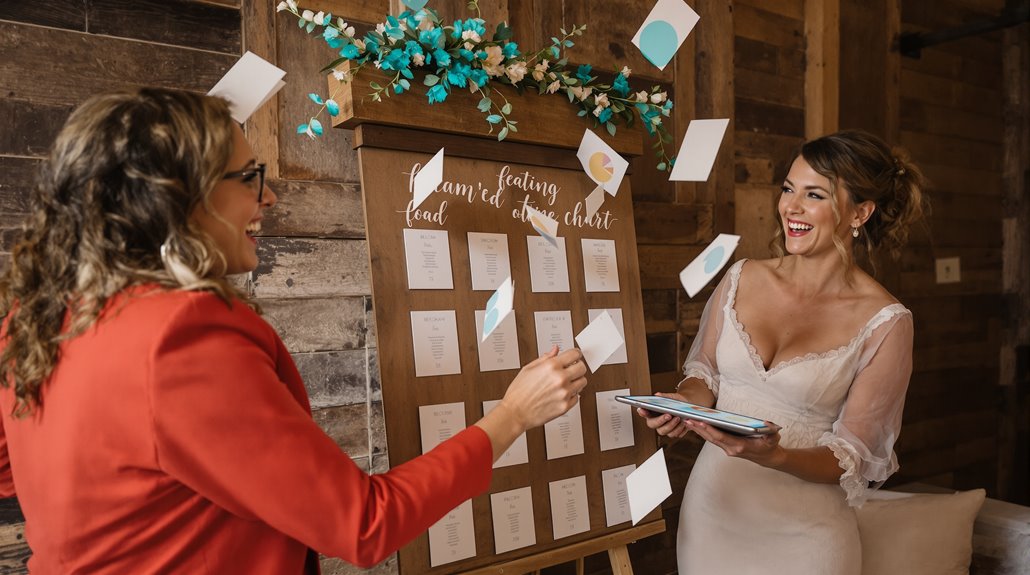
Let’s cut through the chaos with a visual summary that gets the job done. You’re dealing with a dynamic guest list, and we’re here to help you navigate it like a pro. Expect 15-25% declines, so strategically invite 20% more than your target attendance. Track RSVPs with precision, using tiered lists—A for must-invites, C for announcements.
Venue minimums can mess with your plans, so choose flexible spaces ready for last-minute pivots. Remember, around 80% of guests will attend. Keep an eye on economic trends; they affect costs and guest numbers. Service charges and venue minimums are part of the hidden costs that can impact your final guest count. Factors influencing attendance include time of year, location, and guest personalities.
Simplify your life with shared graphics: pie charts for decline rates, bar graphs for average guests. Execute with confidence and adjust with ease. Now, what’s next? Check your seating chart! {img} {save_text: “guest_list_visual_summary”
FAQ
You’re maneuvering the guest list chaos like a pro, but what if family or vendors push back? Don’t sweat it—course-correct by pulling out your list framework and strategically trimming or expanding where needed. The quickest win? Get your partner on board with a clear, non-negotiable plan that gives room for a few last-minute moves without compromising your vision.
What if my family/vendors push back?
When family or vendors start pushing back on your guest list, it’s time to strategically pivot with precision. Family dynamics and vendor constraints can complicate your plans. Aunt Linda wants her neighbor’s cousin invited? That’s where your A, B, C list system shines. Keep your core list tight, and let the C list handle the “nice-to-haves.” For those pesky vendor minimums, ask about their flexibility on numbers or timing. The hustle? Track RSVPs like a stock portfolio—adjust for declines and unexpected plus-ones. Remember, 15-25% will decline, so over-inviting by 20% isn’t just smart; it’s survival. Need a reality check? Boundaries are your best friend. Set them, stick to them, and keep your wedding a streamlined, non-negotiable affair.
What if I already made the ‘wrong’ decision?
How do you pivot when it feels like you’ve already veered off course with your guest list decisions? First, don’t panic—realign strategically. Use the 15-25% decline rate to invite 20% more people than your target. That’s purposeful over perfection. Got unexpected plus-ones or family curveballs? Keep a tiered RSVP list: A for must-invite, B as on-deck, C for announcements. This gives you flexibility to adjust without drama.
Budget blown? Realign it. If inflation’s squeezing, cut back the list or negotiate with vendors. Venue got you cornered? Know your numbers and pivot with ease. Minimum headcounts can be tricky, but flexible venues help dodge penalties.
Reality Check: The guest list game is about smart pivots and hustle—not rigid dreams. Execution beats expectation.
What’s the fastest way to course-correct?
Feeling like your guest list is spiraling out of control? Time to execute a strategic pivot. First, track RSVP responses daily using digital tools. Aim for a 15-25% decline rate—your secret weapon for quick list adjustments. Invite 20% more than your target, keeping a secondary list ready to replace decliners fast.
Communicate with vendors—stat. Make certain they’re updated on headcount changes to avoid extra costs. Check venue flexibility for guest count variations, and confirm policies on minimums and maximums.
Anticipate declines due to timing or location—especially for destination weddings. Now, pull those levers, gain momentum, and remember: a streamlined approach gets the job done.
Reality Check: Over-invite strategically, but don’t get reckless. Monitor expenses closely.
How do I get my partner aligned?
Why does aligning with your partner often feel like herding cats? Because you’re both ambitious, career-driven, and juggling more than wedding plans. Start by creating individual guest lists. This strategic move respects personal preferences and sets a foundation for a streamlined merge. Then, execute a negotiation session—think of it as a board meeting, not a battle. Use tools like Zola’s online guest list manager for clarity and precision. Discuss non-negotiables and pivot on preferences. Remember, 80% of your guests will RSVP positively, so strategically adjust your list around that metric. Leverage your full-service planner to anticipate declines and create a smart, flexible plan. Reality Check: Communication isn’t just sweet talk—it’s the backbone of your streamlined wedding execution.
What’s the easiest win I can do today?
You’ve got the guest list debate under control, and now you’re ready for a quick win that’ll save you hours later. Strategically execute the A-list/B-list strategy today. It’s your secret weapon for a streamlined guest list. First, craft your A-list—non-negotiables who must be there. Send those invites 10 weeks out. Expect 15%-20% to decline, which is normal. Once declines roll in, pivot to your B-list. These are your backup players ready to step in if needed. This method guarantees you hit your target number without overshooting. Remember, 10% more invites cover the expected declines. So, hustle smartly—plan the list, send those invites, and watch your RSVP metrics like a hawk. Next step? Breathe. You’ve got this.
Key takeaways
When it comes to managing your guest list, it’s all about strategic execution and adaptability. Expect your guest list to morph at least five times before the big day. Why? Because life’s unpredictable, and so are people. Here’s how to navigate this high-stakes game:
- Pivot with Purpose: Anticipate a 15-25% decline rate—invite 20% more to hit your target.
- Strategize for Surprises: Family dynamics and unexpected plus-ones are non-negotiable.
- Streamline RSVPs: Use A, B, C lists for seamless changes; don’t sweat the small stuff.
- Execute with Precision: Venue minimums might demand headcount tweaks—be ready to adjust.
- Budget Bravely: Rising costs mean smaller lists are strategic, not sacrificial.