

First, breathe. Now, tackle your wedding like a damn project manager: prioritize. Designate non-negotiables early and ditch the Pinterest-perfect fluff. Use a Decision-Priority Map; it’s like Tinder for wedding choices. Score vendors with a Matrix and hold them accountable. Knowing your relationship values? It’s gold. No energy-sapping minor decisions—only what gets the job done. Execute efficiently, stay on budget, and plan for surprises. Next up, master the art of strategic planning using timelines and checklists.
The short answer (what most people should do)
Let’s cut to the chase: start by prioritizing what’s really important. In wedding decision making, it’s vital to identify the essentials early. You and your partner need to decide on non-negotiables for your couple decision making wedding process. Break down your vision into must-haves, nice-to-haves, and not-important items—this framework guides every wedding planning decision. Focus your budget on statement pieces like florals that make a big impact. Remember, aligning all decisions with your core priorities helps prevent second-guessing. Taking the time to understand each other’s relationship values can help you build a stronger partnership as you make these choices. Set a detailed timeline with decision-making deadlines to keep things moving. Don’t get bogged down by endless opinions—limit advice to just a few trusted sources. Implementing a reward system for timely decisions can also motivate you to stick to your timeline and reduce stress. Execute each step strategically, and remember: you’re the project manager of your own curated cool day.
The real answer: what it depends on
When it comes to making real wedding decisions, it depends on a few key factors that can make or break your planning experience. First, who’s footing the bill? Since 87% of couples contribute to costs, your financial stake means prioritizing what truly matters is non-negotiable. Next, what’s the emotional ROI? Sentimental splurges might feel good, but prioritize elements that deliver lasting guest memories and stress-free execution. Unclear packages and vague pricing can lead to couples ghosting after inquiries, highlighting the importance of transparent communication and detailed offerings. According to Columbia University research, understanding consumer economics can help couples make more informed decisions about where to allocate their wedding budget for maximum impact. Finally, family dynamics. Balancing expectations can be tough, but strategic compromises guarantee your vision stays intact.
Budget impacts priorities, emotional ROI matters, and balancing family expectations ensures a seamless wedding planning experience.
- Budget control: Who pays impacts priorities.
- Guest experience: Memorable moments matter.
- Family expectations: Manage without losing your cool.
Accelerate your planning by evaluating these factors. Remember, strategic moves and a clear head get the job done.
Decision framework (choose the right move fast)
Get set to execute wedding decisions with strategic precision. You’re maneuvering through chaotic schedules, but with the right decision framework, you’ll streamline choices like a pro. Research from the University of Michigan highlights how joint decision patterns can strengthen your approach and reduce post-decision stress.
| Decision Tool | Purpose |
|---|---|
| Decision-Priority Map | Rank what truly matters and allocate budget |
| Decision Matrix | Score and select vendors with precision |
| Decision Roles | Assign who decides what to prevent chaos |
| Time-boxing | Deadlines to keep momentum and avoid stalls |
Assign numeric weights to priorities, and translate them into budget percentages. Cut through the noise using a decision matrix—criteria, weights, scores, totals, boom, the right vendor chosen. When making vendor decisions with intention, it’s crucial to ensure that the vendor aligns with your values and vision, not just your budget. Define decision roles to prevent endless debates, and time-box decisions to curb procrastination. Your wedding planning? It’s a project, and you’re the boss. Now, pivot and execute.
Recommended timeline / checklist (so you don’t miss anything)
While wedding dreams may start in a cloud of tulle and champagne, reality demands a timeline that’s executed with the precision of a Swiss watch. For ambitious couples, a strategic approach guarantees nothing’s overlooked. If your wedding planning involves a spouse from another country, it’s crucial to understand the marriage-based immigration process and how it may impact your timeline. Here’s your streamlined checklist to keep chaos at bay:
- 10–18 months before: Nail down your budget, lock in your venue, and secure those high-demand vendors.
- 6–9 months before: Confirm florists and caterers, and get those threads ordered and fitted.
- 3–5 months before: Start tracking RSVPs like a hawk and finalize those ceremony details. A well-structured timeline can help you efficiently manage all aspects of your wedding planning, ensuring a smooth and stress-free experience.
These non-negotiable steps accelerate your planning momentum, guaranteeing clarity in the whirlwind. Remember, this is project management on a high-stakes stage. Stay focused, execute with intent, and pivot when necessary. Your wedding’s success is in the details.
Examples (realistic scenarios)
Imagine you’re against the clock with a tight timeline and limited venue availability—it’s time to execute fast, cut the fluff, and strategically prioritize non-negotiable elements. If you need help navigating last-minute choices, consider leveraging Hilton’s wedding services for expert event planning and access to premier venues. Or perhaps you’ve got the luxury of a flexible timeline and crave high customization; that’s when you pivot your focus to creativity and personalization without losing sight of efficiency. Ultimately, if budget-first priorities rule your world, you’ll streamline decisions by using category-based budgeting to gain control and prevent overspending on show-stoppers that could derail your financial plan. Always remember to discuss options with your wedding planner to ensure a seamless flow of events, as their expertise can provide valuable insights into making efficient and effective decisions.
Scenario 1: tight timeline + limited availability
When you’re staring down the barrel of a tight wedding timeline, strategic moves are your best friend. Start by pinpointing your non-negotiables: venue, officiant, key family attendance. These decisions form the backbone of your planning. Book venues and dates immediately. They’re the dominoes that knock everything else into place. Don’t drown in vendor options; limit yourself to three top contenders based on availability, price, and a standout feature. Keep it moving with firm decision deadlines—48 to 72 hours max. Utilize ready-to-use options like pre-set menus and digital invites. Streamline communication with a single point of contact for vendors. If your wedding is in New York, make sure to review the official marriage license requirements early so you don’t miss any key deadlines. Remember, weddings aren’t about stress—they’re about execution. Move smart, not hard. It is also essential to prioritize tasks to manage time effectively and reduce overwhelm. Your next step? Secure that planner, pronto.
Scenario 2: flexible timeline + high customization
Tight timelines might give you heart palpitations, but a flexible one? That’s your playground to execute a wedding that’s as unique as your career path. With 15 months or more, you can strategically secure top-choice vendors—72% more likely, in fact. Use digital tools and AI to personalize every detail, from tailored décor to dynamic menus. Plan on your smartphone, because who doesn’t love efficiency on-the-go?
Think of your wedding planning as structured chaos: book venues 12-18 months out, finalize guest lists three months before, and keep weekly planning sessions non-negotiable. If you’re seeking an elevated experience, consider the Four Seasons luxury venues for both their elegance and professional planning support. Pivot plans as needed and block daily hours for crunch time. Remember, flexibility isn’t about lounging—it’s about smart, intentional decisions. A backup invitation list may be needed based on RSVPs, allowing you to adapt to attendance variability and ensure all important guests are accommodated. Your move: kick off with a detailed, dynamic timeline.
Scenario 3: budget-first priorities
Facing a wedding budget can feel like staring down a spreadsheet from the depths of Excel hell, but fear not—there’s a method to this madness. Start by prioritizing big-ticket items: venues and catering will eat up over 50%. Nail these down first to prevent budget blowouts. Keep in mind that wedding catering tips recommend clear communication with your caterer and considering buffet versus plated options to manage costs effectively. Photography should hold around 10%—capture memories without draining the bank. For decor, stick to 9% and explore foam or reusable options. Prioritize either ceremony or reception attire to keep costs at 6%. Honeymoon? Separate budget entirely. Remember, local averages beat national ones—adjust for geography. Use tools like The Knot Budget Advisor for precise projections. Don’t underestimate costs—allocate a 5-15% contingency. Ready, set, execute. Given that the average wedding budget climbs to $32,000, it is essential to trim that guest list to manage costs effectively.
What to avoid (common traps)
Steering through the wedding planning minefield is like managing a high-stakes project where every detail screams for attention—but here’s the catch: not every decision deserves the same weight. Avoid decision paralysis by recognizing the traps waiting to snag you:
- Elevating minor choices to “must-haves” drains energy and budget without boosting outcomes.
- Letting external opinions dictate choices leads to compromises on core priorities and blinds you to non-negotiables.
- Skipping budget guardrails escalates expenses, leading to debt and frantic last-minute cuts.
Drawing on wedding budgeting research, couples who set clear priorities early and adhere to spending guidelines report less stress and greater satisfaction with their celebration. These traps will derail your big day if you let them. Instead, strategically prioritize and streamline your approach. Use checklists and timelines to keep momentum and focus on what truly matters. Remember, you’re the project manager of this wedding—not its victim.
1-page action plan you can screenshot
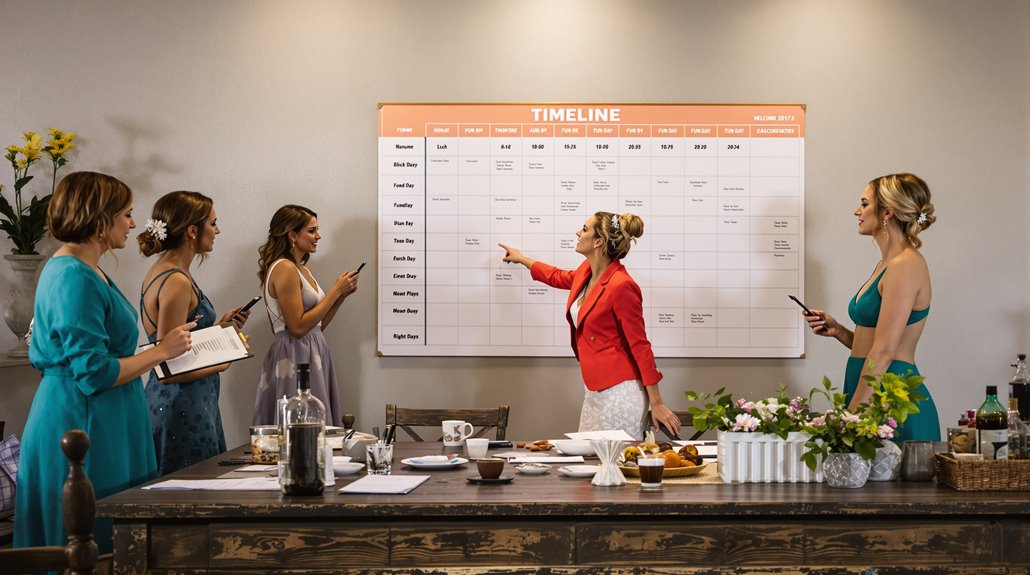
You’re in the thick of wedding planning chaos, juggling decisions left and right, and it’s time to get laser-focused with a no-nonsense action plan. Screenshot this: a customized master checklist that breaks everything into a 12-month timeline, including cultural ceremonies and unique touches. Use tools like The Knot for digital checklists with deadlines you can tweak. Prioritize securing your venue, booking key vendors, and sending save-the-dates. Strategic vendor bookings and a detailed day-of coordination plan are non-negotiables. Integrate tracking tools like Excel for budget and guest lists. Get your wedding website and registry up within six months. Remember, it’s about executed steps, not Pinterest dreams. Next step? Start delegating like a boss and keep that momentum rolling. For even greater control and clarity, apply project management principles to your event planning process to break complex tasks into actionable steps and manage timelines efficiently.
FAQ
Got questions about making those wedding decisions stick? First, prioritize your top action today by setting a decision deadline—it’s non-negotiable. If you’re worried you’re moving too fast or regret leaving something out, remember: adding or removing vendors should strategically align with your budget and timeline, so use our frameworks to keep everything streamlined.
What if my situation doesn’t match the examples?
When your wedding day doesn’t fit the mold, it’s time to pivot and execute a plan that works for you. Forget cookie-cutter solutions. Translate those generic examples into personalized strategies. Scale published stats to match your budget. Swap sample vendors for local gems. Got a unique timeline? Prioritize contracts and logistics—those are non-negotiable. Turn checklist items into clear goals. When you can’t find a fit, create your own framework. Use a 2×2 matrix or the Eisenhower principle to sort priorities. Move with intention and streamline decisions. Remember, it’s about strategic execution, not perfection. Accelerate your planning with time-boxed sessions. When industry norms don’t resonate, be the outlier. The goal? A wedding that’s distinctly yours, executed with precision.
What’s the first thing I should do today?
Where do you begin when your wedding feels like a massive, chaotic beast? First, grab a coffee and tackle that budget. Set it today—no fluff. Knowing your financial runway lets you pivot strategically, focusing on what matters. Next, draft a priority list with your partner. Not just any list—a hard-hitting, ranked guide of non-negotiables like venue, food, and entertainment. This gets the job done and guarantees you’re allocating resources where they gain the most. Today’s goal? Open a candid conversation about your shared vision. Discuss your “why” and align on your day’s purpose. This isn’t about pleasing Aunt Karen; it’s about executing a celebration that represents you both. Now, release expectations and start hustling.
What’s the most common regret?
Ever wonder what couples most often regret about their big day? It’s the guest list. Inviting too many people balloons costs and dilutes personal connections. A larger crowd means skyrocketing expenses on venues, centerpieces, and more. Plus, coordinating with vendors becomes a logistical nightmare. Imagine needing more staff for photography and bartending just because you felt obliged to invite your third cousin twice removed.
Scheduling rushes also top the regret list. A 10-hour event can still feel like a blur if not strategically planned. Running 15 minutes late? It’s a stress accelerator.
Reality Check: Keep your guest list tight and your timeline tighter. Use a solid checklist and timeline to avoid playing catch-up all day. Prioritize memories over excess.
What’s a red flag that I’m moving too fast?
Guest list regrets got you thinking? If you’re feeling a nagging sense of urgency, it might be a red flag that you’re moving too fast. Are you skipping significant conversations about budget or future plans? That’s like building a house without a blueprint. Is one partner making solo vendor decisions? That’s not teamwork; it’s control. Rushing decisions like venue deposits and invites right after engagement can lead to buyer’s remorse faster than you can say “non-refundable.” Ignoring input from your support network? You’re missing out on valuable perspectives. Emotional outbursts or prioritizing image over substance? Emotional bias alert! Slow down, take stock, and execute strategically. Need a reality check? Consider premarital counseling or a timeline adjustment. Your wedding’s a project—manage it wisely!
What changes if I add/remove vendors?
Adding or removing vendors in your wedding plan? It’s a strategic move that shifts your budget and stress levels. Adding vendors jacks up costs and complexity—more contracts, more coordination, more caffeine. But sometimes, it’s non-negotiable for securing top talent or elevating guest experience. Removing vendors frees up the budget—pivots it into something high-impact, like killer photography or gourmet food. It also means fewer touchpoints, less chaos. Consider vendor consolidation: multi-service pros streamline execution and reduce headaches. Remember, vendor changes late in the game? High risk, high stress. Strategically vet options earlier using transparent pricing and comparison tools. Your next move? Evaluate value, not volume—what genuinely enhances your day versus what just adds noise. Execute smartly.
Key takeaways
When you’re maneuvering the whirlwind of wedding planning, remember this: it’s a strategic operation, not a fairy tale. Cut through the chaos with precision. Your wedding’s a project, not a fantasy. Here’s how to execute it:
Navigate wedding planning as a strategic project, not a fantasy. Execute with precision amidst chaos.
- Prioritize Non-negotiables: Identify your top three must-haves. Allocate the biggest slices of your budget pie to these, ensuring they’re executed flawlessly.
- Scale Decisions: Planning’s a marathon, not a sprint. Stretch decisions over 12–14 months to avoid urgency and strategic burnout.
- Leverage Digital Tools: Centralize tasks digitally. Use AI for decision support, letting tech streamline your planning hustle.
Reality Check: Underestimating costs is a trap. Early, realistic budgeting isn’t just smart—it’s essential. Pivot wisely, and remember: every choice accelerates your vision.