
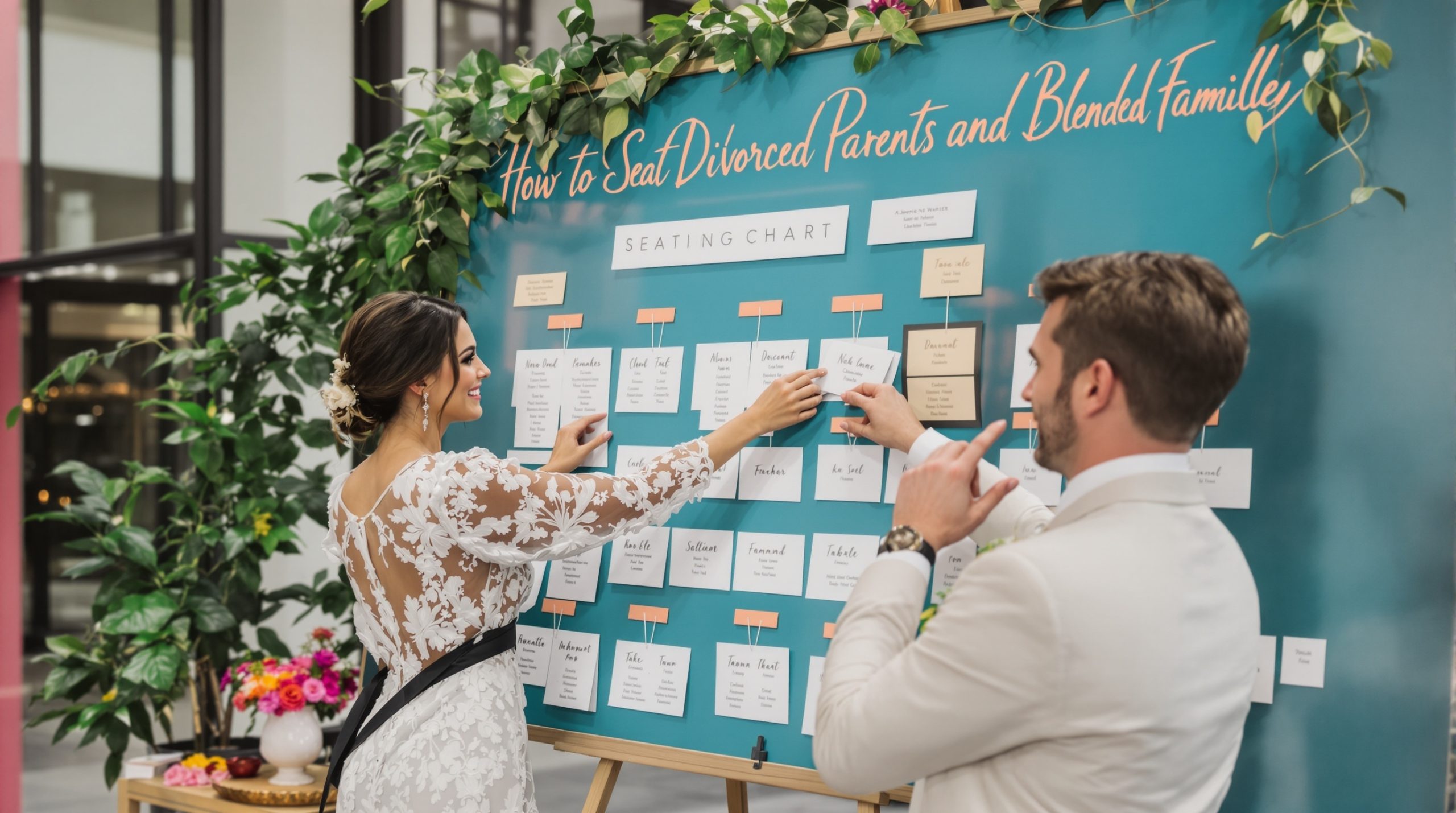
Strategically seating divorced parents and managing blended families requires a bit of finesse and a lot of execution. Start by placing exes on opposite sides to diffuse tension—ignore Pinterest fantasies; this is real-world strategy. Use the rule of thirds at tables, mixing familiar faces, acquaintances, and wildcards. A nearby quiet zone offers a breather for those who overheat. A tactical seating chart? Absolutely non-negotiable. Want to nail this task? Immerse yourself in the checklist next for streamlined success.
What you’ll accomplish (and what ‘done’ looks like)
When it comes to seating divorced parents and blended families at your wedding, think of it as a strategic puzzle where you’re the master planner. You’re maneuvering family seating challenges like a pro, ensuring your big day feels inclusive and harmonious. Keep in mind that blended families face three times more stress factors, making it crucial to approach seating arrangements with sensitivity and understanding. Blended family seating isn’t just about placing chairs—it’s about crafting an experience where everyone feels valued. The goal? Minimize drama and maximize joy.
Quick start (the short version)
Let’s cut to the chase: seating divorced parents and blended families at your wedding is like orchestrating a high-stakes game of musical chairs. Get it right and you’ll avoid unnecessary drama. Here’s your quick, no-nonsense guide:
- Divorced Parents Table: Strategically map out seating. Place divorced parents on opposite sides of the room. Prioritize separation to minimize tension. For an even smoother process, clarify event vision and objectives with both sets of parents ahead of time to set expectations.
- Mix and Match: Use the rule of thirds—familiar faces, acquaintances, and strangers at each table. Blend family members with friends to encourage interaction and ease tensions.
- Opt for Smaller Tables: Tables of 6-8 guests offer flexibility. They’re perfect for accommodating blended family dynamics without the headache. Consider creating a quiet space nearby where individuals can gather their thoughts and emotions, providing a moment of respite and reflection during the festivities.
Execute these steps with precision and you’ll create a harmonious environment that gets the job done. Now, hustle on!
Before you start: inputs you need
Before you plunge into the logistical juggernaut of seating divorced parents and blended families, gather your intel. It’s all about knowing the players and the field—no surprises allowed. You need a strategic approach, not a seat-of-your-pants panic attack. Here’s your must-have list:
- Child’s Developmental Stage: Understand their emotional maturity. Younger ones might need comforting objects, while teens demand autonomy. This affects how you seat them strategically. Remember, children’s acceptance of changes like separation varies greatly depending on their age and emotional maturity, so tailor your approach accordingly.
- Partner Evaluation: Know your partner’s readiness for their stepparent role. Discuss expectations and respect for the child’s ongoing journey to avoid future pitfalls.
- Co-Parent Communication: Establish regular “business meetings” to discuss schedules, emotional shifts, and more. This coordination is non-negotiable for streamlined logistics.
Get these inputs, and you’re halfway to hosting genius.
Step-by-step process
Alright, hustle champions, let’s translate that wedding chaos into a streamlined action plan. Start by clarifying your constraints—know your date range, budget ceiling, and any non-negotiables that must stand firm. Then, strategically build your decision order, create a timeline with milestones, execute vendor outreach like the pro you are, and lock your plan with contracts and contingency buffers—because when the plan gets executed, you’re the one who gets the job done. Involve a trusted third party to review the seating chart and provide insights, helping ensure that the arrangement is balanced and considers emotional dynamics effectively. Recognizing that wedding decision paralysis is common can help you navigate complex family dynamics with more confidence and less second-guessing.
Step 1: Clarify constraints (date range, budget ceiling, non-negotiables)
How do you make the puzzle pieces fit just right? Start by strategically clarifying constraints. First, tackle date ranges. Check those blended family calendars early for parenting schedule conflicts. Think custody agreements and school breaks—pivot when necessary. Next, budget ceilings. Nail down spending limits with your partner and involve stepchildren in the discussion, age-appropriately. Cover costs for activities, accommodations, and remember multiple households if gift-giving. Finally, identify non-negotiables. Prioritize custody and parenting guidelines for travel. Ascertain all children are included in core activities—nobody rides the bench. Maintain traditions for emotional security. Hold family sit-downs to voice needs and preferences, and document everything. Involve all stepfamily members in the trip planning process to ensure everyone feels included and has their expectations managed. Streamline these steps, and your chaotic blend gains clarity. Next, we’ll build the decision order.
Step 2: Build the decision order (what to decide first so everything else is easier)
Now that you’ve nailed down your constraints, let’s tackle decision order. Start with prioritizing core relationship alignment—it’s the bedrock of family harmony. Strengthen your partnership through quality time and candid chats. Next, strategically agree on household rules and roles. Establish who disciplines, who manages homework, and the all-important knocking-before-entering rule. Involve everyone in setting these rules; make kids feel valued. Then, establish robust communication protocols with ex-partners—text, email, whatever gets the job done. Sequence decisions from foundational to specific. Start broad, then narrow down—align values before debating screen time. Pivot to logistics after respect rules are executed. Remember, intentional decisions now accelerate smoother family integration. When individuals face indecision, it can lead to feelings of uncertainty and disempowerment, making it crucial to address these challenges head-on. Next up: creating your timeline. Ready to hustle smart? Let’s move.
Step 3: Create the timeline (milestones + deadlines)
When it comes to creating your timeline for integrating divorced parents and blended families, precision is non-negotiable. You’re not just managing a wedding; you’re orchestrating a family evolution. Start by recognizing that a two-year adjustment period post-divorce is critical. Strategically align parenting styles and household rules well before the big day to minimize chaos. Set milestones for family bonding—weekly game nights or shared meals build momentum. Track progress with quarterly check-ins and celebrate wins at the one-year mark. Remember, this isn’t a sprint; it’s a marathon. In managing this process, make sure to prioritize with precision so your planning remains on track and stress is minimized. Monitor family dynamics every six months and adjust your approach as needed. Blended families can be happy and healthy but require time and effort. Patience and flexibility get the job done. Next up, let’s talk about how to connect with vendors and execute your strategy.
Step 4: Execute vendor outreach (scripts + tracking)
Executing vendor outreach is where your wedding planning pivots from concept to action. It’s time to strategically engage vendors who get the job done. Start by identifying vendors that align with your event’s needs—think seating specialists or event coordinators experienced with sensitive family dynamics. Use databases and referrals to pinpoint these pros. Develop scripts that clearly outline your requirements, budgets, and non-negotiables. Tailor messages to highlight how they align with your goals. Contact them 1-6 months ahead, setting up initial emails or calls with detailed briefings. Schedule regular check-ins to guarantee everyone’s on the same page. Track progress using tools that provide real-time updates and performance reviews. Remember, clear contract clarity helps minimize confusion and ensures all vendor agreements are transparent from the start. Craft a clear, compelling pitch when reaching out to vendors, explaining exactly how your event stands out and what you expect from them. This approach guarantees precision with no room for chaos.
Step 5: Lock the plan (contracts, deposits, and contingency buffers)
Locking in your wedding plan means it’s time to nail down contracts, deposits, and those all-important contingency buffers. This is where you strategically execute agreements with vendors. Don’t just sign—ensure every term is clear and favorable. Deposits are non-negotiable; they secure your dates and services. Think of them as your insurance policy. Contingency buffers? Essential. They’re your safety net against potential hiccups. Allocate funds to handle unexpected surprises—because controlled chaos is still chaos. Utilize timelines and checklists to keep everything streamlined. This isn’t about being “bless and stressed”—it’s about being prepared. Pivot swiftly if challenges arise. You’re not just planning a wedding; you’re managing a project. Next up? Tune in weekly to stay on track and avoid spiraling. For extra peace of mind, always review your vendor contracts for hidden costs so your budget stays on target.
Step 6: Run weekly check-ins (how to stay on track without spiraling)
Let’s face it, wedding planning isn’t a fairy tale—it’s a full-blown project, and you’ve got to keep things moving efficiently. Weekly check-ins are your secret weapon to prevent spiraling. Hold a family council meeting every week on a consistent day. Review last week’s wins, tackle challenges head-on, and map out upcoming events and custody schedules. Document everything; stick it on the fridge or blast it in a group text. Conclude with something fun to keep spirits high. Assign a family notebook for decisions and a whiteboard for brainstorming. No blame games allowed; keep it constructive. Adjust rules as life pivots. Keep everyone in the loop. Now, go execute like a boss. Next step? Lock in those seating arrangements! Remember, using effective project management principles can help you streamline logistics and keep everyone accountable throughout the process.
Template you can copy/paste (checklist + tracker)

Crafting a seating arrangement for divorced parents and blended families might sound like walking a tightrope, but fear not—our streamlined checklist and tracker have got your back. Let’s keep it sharp and stress-free. First, open discussions to gauge comfort levels—document every insightful tidbit. Strategically seat parents at tables equidistant from focal points and avoid any hierarchy drama. Use the venue layout to your advantage, ensuring sightlines don’t ignite tension. Deploy buffer guests like your social ace in the hole—insert them between potential hotspots with finesse. Smaller tables? They’re your secret weapon for minimizing awkward cross-table dynamics. Mix it up with zones that encourage mingling. Execute these moves with precision, and watch as your seating plan accelerates towards harmony. Ready, set, strategize! For even better results, consider how your guest count will influence table arrangements and overall flow.
Common mistakes (and how to avoid them)
When it comes to seating divorced parents and blended families, skipping the seating chart is like inviting chaos to crash your wedding. Envision this: guests wandering aimlessly, awkward groupings, and brewing tensions. Let’s streamline this with strategic planning.
- Create a Seating Chart: Use Post-its or apps to craft your layout. Trial and error will refine it, ensuring smooth execution.
- Address Family Drama: Acknowledge tensions. Separate feuding relatives to fend off conflicts, especially with alcohol involved. Recognize step-parents with their own space upfront.
- Keep Families Together: Prioritize quality time by seating families together. Blended families thrive with inclusive tables, so keep drama exceptions minimal.
Remember, a well-planned seating chart can help you avoid common regrets and pitfalls that can add unnecessary stress and tension to your special day.
Reality Check: Plan meticulously to avoid last-minute chaos. Efficient seating is your non-negotiable key to wedding-day harmony.
FAQ
Let’s get real—seating your divorced parents and blended families efficiently needs a streamlined strategy, not hours of your precious time. Aim to execute a minimal version that still respects relationships by strategically placing key players. Delegate tasks like follow-up emails and signage to someone reliable, and if a vendor isn’t responding, pivot to Plan B faster than a caffeine-fueled meeting.
How long should this take if we’re busy?
Ever wondered how long it takes to integrate a blended family while you’re juggling a career and planning a wedding? Generally, it’s a marathon, not a sprint—expect 2-5 years for a successful adjustment. But fear not, ambitious planner, because with strong marital foundations and killer communication, you can accelerate this process. Think of integration as another project to manage, strategically executed amidst your bustling life. To fast-track success, set clear expectations and engage external support like counseling—it’s a game-changer. Remember, financial stress is a non-negotiable hurdle, so tackle it head-on. Stay aware: 60-70% of stepfamily marriages stumble, but your proactive approach can defy those odds. Next step? Create a timeline that respects both your family’s needs and your ambitious schedule.
What’s the minimum version that still works?
Ready to streamline seating arrangements for divorced parents and blended families? Let’s execute the minimum version that still works. Strategically place divorced parents in front-row seats, using siblings as buffer guests. Can’t sit them together? Move one to the second row. At the reception, separate tables keep the peace—distance is your friend here. For amicable situations, seat them at opposite ends of a long table. New partners? Let them sit with their accompanying parent; buffer guests guarantee comfort. Ushers briefed on seating assignments accelerate the process, minimizing conflicts. Use reserved seating cards to prevent last-minute chaos. Remember, it’s about executing efficiency, not aesthetics. Now pivot to action—assign tasks, set boundaries, and get ready for a smoothly executed celebration.
What can I safely delegate?
How do you master the art of delegation without losing control? Start by creating a killer task list to pinpoint what’s essential versus what can be delegated. Prioritize using the urgent-important matrix. Assign age-appropriate tasks to your kids—yes, even the stepchildren, because fairness isn’t just nice; it’s non-negotiable. Involve your partner in shared responsibilities to foster teamwork. Keep everyone in sync with a shared family calendar—consider it your command center. Regular family check-ins keep the delegation machine running smoothly. Get strategic: bio-parents lead discipline; stepparents support. Set clear boundaries for communication with ex-partners. Your goal? A finely-tuned family unit that moves like a well-oiled machine. Ready for action? Grab a checklist and start delegating like a pro.
What if a vendor isn’t responding?
When a vendor goes radio silent, it’s like hitting a red light in the fast lane of your wedding planning timeline. You’re not here for delays, and neither are we. First, strategically pivot: check your contract for response time clauses. If they’re slacking, it’s time to escalate—call, email, or even tweet. Remember, 85% of customers expect a reply within six hours, so don’t feel guilty about being assertive.
If traditional channels fail, consider leveraging hybrid AI-human models for more consistent communication. Being proactive is non-negotiable. Document every interaction—proof beats promises. If you still hit a wall, it might be time to cut losses and explore alternatives. Hustle smart and keep your momentum alive. Reality check: sometimes, moving on accelerates success. To stay organized in these situations, keep a central tracker of all vendor communications and follow-ups for easy reference and accountability.
What should I track weekly?
Although wedding planning might seem like a never-ending to-do list, executing it with the sharpness of a high-powered project manager is your secret weapon. Each week, strategically track custody schedules, family activities, and shared responsibilities. Use color-coded calendars to streamline logistics—who’s dropping off when and where? Automate reminders for soccer pickups, doctor appointments, or school events. Don’t get caught playing catch-up; real-time updates keep the family in sync. Shared to-do lists are non-negotiable for chores and shopping—delegate tasks efficiently. Record compromises and decisions in co-parenting apps or family journals. Want to balance fun and function? Plan engaging activities like cooking challenges or neighborhood walks. Ready to shift? Use tech tools for seamless changes. Get clarity, gain control. To keep your planning on track and avoid hidden costs, review your budget and family commitments weekly as part of your routine.
Key takeaways
Seating divorced parents and blended families at your wedding shouldn’t feel like solving a Rubik’s Cube blindfolded. Here’s how to execute it with precision and confidence:
- Alternating Rows: Mix it up by seating guests on both sides of the aisle. This strategic move promotes an inclusive atmosphere, ensuring no family feels sidelined. It’s perfect for maneuvering the blended family landscape without the headache of strict divisions.
- Circular Seating: Opt for this setup if your wedding’s intimate and outdoorsy. It creates a harmonious, interactive vibe, blending family members naturally without the linear constraints.
- Mixed Seating Plans: Forget rigid family lines. Strategically assign seats based on relationships to the couple, accommodating stepparents and siblings seamlessly.
Reality check: While these moves streamline seating, remember, proactive planning beats reactive scrambling every time.