
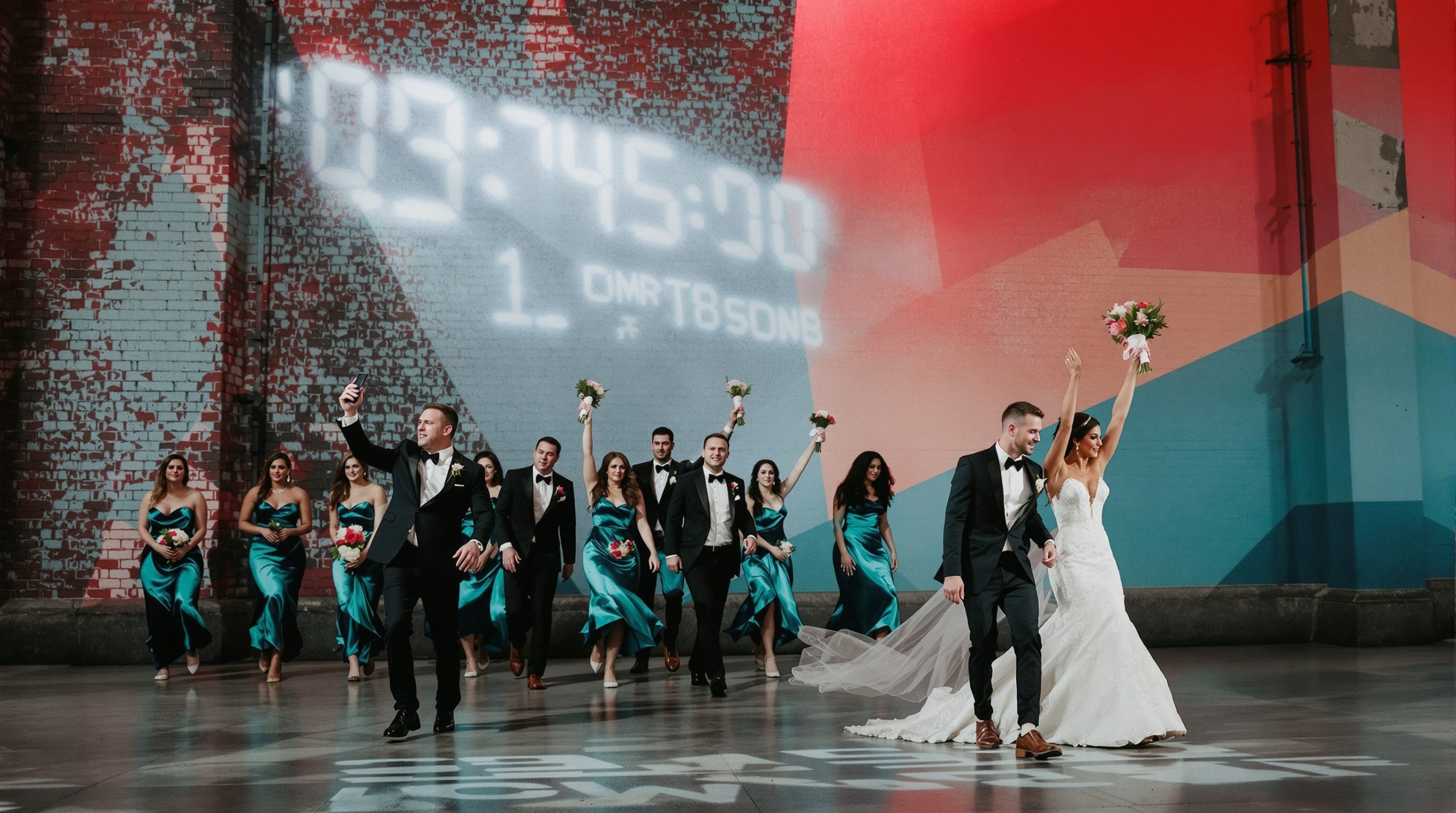
To time your processional music to the actual walk, think of it as managing a high-stakes project. Nail the essentials: strategically select three songs, calculate walker pace and aisle length, integrate fallback loops for seamless flow, and sync each cue flawlessly. Ditch the stress—prep like a pro by rehearsing weekly and streamlining communication with visuals and trackers. Once you’ve executed this with precision, tweak for perfection. Ready for the deeper hustle? Let’s make it unforgettable.
What you’ll accomplish (and what ‘done’ looks like)
Envision this: You’ve got a wedding to plan, and you’re laser-focused on nailing that processional music timing like a boss. Here’s the game plan: processional timing is all about executing ceremony music timing that aligns with your walk timing. Keep it sharp with three strategic songs—one for parents, one for the bridal party, and one for you. Each piece typically lasts 60 seconds, but flexibility is key. Musicians can loop or fade as needed, so your walk flows seamlessly. Request specific starting points to match the vibe you want. Consider the desired atmosphere for your ceremony, as it will guide your song choices to create the perfect mood. Remember to prioritize guest satisfaction through streamlined processes, ensuring everyone enjoys the moment. Think of it as a project runway; you’re not just strolling, you’re strategically moving. Done right, it’s a precision move where timing meets elegance. Ready to pivot into action? Let’s go.
Quick start (the short version)
When you’re up against the clock and need that processional music nailed down faster than you can say “I do,” here’s your quick-start guide to getting it done right. You’ve got a lot on your plate, so let’s streamline the processional music length with these steps:
- Strategize Song Selection: Choose 3 songs—one for grandparents/parents, one for the bridal party, and one for the bride. Keep each song around 3 minutes. Perfect timing enhances the emotional connection for guests, ensuring the ceremony music serves as the soundtrack to your love story.
- Time the Walk: Calculate 30 seconds per person. Aim for a total processional music length that fits everyone’s pace without rushing.
- Loop Strategically: If a song runs short, loop it. It’s non-negotiable for a seamless flow.
- Rehearse and Execute: Practice the full run at the venue. It’s the hustle that gets the job done.
Before you start: inputs you need
Before you plunge into timing your processional music, gather the right intel to execute like a pro. Immerse yourself in the numbers and logistics with laser focus. Here’s your streamlined checklist:
- Song Duration: Know your tunes. Processional songs average 3-5 minutes; aim for coverage without leftover fluff. Match song length to your aisle’s reality. Consider songs that evoke the desired emotions to create the perfect atmosphere for your wedding day.
- Aisle Length and Walk Time: Time each participant’s walk. Average is 30 seconds per person. Consult your venue coordinator for aisle insights.
- Participants: Count your crew. Fewer people mean fewer songs. Typically, 2-4 songs cover grandparents, bridal party, and the bride.
- Venue Factors: Venue size dictates music pacing. Start when doors open. Musicians ready? 30 minutes before showtime. Make sure to allocate 10-15% of the budget for strategic lighting and professional photography to capture these moments beautifully.
Reality Check: Nailed down your numbers? Great. Skipped any? Circle back before chaos ensues.
Step-by-step process
Alright, powerhouse, let’s break it down step-by-step. First, pin down your constraints—dates, budgets, and any non-negotiable elements that set the boundaries for your planning game. Next, streamline your decision-making by knowing what to tackle first, then create a rock-solid timeline that keeps the chaos controlled as you execute vendor outreach and lock in your plan with contracts and contingency buffers. Music enhances emotional depth and the duration of feelings, setting the mood for various moments throughout the day, so take special care to coordinate your music choices with the rest of your timeline. Consider crafting the perfect wedding playlist to ensure that every musical moment complements the atmosphere you wish to create.
Step 1: Clarify constraints (date range, budget ceiling, non-negotiables)
Tackling your wedding music like the project management pro you are starts with understanding your constraints. First, nail down your date range: prelude music kicks off 20–30 minutes before the ceremony, with the processional spanning 3–10 minutes. Next, set your budget ceiling. You’ll need 15–16 songs overall, with the prelude demanding up to 12 tracks. Strategic fading or looping saves you from custom edits, keeping costs in check. Now, identify non-negotiables. Each processional song should last 3–5 minutes, ensuring no awkward silences. Group walkers smartly to match aisle length, and rehearse to avoid premature song endings. Consult with your venue coordinator for specific timing insights. Remember, a contingency fund of 10-15% can be crucial in managing unexpected costs, especially when planning under a tight timeline. Ready to execute? Clarify these constraints and move forward with confidence.
Step 2: Build the decision order (what to decide first so everything else is easier)
When it comes to orchestrating a seamless wedding processional, you need to build your decision order like a high-stakes business meeting. Start by determining your processional participants. Think of it like assembling a dream team: grandparents, parents, officiant, groom, groomsmen, bridesmaids, flower girl, ring bearer, and then—you guessed it—the couple. Next, count your entrants and keep the venue’s aisle length in mind. Short aisle? You’ll need fewer songs. Long aisle? Prepare for a 3-10 minute musical journey. Now, strategically select music categories. Use distinct pieces for family, bridal party, and couple. Match songs to tempo and pace for a smooth flow. Assign cue signals and roles to guarantee precision. The wedding processional not only sets the tone for the ceremony but also serves as the opening scene to the couple’s love story, making it crucial to plan each step thoughtfully. Execute these steps, and you’re on track to a streamlined, no-nonsense processional. Incorporating strategic contingency buffers into your planning can help address unexpected delays or changes in the wedding processional timeline.
Step 3: Create the timeline (milestones + deadlines)
You’ve built your decision order and now it’s time to shift gears into timeline creation. This isn’t just a checklist—it’s a strategic roadmap to your big day. Start by identifying key processional milestones: officiant, groom, bridal party, and the headliner—your grand entrance. Set a ceremony start time—4pm works for winter if sunset’s your vibe. Allocate 25-30 minutes for the full processional and a 5-10 minute recessional, ensuring guest seating happens 25-30 minutes prior. Calculate each walker’s pace and aisle distance to sync with music. Build in buffer times to prevent bottlenecks. Ensure guest comfort by streamlining logistics, such as seating arrangements and access to refreshments. Acknowledge that emotions may affect timing, so include a 15-minute post-ceremony breather. Document everything, distribute timelines a month ahead, and finalize two weeks out. You’ve got this—plan, execute, celebrate.
Step 4: Execute vendor outreach (scripts + tracking)
Start executing your vendor outreach like a pro project manager. Immerse yourself in vendor research by reading reviews on The Knot, WeddingWire, and Google. Don’t forget real-life insights—ask friends or join Facebook wedding groups. With 20 target vendors in sight, initiate strategic contact. Use a dynamic three-part email script to detail your wedding needs and request quotes. Pre-engage on social media to warm up connections, then message trade show vendors to express interest. Evaluate communication skills, focusing on responsiveness and genuine interaction. Track everything meticulously—quotes, timelines, and proposals. Pivot quickly if responses lag. Designate a single point of contact to streamline communication and avoid miscommunication. This isn’t a Pinterest fantasy; it’s strategic execution. Next, secure meetings for deeper alignment and propel your wedding plan forward. Remember to verify vendor availability for your wedding date and discuss timelines for services and deliveries. Ready to hustle? Let’s move!
Step 5: Lock the plan (contracts, deposits, and contingency buffers)
To lock down your wedding plan with precision and poise, focus on the contracts, deposits, and contingency buffers like a seasoned project manager on a caffeine high. You’ll execute contracts detailing everything—from music selections to venue requirements. Strategically secure deposits for musicians familiar with pacing and pre-ceremony needs. This isn’t just about money; it’s about confidence that your songs, from preludes to processionals, are non-negotiable. Choosing the right music can be challenging but is essential, as it sets the tone for key moments like the processional and recessional.
Next, build contingency buffers—extra songs for late arrivals and wardrobe rehearsals. Include fade or loop options for songs that run long. You’re not leaving anything to chance, so plan for interludes during key moments. With contracts signed and deposits made, you’ve got the job done. Budgeting for events can be complex; consider factors like venue costs which vary by location and add to your overall expenses. Now, move forward with assurance and focus on enjoying your day.
Step 6: Run weekly check-ins (how to stay on track without spiraling)
Stepping from contract security into the domain of weekly check-ins keeps your wedding planning gears turning without the risk of derailing. Rehearse your processional weekly—yes, every week. Time your walk to the music’s crescendo to hit that aisle end with precision. Confirm musician cues regularly. Your musician should know exactly when Canon in D hits that sweet spot. Measure your aisle. A 30-second walk is your non-negotiable target per person. Log your rehearsal times—track them like you would a project milestone. Your aisle length and party size dictate whether you need one track or two. Avoid spiraling by adjusting as you go. Next up? Nail down those cues and signals. It’s not just music; it’s a strategic move. When planning your wedding, create a timeline with milestones and deadlines to ensure all elements, including the processional, align with your overall schedule.
Template you can copy/paste (checklist + tracker)
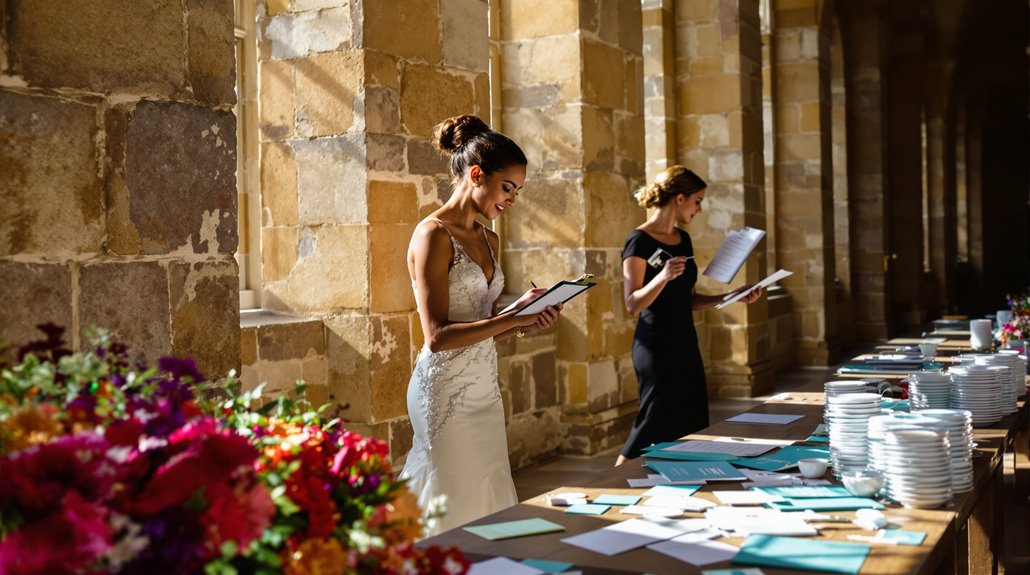
While you’re juggling a career and wedding planning like a boss, having a processional music checklist and tracker is non-negotiable. Think of it as your secret weapon to execute a seamless ceremony. Here’s a streamlined strategy: List song durations—20-30 minutes for prelude, 3-10 for the processional. Track entries: parents, bridal party, then the bride. Note cues, like parent entry signaling the ceremony start. Musician instructions are essential: loop songs, start at specific sections, adjust tempo. Guarantee timing precision with the bridal party rehearsals, strategically timing each group’s entrance. Research suggests lower spending may correlate with longer-lasting marriages, which can be a comforting thought as you prioritize your wedding expenses. This checklist gets the job done, so you can pivot seamlessly from vows to victory dance. Next steps? Plug these into your timeline and watch your plan move with kinetic precision.
Common mistakes (and how to avoid them)
Even the most meticulously planned wedding can unravel if common mistakes sneak in, but don’t worry—you’re about to sidestep those pitfalls with precision. Timing your processional music is all about strategic execution. Here’s how to avoid the common blunders:
- Minute-by-minute scheduling: Ditch it. Real life isn’t a stopwatch. Build cushioned timelines for flexibility and avoid chaos.
- Processional timing commitment: This is non-negotiable. Stick to the published time for that grand entrance. It sets the tone.
- Insufficient communication: Speak to your officiant and speakers. Confirm and practice timing to prevent speeches from derailing your schedule.
- Buffer time exclusion: Build 10-15 minute buffers between major events. This padding prevents a domino effect of delays.
Now, streamline your timeline and execute with confidence!
FAQ
Wondering how to time processional music when your schedule’s tighter than your wedding day shoes? Strategically allocate about 2-4 hours to get this nailed down, focusing on the essentials: selecting songs, coordinating with musicians, and rehearsing. Delegate song selection to someone with good taste, track progress weekly, and if a vendor ghosts you, pivot fast and find a backup—because in this game, efficiency isn’t just recommended, it’s non-negotiable.
How long should this take if we’re busy?
Strategically timing your processional music isn’t just a nicety—it’s a non-negotiable for any couple with a packed schedule. You want this executed quickly and smoothly, with zero room for mishaps. Most processionals fall between 3–10 minutes, but for the hustle-driven couple, it’s all about strategic precision. Start by coordinating closely with your musicians. Have them kick off at a significant song point or loop a catchy tune to match the walk’s pace. This streamlines the process, guaranteeing you’re not bogged down by unnecessary pauses. Rehearse the walk to confirm everyone’s in sync—your musicians can fade the music as needed without missing a beat. Reality Check: Skipping rehearsals equals chaos, not cool efficiency. Prioritize prep, avoid stress.
What’s the minimum version that still works?
You’re juggling a million things and the last thing you need is a bloated processional playlist slowing you down on your big day. Let’s streamline this. You only need three types of songs: preludes, processionals, and recessionals. For the processional, strategically choose 2-4 songs covering key moments: grandparents/parents, bridal party, and the bride. If you’re feeling bold, a single song for everyone before the bride can work—just loop it as needed. Keep the couple’s entrance to a solid 3-10 minutes depending on your procession size. Remember: 60 seconds per piece is your sweet spot. Forget fluff; focus on execution. Practice timing during rehearsal, and bam—your processional is a kinetic masterpiece. Ready to pivot? Draft a no-nonsense playlist now!
What can I safely delegate?
How do you keep your wedding day from turning into a logistical nightmare? Delegate strategically. Let musicians work their magic. They can time songs to your processional flow, starting at specific points to match your walk. Musicians handle song fades and loops, ensuring a seamless vibe. Venue coordinators? They’re your secret weapon. They’ve seen it all and know aisle-walking times like the back of their hand. Trust them to cue the music as guests enter. Want personalized processional music? Assign different tunes to grandparents, bridal party, and yourself. Musicians adjust within each section for smooth transitions. This isn’t just delegation; it’s smart execution. Ready to hustle? Create a detailed music timeline and sync it with your venue team. Gain peace of mind.
What if a vendor isn’t responding?
Ever feel like you’re chasing shadows when a vendor goes silent? It’s time to pivot and execute a strategic follow-up. First, send a concise email with a clear subject line and date. If no response after 48 hours, follow up politely, spacing your messages 2-3 days apart. Still nothing? Call them. Document every attempt, and set a non-negotiable deadline: “Need a response by [date], or we’ll move on.” Meanwhile, prepare a backup vendor list—quick pivots save the day. Use online directories or forums to find verified, responsive alternatives. If chaos ensues, switch to self-managed options like playlists. Remember, in wedding planning, speed and precision are your best allies. Don’t dwell—move, pivot, and keep the momentum.
What should I track weekly?
When wedding chaos threatens to derail your plans, tracking weekly metrics becomes your secret weapon against the madness. Focus on a few key areas to keep your processional music in check. First, time each rehearsal to guarantee the aisle pacing matches your 6–8 seconds per pair guideline. Adjust music to fit the flow—check if your DJ can loop tracks for larger bridal parties. Keep an eye on group size changes; they directly affect timing. Confirm all music cues and volumes are tested and ready. Practice overlapping entrances to prevent awkward pauses. Each week, finesse these elements to guarantee a seamless execution. Remember, strategic tracking isn’t just smart; it’s non-negotiable. Next step? Fine-tune your rehearsal checklist for ultimate efficiency.
Key takeaways
Timing your processional music isn’t just a task—it’s a strategic execution that demands precision and foresight. Here’s how you nail it:
- Song Duration: Each processional piece should flow for 60 seconds for a smooth shift. Total time depends on participants and venue size—expect 3–10 minutes.
- Song Selection: Choose slower, steady-tempo pieces to match the venue’s aisle length. This guarantees a graceful walk and avoids premature endings.
- Prelude Integration: Start 20–30 minutes prior, with 5–10 songs, setting the atmosphere. Shift seamlessly to the processional, representing your dynamic relationship.
- Timing and Rehearsal: Practice with full songs, adjusting walk speed for natural pacing. Musicians need clear cues to sync perfectly, emphasizing flow over fluff.
Reality Check: Avoid awkward silences and prioritize seamless shifts.