
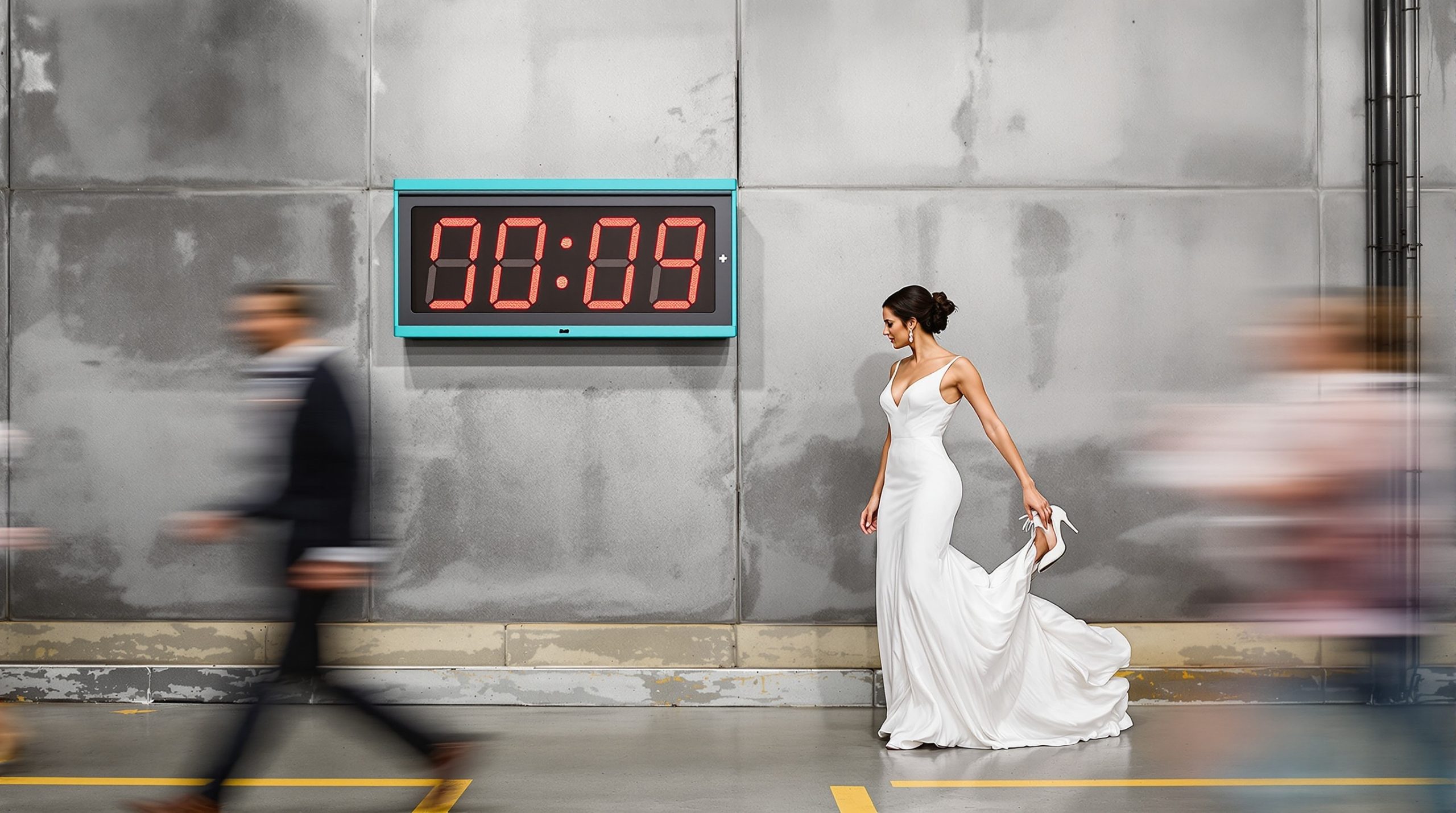
Most wedding timelines derail because they skip strategic buffers, overloading the schedule to look “Pinterest perfect.” Guess what? Brides end up bless and stressed, and nobody’s got time for chaos. Streamline it by starting from your ceremony time, working backward with built-in pauses, and executing a work-backward timeline that even NASCAR would envy. Get that non-negotiable 45-minute buffer nailed down, and let tech do the heavy lifting. Curious about maintaining wedding day zen amidst potential mayhem?
The thesis (what people get wrong)
Let’s cut the cake and get real—wedding timelines often crumble because people underestimate the power of precision. You think you’ve got it all under control, but wedding timeline delays sneak in when schedule problems arise due to insufficient time allocation for key events. Ambitious couples often forget that speeches and toasts can run over, or that moving guests from ceremony to reception takes more than a New York minute. Planning without buffer times? That’s a recipe for chaos.
You need to strategically allocate time like your career depends on it. Add extra minutes for shifts and guarantee everyone, from vendors to guests, knows the schedule. Use tools—checklists, timelines—to keep things streamlined. Your wedding deserves to be executed with the same precision you bring to the boardroom. Include a contingency buffer in your timeline to account for unexpected delays during the day, ensuring a smoother and more enjoyable experience for everyone involved.
Why this happens (the real root causes)
While you’re busy being a boss in the boardroom, wedding timelines quietly unravel due to overlooked details and miscommunications. You want everything executed flawlessly, yet the timeline running late becomes inevitable when:
- Hair & Makeup Delays: Last-minute additions and interruptions extend prep times. Hesitancy among bridesmaids to go first can slow the process significantly.
- Logistics Hiccups: Elevators crawl, guests sidestep, and traffic conspires against you. Even with meticulous planning, unpredictable factors like weather and transportation delays can disrupt the schedule.
- Vendor Misalignment: Invisible timelines clash without a master plan—chaos ensues.
- Guest Interactions: Well-meaning hugs and hellos morph into time-thieving marathons.
These root causes of wedding delays aren’t just nuisances—they’re preventable with strategic execution. Tackle each with the precision you bring to work. It’s not about perfection; it’s about smart, intentional choices that keep your day moving. Reality check: Expect the unexpected; plan for it.
What to do instead (the better framework)
To guarantee your wedding timeline doesn’t unravel into a stress-fest, strategically pivot your approach with a Work-Backward Framework. Start from your ceremony time and build backward to confirm every detail is executed with precision. Here’s how to streamline your timeline like a pro:
- Allocate Buffers: Insert 10-15 minute cushions between major events. Trust me, they’re non-negotiable.
- Embrace Alone Time: Give yourselves 10-20 minutes post-ceremony to breathe—your sanity will thank you.
- Use the 30/5 Rule: For tasks, add 30 minutes for biggies, 5 for the small stuff. Your future self will love this.
- Coordinate Vendors: Share your timeline early and confirm details one week out—no surprises here. Always communicate any last-minute changes to ensure everyone is on the same page.
Remember to monitor venue rentals and other expenses closely, as unexpected costs can delay your timeline. Reality Check: Underestimate time and you’ll regret it—plan smart, not hard.
How to apply it in real life
Envision this: you’ve planned to take pre-ceremony photos, but the photographer’s stuck in traffic—pivot by allocating buffer time in your timeline. In high-stakes moments like coordinating a surprise performance, strategically confirm vendor details two weeks out to guarantee flawless execution. To ensure everything runs smoothly, maintain regular check-ins and updates with vendors, as consistent communication is key to avoiding last-minute surprises. Remember, aligning timelines with vendor schedules is crucial for success, as it helps in managing expectations and avoiding delays. And for those “we’re too busy” days, streamline your timeline management with a wedding planning app that keeps everyone in sync and on schedule, no stress required.
Example 1: a common scenario + the better move
You know how post-ceremony photos can hijack your reception schedule faster than you can say “cheese”? Let’s streamline that chaos. The culprit? An unrealistic timeline. Couples often underestimate how long those “quick” snaps take, especially with large parties. Here’s the better move: Strategically plan a 10-20 minute buffer right after the ceremony. Use this time for just you two—breathe, regroup, then hit the photo session with precision. Communicate a realistic schedule to your photographer in advance. It’s non-negotiable. This isn’t just smart; it’s essential. You’re not just saving time; you’re saving money—because every 30-minute delay can cost you $5,000 in vendor fees. Consider the service charges that pile up over time, which can range from 15-25% of total costs, further emphasizing the importance of sticking to your timeline. So, pivot from chaos to clarity. Next step? Share this schedule with your vendors. To further streamline the process, limit the number of locations for photos to ensure timely completion and prevent unnecessary delays.
Example 2: a high-stakes scenario + the better move
When high-stakes scenarios threaten to derail your wedding day, being ahead of the game isn’t just smart—it’s essential. Imagine your $20,000 day running $5,000 over budget because vendors clock overtime. Ouch, right? Let’s avoid that. Pinpoint potential time bombs: post-ceremony photos, hair/makeup marathons, and guest herding. These are the usual suspects. But here’s the kicker—communication. Nail your timeline down. Sync schedules with vendors. Confirm hair and makeup wrap-ups before snapping pics. Build buffers—at least 10-15 minutes between events—and pad travel time like a pro. A well-crafted force majeure clause can also safeguard against unexpected disruptions. A calming, beautiful environment can set a positive tone for the day, so choose your getting ready space wisely. Don’t forget the 10-20 minutes of alone time post-ceremony to breathe and recalibrate. Strategically executed plans mean fewer headaches and more dance floor action. Your move? Create a bulletproof timeline today.
Example 3: a ‘we’re busy’ scenario + the better move
In wedding planning, “busy” isn’t an excuse; it’s the reality. Imagine this: vendors scrambling from back-to-back gigs, guests stuck in traffic, and coordinators juggling tasks. It’s chaos, but it doesn’t have to derail your day. Here’s how to pivot: schedule a non-negotiable 45-minute buffer between your ceremony and reception. Hire a timeline manager—think of them as your event’s Swiss Army knife. Limit family photos to 10 minutes for just 20 people. Strategically stagger guest arrivals to smooth out the rush, and have cocktail stations pre-set to kick off on time. Use real-time RSVP apps to predict guest waves, and impose penalties for vendor delays. These moves streamline your day, making sure everything’s executed with kinetic precision. Keep in mind that the median duration of marriage for individuals in a first marriage is 21 years, reflecting the importance of thoughtful planning for such a significant milestone. Understanding that wedding trends are influenced by industry insiders can help you focus on timeless styles rather than fleeting fads.
Counterpoints (when the old way is actually fine)
Although the wedding world loves to sell innovation like it’s going out of style, let’s be real—some old-school methods still get the job done with zero drama. For those who thrive on efficiency and results, consider these classic strategies:
- Flexible Timelines: Keep timelines as living documents that adjust in real-time. You’ll avoid the stress of rigid schedules while keeping your vision intact.
- Buffer Time: Adding 10-15 minute buffers between events guarantees smooth shifts and avoids cascading delays. It’s a non-negotiable for stress-free execution.
- Extended Day: Starting earlier means more mingling, more memories, and less pressure for early exits. Early ceremonies accommodate guests of all ages, ensuring everyone can enjoy the celebration without the stress of staying too late. Engaging vendors early can also enhance the experience by ensuring smooth coordination throughout the day.
- First Look: This approach grants 40% more photo time and eliminates rushed post-ceremony sessions. Strategically executed and streamlined.
Reality check: Old-school doesn’t mean outdated.
Action plan (do this next)
Ready to kick your wedding planning into high gear? Let’s execute an action plan that gets the job done with kinetic precision. Here’s what you need to do next:
- Build Timeline Backward: Start from your ceremony time and work backward. Add 10-15 minute buffers between major events—this is non-negotiable.
- Apply 30/5 Rule: Tasks that normally take 5 minutes will demand 30 on the big day. Strategically plan for last-minute questions and distractions.
- Share Timeline Widely: Finalize and confirm your timeline with vendors a month in advance. Keep extra copies handy for VIPs and guests.
- Hire Coordinator: They keep everything streamlined and pivot smoothly between tasks. Trust them with vendor coordination and final payments. Remember, understanding vendor pricing sheets can help avoid hidden costs, ensuring you stay on budget.
Visual summary you can share
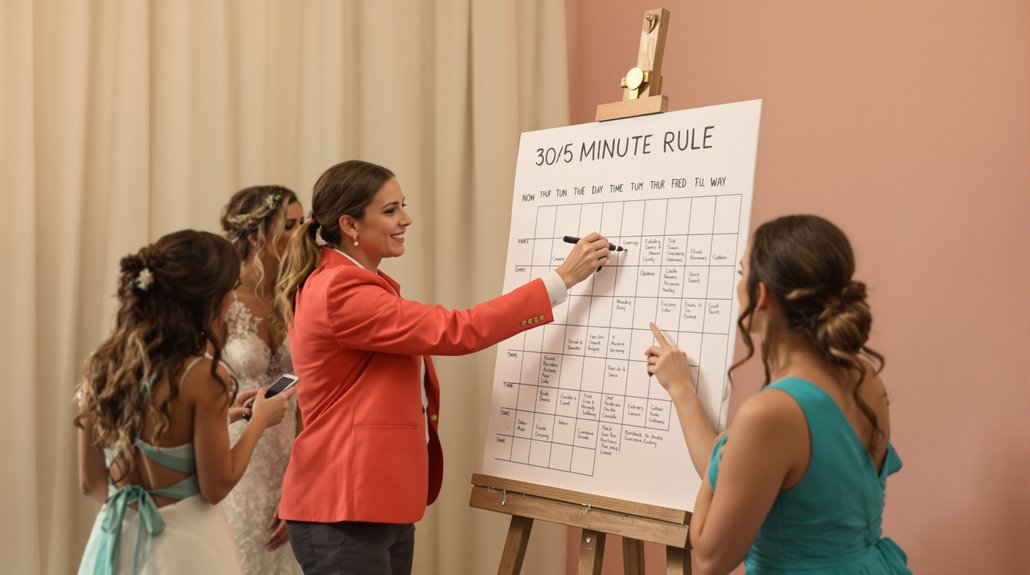
Let’s cut to the chase: you need a shareable visual summary that keeps your wedding day on track like a well-oiled machine. Think of it as your strategic map, ensuring every detail is executed flawlessly. Start with the 30/5 Minute Rule—tasks balloon on wedding days, so build in buffers. Hair and makeup? Non-negotiable: book six hours before the ceremony. Reception spans five hours, with a cocktail hour kicking things off. Utilize a timeline chart to visualize each segment—from guest arrival to the last dance. {img} A simple, bold infographic illustrating these checkpoints can be your secret weapon. Share it with your bridal party and vendors. It’s the difference between a day that flows and one that falters. Action step? Create and distribute this now. Also, remember to secure photographers 10-12 months prior to capture those unforgettable moments on your big day. {save_text: “wedding_timeline_visual_summary”
FAQ
When your family or vendors push back, or you realize a decision wasn’t as strategic as you’d hoped, don’t panic—pivot. The fastest way to course-correct is to streamline your timeline, communicate clearly, and get your partner on board with the new game plan. Your easiest win today? Reassess your buffer times and make sure every vendor has the updated schedule, because nothing says “mission accomplished” like a well-executed plan.
What if my family/vendors push back?
Even if your family or vendors push back on your wedding timeline, remember that you’re steering this ship. You have the numbers on your side. Present data on smoother guest experiences with 117 as the average guest count to justify your timeline. Use facts like the recuperation of 85% delayed marriages by age 45 to counter tradition arguments.
Strategically offer buffer times within your timelines to tackle vendor concerns while keeping everything streamlined. Use incentives tied to on-time performance to guarantee adherence. Enforce contracts specifying timelines as non-negotiable and limit discussions to data-driven points. Schedule pre-event meetings to reinforce these plans and keep everyone aligned. Remember, this isn’t about romance—it’s about getting the job done efficiently. Pivot when necessary, but stay in control.
What if I already made the ‘wrong’ decision?
So, you think you’ve made the ‘wrong’ decision? Relax. Let’s pivot and get things back on track. First, assess how your timeline‘s been impacted. Maybe hair and makeup are taking longer than expected, or vendor arrivals were misaligned. These hiccups can snowball, but they’re fixable. Add strategic buffer times—15-30 minutes here and there—to absorb minor chaos without derailing the day. Simplify overcomplicated elements; ditch non-essentials to streamline the flow. Revisit vendor contracts to verify setup and teardown are aligned with your revised schedule. Recommunicate updated timelines to everyone involved. Remember, a well-executed plan doesn’t mean perfection. It’s about making smart, intentional moves to keep the day running smoothly. Now, let’s execute like the pros we are.
What’s the fastest way to course-correct?
Need to hit the brakes and steer your wedding back on course? Start by identifying non-negotiable moments like the first look or family portraits. These are your anchor points. Prioritize them and let everything else shuffle. Communicate swiftly with vendors; a quick call or message gets the job done. Share your revised timeline ASAP—no one likes surprises, especially not vendors. You’ve got a phone; use it to keep guests in the loop. Designate a bridal party member as your in-person communicator. Add 10-30 minute buffers between activities to breathe and pivot. Treat your timeline as a flexible guide, not a rigid script. Maintain calm under pressure, and remember: hustle gets results. Now, let’s get you back on track!
How do I get my partner aligned?
How do you get your partner aligned with wedding planning chaos? Start by scheduling joint review sessions—treat them like your weekly power meetings, not optional coffee dates. Sync your timelines using shared digital tools, because 85% of couples swear by them for timelines and budgeting. Establish a mutual planning routine, spending around 6 hours weekly on wedding details, with dedicated time for updates. Discuss priorities early, like photography or florals, to reduce decision fatigue. Leverage collaborative apps for checklists and schedules, ensuring you’re both on the same page. Remember, transparency in budgeting and vendor selections can save headaches. Finally, consider a planner or day-of coordinator to unify visions and streamline execution. Now, go execute your wedding like a boss.
What’s the easiest win I can do today?
Why wait for the perfect moment when you can snag an easy win today? Leverage your smartphone to streamline your planning with a wedding website. It’s a strategic move that gets the job done. Craft a personalized site for RSVPs, venue details, and travel info. This isn’t just fluff—it’s kinetic precision that cuts down on those endless guest queries. Plus, use AI-powered tools to create efficient timelines and personalized checklists.
You’re busy, so let tech do the grunt work. Add SMS reminders for tastings and tours to keep things moving. It’s all about making intentional, accelerated decisions that respect your time.
Next step? Sync everything with mobile alerts. You’re not just planning; you’re executing.
Key takeaways
When planning your wedding, precision and strategic execution are your best friends. You’re not just setting a schedule; you’re orchestrating a high-stakes event with the precision of a project manager. Here’s how to keep things running smoothly:
- Non-negotiable Buffers: Build in extra time for each task. A five-minute job magically expands to 30 on your big day—plan accordingly.
- Grooming Timelines: Allocate 90 minutes for hair and makeup per person. Don’t skimp; it’s a strategic investment.
- RSVP Mastery: Send invites 6-10 weeks ahead and follow up. Track responses like you track KPIs.
- Photography Precision: Schedule 8 hours of coverage, including a pre-ceremony portrait sprint.
Reality Check: Even the best plans pivot. Embrace the chaos; it’s half the fun.