
Most wedding timelines collapse because you’ve underestimated logistics and skipped essential buffer times. When your day becomes chaos, it’s because you’ve treated planning like a Pinterest board instead of a project management blueprint. The fix? Strategically block out time, implement a shared checklist for clarity, and build non-negotiable buffer zones. Execute with precision, and your wedding will run smoother than a CEO’s calendar. Want a streamlined celebration that gets the job done? There’s more to discover.
The thesis (what people get wrong)
Let’s get straight to it: wedding timelines often go off the rails because of unrealistic time expectations. You might think you’ve nailed the schedule, but wedding planning timeline mistakes are lurking. Underestimating hair and makeup durations? Classic. Expecting outfit changes to be swift? Forget it. These wedding timeline problems make even the best-laid plans crumble. For couples, focusing on nutrition and wellness in the weeks leading up to the wedding can help manage stress and maintain energy throughout the big day. Your planning timeline’s not working if you’re treating it like a checklist rather than a dynamic flow. Scripting every minute without sequencing and failing to include buffer times is a recipe for disaster. Planning buffer time ensures a more relaxed experience and joyful moments for the couple on their special day. Want to avoid chaos? Strategically execute your timeline with clear communication and smart sequencing. To get the job done right, pivot your approach and guarantee every moment moves seamlessly.
Why this happens (the real root causes)
When wedding planning feels more like a high-stakes negotiation than a celebration, you’re not alone. Balancing your career with wedding prep is why wedding planning is hard. Unequal partner contributions often lead to stress and conflict. Why? Because:
- 81% of women report their partners contribute little to planning.
- 67% higher stress levels occur with unequal planning responsibility.
- 45% more conflicts arise in relationships with imbalanced duties.
- Poor communication results in timeline chaos and dissatisfaction.
- Budget overruns worsen with inadequate planning and excessive expenses.
Research from the University of Minnesota Extension shows that unresolved family dynamics can significantly amplify planning stress and complicate decision-making in ways couples often underestimate. With inadequate time allocation and communication breakdowns, your big day risks turning from a dream into a logistical nightmare. It’s time to pivot and streamline the process with strategic planning and precise execution. Research indicates that a systematic failure in wedding planning frameworks contributes to these issues, necessitating a shift to systems that ensure equal stakeholder involvement.
What to do instead (the better framework)
Feeling overwhelmed by the chaos of wedding planning? Let’s ditch strict timelines and embrace a strategic framework that actually works. Prioritize outcomes over minute-by-minute scheduling. Define key deliverables and allow flexibility with time blocks. According to wedding budgeting research, couples who focus on strategic planning frameworks experience less stress and more satisfaction with their event outcomes.
Ditch strict timelines and embrace a strategic framework for wedding planning that prioritizes outcomes over rigid schedules.
- Focus on outcomes: Sequence events by core deliverables, not rigid timings.
- Use time blocks: Allocate minimum and maximum durations, not fixed start times.
- Strategize around milestones: Base timelines on controllable variables, reducing reliance on the unknown. Consider using a 6, 8, or 10 hour photography coverage example to guide your planning, as these timelines highlight unique aspects and benefits.
- Build in buffers: Include a 5–20% buffer to absorb delays without stress.
- Communicate clearly: Share outcomes with vendors and the wedding party for adaptive decision-making.
How to apply it in real life
In real life, you can streamline your wedding day by proactively tackling common pitfalls with strategic moves. When you notice hair and makeup running late, pivot by allocating buffer time early on; it’s non-negotiable for keeping stress levels in check. During high-stakes moments like vendor no-shows, act fast with backup plans and clear decision-making authority—it’s the hustle that gets the job done efficiently. Taking a cue from wellness tips for effective planning, you can reduce stress by prioritizing self-care and clear communication throughout the process. To ensure the wedding aligns with the couple’s vision, engage in deep consultations to gather detailed information about their preferences and style.
Example 1: a common scenario + the better move
Imagine this: It’s your wedding morning, and you’re already playing catch-up because you underestimated the hair and makeup timeline. You thought an hour was enough, but quality work and group dynamics need at least two. Artists are performing detailed magic, and every question or mimosa-induced delay adds up. For the best results, consider the expert bridal makeup timeline from Bobbi Brown, which emphasizes careful planning and communication with your beauty team. Here’s the power move: allocate two hours minimum per person and communicate your expectations to your glam squad. This isn’t just a beauty routine; it’s a strategic execution. Remember that distractions from guests can also contribute to delays, so it’s important to create a focused environment to stay on schedule.
Example 2: a high-stakes scenario + the better move
You’ve nailed the morning routine, so let’s tackle the high-stakes timing that can make or break your ceremony. First off, don’t treat the ceremony start time as a guest arrival cue. Misjudging RSVP-based timing equals chaos. Instead, schedule the ceremony to begin 10–20 minutes after guests arrive. Assign a point person to manage VIP seating—don’t assume they’ll self-coordinate. Strategic pre-ceremony buffers—15–30 minutes for vendors to run through final checks—prevent last-minute scrambling. If you’re hosting at one of the Four Seasons Hotels official luxury wedding venues, their expert planning teams can help ensure every detail is perfectly timed. Failing to communicate with vendors can lead to misalignment on the day; ensure they are informed of the timeline to ensure smooth operations. Trust us, this isn’t about being “bless and stressed.” It’s smart execution. Actionable next steps: Use a checklist to align everyone on the timeline, and distribute it widely. This isn’t just planning; it’s project management. Get it right, and your day gains unstoppable momentum.
Example 3: a ‘we’re busy’ scenario + the better move
When chaos is your daily grind, you know time’s a ruthless beast, especially on your wedding day. In the ‘we’re busy’ scenario, misjudging task durations becomes your nemesis. Hair, makeup, and dressing always take longer—plan extra buffer time. Don’t trust GPS; add 15-30 minutes for transportation logistics. Formal family photos? Schedule longer blocks and appoint wranglers to keep everyone moving. Break down tasks into monthly milestones with 3 to 5 focus tasks to ensure you’re on track. Streamline by inserting micro-buffers between tasks. Small prep tasks can gobble up precious minutes—handle them early. Studies from Columbia University consumer economics show that couples routinely underestimate both their time and budget needs, which is why proactive planning is crucial. Your timeline’s not a suggestion; it’s a non-negotiable game plan. Distribute it to all stakeholders 7-14 days pre-wedding and again on the day. This isn’t just a wedding—it’s a project, and you’re the boss. Stay sharp, execute strategically, and get it done.
Counterpoints (when the old way is actually fine)
While many modern couples are looking to break away from tradition, don’t underestimate the power of a proven wedding timeline—it’s not just old-school fluff. Standard timelines have stood the test of time for good reasons. They keep your day on track and guarantee a seamless flow. Recent studies even suggest that wedding spending can influence how long marriages last, highlighting the practical impact of planning choices. Here’s why sticking with tradition can be a game-changer:
- 72% of couples snag first-choice vendors.
- 64% feel less overwhelmed during planning.
- 58% stay within budget—a non-negotiable win.
- Typical 20-30 minute ceremonies keep guests engaged.
- A 5-hour reception guarantees you’re not rushed.
Executing a traditional timeline isn’t about conforming; it’s about strategically using time-tested methods to make your day efficient. It gets the job done, no stress, no mess. A structured timeline serves as a roadmap and stress-reduction tool, allowing couples to make confident decisions and enjoy their engagement period.
Action plan (do this next)
Executing a traditional timeline might be a smart move, but now it’s time to shift gears and get your action plan rolling. You’re not here for fluff—you want results. Here’s your next steps:
Switch from fluff to action; results-driven planning is your next move.
- Consult Vendors: Sync schedules early. No one wants a DJ spinning tunes while you’re still in hair and makeup.
- Prioritize Events: Time is a non-renewable resource. Work backwards from your ceremony and nail down those key moments.
- Add Buffer Time: Factor in delays. Trust us, they’ll happen.
- Communicate Timeline: Have a pre-wedding meeting to guarantee everyone’s on the same page. No surprises.
- Use Planning Tools: Lock in your timeline early. Apps are your best friend here.
Get this right, and your wedding day will move like clockwork.
Visual summary you can share
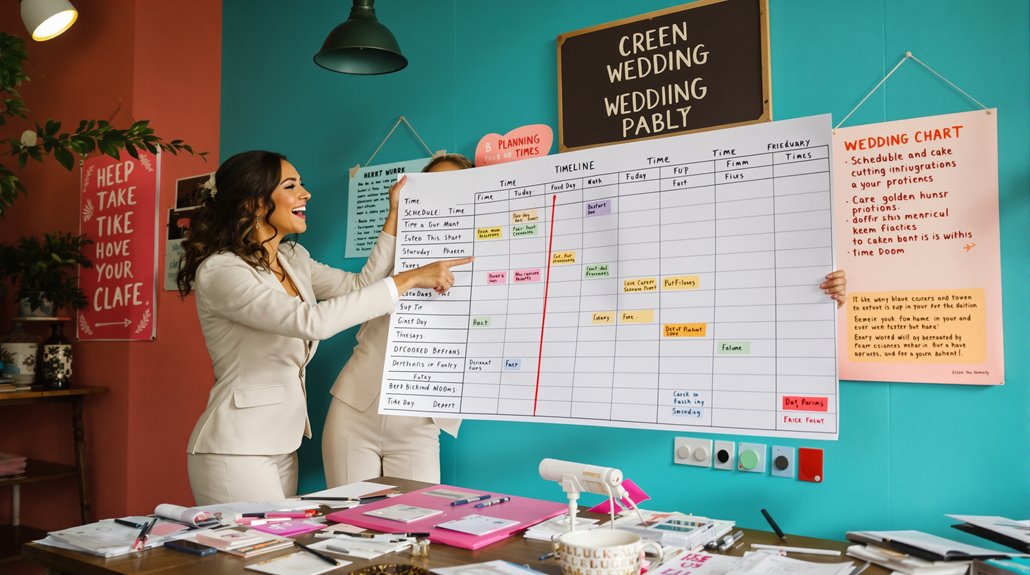
Let’s cut to the chase: a visual summary isn’t just a nice-to-have, it’s your secret weapon in wedding planning warfare. Imagine your entire wedding timeline outlined with precision, like a well-executed business presentation. This isn’t just for you; it’s for your vendors too. Share this strategic snapshot to guarantee everyone’s on the same page. Think of it as your non-negotiable roadmap—every minute accounted for, every potential hiccup preempted. Vendors thrive on clarity, and your visual summary keeps chaos at bay.
Creating this isn’t a marathon; it’s a sprint. Use tools like Gantt charts or detailed checklists. Your goal? Accelerate communication, eliminate guesswork, and savor the day. Get moving—download a template, and let’s streamline your wedding planning into a masterpiece. {img} {save_text: wedding_visual_summary.png}
FAQ
Got questions about wedding timelines that are keeping you up at night? Whether you’re facing pushback from family or vendors, worried about previous decisions, or in need of a fast pivot, we’ve got answers that get the job done. Let’s tackle these head-on and streamline your path to a wedding day that runs with kinetic precision. Drawing insights from marriage psychology, understanding your partnership’s unique communication and planning style can dramatically improve the way you build and execute a wedding timeline.
What if my family/vendors push back?
When family or vendors push back, it’s time to pivot strategically while maintaining your momentum. First, streamline your communication. If your vendors aren’t responding, shift gears: follow up using multiple methods—email, calls, or platforms like WeddingWire. Sometimes, a non-response means they’re unavailable. For family, acknowledge their concerns but remind them that your priorities are non-negotiable. Use timelines and metrics to back your decisions, showcasing the logic behind your choices. Research from the University of Wisconsin highlights how family systems play a crucial role in shaping the dynamics and challenges of wedding planning, underscoring the importance of clear communication and boundary-setting with relatives.
What if I already made the ‘wrong’ decision?
You’ve planned every detail, but suddenly a decision feels off—like a too-tight pair of shoes on your wedding day. Don’t panic. Regret’s common when timelines go rogue, leaving you less “curated cool” and more “chaos central.” First, reassess choices. Contracts often allow tweaks; check terms for reversibility without catastrophic costs. Identify your timeline’s biggest time sink. Could be hair, makeup, or those never-ending family photos. Inject strategic buffer minutes into these areas. This won’t just save time—it’ll save sanity. Prioritize changes with vendors: planner, photographer, venue manager. Keep it concise, minimize confusion. Remember, it’s a pivot, not a derailment. Hustle smartly, and reclaim control. After all, your wedding’s a project, not a Pinterest board. Act, adjust, and move forward.
What’s the fastest way to course-correct?
Although it might feel like the wheels are coming off your well-oiled wedding machine, remember there’s always a way to course-correct efficiently. Start by locking in your venue and guest list if you haven’t already—consider these your non-negotiables. Create a streamlined planning compass highlighting three must-haves and two nice-to-haves. Integrate a detailed 4-6 week timeline, ensuring you’ve got 15-30 minute buffers between critical events. Establish open communication channels with vendors and designate a point person for the big day. If chaos is your jam, keep contingency plans for weather and vendor swaps, because nothing’s worse than being bless and stressed. Actionable next step? Delegate tasks, embrace flexibility, and use project management tools like a boss. Keep hustling!
How do I get my partner aligned?
Aligning with your partner on wedding plans isn’t just a feel-good exercise—it’s a strategic move that guarantees you’re both cruising in the same direction. Start by listing your top three wedding priorities together. This sets a solid foundation for every decision, reducing friction and indecision. Translate these priorities into concrete trade-offs, like budget allocations, and write a brief “values statement” to keep your vision clear when things get heated. Regular check-ins with a clear agenda prevent surprises and keep communication sharp. Assign roles based on strengths—think of it as your wedding planning A-Team. Use shared tools to track progress and avoid overlap. Remember, clarity and systems trump chaos. Next step: Implement regular, agenda-driven check-ins to maintain momentum.
What’s the easiest win I can do today?
How do you score an easy win today in the chaos of wedding planning? Create a “Day-Of One-Page” timeline. Think of it as your wedding’s cheat sheet—strategically streamlined for clarity. This single page is your non-negotiable tool: ceremony start time, vendor arrival slots, key contacts, and an hour-by-hour flow from vows to last dance. Distribute it two weeks ahead to vendors and the wedding party to avoid last-minute bless-and-stressed scenarios. Add contingency plans for rain or delays, because let’s face it, chaos loves company. Confirm and consolidate vendor logistics, ensuring everyone’s on the same page. Your next step? Assign a point person for day-of troubleshooting. This precision-driven plan? It’s your secret to a well-executed, hustle-approved celebration.
Key takeaways
Let’s cut to the chase: a balanced partnership in wedding planning isn’t just an ideal; it’s a necessity. With 81% of women carrying the planning load, it’s no wonder stress skyrockets by 340%. You’re not just planning a wedding; you’re project managing a major life event. Here’s how to keep your cool:
- Share the load: Aim for a 52/48 split in planning duties.
- Communicate timelines: Brief vendors early to avoid chaos.
- Allocate buffer time: Reduce rushing by planning for delays.
- Track contributions: Use 15-minute increments to expose gaps.
- Stick to a budget: High costs can spell divorce, so keep it modest.
Next step? Implement a planning framework that gets the job done. You’re not just surviving the hustle; you’re owning it.