
Got a room full of guests? Assigned seating is your secret weapon for flawlessly executed weddings, minimizing chaos and ensuring seamless flow. It’s strategic: place feuding aunts apart, guarantee Sarah gets her vegan meal. But if your event’s small and casual, opt for open seating‘s relaxed charm. Leverage checklists, set timelines, and own the control. Want to dive deeper into this seating showdown and emerge victorious? We’ve got the intel you need.
The short answer (what most people should do)
When it comes to seating arrangements at your wedding, the smart move is to go with assigned seating. Why? It’s all about control and efficiency. In the assigned seating vs open debate, assigned seating wins. It’s a decision that eliminates the chaos of guests staking claims like they’re in a territorial battle. With assigned seating, you strategically place guests, minimize confusion, and maintain a streamlined flow—from check-in to dinner service. Assigned seating provides guests with a sense of control over their environment and reduces competition for “good” seats at events. This approach not only respects your guests’ time but also aligns with their modern expectations. Plus, it helps separate incompatible guests, avoiding awkward silences. Sure, it requires upfront planning, but the advantages are non-negotiable. Incorporating guest list management from the start ensures you can keep costs predictable and logistics smooth. So, grab your seating chart; it’s time to execute a flawless seating assignment decision.
The real answer: what it depends on
Why does it depend? The choice between table assignments vs free seating isn’t one-size-fits-all. Your seating choice should pivot on these key factors:
- Event Size: Large guest lists demand assigned seating for flow and control, while smaller events can enjoy the freedom of open seating.
- Guest Dynamics: Got family drama? Assigning seats strategically can neutralize conflict and encourage mingling.
- Event Formality: Formal weddings thrive on the order of assigned seating, but casual gatherings might prefer open seating’s laid-back vibe.
- Logistics Control: Assigned seating is a logistical powerhouse, keeping your timeline tight and dietary needs in check. Additionally, planning the seating arrangement carefully helps prevent family tensions by placing individuals thoughtfully.
Decision framework (choose the right move fast)
Choosing between assigned and open seating can feel like deciding between a tailored suit and a chic, off-the-rack ensemble—both have their merits, but the right choice depends on your event’s DNA. Let’s make this decision swift and smart.
For some, the structured approach of assigned seating can be a lifesaver, particularly when you want to ensure loved ones are seated closest to the couple, offering them the best views and a sense of inclusion. When considering your venue, remember that the guest experience and impact of seating style can shape overall satisfaction and flow for your event.
| Criteria | Best Option |
|---|---|
| Event Size | Small: Open |
| Large: Assigned | |
| Guest Dynamics | Familiar: Open |
| Mixed: Assigned | |
| Event Type | Casual: Open |
| Formal: Assigned | |
| Planning Effort | Quick: Open |
| Smooth Flow: Assigned |
Evaluate your guest list and vibe. For a smooth, controlled chaos, assigned seating is your ally. But if you’re embracing a relaxed, mingle-friendly atmosphere, open seating could be your go-to. Execute with precision and pivot where needed.
Recommended timeline / checklist (so you don’t miss anything)
Envision this: You’re not just planning a wedding; you’re orchestrating a masterpiece of efficiency and style. Here’s your streamlined, hustle-ready checklist to guarantee nothing slips through the cracks:
- 12 Months Out: Lock in your venue like a boss. Determine event type, draft a guest list, and set a budget. Start exploring potential venues and available dates to ensure the location accessibility for your guests.
- 6-10 Months Out: Book your heavy-hitters—caterer, entertainment, photographer. Finalize your guest list and send save-the-dates.
- 4-6 Months Out: Get nitty-gritty with menus and printed materials. Confirm your VIPs and consult all relevant calendars.
- 2-3 Months Out: Fire off official invitations and collect RSVPs. Confirm vendors and strategize a seating chart.
Reality Check: Execution is your game. Don’t wing it—plan it. Now, move those timelines!
Examples (realistic scenarios)
Envision this: you’re juggling a tight timeline and limited venue availability, so assigned seating becomes your non-negotiable secret weapon—every guest efficiently placed, every minute maximized. With budget management and prioritization, assigned seating can also help control catering costs, since you know exactly how many guests to expect at each table. Now, imagine a scenario where you’ve got time to play with and a penchant for high customization; open seating lets your guests choose their vibe, turning the reception into a curated social playground. Finally, if you’re prioritizing the budget, open seating could streamline costs, but you’ll need a strategic eye to avoid the dreaded game of musical chairs. The shift in Southwest Airlines’ policy to assigned seating reflects broader industry trends, emphasizing the importance of meeting modern customer expectations.
Scenario 1: tight timeline + limited availability
When you’re racing against the clock with a tight timeline and limited availability, assigned seating isn’t just a preference—it’s a strategic move. It’s about more than just placing butts in chairs; it’s about executing a seamless start. You’ll keep chaos at bay by tracking arrivals, ensuring punctual beginnings, and eliminating guesswork. Think Southwest Airlines’ no-delay boarding: it’s proven. Don’t let guests play musical chairs while your timeline ticks away. Instead, use clear seating plans to minimize check-in confusion and control the flow. With the rise of unassigned seating in workplaces, understanding worker preferences for assigned seating is crucial to make informed decisions. A key benefit is that streamlined guest management directly supports your ability to stick to the agenda and avoid costly schedule overruns. Reality Check: Assigned seating isn’t just a perk. It’s your non-negotiable tool for managing limited resources efficiently. It’s not about making things pretty; it’s about making them work. Next step? Draft that seating chart, stat.
Scenario 2: flexible timeline + high customization
You’ve nailed the assigned seating under a tight timeline, but what if your schedule’s more flexible and you’re all about customization? Welcome to a world where adaptability meets precision. Imagine this: “swing” tables accommodating last-minute VIPs, dynamic layouts shifting between keynotes and banquets, and interactive maps for collaborative decision-making. Forget starting over—drag-and-drop editing keeps things streamlined. Combine collaboration zones with focused rows and informal lounges to match your objectives. It’s crucial to also consider clear paths to exits and service areas to ensure safety and compliance with regulations. Need to boost energy? Closer seating does the trick. Mix first-timers with alumni at “buddy tables” for networking magic. Utilize blended seating to add visual interest and keep attendees engaged. Real-time tech tools guarantee seamless execution, and integrating vendor availability and guest experience insights can elevate both flexibility and satisfaction. Ready to pivot? Your customized seating plan accelerates with ease. Next step: get your interactive map ready and start dragging and dropping!
Scenario 3: budget-first priorities
For the budget-savvy couple who knows that every dollar’s a soldier on the battlefield of wedding planning, open seating can be your secret weapon. It slashes costs by eliminating seating charts, place cards, and table numbers. You cut design and printing expenses, and save on labor for setup. Plus, it accelerates your timeline, freeing you to focus on other budget-friendly priorities like decor. Unlike assigned seating, which can be time-consuming to plan, open seating provides a more relaxed and informal atmosphere. But let’s be real—open seating risks chaos. You might face uneven table fills and guest confusion, which can delay your event. If you’re maneuvering this route, plan strategically. Have a quick guide to inform guests upon arrival. {img} Image suggestion: a minimalist wedding reception setup. {save_text} minimalist-wedding-reception.jpg. Reality Check: Open seating demands vigilance—balance savings with guest comfort. Don’t forget to factor in service charges and automatic gratuities when comparing overall costs, as these hidden fees can add up quickly even when saving on seating arrangements.
What to avoid (common traps)
Avoiding common traps in seating arrangements requires laser-focused execution and strategic foresight. Nail the guest experience by dodging these pitfalls, ensuring your wedding flows seamlessly. Here’s what to watch out for:
- Guest Dissatisfaction Risks: Assigning seats can backfire, leaving guests insulted or paired awkwardly. Prioritize flexibility and compatibility.
- Time-Consuming Planning: Crafting seating charts is a challenging task; streamline by using dynamic tools and clear criteria.
- Event Flow Disruptions: Open seating invites chaos. Designate tables, not seats, to maintain order and adaptability.
- Uneven Table Distribution: Prevent overcrowding or isolation by strategically mapping guest locations in advance.
Execute with precision, anticipate needs, and let nothing derail your timeline. You’re not just hosting a wedding—you’re managing an event with finesse. Remember that guest count impacts key logistics like venue layout, catering, and overall event flow, so plan seating with your final numbers in mind.
1-page action plan you can screenshot
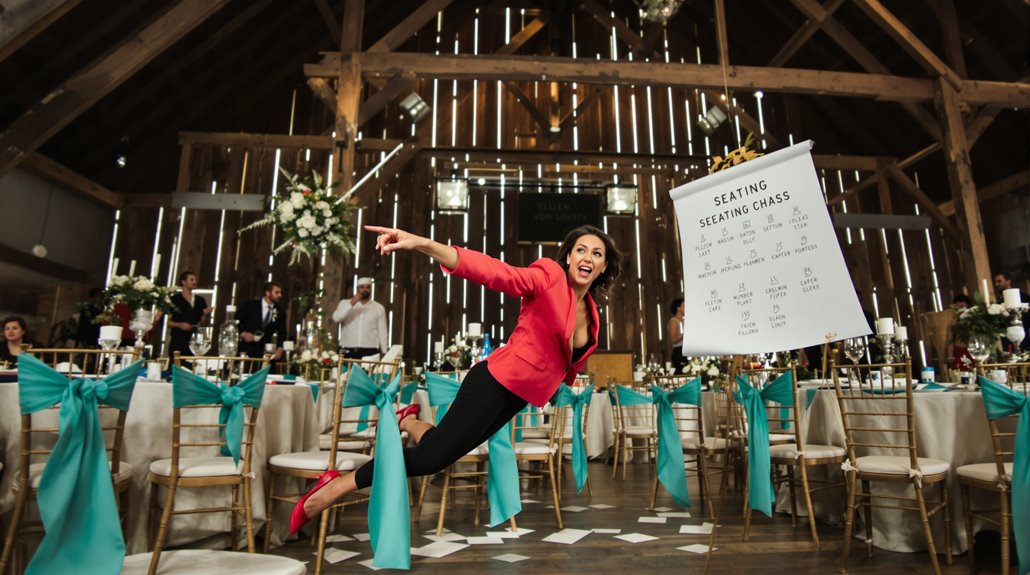
Now that we’ve dodged the common traps, let’s zoom into a page action plan you can actually screenshot. First, determine your event type and vibe—formal or informal. Next, grab our seating checklist. For formal affairs, go assigned. It’s non-negotiable. You’ll streamline arrivals, minimize food mix-ups, and strategically separate incompatible guests. Open seating? Only if your event thrives on chaos and autonomy. Leverage metrics: 86% prefer assigned; it’s a retention ace. Want a hybrid? Pivot by assigning tables, not seats. Execute this with precision. Download our seating plan template—it’s a time-saver. Remember, guests will appreciate your hustle! Action steps: Implement your plan, monitor guest feedback, and adjust for future events. Screenshot this, and you’re ready to rock. Adding buffer time to your timeline ensures that any seating hiccups don’t derail the flow of your event. {img} {save_text: “Seating_Plan_Template”
FAQ
If your situation doesn’t match the norm, it’s time to strategically assess what elements are non-negotiable and adjust from there. Start today by mapping out your guest list and vendor needs; the most common regret is underestimating the power of a well-executed plan. Watch out for the red flag of rushing decisions without clear metrics—adding or removing vendors can pivot the entire event flow and budget, so plan smartly. Remember that guest list management directly affects your venue selection, catering, and overall wedding logistics.
What if my situation doesn’t match the examples?
Wondering how to navigate seating when your event doesn’t fit neatly into the examples? No worries. Let’s pivot to a strategy that gets the job done. You’re dealing with unique circumstances, so your seating plan should be just as tailored. Start by evaluating your event’s vibe and logistics. Hosting a casual mixer? Open seating’s your friend. Need precision for a formal dinner? Assign those seats. Consider hybrid approaches—mix assigned and open areas if flexibility is key. Remember, strategic seating is about control and flow. Use checklists to streamline the process, ensuring dietary needs and social dynamics are covered. Still feeling stuck? Execute a quick poll—your guests’ preferences can offer clarity. Make seating decisions that accelerate your event’s success. Don’t forget to factor in family dynamics since decision-making roles and communication can heavily influence how your seating plan is received and executed.
What’s the first thing I should do today?
Before you can pull off a seating strategy that’s as sharp as your career, you’ve got to nail your morning routine. Start by predicting your day. Believe it or not, 37% of Americans do this in the first 10 minutes of waking. You’re not just brushing teeth and chugging water like 60% of us; you’re crafting a powerhouse morning. Eat breakfast early—it’s a non-negotiable. Get fresh air; it accelerates your morning momentum. Limit your phone scrolling to under 10 minutes. You need a checklist with no more than seven tasks, created the night before. This isn’t fluff; it’s strategic execution. With your mornings on point, you’ll have the focus to tackle any seating plan. Now, go execute.
What’s the most common regret?
Regrets? They’re almost inevitable, but strategically managing your wedding seating might help you dodge a few. When it comes to life’s most common regrets, education tops the list, accounting for 32.2% of reported regrets. It’s a lesson in prioritizing what truly matters—like nailing your seating arrangement. Career regrets follow closely, showing how essential it is to balance personal and professional spheres. Romance regrets, especially high among women at 44%, indicate the importance of considering emotional dynamics, even at your reception.
Here’s your hustle: use a seating chart to streamline interactions and reduce awkwardness. Avoid last-minute chaos with a pre-planned approach. Evaluate your priorities and execute a seating strategy that aligns with your event’s vibe. Your future self might thank you.
What’s a red flag that I’m moving too fast?
How do you know if you’re hitting the accelerator too fast in your relationship? Red flags flash when you ignore anxiety or swiftly dismiss your partner’s flaws, like questionable social media antics. Pump the brakes if your friends stage interventions and you brush them off. Lack of community backing? Proverbs 11:14 reminds us that safety lies in advice abundance. If you’re talking engagement within a month or planning weddings two years early, it’s time to pivot. Notice if your partner drags their feet on decisions or dodges planning meetings—it’s a sign. Don’t let late consultations and missed deadlines derail your wedding planning. Respect timelines and prioritize execution. Next step: schedule a reality check with trusted advisors to recalibrate.
What changes if I add/remove vendors?
You’re maneuvering the exhilarating whirlwind of wedding planning, and suddenly, vendor juggling enters the scene. Adding or dropping vendors isn’t just a checkbox—it’s a strategic pivot. More vendors mean more moving parts; fewer vendors require streamlining. Both affect your seating dynamics. If you add a décor vendor, expect seating aesthetics to elevate. Removing a vendor? You might need to reallocate tasks, possibly affecting seating layout or guest comfort. With 67.4% of planners considering switching event software vendors, digital tools can make or break your flow. Embrace digital bookings for efficiency. Remember, in the hustle to execute your vision, every vendor switch should be intentional. Next step? Create a vendor impact checklist—know what each change means.
Key takeaways
Efficiency meets strategy when choosing between assigned and open seating for your wedding. You’ve got a lot on your plate, so let’s cut to the chase. Assigned seating is your go-to if you need order and control. It’s like having a well-oiled machine that:
- Tracks arrivals for an on-time start.
- Manages dietary needs effortlessly.
- Reduces disruptions by strategically placing guests.
- Prevents awkward encounters by separating incompatible guests.
On the flip side, open seating offers freedom but can lead to chaos—think territorial disputes and food service confusion. Your choice boils down to how much control you want to wield. Don’t overthink it. Decide, execute, and keep the day moving. Ready to streamline your seating strategy? Start with a solid checklist and timeline.