

Executing a wedding guest list cut of 50 demands quick, strategic finesse. Start with a tiered system: slice from college buddies and parental acquaintances. Make plus-ones non-negotiable—sorry, but only married or engaged partners make the cut. Opt for a kid-free policy, then utilize those RSVP trackers as if they owe you money. Your venue demands results: remember, ruthless efficiency is key. Handle your guest list like a boss, because you’re more than just Pinterest-perfect aspirations. Curious for more intel?
What you’ll accomplish (and what ‘done’ looks like)
When you’re ready to cut 50 guests, know that you’ve just pivoted your wedding planning into high gear. You’re not just trimming the fat; you’re executing a strategic, large guest reduction. Drastic guest list cuts mean aligning your budget with reality—smaller venues, cozier spaces, and intimate vibes that don’t compromise quality. Downsizing your guest list gets the job done by freeing up resources for what truly matters, like killer food and memorable entertainment. Make sure to communicate changes clearly and keep a reliable paper trail so everyone is on the same page.
You’ve already set your maximums, so now, prioritize: immediate family, besties, and those who make your inner circle. Execute a tiered approach—must-haves first. This isn’t a Pinterest-perfect moment; it’s about real decisions. A smaller guest list allows for a memorable event without financial strain. With your list streamlined, you’re all set to focus on the essentials that create a meaningful celebration.
Quick start (the short version)
Let’s hit the ground running with a swift execution plan to cut those 50 guests. It’s all about cutting the guest list drastically while maintaining your curated cool vibe. Here’s how we get it done:
- Prioritize Immediate Family: Start with a must-invite list of immediate family and best friends. If you haven’t spoken to someone in over a year, they don’t make the cut. Remember, the venue’s capacity is a hard limit that guides these decisions.
- Limit Plus-Ones: Extend plus-one invites to married, engaged, or long-term relationships only. Keep singles, well… single.
- Adults-Only Policy: Declare the event adults-only. You’re not running a daycare.
- A-List/B-List Method: Send A-list invites first and B-list as RSVPs dip. Track RSVPs online for quick pivots.
Now, execute this plan with precision!
Before you start: inputs you need
Before you even think about trimming that guest list, you’ve got to arm yourself with some non-negotiable inputs. This isn’t just a list; it’s a strategic arsenal to get the job done efficiently. Here’s what you need:
- Venue Capacity Limits: Know your venue’s maximum headcount to avoid cramped chaos or barren wastelands.
- Budget Per Guest Calculation: Break down your total wedding budget to a per-person cost to prioritize who makes the cut.
- Guest Categorization Tiers: Sort invites into must-haves, would-loves, and nice-to-haves for streamlined decisions.
- Partner Collaboration Rules: Synchronize with your partner on non-negotiable guests to guarantee mutual respect and seamless execution.
With these inputs, you’ve got the foundation to execute a sensible, satisfying guest list cut. Remember that a smaller gathering can create a more intimate atmosphere, allowing you to have meaningful interactions with your guests.
Step-by-step process
Let’s cut the guest list with precision and efficiency—no fluff, just results. Start by clarifying your constraints: know your date range, budget ceiling, and non-negotiables. With those in hand, strategically build your decision order, create a timeline with milestones and deadlines, and prepare to execute vendor outreach with scripts and tracking tools. Consider your motivations for inviting specific individuals to ensure the list reflects genuine desires rather than obligations. When narrowing your guest list, keep in mind that venue minimum spend requirements can impact your bottom line and should be factored into your decision-making process.
Step 1: Clarify constraints (date range, budget ceiling, non-negotiables)
Starting with constraints is your power move. Nail down what’s non-negotiable and get ready to slice through the guest list like a pro. Set your budget ceiling first. This isn’t just about numbers; it’s about strategically managing resources. Knowing your financial limits helps you trim with precision—no fluffed-up dreams here, just cold, hard facts. Next, lock in your date range. Early saves-the-date cards mean some guests will naturally decline, helping you streamline effortlessly. To avoid unexpected issues, make sure you understand vendor pricing transparency so you can anticipate any extra costs connected to guest count reductions. Finally, define your non-negotiables. Consider having an “A” list and a “B” list for guests; this allows you to prioritize desired attendees first and offers flexibility if there are declines. Who absolutely needs to be there? Tier 1 folks—family, inner circle—get priority. The rest? They’re on the chopping block if space demands it. Ready to execute? Create a spreadsheet for your guest list and start categorizing who stays and who gets cut.
Step 2: Build the decision order (what to decide first so everything else is easier)
When you’re ready to slice that guest list, establishing a clear decision order is your first move. Start by defining specific criteria: who qualifies as essential? Who’s optional? Apply a consistent standard—maybe everyone both partners have met or those you’ve seen in the past year. Use the first-name-last-name rule: if you can’t recall it, they’re likely off the list. Categorize guests into hierarchical tiers—family and best friends in Tier 1; extended relatives and close friends in Tier 2; and those you invite out of obligation in Tier 3. Calculate the budget-to-guest ratio to guarantee you’re not inviting more than you can afford. Since guest count is one of the biggest cost drivers, reducing your list has an immediate impact on your overall wedding budget. Align with your partner on non-negotiables, then strategically make cuts. To ensure that the process is smooth, organize guests into categories such as immediate family, close friends, and acquaintances, which will simplify the task of identifying potential cuts. Ready to execute? Let’s hustle.
Step 3: Create the timeline (milestones + deadlines)
You’ve made those tough guest list choices; now, it’s time to put the plan into motion with a timeline that acts like a Swiss watch. Start by identifying key milestones: secure your venue and budget over a year out, finalize that trimmed guest list 9-11 months prior, and book your must-have vendors early. Remember that venue and catering account for 40-45% of total budget, so locking these in early not only helps with logistics, but also with keeping your finances on track. Work backwards from your wedding date, using a streamlined month-by-month breakdown. Assign non-negotiable deadlines—order invitations 3-5 months in advance, and make sure seating charts are set 1-2 months before the big day. Use tracking tools like printable checklists and a wedding website to keep it all in check. Remember, this isn’t about fluff; it’s about precision. Keep it tight, and you’ll glide through with grace. Couples can benefit from personalized planning checklists to avoid overlooking important tasks.
Step 4: Execute vendor outreach (scripts + tracking)
Executing vendor outreach is where your wedding planning gains momentum. Forget the fluff; let’s get this done. First, draft emails that are specific and personalized—think “Wedding Photography Inquiry – [Date] at [Venue].” Include key details like guest count and style preferences. Tailor each email to the vendor type, and don’t skip the clear call-to-action. Personalization isn’t just polite; it boosts response rates. Emails serve as crucial touchpoints after marketing efforts, helping to establish clear communication and set expectations with vendors early on.
Your communication timeline should be strategic. Confirm vendor participation immediately and set regular check-ins. Use tools like email templates to streamline outreach and track open rates, aiming for that sweet 81%. Remember, this is controlled chaos with a purpose. Keep moving and pivot when necessary. Now, prepare your scripts and start tracking—time to hustle! Don’t forget to track vendor responses so you can maintain organization and follow up efficiently.
Step 5: Lock the plan (contracts, deposits, and contingency buffers)
Locking in your wedding plan is non-negotiable, especially when you’ve strategically decided to cut your guest list by 50. It’s time to execute like a pro. First, secure contracts with vendors that reflect your revised guest count. Make sure clauses cover penalties and cancellation terms—protect yourself against overcapacity charges. Adjust deposits to fit the new headcount, releasing excess funds to bolster contingency buffers. Got it? Good. Allocate 10-15% of your budget for surprises, ensuring you’ve got the resources to pivot when needed. Define clear contingency triggers—your buffer is your safety net. Finalize your plan, logging everything meticulously. Communicate roles and responsibilities to your team. Remember, this isn’t just a wedding; it’s a mission, and you’re the commander. Let’s move! When reviewing contracts and deposits, pay special attention to service charges and taxes, as these hidden costs can significantly impact your finalized budget.
Step 6: Run weekly check-ins (how to stay on track without spiraling)
When you’re running a wedding like a high-stakes project, weekly check-ins are your secret weapon to staying on track without spiraling into chaos. Schedule these meetings with your partner and vendors to strategically align on budget, guest list, and decor. No fluff—just hardcore efficiency. Celebrate progress and divide tasks like a boss. Review timelines, confirm contracts, and finalize decisions. These check-ins aren’t optional; they’re non-negotiable checkpoints that keep you sane. Document action items, follow up religiously, and make adjustments as needed. You’ll be amazed at how these sessions streamline your planning and prevent oversight. Avoid the bless-and-stressed vibe; instead, embrace the hustle. Move forward with confidence and precision. Next step: automate your RSVP tracking for less chaos. To maximize these meetings, refer to a streamlined checklist to ensure every detail is covered and nothing slips through the cracks.
Template you can copy/paste (checklist + tracker)
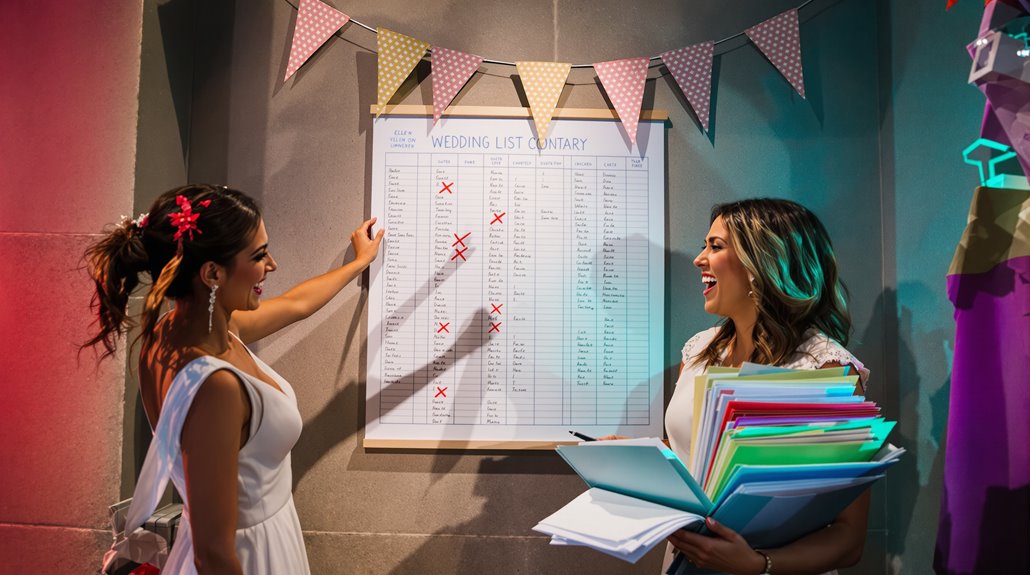
A well-executed guest list is your secret weapon to managing a wedding without spiraling into chaos. To streamline your guest management, use a copy/paste template that keeps you on track with ruthless efficiency. Start with a curated VIP list and strategically categorize guests—family, friends, colleagues. Prioritize those you’ve seen or talked to within the past year. Use a dynamic tracker to manage RSVPs, meal choices, and hotel needs at a glance. Tools like Excel templates or platforms like WeddingWire help you pivot as changes come. Track, export, and sync with seating charts and budget trackers. By focusing on non-negotiable relationships, you’ll create a list that’s intimate yet thorough. Ready to hustle smarter? Integrate this into your planning now! Don’t forget to budget for vendor meals and beverages as these costs can add up quickly when adjusting your guest count.
Common mistakes (and how to avoid them)
Let’s cut the fluff and dive straight into the pitfalls that can turn your wedding guest list into a logistical nightmare. Avoid these missteps, and you’ll streamline your planning like a pro:
- Obligation Invites: Don’t feel pressured to invite coworkers or distant relatives. Prioritize those who genuinely care about you, and you’ll prevent resentment and awkward post-invite cuts.
- Plus-Ones Mistakes: Offering plus-ones to all guests? That inflates your list. Stick to married, engaged, or long-term couples only to keep costs in check.
- No A-List/B-List Strategy: Without tiered lists, you risk over-inviting and cutting pre-notified VIPs. Be strategic with your RSVPs.
- Ignoring Venue Budget: Disregarding venue limits or budget constraints leads to last-minute chaos. Evaluate early and often.
Leverage real-time inventory tracking to make quick decisions about your guest list and ensure that your numbers align with your venue’s requirements.
Next step: Use a guest list tracker to stay ahead!
FAQ
Got a busy schedule and need to cut 50 guests? Let’s streamline the process by executing a focused plan: prioritize tasks like setting venue capacity, defining must-invite lists, and establishing clear plus-one policies—all within a week. Delegate non-negotiables like tracking RSVPs and vendor communication to a reliable friend or wedding planner, ensuring nothing gets missed while you keep the momentum going.
How long should this take if we’re busy?
Wondering how long this wedding guest list trim will take? If you’re swamped, aim for a brisk, no-nonsense approach. Use digital tools to streamline the process, and expect this task to take about a week with strategic focus. You’ll need to execute a ruthless review of your invitees: immediate family and close friends stay, but colleagues and distant relatives might get the axe. Leverage RSVP projections—like the 20% average decline rate—to predict attendance and make informed cuts. Remember, destination weddings naturally shrink guest lists due to higher decline rates. Your timeline gains speed using these metrics, so pivot quickly and press ahead. Next step? Draft a preliminary list and use RSVP software for real-time adjustments.
What’s the minimum version that still works?
How do you carve a guest list down to its bare essentials without losing your mind? First, execute a tiered guest list. Start with Tier 1: immediate family, best friends, and your bridal party—those are non-negotiable. Tier 2 covers close relatives and colleagues. Tier 3 includes duty invites like college buddies and your parents’ friends. Cut strategically from Tier 3 upward. Next, pivot with plus-one rules—ditch uncommitted partners to streamline numbers. Want more gains? Enforce a child-free policy, maybe with exceptions for close family. Lean into RSVP decline rates; expect 75% to attend. Aim for a minimum viable size—under 50 guests aligns perfectly with venue limits, optimizing budget per guest. Now, go execute with precision and confidence.
What can I safely delegate?
You’ve locked down your lean guest list, now let’s accelerate your planning by delegating like a boss. Start by handing RSVP tracking to a trusted friend—it’s a non-negotiable task that needs precision without your constant oversight. Use clear addressing to set boundaries, and let your designated RSVP tracker pivot declines into B-list gains. Also, delegate communication duties. Equip someone reliable with scripts for those tricky chats about venue limits or plus-one policies. This streamlines the emotional labor while you focus on executing your vision. Set firm family invitation limits early to prevent guest list creep. Your strategic delegation moves reduce stress and keep the planning train rolling. Next step? Finalize those decisions and stay agile.
What if a vendor isn’t responding?
Caught in the vendor silence void? Don’t let it derail your planning. First, assess the severity—how long’s it been since they last replied, and is a deadline looming? If it’s not urgent, give it a minute. But document every attempt—dates, times, and methods. Use a vendor communication tracker to keep it organized. Keep your cool, but don’t wait forever; follow up after 1-2 weeks. Try multiple channels if you’re being ghosted. If no response, pivot—consider backup options. Involve your planner for insights, or start exploring alternatives. Should silence persist, terminate the contract legally. Your day is too important for radio silence. Remember, efficiency is king; move strategically and smartly to keep your plans on track.
What should I track weekly?
Ever wondered what keeps a wedding plan running like a well-oiled machine? It’s all about tracking strategically. Weekly, keep an eagle eye on RSVP responses—adjust guest estimates early. Lock down meal choices with those RSVPs to streamline caterer prep. Update your non-negotiable guest list to prevent last-minute venue surprises. Transform declines into opportunities—reassign seats without breaking a sweat. Vendors? Confirm they’re aligned on headcount details. Weekly vendor check-ins avoid day-of chaos. Meanwhile, headcount forecasting is your secret weapon. Monitor response trends to predict guest cuts. Remember, 80-90% response rates are the norm, not the dream. Ready to accelerate your wedding planning? Start tracking now and stay ahead of the game. Action item: Set up your tracking system today.
Key takeaways
When it comes to trimming your guest list, strategic execution is your secret weapon. You’re not just removing names; you’re optimizing your wedding’s kinetic momentum. Here’s your streamlined approach:
- Venue Budget Limits: Understand your space and budget. Smaller venues equal intimate vibes but require a tighter guest list. Align guest count with venue capacity to guarantee comfort and ambiance.
- Tiered Prioritization: Rank guests in must-have tiers. Start with immediate family and best friends, then add until you hit your desired count. Keep the original list for potential no-RSVPs.
- Plus-Ones and Children Rules: Set firm boundaries on plus-ones and child-free policies to manage headcount efficiently.
- RSVP Decline Strategy: Anticipate no-shows by inviting slightly over capacity. Use B-lists judiciously to handle RSVPs.
Now, execute with precision!