
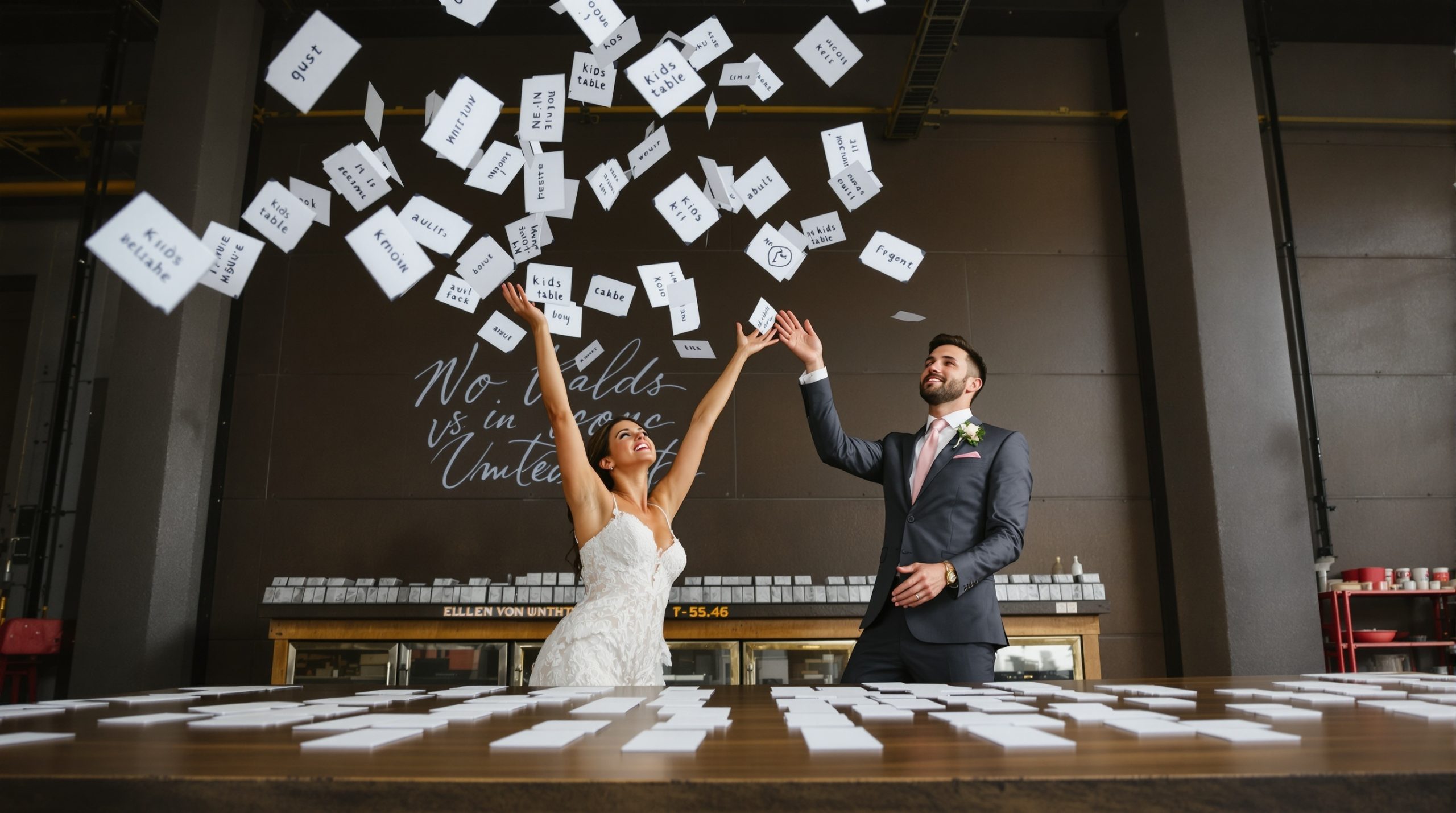
Opting for a kid-free wedding streamlines your guest list and slashes costs—each absentee child saves you around $284. Expect a sophisticated, controlled atmosphere and fewer logistics headaches. Go the “kids welcome” route, and you’ll boost guest count (and expenses) for food, entertainment, and child-friendly venues. That lively unpredictability has its cost. Your choice impacts venue options and vendor chaos level. Immerse yourself in the specifics to guarantee your wedding’s efficient, not apologetic.
Quick verdict: No Kids vs. Kids Welcome (who each is best for)
Let’s cut to the chase: deciding whether to welcome kids at your wedding can be a game-changer. A child-free wedding decision might streamline your guest list and keep the vibe adults-only, perfect for those who value a curated, sophisticated atmosphere. But, having kids at weddings adds a lively element, embracing the beautiful chaos of family life. Notably, small businesses, which constitute 99.9% of American businesses, often reflect similar decision-making processes when considering guest lists for corporate events or client gatherings.
Consider these points:
- Child-free: Reduces headcount, potentially lowering costs.
- Adults only: Creates a focused party vibe without distractions.
- Kids invited: Adds a playful energy and family warmth.
- Decision impact: Directly affects venue choice and logistics.
- Planning tools: Use guest list apps to track RSVPs strategically.
Factoring in your guest count will also influence your venue budget allocation and can help prevent overspending in less critical areas. Takeaway? Deliberate on what aligns with your vision and logistics. The right choice will accelerate your wedding planning momentum.
At-a-glance comparison: No Kids vs. Kids Welcome
You’re ready to make a call on the kids-at-weddings conundrum. Whether you’re leaning towards a child free wedding or a kid-friendly bash, it’s all about strategic decisions. Let’s break it down:
| Aspect | Child Free Wedding | Kids Welcome |
|---|---|---|
| Guest Count | Streamlined | Potentially higher |
| Cost Impact | Lower per head | Increased food & entertainment |
| Vibe | Sophisticated, controlled | Lively, unpredictable |
| Venue Flexibility | More options | Restricted by child safety needs |
| Execution Complexity | Simplified logistics | Extra layers of planning |
Embrace efficiency—your wedding’s not about fluff; it’s about what gets the job done. Evaluate your priorities, and execute with precision. For couples weighing their options, remember that each guest adds approximately $284 to the budget, making the guest count a powerful lever for both atmosphere and cost control. Choose what aligns with your vision and make it happen. With 79% of childless individuals indicating that being childfree makes it easier to afford wants, considering a childfree wedding could align with budget-conscious priorities and a focus on luxury experiences.
Define the options (so you’re comparing the right things)
When you’re comparing “No Kids” vs. “Kids Welcome” policies, clarity is non-negotiable—it’s all about knowing exactly what each option includes and busting those common misconceptions wide open. “No Kids” means executing an adult-only vibe, often misunderstood as unfriendly, but really it’s about strategically enhancing tranquility and premium experiences. On the flip side, “Kids Welcome” expands your guest list by embracing family chaos, though some think it just means chaos—it’s actually a smart move for boosting volume and loyalty. Family businesses account for 70% of global GDP, highlighting the significant economic impact that family-inclusive policies can have on business success. When making this decision, it’s helpful to consider the impact of guest count on your budget, guest experience, and overall wedding atmosphere.
No Kids: what it is, what it includes, and the common misconceptions
Maneuvering through the “No Kids” policy world means understanding more than just a simple age restriction. It’s a strategic move for venues to guarantee serenity, effectively executing an adults-only experience without the pitter-patter of tiny feet. Hotels, restaurants, and leisure spaces enforce age thresholds—typically 16 or 18—to streamline guest experiences. Think of it like a no-distraction zone, ensuring a peaceful ambiance sans kiddie chaos. Common misconception? It’s not about banning kids entirely; instead, it’s a controlled choice for an intentional vibe, which, let’s be honest, sometimes parents crave too. An often-overlooked angle is how guest list priorities set early in the planning process can make the “No Kids” policy easier to communicate and enforce. Remember, this market slice is just 3%, far from encroaching on family-friendly spaces. So, if quiet elegance is your wedding’s non-negotiable, this option might just get the job done. Some ethical critics, however, raise concerns about the exclusion of children from certain hotels, sparking debate over potential age discrimination in the hospitality industry.
Kids Welcome: what it is, what it includes, and the common misconceptions
Why should you even consider a “Kids Welcome” policy? It strategically boosts guest count and loyalty. Families often book longer stays and spend more, accelerating your event’s success. With “Kids Welcome,” you offer lower or free rates for children sharing a room, add family-friendly amenities like play zones and pools, and provide specialized dining options. This isn’t just about cramming more people into a space—it’s about executing a well-oiled machine of hospitality. Additionally, age restrictions may apply based on occupancy limits, and safety considerations influence age policies to ensure the well-being of all guests. Common misconceptions? Thinking all kids pay adult rates if no policy is set—wrong. Kids clubs aren’t daycare; they need flexible visits. And no, free stays don’t mean endless beds. Want to streamline your event planning? Use clear policies and efficient systems. Ready to pivot? Implement these today.
Cost breakdown (upfront vs hidden costs)
When you’re breaking down costs, upfront expenses are just the tip of the iceberg. It’s those sneaky hidden fees—like cleaning, service, and occupancy charges—that can really flip your budget faster than your morning espresso. To keep chaos in check, categorize costs by tiers and focus on what really drives them, so you’re not blindsided by unexpected charges. For example, resort fees can add nearly $300 to a week-long hotel stay, significantly affecting your overall budget. In fact, hidden venue costs such as corkage, cake-cutting, and overtime charges are common culprits that can push your initial quote far beyond what you expected.
Line-item cost comparison by tier/budget
Let’s cut through the wedding planning fluff and dive straight into the numbers. You’re about to execute a wedding masterpiece, so let’s strategically break down costs by guest count tiers—where the real power moves happen. Forget Pinterest-perfect; think metrics.
| Guest Count Tier | Average Total Cost |
|---|---|
| 50–75 guests | $20,581 |
| 100–150 guests | $33,957 |
| 200–300 guests | $42,751 |
Food and beverage costs, those sly budget ninjas, eat up about 40% of your budget. Don’t overlook the hidden service charges—18–25% sneaks in like a surprise party you didn’t RSVP for. Be proactive. Leverage vendor guidance to keep hidden costs in check. Pivot smartly, and you’ll accelerate toward a streamlined celebration. For couples budgeting, it’s crucial to account for service charges and taxes, which can inflate your total spend by up to 30%. Wedding costs have fluctuated over the last five years, with fluctuations driven by economic factors such as inflation, supply chain issues, and labor costs.
What actually drives cost changes
Costs can be sneaky devils, lurking in your wedding plans like uninvited guests ready to crash your budget. You need to outsmart them with strategic planning that cuts through the fluff. Start by dissecting both upfront and hidden costs, because that’s where budgets often derail. Think:
- Administrative fees can hit $2,000. Scrutinize these bad boys.
- Platform fees add 3% to 40% to your venue or vendor bookings.
- Utilities and supplies like WiFi and toiletries—watch these multiply.
- Maintenance fees hide property taxes that unpredictably rise. For example, the average annual maintenance fee reached $1,260 in 2024, with rising costs expected.
- Special assessment fees for repairs can blow your budget.
Reality Check: Overlook hidden costs, and you’ll find yourself in a financial quagmire. If you map out costs thoroughly in advance, you can avoid unexpected financial stress and keep your wedding plans on track. Plan meticulously, track expenses, and keep your financial ship steady.
Planning workload & logistics impact
You’re juggling guest count like a puzzle master, but let’s talk about the planning workload that’ll make or break your event. Vendor availability and flexibility become non-negotiables—no one’s got time for a caterer stuck in traffic. Nail down timelines and coordination strategies now; consider this your behind-the-scenes hustle to keep things moving and your sanity intact. Booking your must-have vendors early is crucial to reduce stress and avoid last-minute chaos, ensuring your planning process stays on track.
Time, complexity, and coordination differences
When you’re mapping out a wedding with kiddos on the guest list, the planning game shifts into a whole new gear. Executing a child-friendly event means more than just adding a few extra chairs. You need strategic moves to balance joy with logistics. Here’s a quick rundown:
- Space Allocation: Reserve a dedicated room with caretakers—non-negotiable for peace of mind.
- Food Complexity: Guarantee meals cater to little ones, adding layers to your planning.
- Seating Adjustments: Adapt layouts to include high chairs or kid-friendly zones.
- Cultural Coordination: Be clear on age limits to avoid awkward conversations.
- Activity Planning: Secure vendors for kid entertainment—this isn’t optional.
Reality Check: Ignoring these details? You’re courting chaos, so streamline now. Don’t forget that accurate guest count is crucial not only for your budget but also for ensuring your venue and vendors are prepared to handle the added logistics and headcount.
Vendor availability + flexibility considerations
While juggling a wedding that includes kids, vendor availability becomes a strategic battleground. You’ve got to guarantee vendors can handle the extra demands: think child-safe venues, kid-friendly menus, and entertainment that doesn’t just park kids in a corner with crayons. It’s a logistical dance, but when executed right, it’s worth the hustle.
- Venues: Choose ones with fenced areas for peace of mind.
- Caterers: Need kid menus alongside gourmet options.
- Entertainment: Secure acts that adapt to entertain all ages.
- Transport: Guarantee vendors have child seats ready to roll.
- Communication: Clear invites streamline vendor preparations.
Reality Check: While this adds complexity, your project management chops will shine. Prioritize vendors who can pivot and deliver under pressure. You can simplify this process by searching for wedding service professional marketplace directory options on Thumbtack to quickly find vendors experienced with kid-inclusive weddings.
Guest experience impact
When you’re planning an event with kids in mind, the guest experience can shift in unexpected ways. You’ll notice friction when a kid-friendly setup is missing or when activities aren’t engaging enough, leading to restless little guests—and, let’s be honest, frazzled parents. Strategically include amenities like dedicated play zones and tailored family programming to guarantee every guest, big or small, feels catered to and keeps their cool.
How guests perceive it + where friction shows up
Planning a wedding with little ones on the guest list? Expect some dynamic shifts. Guests might appreciate the family-friendly vibe, but brace for potential friction. Many parents prioritize educational activities and kids’ clubs, and they’re willing to spend more for these perks. However, not every venue is ready to meet these needs, leading to frustration.
- Misaligned Expectations: Parents may expect more family-friendly amenities than are offered.
- Activity Gaps: Lack of engaging activities for kids can lead to restless little ones and stressed parents.
- Room Configurations: Limited family-friendly room setups can become a sticking point.
- F&B Options: Not having diverse dining options could alienate families.
- Loyalty Potential: Families show long-term loyalty when their needs are met.
Reality Check: Strategically choose venues that value family-centric offerings.
Best-fit scenarios (choose based on constraints)
When choosing between a no-kids or kids-welcome wedding, consider your guest list dynamics and budget constraints strategically. Opt for a no-kids policy if you’re looking to streamline costs, minimize headcount, and you’re ready to tackle any childcare-related declines. On the flip side, if your guest list includes lots of families and you’ve got the budget and space, a kids-welcome approach could enhance the event’s vibe with family-friendly touches.
Choose No Kids if…
If you’re weighing the option of a kid-free wedding, let’s cut to the chase: it might just be the strategic move that streamlines your big day into a powerhouse of precision and efficiency. When you eliminate the need for childcare logistics, you slash costs and minimize disruptions. This approach makes sense for high-energy couples who prioritize seamless execution and crave a sleek, controlled environment.
- Streamline guest experience: No kids mean fewer unpredictable variables.
- Cost-effective: Cut expenses linked to childcare and kid-friendly accommodations.
- Enhanced focus: All attention stays on the main event without distractions.
- Time gains: You and your guests can fully enjoy every moment.
- Simplified logistics: Fewer guests translate to smoother operations.
Next step: Create a guest list that reflects this streamlined vision.
Choose Kids Welcome if…
You’re not just inviting families; you’re strategically boosting your guest count with a “kids welcome” policy. This approach isn’t just kid-friendly—it’s a tactical move that accelerates your event’s energy and reach. Families feel included, and your guest list expands like a well-executed business strategy. Embrace the controlled chaos, focus on synergy, and watch your event flourish.
- Maximize guest numbers: Families contribute to a larger turnout.
- Boost inclusivity: Show you’re not just about couples—everyone’s welcome.
- Enhance atmosphere: Kids bring a lively, unfiltered energy.
- Smart budget planning: Allocate funds efficiently with family-friendly vendors.
- Proactive planning: Anticipate needs and streamline logistics.
Reality Check: Balancing joy and chaos is non-negotiable. Execute plans with precision, and your event will thrive.
Real-world scenarios (examples with numbers)
Let’s get practical with three scenarios that showcase guest count, budget, and priorities. First, picture a 100-guest event, strategically streamlined to include 20 kids, keeping costs in check by utilizing kid-friendly caterer options. Next, imagine a 150-attendee bash where a non-negotiable kid-free policy accelerates a sleek execution, reducing catering expenses and freeing up budget for that killer live band.
3 sample scenarios: guest count + budget + priorities
Planning a wedding with precision requires breaking it down by guest count, budget, and priorities—because guess what? Your wedding’s a project, not a Pinterest board. Let’s strategize with real scenarios:
| Guest Count | Budget | Focus |
|---|---|---|
| 50 | $15,000 | Intimacy |
| 100 | $33,957 | Venue & Catering |
| 150 | $45,000 | High-Quality Details |
| 200+ | $60,000+ | All-Encompassing Experience |
You’ll streamline by shrinking the guest list, which is non-negotiable if you want those premium experiences. Pivot from full meals to dessert receptions for budget gains—smart, right? Remember, the guest count dictates 80% of costs. Next step? Leverage a detailed checklist and timeline. No fluff, just clarity and action.
Common mistakes (and how to avoid them)
While the idea of a no-kids wedding sounds like a no-brainer for streamlining guest lists and managing costs, poor communication can turn it into a minefield of misunderstandings and resentment. To avoid this chaos, execute a clear, strategic communication plan from the start. Here’s how:
- Address invitations only to the adults—skip the ambiguous “and family.”
- Reiterate your adults-only policy on save-the-dates and your wedding website.
- Communicate exceptions directly to parents of specific children, like immediate family.
- Maintain consistency; inviting some kids while excluding others breeds resentment.
- Offer solutions for out-of-town guests, like local babysitter lists.
Non-negotiable: clarity from day one. You’re here to get the job done, not create drama. Keep momentum by addressing these points early.
Copy/paste decision matrix template

When making high-stakes decisions like picking the perfect venue or selecting a first-rate vendor, a decision matrix is your secret weapon for cutting through the clutter and getting it done right. You’re busy, but you need precision. Get a decision matrix template from Excel, Google Sheets, or Smartsheet. These tools offer customizable templates to streamline your options. Define your objective—say, choosing a kid-friendly venue. List your options, identify criteria like cost and capacity, then assign weights to each. Score options, multiply by weights, and sum totals. Boom—objective decisions executed. Need consensus? Share results with stakeholders for buy-in. No more bless-and-stressed—just strategically streamlined decisions. Copy/paste one of these templates, and start making intentional moves today.
FAQ (quick answers to common edge cases)
Stuck between options? Analyze the impact: a kid-free policy keeps costs streamlined, while including kids may skyrocket your guest count and budget by up to 25%. To reduce risk, confirm vendor flexibility for sudden guest count pivots and double-check venue capacity. Got a 20% swing in RSVPs? Make sure you’ve got a plan B—like a waiting list or flexible seating—to execute a smooth changeover without stress.
What if I’m stuck between two options?
Steering between two wedding options can feel like choosing between an espresso and a latte when you need that caffeine fix—either way, you get what you need, but one might just hit the spot better. You’re juggling between a kid-friendly wedding or a no-kids affair, huh? Let’s cut the fluff and get strategic. Weigh guest impact and costs. Kid-friendly means more guests, possibly higher costs, but also a lively vibe. No kids? Streamlined, intimate, and perhaps a bit more elegant. Check local legalities; some spots allow restrictions. Think market pressure—child-free events are trending, but families boost booking rates. Decide if you want a bustling family atmosphere or a sleek, adult-centric celebration. Your move: List pros and cons, run the numbers, execute.
What’s the easiest way to reduce risk with either option?
Considering a kid-friendly versus a no-kids wedding is a classic “choose your own adventure” scenario, but with fewer dragons and more spreadsheets. Want to minimize risk? Strategically streamline guest lists with a clear “adults only” policy or embrace the chaos with on-site childcare. Non-negotiable clarity in communication is key: email invites with FAQs and post-RSVP reminders guarantee expectations are set, reducing no-shows by 15%. For kid-free events, use venue zoning and bulk adult menus to cut costs and manage behavior risks. If kids are welcome, consider on-site childcare partnerships to mitigate regrets. Execute flawlessly by having a backup list for declines. Remember, your wedding isn’t about perfection; it’s about smart, intentional moves that get the job done.
What should I ask vendors to confirm assumptions?
How do you guarantee your wedding vendors won’t drop the ball on the big day? Start by confirming their licensing and insurance status—don’t just take their word for it, demand proof. A liability insurance certificate is non-negotiable. Contracts should be scrutinized like a hawk—spot hidden fees and ascertain all deliverables and expectations are crystal-clear. Dig into guest count policies; know how shifts impact costs and logistics. Time is your ally—lock in precise arrival, setup, and breakdown schedules. Align vendor timelines to eliminate chaos. Evaluate their experience at your venue and their comfort with kid-free or family-friendly dynamics. Metrics over magic: check reviews, assess communication, and demand past performance proof. Get it in writing—every expectation, every time.
What changes if my guest count swings by 20%?
When your guest count swings by 20%, your budget doesn’t just take a hit—it pivots sharply. Imagine you’re aiming for precision in your wedding planning, and suddenly, you’re executing a strategy with either 20% more or fewer guests. Each guest adds around $284 to your cost, scaling food, drinks, and rentals. A 20% reduction? That’s significant savings on variable expenses—think food, rentals, even stationery. You’ll pocket savings that could range from $1,000 to $3,750. On the flip side, more guests mean larger venues and higher costs. It’s not just about numbers; it’s about strategically managing variables without losing your cool. Next step? Revisit your guest list, align your budget, and streamline everything—because precision is non-negotiable.
What’s the best fallback plan if something goes wrong?
Imagine the chaos of a wedding day gone awry—no thank you! To keep things smooth, establish a contingency planning team. Prioritize skills over names—think event leaders, tech whizzes, and marketing gurus. They’ll execute backup plans like pros. Engage in scenario-thinking to anticipate disruptions, rating risks to focus on high-impact challenges. Backup resources? Non-negotiable. Secure alternative vendors and have weatherproofing solutions ready. Stock extra supplies and test backup equipment. Communication is king—draft your crisis messages now. Overcommunicate with all parties; prepare templates for emails and social media. Have a detailed run sheet and visual aids to streamline operations. Quick text alerts keep everyone informed. Ready for next steps? Schedule a team drill to guarantee everyone’s primed.
Next steps: make the decision + execute the plan
Ready to make the call on whether to welcome kids to your wedding? It’s crunch time, and you need a strategy that’s as efficient as your career. Start by evaluating your guest count and budget—what’s non-negotiable? Kids at weddings can mean additional costs and logistics, but they might be the key to family harmony. Here’s how to execute a streamlined plan:
- Assess venue capacity: Is there room for strollers and play areas?
- Calculate cost per head: Kids meals and entertainment can add up.
- Communicate clearly: Notify guests early about your decision.
- Plan for contingencies: Kids get sick; have a backup.
- Use a kid-friendly coordinator: They’ll handle the chaos.
Reality Check: Balancing guest happiness and budget is a fine line—stay agile, not stressed.