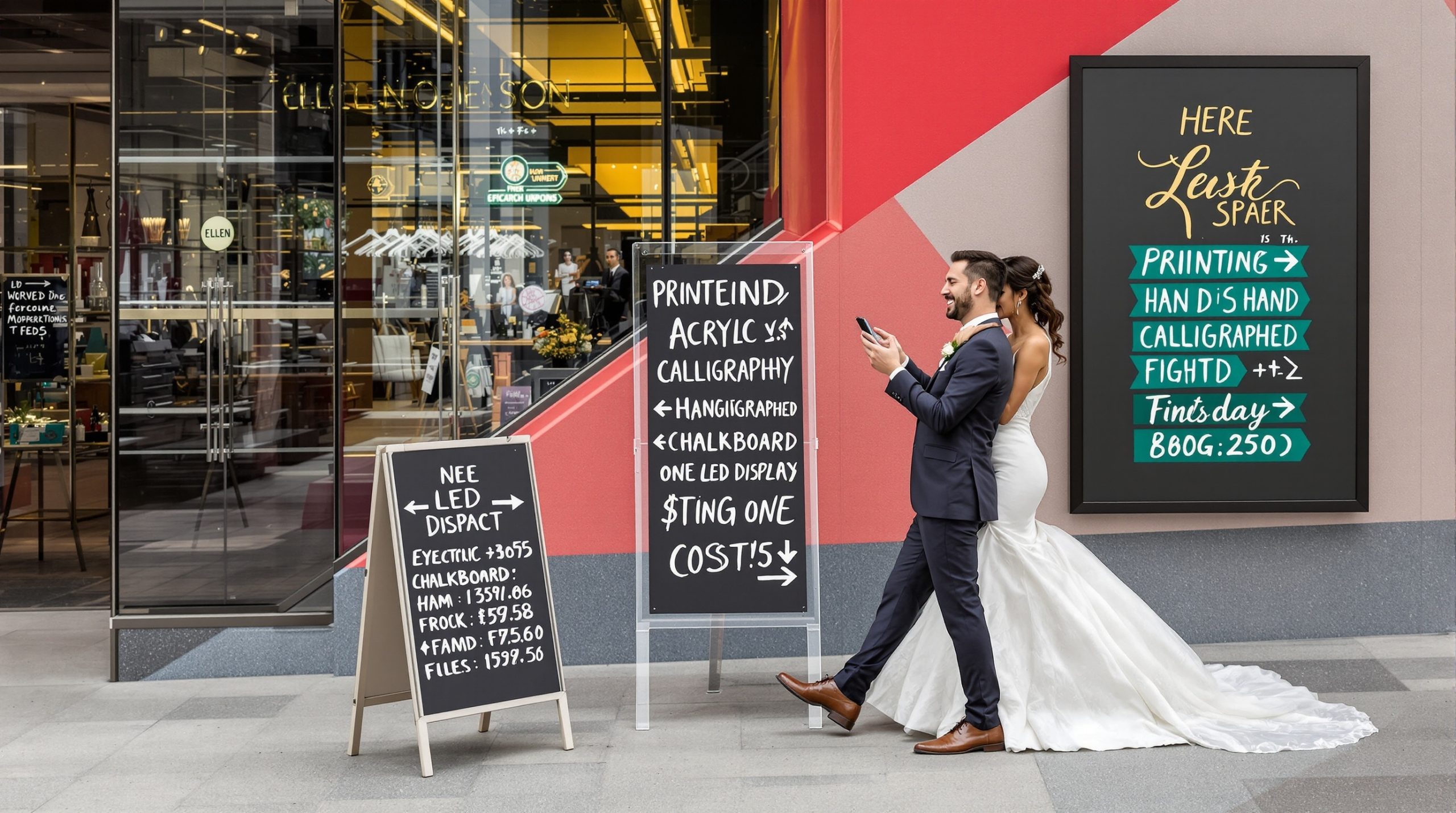
Printed signs cut costs without skimping on durability—think punchy messages executed efficiently. Calligraphy adds bespoke flair, but labor isn’t cheap—save for intimate gigs. Digital displays? They’re the big guns: higher initial spend but pivot-ready with dynamic engagement. Sorting your VIP list? Printing’s scalable; digital’s adaptable. Calligraphy—well, it’s downright picky. Align each option to your wedding vibe: strategically blend for max ROI gains. Curious about more savvy choices? The real scoop awaits.
Quick verdict: Printed Signs vs. Calligraphy vs. Digital Displays (who each is best for)
When it comes to selecting the right signage for your high-energy wedding event, you’ve got three contenders: printed signs, calligraphy, and digital displays. Let’s cut to the chase with a signage options comparison that fits your hustle:
- Printed Signs: Ideal for cost-conscious, low-tech setups. They’re a non-negotiable for those who prioritize budget efficiency. Static, yes, but they get the job done.
- Calligraphy: Perfect for that artisanal touch without breaking the bank. It’s a streamlined choice when you want elegance executed with precision.
- Digital Displays: Best for dynamic, high-volume events needing real-time updates. They pivot effortlessly between content, maximizing engagement. Digital signage requires upfront investment for hardware and software, but it can reduce printing and maintenance costs significantly in the long run.
Your move? Decide based on sign cost options and the vibe you’re aiming for. Need a checklist? Let’s rock and roll!
At-a-glance comparison: Printed Signs vs. Calligraphy vs. Digital Displays
Let’s dive right into the no-nonsense comparison of Printed Signs, Calligraphy, and Digital Displays for your high-energy wedding. When it comes to sign format comparison, printed signs are cost-effective and long-lasting but lack flexibility. Calligraphy adds artistic flair, though it’s labor-intensive and vulnerable to weather woes. Digital displays demand upfront investment but shine with dynamic engagement and adaptability. When considering vendor reliability, digital displays offer unparalleled customization options for content updates, allowing for easy changes and real-time adaptations to enhance customer engagement.
| Factor | Printed Signs | Calligraphy | Digital Displays |
|---|---|---|---|
| Cost | Lower initial | Variable artisan labor | High upfront |
| Durability | 7-15 years | Wears from weather | 5-10 years, weather-resistant |
| Maintenance | Low upkeep, no power | Manual touch-ups needed | Moderate, tech updates |
| Engagement | Immediate comprehension | Artistic appeal | 400% more views, interactive |
Reality Check: Digital displays offer adaptability but require tech know-how. Plan your choice strategically!
Define the options (so you’re comparing the right things)
Alright, let’s break this down: printed signs are your static powerhouses, perfect for those non-negotiable messages that need to be clear from across a crowded room—think banners, posters, and safety signs. Calligraphy, on the other hand, is your bespoke option for when you want to scream sophistication without plugging anything in; it’s all about those elegant strokes and high-end vibes, but don’t expect it to scale up for mass communication. Digital displays are your dynamic content machines, ideal for real-time updates and animations, but they come with the catch of needing power and connectivity—great for engagement, but not so much if the lights go out. Printed signs offer a tactile permanence that resists technical failures or downtime, making them reliable even when technology falters.
Printed Signs: what it is, what it includes, and the common misconceptions
Printed signs are the unsung heroes of wedding logistics, seamlessly executing communication without the need for flashy theatrics or constant upkeep. They’re strategic tools that get the job done with Dibond signs for durability or Coroplast for temporary outdoor needs. Monument and pylon signs guide guests efficiently, while window signs and trade show graphics elevate visual appeal.
Misconceptions abound. People often think printed signs are just flat surfaces or costly custom work. Not true. From three-dimensional channel letters to budget-friendly options like post-and-panel signs, there’s versatility. Forget the myth of needing large volumes; digital inkjet printing is perfect for short runs. And durability? With materials like Dibond, these signs withstand weather like champs. Ready to level up your wedding logistics? Let’s plunge into it. Additionally, compliance signage ensures that your event adheres to regulatory standards, providing necessary safety and accessibility information. In event planning, vendor management insights reveal that careful selection and handling of vendors can impact the overall efficiency and success of the event.
Calligraphy: what it is, what it includes, and the common misconceptions
Calligraphy isn’t just handwriting; it’s the art of orchestrating beauty and rhythm into every stroke, a visual symphony executed with precision and flair. Think of it as the charismatic conductor in your wedding’s visual orchestra. It’s not just about looking good—it’s about strategic impact, like a well-planned project. Calligraphy involves crafting elegant symbols by hand, blending historical elegance with modern functionality. You’re not just getting pretty letters; you’re securing a timeless art form that screams sophistication without shouting “I tried too hard.” Forget the myth that printing killed calligraphy—it just sparked innovation. Whether you’re channeling the elegance of Roman square capitals or the intricate beauty of Islamic styles, calligraphy adds an unrivaled edge. Consumer economics plays a significant role in understanding how wedding spending decisions are made, influencing choices like calligraphy. Calligraphy as a major art form in Islamic culture was especially prominent during the Islamic Golden Age, showcasing the art’s enduring cultural significance. Ready to pivot your wedding’s aesthetic narrative? Start by exploring script styles that resonate with your vibe.
Digital Displays: what it is, what it includes, and the common misconceptions
While you might think digital displays are just fancy TV screens, they’re actually the strategic powerhouse of modern event design. This tech isn’t fluff—it’s about executing dynamic content to strategically engage guests. Digital displays consist of hardware, software, and connectivity. Think LCDs or LEDs that stream real-time content, not just static signs. You can update instantly, no ladder required. The content management system is your operational “brain,” letting you schedule, pivot, and gain momentum effortlessly. These displays are essential for transforming communication into engaging experiences across various industries. Misconception? You don’t need to babysit content. It’s automated—set it, forget it, and let it hustle. Reality check: While the upfront cost is higher, the long-term efficiency makes it non-negotiable. Want to accelerate your wedding game? Digital displays get the job done.
Cost breakdown (upfront vs hidden costs)
Let’s cut through the noise and get strategic about costs, shall we? When it comes to signs, understanding upfront vs hidden costs is non-negotiable for executing a streamlined plan. Whether you’re eyeing printed signs, calligraphy, or digital displays, knowing what truly drives cost changes is your secret weapon to staying on budget and pivoting like a pro. For instance, digital signage costs can range significantly from $200 to over $3,000 per screen, depending on factors such as hardware, software, installation, and maintenance.
Line-item cost comparison by tier/budget
When you’re planning a wedding with the precision of a tech startup launch, understanding the costs of signage options can help you execute your vision without derailing your budget. Let’s break it down:
| Budget Tier | Printed Signs | Digital Displays |
|---|---|---|
| Low | $40–$500 | $200–$600 |
| Mid | $1,000–$5,000 | $500–$3,000 |
| High | $3,000–$10,000 | $5,000–$20,000 |
| Upfront | $300–$10,000 total | $1,000–$15,000 initial |
| Hidden | Reprinting $100–$500 | Software $18/month |
Printed signs are straightforward but require periodic reprinting, while digital displays need ongoing software subscriptions and power. It’s important to note that indoor digital signs typically range from $5,000 to $10,000, which influences the overall cost strategy. Don’t forget that taxes and service charges can increase your budget by 10-15%, making it essential to include these in your budgetary considerations. Strategically assess your budget to align with your vision. Ready to make a move? Immerse yourself in the details and pivot with precision.
What actually drives cost changes
To get your wedding signage right without hemorrhaging cash, you need to understand what really drives those costs. It’s not just about the sign itself. The hidden costs lurk in layers you might not expect. Here’s what to keep an eye on:
- Commission Structures: Multi-tiered commissions inflate prices by 30-60%. Bypass the middlemen by purchasing directly; it’s a non-negotiable move.
- Installation Costs: Expect $500 to $5,000+, covering concrete foundations, electrical work, and trenching. Plan smartly and you won’t be caught off-guard.
- Permits and Fees: These can cost $400-$2,500. Early research prevents nasty delays and surprise expenses.
Reality Check: Don’t underestimate ongoing expenses like energy and software fees. Your strategy? Prioritize transparency and strategic planning to avoid financial pitfalls. Regularly monitor the budget to ensure alignment with financial reality, preventing unexpected expenses from derailing your plans.
Planning workload & logistics impact
When it comes to planning workload and logistics, you’ve got to strategically weigh the time, complexity, and coordination differences between printed signs, calligraphy, and digital displays. Vendors matter here—printed signs require a reliable team for quick assembly and distribution, while calligraphy needs artisans who won’t flake out on tight timelines. Digital displays demand tech-savvy folks who can execute seamless updates across multiple locations without a hitch.
Time, complexity, and coordination differences
Maneuvering the logistical maze of wedding signage boils down to understanding the distinct time commitments and coordination demands of printed signs, calligraphy, and digital displays. Let’s break it down so you can make informed decisions with kinetic precision confidence.
- Printed Signs: While they have extended production timelines (days to weeks), they’re straightforward. No software training is needed, but reprints for updates can slow you down.
- Calligraphy: This art form demands hours to days for each piece, limiting scalability. It’s a high-skill task with manual logistics, not ideal for quick pivots.
- Digital Displays: With real-time updates via software, these are a game-changer. Setup takes a couple of days, but once running, content changes are quick and centralized.
A well-structured approach to wedding planning helps mitigate logistical issues and enhances the overall experience.
Reality Check: Each option has its trade-offs; weigh time against complexity.
Vendor availability + flexibility considerations
Maneuvering vendor availability and flexibility is a must when you’re knee-deep in planning a wedding that screams efficiency and precision. Let’s explore the nitty-gritty. You need vendors who can pivot as quickly as your schedule demands, ensuring hiccups don’t derail your big day.
- Printed Signage: With 39,645 shops in the U.S., these vendors offer medium-term flexibility. However, labor shortages and paper supply issues might play spoiler.
- Calligraphy: Specialized calligraphy is woven into broader sign shops, ideal for personalized touches. Urban demand keeps them nimble.
- Digital Displays: Samsung, LG, Sony—your digital go-tos. While offering dynamic updates, they require infrastructure planning, adding complexity.
Reality Check: Don’t overpromise on timelines. Understand each vendor’s lead times and adjust logistics to avoid last-minute chaos. Day-Of Coordination ensures smooth execution of wedding plans and can help manage vendor logistics efficiently.
Guest experience impact
When it comes to guest experience, digital displays are your secret weapon, offering dynamic engagement that printed signs just can’t match. They strategically reduce friction by cutting perceived wait times and providing interactive, personalized content that makes your guests feel like VIPs. But, don’t underestimate the power of a well-executed calligraphy sign for those intimate, memorable touches—just keep it clear and straightforward, no blessing or stressing. To create a truly unforgettable experience, focus on great food as a central element, ensuring that your catering reflects unique tastes and regional flair.
How guests perceive it + where friction shows up
Visual consistency at your wedding isn’t just a nice-to-have; it’s a non-negotiable. It’s your secret weapon in creating an efficient, memorable guest experience that leaves a lasting impression. Here’s why it matters:
- Enhances Navigation: Clear and cohesive signage reduces confusion, ensuring your guests move smoothly between locations. Think streamlined flow, not lost souls.
- Boosts Engagement: Digital displays grab 400% more attention, igniting energy and interaction from your guests. They remember your day because it’s engaging, not just pretty.
- Builds Confidence: Consistent branding screams professionalism. Guests feel assured and comfortable, knowing the event is strategically executed to perfection.
Using a Priority Based Budgeting approach can help allocate resources to what truly matters, ensuring that your visual elements contribute effectively to the guest experience.
Reality Check: Overdo it, and you risk visual overload. Balance is key—strategically place signs to guide without overwhelming.
Best-fit scenarios (choose based on constraints)
When you’re strategizing for a wedding that’s as streamlined as a startup launch, choose printed signs if you’re on a budget and need something that gets the job done without tech headaches. If it’s all about artistry and you’re embracing the elegance of manual execution, calligraphy is your go-to, adding a personal touch that’s non-negotiable for intimate settings. Digital displays are your best bet for maximum engagement and real-time updates, perfect for those who want to pivot plans without breaking a sweat. Be mindful of hidden fees that can inflate your budget unexpectedly, such as corkage fees and cake-cutting charges, which are common in venue pricing structures.
Choose Printed Signs if…
Printed signs aren’t just relics of the past; they’re your secret weapon for strategic wedding planning when budget constraints, long-term needs, or rural aesthetics are in play. You’re not just getting a sign; you’re making a smart investment. Here’s when printed signs are your go-to:
- Budget-Friendly Execution: When you’re watching every penny, printed signs offer low upfront costs and high ROI. They’re the unsung heroes of cost-effective branding.
- Long-Term Impact: Need your message to last? Printed signs are permanent fixtures that keep speaking long after the initial setup. No ongoing costs, just ongoing visibility.
- Rural Harmony: Planning in a rural or historical setting? Printed signs fit seamlessly, requiring no tech distractions or electricity.
Reality Check: Avoid overloading your signs with information. Keep it simple and impactful.
Choose Calligraphy if…
Opt for calligraphy when your wedding demands a touch of artistry that zings with sophistication without the tech headache. This isn’t just a stylistic choice; it’s a strategic move that aligns beautifully with your non-negotiable standards of efficiency and elegance. Here’s why:
- Artisan Aesthetic: Custom lettering elevates your invitations above the ordinary, offering a unique, handcrafted feel that no digital design can match.
- Small-Scale Events: Perfect for intimate gatherings, calligraphy scales efficiently to your needs without the burden of reprint costs or minimum orders.
- High Customization: Need something specific? Calligraphy adapts instantly to bespoke designs, capturing your exact vision with precision.
Ready to make a calligraphy move? Start by contacting an artist today and discuss your vision.
Choose Digital Displays if…
Imagine executing a wedding with the precision of a well-oiled machine—digital displays are your secret weapon. They’re perfect when you need dynamic, adaptable solutions that get the job done with zero fuss. Here’s why you should consider them:
- Real-Time Updates: Pivot your messaging in minutes, not weeks, keeping everything fresh and relevant. Forget the print lag—this is hustle culture at its finest.
- Cost Efficiency: Reach 1,000 people for just 15 cents. Compare that with traditional media, and you’re laughing all the way to a better budget.
- Engagement Power: Interactive displays engage guests, turning them from passive observers into active participants.
Reality Check: Overestimate print? You’ll miss out on strategic gains. For those craving precision, digital displays aren’t just a choice—they’re non-negotiable.
Real-world scenarios (examples with numbers)
You’re managing a wedding for 150 guests with a $50,000 budget, and priorities are non-negotiable efficiency and impact. Consider digital displays for a streamlined approach—although upfront costs could reach $2,200, they offer real-time updates and measurable metrics which means you’re not stuck reprinting last-minute changes. If your vibe leans towards a more traditional touch with tight budget constraints, printed signs might get the job done at just $100 for a 55″ vinyl banner, but remember, you’ll be sacrificing the agility and modern appeal digital offers.
3 sample scenarios: guest count + budget + priorities
When you’re managing a wedding with 25-50 guests and a budget of $500-$2,000, precision is everything. You’re executing an event with minimal fluff. Printed signage is your streamlined ally—non-negotiable for CloseKnit gatherings. Feather banners, A-frame signs, and vinyl graphics get the job done without tech headaches or extra fees. Strategically placed, they maintain brand consistency throughout the event. Here’s a quick breakdown:
| Sign Type | Cost Estimate | Best Use |
|---|---|---|
| A-frame Signs | $100-$300 | Welcome/Entry |
| Feather Banners | $150-$400 | Outdoor/Pathways |
| Vinyl Graphics | $200-$500 | Reception/Branding |
Reality Check: Don’t get “bless and stressed” over aesthetics—your priority is functional execution. Execute, accelerate, and pivot as needed.
Common mistakes (and how to avoid them)
Let’s talk common pitfalls in signage—because yes, even the simplest decisions can derail your wedding day momentum. To keep things moving smoothly, avoid these traps:
- Ignoring Durability: Printed and calligraphy signs can fade or tear easily. Opt for digital displays with UV protection that’ll last up to 10 years, minimizing damage from the elements.
- Underestimating Costs: Printed signs may seem cheaper upfront, but frequent replacements add up. Instead, choose digital signage. It cuts long-term expenses by 50% with real-time updates and lower maintenance.
- Overlooking Engagement: Static signs capture fewer views than digital’s dynamic content. Leverage videos and personalization with digital displays to boost interaction.
Execute your signage plan strategically and keep your wedding day momentum on point. Need more? Pivot to digital.
Copy/paste decision matrix template
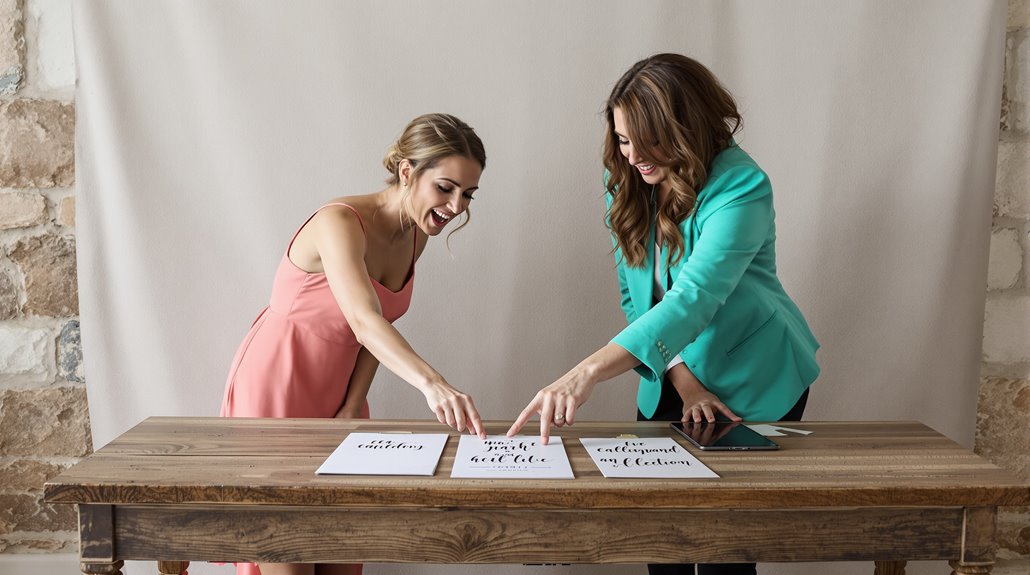
Steering through the decision maze of wedding planning? Let’s tackle it with a decision matrix template that gets the job done. Start by pinpointing your criteria—what’s non-negotiable for your wedding signage? Cost, aesthetic, or technology? Assign weights strategically; every factor’s got its clout. Enter your options: printed signs, calligraphy, digital displays. Rate each using a consistent scale—1 to 10 works well. Multiply these ratings by your weights, and voilà! You’ve got scores that rank your options objectively.
Why bother? This approach accelerates decision-making, keeps your crew aligned, and cuts through the chaos. Share the matrix with your partner for buy-in, and watch as your wedding planning pivots from stressful to streamlined. Next up? Execute the plan with precision.
FAQ (quick answers to common edge cases)
Stuck between printed signs and digital displays? Strategically ask vendors about durability, update flexibility, and maintenance needs to confirm your assumptions—because assumptions are a wedding’s worst enemy. If your guest count swings by 20%, pivot with scalable options like digital updates or pre-designed templates for quick print, and always have a contingency plan—think backup power for digital or extra prints in case of weather.
What if I’m stuck between two options?
When you’re caught between printed signs and digital displays for your wedding, first assess the battlefield. Think: budget, location, updates, and eco-impact. Printed signs are your budget-friendly soldiers, offering lower upfront costs. But if you’re planning a high-traffic wedding, digital displays gain 400% more views with snazzy motion. Frequent content updates? Digital wins, no contest. It updates without tearing down and putting up new posters. For outdoor durability, digital signage holds strong with weatherproof armor, but printed signs can stand the heat too.
Reality Check: Consider your battlefield wisely. Printed signs are cost-effective but static. Digital displays dazzle but come with higher initial investment. Use your project management prowess to strategically choose what aligns with your non-negotiables and gets the job done.
What’s the easiest way to reduce risk with either option?
Although power outages and vandalism can throw a wrench in your wedding plans, you can execute a strategy to mitigate these risks effortlessly. For digital displays, invest in backup generators and durable enclosures. Yes, it’s an upfront cost, but it’s a non-negotiable move that protects against tech failures and vandalism. For printed signs and calligraphy, use weatherproof materials and protective covers to extend their lifespan—think of it as insurance against unpredictable elements. Regular inspections are your secret weapon; they’re quick, simple, and prevent surprise failures. Streamlined and intentional, these strategies get the job done without breaking the bank. Next steps? Create a checklist for these risk-reduction tactics and assign roles—treat it like project management, not wedding fluff.
What should I ask vendors to confirm assumptions?
Ever wondered how to cut through vendor jargon and get straight to the facts? When dealing with sign vendors, make sure you ask the right questions to confirm key assumptions. Start by confirming material costs—know your range from printed to digital signs. Verify installation specifics, like outdoor mounting and placement costs. Don’t skip customization options; they’re non-negotiable for that curated cool vibe. Operating costs matter, so ask about energy efficiency and maintenance savings. Finally, get the lowdown on performance metrics—ROI benchmarks are your best friends. Skip the “bless and stressed” nonsense; you’re here to execute, not daydream. Grab your checklist and streamline your vendor discussions. Next step: Make those intentional decisions and keep the momentum going.
What changes if my guest count swings by 20%?
If your guest list suddenly grows by 20%, you need to pivot with precision. Let’s break it down. Printed signs are your scalable sidekicks; a budget bump of $600–$1,500 handles extra guests smoothly, keeping impressions steady. Calligraphy? More like a delicate dance. A 20% swing inflates costs by $300–$1,000, and the ROI might flatline. Digital displays, your tech-savvy allies, barely flinch; hardware’s scalable, and costs remain efficient with a sweet 22% ROI boost. Here’s the kicker: strategically allocate your budget. Printed and digital options keep you on track, while calligraphy needs a hard look. Action time—review your guest numbers, adjust your signage, and let the controlled chaos roll. Bless and stressed? Not on our watch.
What’s the best fallback plan if something goes wrong?
When your guest list takes a wild spin, every wedding planner knows it’s time to prepare for any eventuality. Power failure? No sweat. Switch to printed signs or calligraphy—your non-negotiable backups. Generators or battery backups are your lifeline; test them pre-event. For weather damage, execute with weather-resistant signs and modular frames for quick pivots. Technical glitches? Shift to static signage and troubleshoot remotely. Delays? Partner with local vendors for rapid replacements. Last-minute changes? Leverage change boards and FAQ stations. Your ace in the hole: evergreen designs for modular swaps.
Reality Check: Think 10 steps ahead. Your fallback plan isn’t an afterthought; it’s a strategic necessity. Keep it smart, keep it simple, and always have a Plan B.
Next steps: make the decision + execute the plan
Decisions drive action, and it’s time to pick your path between printed signs and digital displays. Let’s cut the fluff and get strategic. Here’s how you execute like a pro:
Pick your path: printed signs or digital displays, and execute like a pro.
- Evaluate Costs: Start with your budget. Digital displays have higher upfront costs but save money long-term by cutting reprint expenses. Printed signs? Cheaper now, but they’ll rack up over time.
- Assess Engagement: If you’re in a tech-savvy venue, digital will grab 400% more eyeballs. Traditional signage fits better in quaint, historical settings.
- Plan Execution: Digital? Install displays, subscribe to software, and manage content from your dashboard. Printed? Design, print, and install—simple but less adaptable.
Reality Check: Both paths have trade-offs. Choose what aligns with your audience and venue dynamics. Execute decisively.